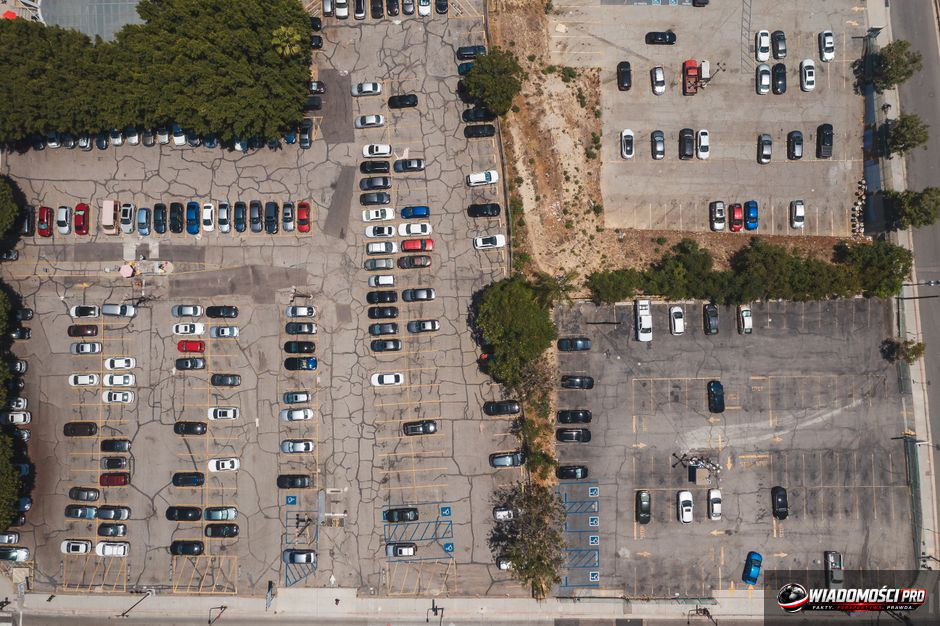
In 2027, the maximum rate for towing a passenger car will be 830 PLN, for a motorcycle 400 PLN, and total costs including one day of storage could reach as much as 2431 PLN. The Ministry of Finance announced these limits in July 2026, based on annual inflation indicators and service maintenance costs. These are the highest price ceilings in the history of Polish traffic regulations, which will force motorists to read traffic signs even more carefully.
The setting of upper limits for fees by the Ministry of Finance is not a random process. For years, the ministry has used a valorization mechanism aimed at compensating for the costs incurred by companies involved in removing vehicles from public roads. Tow truck owners, operators of impound lots, and local governments that commission these services have for months pointed to the drastic increase in fuel prices, spare parts, and employee wages. In 2027, these arguments were translated into concrete figures that will hit the wallets of drivers who violate regulations directly.
Local governments have received a signal from Warsaw that they can—though are not required to—raise their local price lists to the aforementioned 830 PLN for a passenger car. However, experience from previous years clearly shows that most Polish municipalities do not intend to apply a reduced tariff. When the Ministry of Finance gives the green light for increases, local city councils usually implement the maximum possible rates, treating them as a market standard. For municipal budgets, this is a way to avoid subsidizing external towing companies, which would otherwise have to be financed from the taxes of all residents.
The real financial challenge, however, is not the towing itself, but the time the vehicle remains in the impound lot. The sum of 2431 PLN mentioned in the ministry's announcements is the result of the maximum fee for vehicle removal and the rate for one full day of storage. In practice, this means that if a driver does not collect the car immediately after receiving information about its towing, the meter at the parking lot will start generating costs that, within a few days, could exceed the market value of older vehicle models. This is a situation where recovering one's own car becomes economically unprofitable for the owner.
The legal mechanism on which these fees are based is ruthless. Article 130a of the Road Traffic Act is the foundation for the actions of the services. A police officer or municipal guard, seeing a vehicle parked in a place where it is prohibited and obstructs traffic or threatens safety, has the right to make a decision to remove it. A driver who allows such a situation to occur loses control over operational costs at that moment. There is no room here for negotiations with the towing company or choosing a cheaper parking lot. The system is rigid and predictable in its severity.
Motorcyclists, although their vehicles take up significantly less space on the road than cars, will also feel the pressure of the new regulations. The limit of 400 PLN for a tow truck service for a two-wheeler is an amount that leaves no illusions about the direction of the state's fiscal policy. The motorcycle industry, often overlooked in debates about parking infrastructure, becomes a full-fledged participant in this costly system in 2027. The discrepancy between 400 PLN for a motorcycle and 830 PLN for a car reflects the differences in equipment necessary for their transport, but the dynamics of price increases hit both groups of road users in an almost identical way.
Experts in road transport note that such high rates may be a form of hidden tax. Although officially the increases result from inflation, in reality, they constitute a profitable tool for local governments. In cities where the shortage of parking spaces is a chronic phenomenon, the towing system becomes a profitable branch of operational activity. Drivers who treat parking bans as a suggestion rather than binding law will pay a price in 2027 for this mistake that, for many households, will be a noticeable dent in the monthly budget.
Analyzing this data, one must ask about the real costs of operating a guarded parking lot. The Ministry of Finance publishes maximum rates but does not delve into whether the quality of services offered by impound lots corresponds to these amounts. Often, it is simply a fenced-off lot where the vehicle stands in the open air. The lack of quality standards combined with such high fees raises controversy among organizations representing drivers. We are paying for a service we did not want, and the quality of which remains beyond our control.
It is worth paying attention to the problem of older cars. With current repair and parts costs, the amount of 2431 PLN for one day of storage with towing is often close to the purchase price of a used car in poorer technical condition. This leads to a paradoxical situation where the vehicle owner simply abandons it at the impound lot because they cannot afford to redeem the property. The regulations provide for procedures for the takeover of such vehicles by the municipality, but for the driver, this means the loss of assets due to a single parking mistake.
This situation forces a change in habits. Drivers who have previously relied on luck or the leniency of the services must verify their approach. In 2027, the margin for error practically does not exist. Every "moment" in a no-stopping zone, every "just for a minute" entry into a restricted traffic zone, can cost the equivalent of a vacation trip. This is a brutal lesson, but statistics show that only high penalties are able to realistically influence traffic flow in city centers.
How, then, to defend against these expenses? The most effective method remains absolute adherence to vertical and horizontal signage. In the era of widespread access to navigation applications and maps, information about paid parking zones or prohibitions is easily accessible. Often, however, haste becomes the driver's biggest enemy. Stopping a car in a hurry, without checking the sign under the prohibition sign, is the most common cause of visits to the impound lot.
If a situation arises where the driver returns to the car at the moment the tow truck is already on-site, they have a chance to avoid the worst-case scenario. The regulations allow for refraining from towing if the owner appears before the tow truck departs. This, however, requires paying a fine for improper parking. It is still an expense, but incomparably lower than the statutory 830 PLN for towing alone. Officers, however, are not obliged to wait, so this "opportunity" is very limited in time.
Another aspect is education regarding driver rights. Many people do not know that impound lots are required to maintain transparent records and make the vehicle available to the owner. There have been cases where dishonest managers tried to charge additional, unjustified fees for "preparing the car for release" or "administrative fees." Every such case should be verified against the regulations of the given unit, which must be consistent with the municipal council resolution.
Furthermore, it should be remembered that the stated amounts are upper limits. If the municipal council in a given city has enacted rates lower than the maximum, the driver has the right to pay exactly that lower amount. Information about local price lists should be available in the Public Information Bulletins (BIP) of individual city offices. Knowledge of these local regulations can save us several hundred zlotys in crisis situations. One should not thoughtlessly assume that the 830 PLN rate applies everywhere, although in practice, most large urban centers strive for this level.
From a macroeconomic perspective, the Ministry of Finance's decision to raise the limits is a continuation of the policy of making the costs of public services realistic. From a micro perspective, it is another blow to the household budget. Drivers who do not follow changes in regulations will be faced with a fait accompli in 2027. Lack of knowledge about how much a mistake on the road can cost is no longer an excuse. The state is clearly communicating: space on the road is a scarce commodity, and its unauthorized occupation will be punished in a way that is intended to be felt by everyone.
It is worth recalling the historical context. Just a few years ago, towing rates were much lower, which made the system less financially effective for municipalities. Today, after a series of increases, towing has become an operation that must "balance out." This means the city does not subsidize the removal of wrecks or poorly parked cars. Responsibility has been entirely shifted to the driver. Is this fair? Supporters argue that it is, because why should taxpayers finance the clearing of roads of cars belonging to people who ignore the law? Opponents point to the drastic nature of these penalties, which often do not correspond to the economic realities of the average Pole.
Everything indicates that the upward trend will continue. If inflation continues to affect service costs, we can expect further updates in the coming years. This makes owning a car in a large city a luxury fraught with significant financial risk. A driver today must be not only a road user but also a person who is familiar with the complicated system of fees and penalties to avoid financial disaster.
In summary, the upcoming year 2027 will bring a tightening of financial rigors for motorists. Maximum rates at the level of 830 PLN for a car and 400 PLN for a motorcycle, with the possibility of charging a total of over 2400 PLN for a day of storage, put drivers against the wall. Understanding this mechanism and, above all, avoiding situations that lead to tow truck intervention is the only real protection against these costs. The law is on the side of the services, and municipal budgets are on the side of high rates. In this arrangement, the only person who can realistically influence the amount of their bill is the driver themselves.
Questions and answers:
Do these rates apply throughout Poland?
The stated amounts are maximum rates determined by the Ministry of Finance. Specific prices are enacted by municipal councils, which have the right to set lower fees, although in practice they rarely decide on such steps, choosing rates close to the limit.
When exactly do the new regulations come into effect?
The new maximum rates for towing and storing vehicles, according to the Ministry of Finance's decision, begin to apply from January 1, 2027.
Are storage costs included in the towing price?
No, the costs of storage in a guarded parking lot are charged for each day of parking and constitute a separate item on the bill. The sum of 2431 PLN is the maximum cost that can be charged for towing and one day of vehicle storage.
What happens if I don't pick up the car from the parking lot?
If the vehicle is not collected within the specified time, the municipality has the right to apply for a court order for the forfeiture of the vehicle to the State Treasury. In that case, the car may be auctioned or scrapped, and the costs associated with this can be pursued from the owner.
Can I negotiate the price with the towing company?
No. Rates for towing a vehicle removed on the basis of Article 130a of the Road Traffic Act are regulated by statute and municipal council resolutions. The towing company acts on behalf of the services, and the fee is paid based on the price list approved by local authorities.
Will I always pay less for a motorcycle?
Yes, the Ministry of Finance has set a separate, lower limit for motorcycles (400 PLN), which results from lower operational costs associated with their transport compared to passenger cars. Nevertheless, fees for a day of storage in an impound lot may be equal for all types of vehicles in many municipalities, which is worth checking in local regulations.
Is there an appeal against the decision to tow?
A driver can file complaints about the way the services conducted the operation, but in most cases, towing is considered a necessary action to remove a threat. If a mistake by the services occurred, one can seek reimbursement of costs through civil proceedings, which is a long-term process requiring proof of unlawful action.
Sources
- Drivers will pay more. Ministry of Finance announced new rates - WP Moto
- 400 PLN for a motorcycle and 830 PLN for a car. Ministry announced rates for 2027 - Autokult
- New rates for vehicle towing. Ministry announced prices for tow truck and parking - TVN24
- Up to 2431 PLN for vehicle towing. Fees for drivers will rise again in 2027 - Gazeta Prawna
Article prepared by the Wiadomości PRO editorial team with the support of artificial intelligence. Facts come from the sources listed above.
Komentarze (0)
Ładowanie komentarzy...