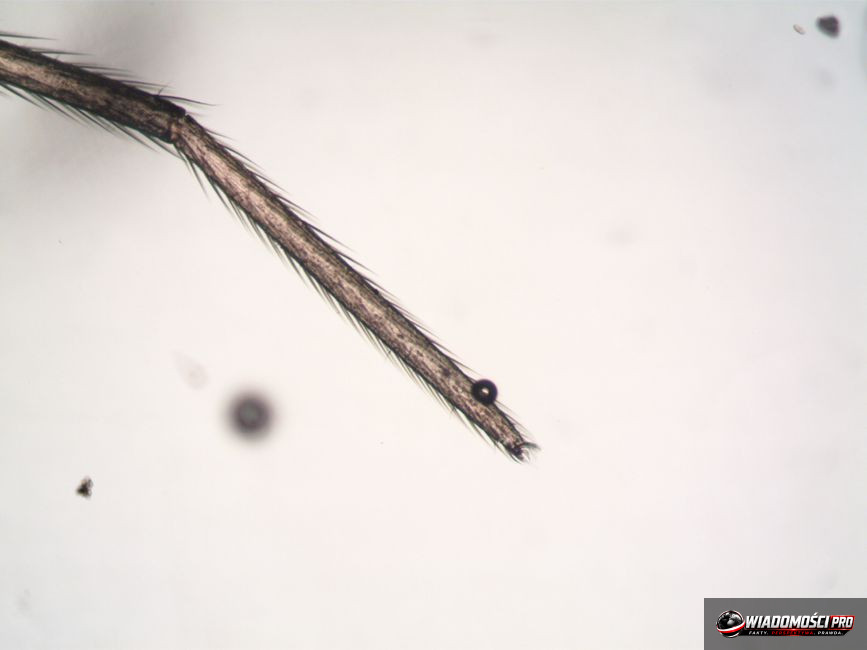
Nanorobot technology is currently in the early stages of laboratory research, which is why there is a lack of confirmed data regarding its commercial implementation and impact on the market prices of smartphones. At this moment, there is no confirmed schedule for implementing this technology into mass electronics production. Any media reports about an imminent drop in the prices of mobile devices stem from a mistaken conflation of academic fascination with the logic of the large-scale semiconductor industry.
What are nanorobots and how do they work on a micro scale?
The foundation of these structures are precisely designed polymer or metal structures that use the vibrations of an external magnetic field to navigate in a liquid environment. These projects are being developed by prestigious institutions, including Prof. Bradley Nelson's team at ETH Zurich and scientists at the Max Planck Institute for Intelligent Systems led by Peer Fischer. The mechanism of magnetic and acoustic propulsion at this scale is based on physics that differs drastically from our everyday experiences.
In the micrometer world, viscous forces dominate, and inertia almost ceases to exist. Objects moving in a fluid with a low Reynolds number cannot rely on pushing off their surroundings in the way macroscopic organisms do. The movement of a nanorobot is not swimming, but rather a laborious overcoming of resistance, which for an object of this scale feels like moving through thick tar. Every time the external magnetic field stops, the robot stops immediately. There is no momentum here that would allow for the smooth continuation of movement.
Magnetic control requires generating field gradients with unprecedented precision. The ETH Zurich team demonstrated that a single object can be positioned with nanometer accuracy, but this operation loses stability the moment additional units are introduced. Magnetic interactions between individual nanorobots lead to the formation of "clouds" or chaotic clusters, which makes precise operation inside densely packed silicon structures impossible.
Fluid physics at the micro scale also complicates the problem of heat dissipation and contamination. In the environment where nanorobots would operate, Van der Waals forces become dominant. Particles stick to each other with a force that cannot be ignored. Attempting to move nanorobots from a liquid into the vacuum where modern processors are manufactured leads to an immediate loss of propulsion properties. A machine that works in water becomes a useless piece of matter in a vacuum.
Precision in component assembly: Is it a realistic alternative?
Semiconductor factories, such as TSMC or Samsung facilities, are cathedrals of cleanliness and order. EUV (extreme ultraviolet) lithography represents the pinnacle of engineering. Machines produced by ASML, costing between 150 and 350 million dollars per unit, operate on photons with a wavelength of 13.5 nm. The precision of this process is deterministic. Every nanometer of deviation means a defective chip that goes to waste.
Introducing nanorobots into the production process would mean replacing the predictable laws of optics with the randomness of magnetic control. Process engineers at Intel strive to eliminate variables. Nanorobots, even with perfect control, introduce the risk of magnetic field drift caused by something as simple as vibrations in the factory floor. Losses of tens of thousands of dollars on a single silicon wafer is a price that no manufacturer will accept in the name of an experimental assembly method.
Comparing the scale of both technologies reveals a chasm. EUV lithography operates at the quantum level, building structures atom by atom. Nanorobots, although called "nano," are in reality objects many times larger than the transistors they would be tasked with arranging. Attempting to use a micrometer-scale robot to manipulate a 3nm component is like using a construction crane to assemble a pocket watch. Engineering logic rules out such efficiency.
Specialist skepticism also stems from the issue of maintaining sterility. The vacuum chambers where processors are manufactured must be free of the smallest dust particles. Nanorobots, which require a liquid environment to function, are pure contamination from the perspective of a semiconductor factory. Introducing them into a sterile process is a direct threat to the efficiency of entire assembly lines. No one will risk introducing "foreign bodies" into a process that is already pushed to the limits of the physical endurance of materials.
The consumer electronics market has received no communications about industrial tests using these units. The lack of official implementation plans means that for manufacturers, this technology is not even in the "preliminary assessment" phase. Every dollar spent on research into nanorobots in electronics is currently capital thrown down the drain from the point of view of margin optimization. Industry giants are focusing on the efficiency of ASML machines, which is a financially predictable and documented path.
Cost analysis: Will production become cheaper?
The economics of integrated circuit production are based on economies of scale and the amortization of infrastructure investments. The cost of manufacturing a 3nm architecture processor is hundreds of millions of dollars in the R&D phase, but the unit cost after the line is launched is relatively low. Introducing nanorobots would require building entirely new production lines capable of generating precise magnetic fields in every assembly chamber.
As of July 31, 2026, we do not have any data regarding the costs of implementing nanorobots into mass production. Suggestions of cheap electronics are speculation that ignores the basic law of opportunity costs. A manufacturer will not replace a cheap, robotic assembly line with an expensive, untested system that additionally requires costly cleaning of components from chemical residues.
The cost of one nanorobot, if produced in millions of copies, could be low, but the cost of the accompanying infrastructure—control systems, filtration, wafer cleaning—would be astronomical. Investors should view these reports through the prism of risk. Innovation in electronics that does not lower the unit production cost is dead on arrival. There is no evidence that nanorobots could ever reduce the final price of a consumer device.
Enthusiasts often confuse scientific potential with a finished product. In the world of new materials research, "Proof of Concept" is just the first step. Between a successful test in a laboratory and an assembly line in Taiwan or South Korea, there is a chasm that cannot be bridged without decades of engineering work. Electronics manufacturers care about reliability, not about implementing exotic solutions that could threaten production continuity.
For the consumer, this means that the price of a smartphone remains a resultant of raw material costs, logistics, and the manufacturer's margin. Nanorobots do not exist in this equation because they have not passed economic verification. There is no proof that using these structures would be cheaper than current robotic arms that place components on motherboards with extreme precision. Traditional robotics is cheap, predictable, and fully amortized through decades of optimization.
The biggest barriers: Why don't we have nanorobots on the lines yet?
Engineers are facing a series of fundamental problems that have not been solved in controlled laboratory conditions. Moving from the conceptual phase to the production line would require overcoming barriers for which there is currently not even a draft of a technical schedule. The most serious challenge remains the synchronization of thousands of nanorobots in real-time. Even microscopic deviations in the coordination of their movement make precise operations on components impossible, which at the nanometer scale results in permanent damage to the structure of the processor or memory module.
The risk of contaminating components with chemical residues used for propulsion is equally critical. Traces of fuels or reagents necessary for nanorobots to work are lethal to delicate electronics. Removing these traces without damaging the device structure is a challenge that modern nanotechnology cannot yet solve in factory conditions. Every microgram of contamination in an assembly chamber can lead to short circuits in 3nm architecture chips.
The question of the impact of nanorobots on smartphone market prices therefore remains purely theoretical. Since we do not even know the unit cost of the process of cleaning components from chemical contaminants, valuations of the final product are pure guesswork. Investor enthusiasm is not supported by technical documentation. For now, nanorobots are a closed world of test tubes, not the future of our pockets.
Any information about alleged "production cheapness" is merely speculation without support in engineering facts. The breakthrough that enthusiasts dream of will only be possible after solving the problem of precise swarm control in 2030, provided that research in this direction maintains its current funding. Currently, however, all evidence points to the fact that this technology remains in the phase of early experiments, not real industrial production.
Technological forecasts for 2026-2030
Nanorobot technology remains an academic curiosity. As of July 31, 2026, we do not have any hard data that would justify linking this solution to smartphone price reductions in the near future. Attempts to move the concept from the test tube to the production line currently end at the stage of verifying theoretical assumptions, not finished components. Leading players in the semiconductor industry, such as TSMC or Samsung, have not presented any investment plans regarding the implementation of nanorobots in their technological processes.
There is no mention in the official communications of these corporations of any dedicated production lines or contracts for the supply of equipment necessary to support this technology. Investors who were counting on a quick return on their involvement in this sector must arm themselves with patience. Or come to terms with the fact that for now, it is just an experiment. Currently, nanorobots function exclusively in the "Proof of Concept" phase. This is a standard procedure in new materials research, which only proves that a physical phenomenon occurs in controlled laboratory conditions.
Between success at the micro scale and the mass production of millions of processors per year, there is a chasm that no prototype known to us has yet managed to bridge. For the consumer, this means something concrete: in the offers of operators and electronics stores, you will look in vain for devices using this method. There is no implementation schedule that would indicate when, or if at all, nanorobots will realistically affect the cost of manufacturing components.
Any forecast suggesting that devices will become cheaper in the coming years thanks to this technology is currently pure guesswork. The electronics market is governed by the hard mathematics of costs, and nanorobots are currently an unknown in this equation that cannot be priced. If this technology enters the industry at all, it will first be in niche medical applications, not in smartphone production. Implementation costs in medicine are higher, which allows for the funding of research that the consumer electronics market simply could not handle.
Will nanorobots replace traditional assembly robots?
In laboratories where work on nanorobots is underway, enthusiasm is mixed with technological coldness. Currently, traditional industrial robotics remains the undisputed performance standard in electronics assembly. Robotic arms precisely place components on motherboards with repeatability measured in micrometers, and their infrastructure is fully optimized for costs. There is no evidence that nanorobots are capable of taking over this role in the near future.
This technology is currently in the early stages of laboratory research. This means that there is a lack of any confirmed data regarding its commercial implementation and real impact on the final market prices of smartphones. Engineers point out that nanorobots could only play a supplementary role in hybrid assembly, supporting processes that traditional systems are unable to handle. There is no talk of completely replacing current production lines.
For the average consumer, this means that there are no signs on the market indicating an impending price drop for devices thanks to a new assembly method. Promises of cheap components assembled by microscopic machines therefore remain only a theoretical scenario. The industry remains cautious, and smartphone manufacturers, on whom the real application of nanorobots depends, have not presented any concrete implementation plans.
Instead of a revolution on the horizon, we are dealing with a long-term research process that can be stopped at any time by scale barriers. As long as nanorobots do not go beyond the sterile conditions of the laboratory, they will remain a curiosity, not a tool affecting our wallets. Any attempt to give this technology the status of a market-changing solution is an abuse that ignores hard economic and engineering facts.
What this means for you
Nanorobot technology is scientifically intriguing, but currently constitutes an information bubble. Investors and consumers should approach reports about cheap smartphones thanks to nanorobots with great reserve — at this moment, it is only a laboratory promise, not a finished market product. A real revolution in smartphone prices will not come from microscopic machines, but from optimizing supply chains and increasing yields in silicon production. Nanorobots are a song of the future that may never play in your smartphone.
Questions and answers
Will my future smartphone be assembled by nanorobots?
Currently, there is no evidence that this technology will reach mass production in the coming years, as manufacturers are not planning such investments in their assembly lines.
How much will I save on a phone thanks to this technology?
There is no data to estimate savings, because this technology does not yet have a commercial valuation and would require gigantic investments in new factory infrastructure, which would likely increase, rather than decrease, unit production costs.
Are nanorobots already used in the industry?
No. This technology is exclusively in the laboratory research phase and is not used in the commercial production of consumer electronics.
Article prepared by the Wiadomości PRO editorial team with the support of artificial intelligence. Facts are derived from the sources provided above.


Komentarze (0)
Ładowanie komentarzy...