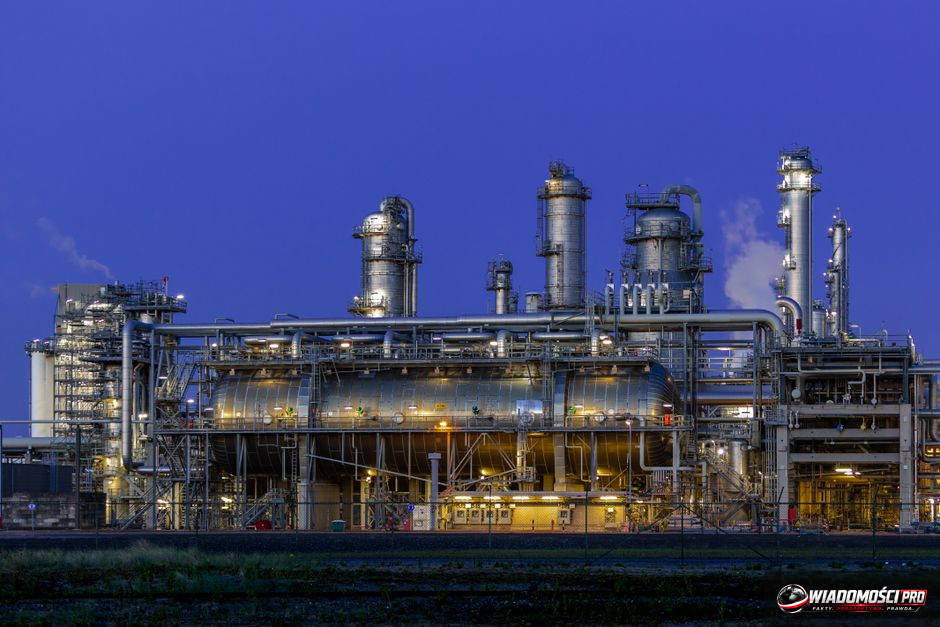
Shell has recorded a 174% increase in margins and refinery operations at over 100% capacity, setting an extremely high benchmark for PKN Orlen ahead of the publication of its results in a week. Investors who had been calmly awaiting the report from the Płock-based concern must now, following today's data from London, verify their expectations regarding operational profitability. The British giant has shown that current market conditions are not an obstacle, but a tool for generating cash, which forces Orlen to respond with concrete financial indicators.
Record results for Shell: operational ruthlessness
Shell has published its financial report for the second quarter of 2026, which goes beyond the standard framework of market forecasts. A key indicator is the 174 percent year-on-year increase in refining margins. In the petrochemical industry, where margins are often subject to fluctuations resulting from the difference between the price of Brent crude and the cost of finished products, such a sharp jump testifies to flawless optimization of input processes and the ability to diversify raw material sources.
The company did not stop at financial results. The board announced the resumption of a share buyback program, which is a message directed straight to shareholders. The liquidity generated in the past quarter allowed for the return of cash to the market instead of freezing it in investments with an uncertain rate of return. For stock market analysts, this is proof that Shell has navigated through a period of high raw material price volatility with maximum profit for equity.
In the context of Orlen, which will publish its results in a week, Shell's report becomes a mirror. The market will now compare the efficiency of the Płock refineries with what the British have achieved. If the Polish concern does not demonstrate similar cost discipline, investors may react with a sell-off of shares, fearing that the national champion is losing ground to European leaders in terms of asset management efficiency.
174 percent margin jump: the mechanism of advantage
The 174 percent margin increase is not a result of market chance, but the effect of operational discipline. In the second quarter, Shell focused on maximizing the yield from every barrel of oil processed. In refining processes, this means optimizing the so-called crack spread, i.e., the difference between the price of oil and the price of finished products such as gasoline or diesel. The British likely utilized better access to cheaper grades of oil or higher efficiency of hydrocracking installations, which allowed them to outpace the competition in unit margins.
For an investor observing Orlen, these 174 percent represent a reference point for the refining margin, which is the main profit driver for the Polish company. Recent quarters have shown that Orlen has been dealing with high operating costs and challenges in supply logistics. Now, the market will expect concrete numbers: what was Orlen's refining margin in the same period? If it turns out to be significantly lower, analysts will begin to ask questions about the efficiency of the raw material procurement process and the fixed cost structure of the Płock concern.
Shell's ability to extract such a high margin indicates that the fuel market in Europe is not a uniform battlefield. There are companies that can squeeze above-average profits from the market thanks to better management of their product portfolio. Orlen, being a company with a much more complex operational structure—combining refining, petrochemistry, extraction, and retail trade—must prove that this diversification does not lower its efficiency in the refining segment.
Refineries at full speed: operating at over 100 percent capacity
Operating refineries at a level exceeding 100 percent of nominal processing capacity is a technical feat that requires perfect logistics. In practice, this means that installations are running without maintenance downtime, with maximum catalyst load, and with full utilization of terminal logistics capabilities. Shell has proven that in a period of high fuel demand, every hour of installation operation is worth a fortune.
For Orlen, this information is an alarm signal. If the Polish refineries in Płock and Gdańsk were operating at a lower capacity level during this time, it means lost profits that cannot be recovered in subsequent quarters. Maintaining efficiency above 100 percent requires not only efficient equipment but also continuity of raw material supplies, which, given the current geopolitical situation, is a challenge for every player in the region.
The market will judge Orlen not through the prism of challenges, but through the prism of results. If it turns out that the Polish concern had to limit processing capacities due to logistics problems or raw material shortages, investors will interpret this as operational weakness. The benchmark set by Shell is ruthless: in the refining industry, only the highest technical efficiency is rewarded. Every shutdown, every day of lower production, translates directly into a decline in competitiveness against entities such as Shell.
A reference point for Orlen: what to expect in a week?
The publication of Orlen's results in seven days will be a moment of truth for investors. Shell has raised the bar so high that any explanation of weaker results by external factors will have less impact. The market wants to see if Orlen can compete with giants not only in the scale of operations but, above all, in the efficiency of refining processes.
Analysts point out that the refining margin is the most sensitive indicator. In the case of Orlen, which has a large share of the retail market, the refining margin must be correlated with the efficiency of fuel sales at stations. If Shell achieves a 174 percent margin increase, it means that its business model is capable of absorbing price fluctuations and turning them into profit. Orlen must demonstrate that its model is equally resistant to market turmoil.
It is worth noting how Shell approaches the management of its resources. The company not only produces fuel but also develops innovative projects, such as cooperation on hydrogen vehicles or the installation of 24/7 bottle recycling machines at stations in Świnoujście. Although these actions may seem secondary, they build an image of a modern and flexible company. Orlen must now prove that its massive structure is not an obstacle to achieving results on par with global leaders.
Share buyback as a signal to the market
Shell's decision to resume share buybacks is a classic move by a company that sees no better way to allocate capital than returning it to shareholders. In the fuel industry, a buyback is a very strong signal—it tells the market that the company is "overloaded" with cash and does not need it for investments in new extraction capacities, as current assets generate enough funds.
For Orlen shareholders, this is a point of contention. The Płock concern is conducting intensive investments in energy transition, which consumes huge financial resources. Shell, on the other hand, by executing a buyback, shows that its strategy is more focused on current profitability than on long-term business model change. Stock market investors will now compare both of these strategies. Should Orlen also focus on improving short-term indicators, or stick to an investment strategy that, in current conditions, may seem less attractive to the capital market?
This situation puts pressure on the Orlen board. Shareholders will ask about dividend policy and potential plans for share buybacks. If Orlen does not show results next week that would justify maintaining high capital expenditures, the pressure to change strategy toward a higher return for shareholders may increase significantly. Shell has created a precedent that is now becoming an investor expectation for all companies in the sector.
Prospects for the fuel sector for the second half of the year
The second half of 2026 promises to be a test for the entire refining sector in Europe. With its results, Shell has shown that the market is capable of generating high profits, provided that operational discipline is maintained. Other players, including PKN Orlen, must respond to this challenge.
The key question is: was Shell's 174 percent margin increase a one-off result, or the beginning of a trend that will persist for subsequent quarters? If it is a trend, then Orlen must adjust its refining strategies to benefit as much as possible from current market conditions. Every percentage point below Shell's efficiency will be valued by the market as a competitive loss.
The sector must also face challenges in the area of technology. Shell is not giving up on innovations, such as the Shell Eco-marathon, which allows the company to attract young engineering talent and build a technological advantage. Orlen, by engaging in similar projects, is also building its competencies, but in the short term, hard financial data determines stock market valuation. In a week, we will know the answer to whether the Polish concern can manage its assets just as efficiently in the face of record competitor margins.
What this means for you
Shell's results present investors with a choice: should they expect similar aggressiveness in profit generation from Orlen, or accept the specific strategy of the Polish concern, which is more focused on long-term transformation? For Orlen shareholders, the report in a week will be crucial. Weaker-than-expected margins may trigger selling pressure, while results similar to Shell's will confirm that the Polish company is capable of operating at the highest, European level.
Questions and answers
When exactly will we know PKN Orlen's financial results?
The publication of PKN Orlen's financial report is scheduled for a week from now, i.e., in the first days of August 2026. This will be a key moment for investors evaluating the company's position against European competition.
Why is refinery operation at over 100 percent capacity so important?
This indicator testifies to the maximum utilization of available infrastructure without downtime. This allows the company to profit from every unit of processed raw material, which, with high market margins, translates into record operational results.
Does Shell pay dividends or buy back shares?
Yes, Shell officially announced the resumption of share buybacks after publishing its results for the second quarter of 2026, which is read by the market as proof of the company's strong cash position.
What impact does Shell's strategy have on Orlen?
Shell sets the benchmark for the entire sector in Europe. Investors will now compare Orlen's refining margins and operational efficiency with Shell's data. Any significant deviation in favor of the British will exert pressure on Orlen's valuation.
Do Shell's results concern only the refining sector?
Although refining margins are key, Shell is a conglomerate. However, in the context of comparisons with Orlen, analysts focus mainly on the downstream segment, i.e., refining, where direct competition between the companies is most palpable.
Which data from Shell's report are most important for analysts?
The most important are the 174 percent margin increase and the maintenance of refinery operations above 100 percent of processing capacity. These two indicators show the company's ability to generate profits in current, demanding macroeconomic conditions.
Does Orlen have a chance to match Shell's results?
It depends on the efficiency of asset management in Płock and Gdańsk in the past quarter. The market will judge whether the Polish concern was able to manage costs and logistics just as effectively in the same market environment.
What does "share buyback" mean for an individual investor?
A share buyback usually increases earnings per share (EPS), which can lead to an increase in the stock price, as fewer shares remain in circulation for the same company value.
Are current refining margins sustainable?
Refining margins are highly volatile and depend on fuel demand and oil prices. Shell's success shows that in the current phase of the business cycle, companies with high operational efficiency can achieve above-average profits.
Is Shell Recharge key to financial results?
Currently, services such as Shell Recharge are an element of building an ecosystem, but the main profits in the reported quarter came from the refining and fossil fuel trading segment, as confirmed by data on refinery operations.
Sources
- Shell Q2 profit exceeded forecasts; company resumes share buyback By Investing.com - Investing.com Poland: Currency rates, cryptocurrencies, stock quotes
- Orlen's results in a week. Shell's margin grew by 174 percent, refineries operated at over 100 percent capacity - Bankier.pl
- Shell Recharge app disabled. Customers "doomed" to intermediaries - Elektromobilni.pl
- There is a trailer for the new "Ghost in the Shell"! The most faithful version? - Filmweb
- Lublin University of Technology students presented hydrogen vehicles before Shell Eco-marathon Poland 2026 - Lublin112
- International competition for young engineers will take place in Kamień Śląski - opole.tvp.pl
- The only 24/7 bottle recycling machine in Świnoujście. Return bottles at any time – at the Shell station at ul. Wojska Polskiego 99 - swinoujskie.info
Article prepared by the Wiadomości PRO editorial team with the support of artificial intelligence. Facts come from the sources listed above.



Komentarze (0)
Ładowanie komentarzy...