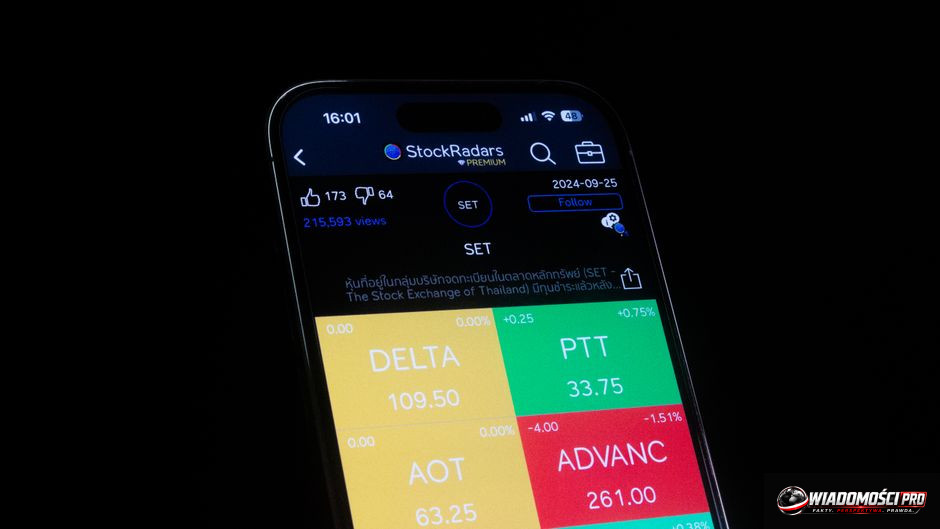
The Żabka stock price, which soared following reports on July 16 about interest from 7-Eleven, is currently under downward pressure after the confirmation on July 27 that negotiations had definitively broken down. Investors who had driven the company's valuation up by 12.4% in the middle of the month had to face an 8.7% correction in trading on Monday, July 27. This marks the end of a short-term bull run based on the expectation of an acquisition premium, which in practice turned out to be merely a speculative rally.
Chronology of the failure: from euphoria to disappointment
It all started on Thursday, July 16, 2026. The website pb.pl reported on the interest of the owner of the 7-Eleven chain in entering the structures of Żabka Group. The market reacted instantly. Capital flowed into the company, driving the price up by a double-digit value over a few sessions. Investors assumed that the Polish convenience chain would be absorbed by a global player, which would open the door to international expansion and the optimization of operating costs on an unprecedented scale.
This scenario ceased to be relevant on July 25, 2026. Business Insider Polska and Wiadomości Handlowe reported that Seven & i Holdings had withdrawn from the talks. The Japanese giant, known for its conservative approach to mergers and acquisitions, decided not to continue the dialogue. The lack of an official statement regarding financial details or strategic barriers caused the market to begin interpreting the information silence on its own.
The weekend of July 25-26 brought clarification of the position. On Sunday, July 26, the Omnichannel News website confirmed the definitive end of the talks. The following day, Monday, July 27, brought an avalanche of reports from the market. Strefa Inwestorów, Inwestycje.pl, and stockwatch.pl unanimously confirmed that Seven & i Holdings had closed the project. Wyborcza.biz pointed to the direct translation of these reports into the company's stock market situation. Investors who had counted on a quick profit resulting from the announcement of the transaction began to sell off their holdings en masse.
GPW reaction: How the market priced the lack of a merger
Żabka Group securities reacted to the announcement on July 27 with an 8.7% drop. This is a correction that largely offsets the gains from the second half of July. The dynamics of the changes show that the shareholder structure in recent days has shifted from long-term investors toward short-term players looking for arbitrage.
Technical analysis shows that the trading volume from July 16-24 was significantly higher than the average for the previous quarter. This means that demand was stimulated mainly by the hope for a tender offer for shares. When that hope disappeared, supply exceeded demand.
The valuation mechanism in this case was based on two pillars:
1. Fundamental valuation, based on the chain's operating results.
2. Acquisition premium, i.e., the bonus paid by a strategic investor for control of the company.
The fundamental valuation remains unchanged, while the acquisition premium was zeroed out on Monday. Institutional investors holding blocks of shares had to quickly recalculate the value of the company. If Żabka's business model does not assume synergies with 7-Eleven, then the previous price was overvalued by the speculative margin.
The scale of the 8.7% drop shows that the market still values Żabka higher than it did before July 16. This means that some capital believes in the company's independent growth or assumes the appearance of another investor in the future. However, this is pure speculation that has no basis in the facts provided by Seven & i Holdings. The Japanese group clearly indicated that it is looking for other investment opportunities, which suggests that it was not Żabka that was the goal in itself, but the convenience market as such.
Why did the Japanese say 'no'?
Seven & i Holdings is an entity that manages thousands of locations around the world. Decisions about acquisitions on this scale are made based on rigorous audits (due diligence). Although financial details remain confidential, conclusions can be drawn from the very nature of the withdrawal from the talks.
The Japanese conglomerate focuses on specific logistical and technological standards. If the audit revealed discrepancies in the vision for development or if the valuation expected by Żabka's owners was too high in relation to potential synergies, then breaking off negotiations was the only rational step. In business of this caliber, there is no room for sentiment. If the numbers don't add up, the deal doesn't happen.
Pragmatism shines through in the communication from Seven & i Holdings. The company is not looking for a "rescue" for its business model, but an opportunity for expansion. If they decided that Żabka does not fit their current portfolio, it means that the Polish operating model – although unique on a national scale – may have proven too difficult to integrate with Japanese supply chain management systems.
For investors observing this situation, it is a signal that Żabka is perceived through the prism of its specifics. This is not a technology company with unlimited scalability, but a retail chain burdened with high last-mile logistics costs. Any attempt to acquire such a company must take into account huge future capital expenditures.
Żabka's prospects: An independent path of development
The end of the talks on July 27 presents the company's management with a challenge. The market now expects a clear plan for the coming quarters. Until now, the growth narrative was supported by the possibility of an alliance with 7-Eleven. Now, that protective umbrella has disappeared.
The company must prove that it can increase profitability while simultaneously expanding the number of locations. This is a difficult task in the face of wage pressure and rising energy costs, which affect every retail operator in Poland. Without the support of foreign capital, Żabka is dependent solely on cash flows from operating activities.
Key areas that analysts will focus on in subsequent reports:
- The pace of opening new stores (will the company maintain aggressive expansion?).
- Margin on private label products (the main source of competitive advantage).
- Net debt in relation to EBITDA.
If the management does not show increased efficiency, the market may continue to correct the valuation. The lack of a strategic investor means that every subsequent zloty spent on development comes from profit or debt, which is much more expensive than financing from the equity of a strong partner.
From a market perspective, Żabka returns to the role of a "growth" company, but without the guarantee of global success. Investors who bought shares around July 16 must now decide whether their investment horizon allows for waiting for organic growth, or if they prefer to move capital to companies with a more predictable dividend.
Expert voices: What's next for the Żabka Group valuation?
Analysis of the situation after July 27 indicates a clear division among analysts. On one hand, there are voices about the undervaluation of the potential of the Polish convenience market. On the other – warnings against the so-called value trap.
Experts emphasize that in recent years, Żabka has become almost synonymous with modern retail in Poland. However, the stock market prices the future, not a success story. The lack of an agreement with 7-Eleven is, for many analysts, proof that the company's valuation may have been too optimistic even before the gains from mid-July.
It is worth noting how investment funds reacted. Many of them did not take positions in anticipation of the end of the negotiations, which suggests that they were not convinced of the success of the transaction. Now that the situation is clear, funds may begin to stabilize the price by buying shares at the bottom if they believe that the operating fundamentals are strong enough to defend the price against further decline.
The risk that shareholders must face is potential stagnation. When the topic of acquisition disappears, the pressure for rapid value growth also disappears, which often results in a "sideways trend" on charts. Investors do not like uncertainty, and the lack of a new strategic investor on the horizon means that it will take years, not weeks, to wait for another such large movement in the stock.
Summary: Is this the definitive end?
The status of the negotiations between Żabka Group and Seven & i Holdings was finally clarified on July 27, 2026. After several days of speculation, the market received confirmation: there will be no merger. The lack of any suggestions from Seven & i Holdings regarding the resumption of talks definitively closes this chapter.
For the retail investor, this is a lesson about information risk. The stock price, which lived on the hope of the entry of Japanese capital, had to confront the fundamentals of the business. The 8.7% drop on the day the information was confirmed is painful, but it represents a natural correction of the acquisition premium. The market does not like a vacuum, and in this case, the vacuum was filled by a return to a sober calculation of financial results.
A difficult time lies ahead for Żabka's management. Every subsequent quarterly report will now be read through the prism of the company's independence. Will the company cope without the know-how flowing from Tokyo? Is the growth rate that delighted the market sustainable without external financing? We will learn the answers to these questions in the coming months, not in press releases.
At this moment, Żabka remains a leader in its segment, but its stock market "bonus" has evaporated. Investors must come to terms with the fact that the bull run fueled by rumors of a global merger has become history. The question remains whether the company will find a new growth catalyst that will allow it to regain the trust of long-term capital.
What this means for you
For the individual investor, this means a return to a strategy based on ratio analysis (P/E, EV/EBITDA). If you were planning to buy shares solely with the intention of a tender offer, this situation makes the investment pointless. If you believe in Żabka's business model, the current correction may be an opportunity to buy shares at a lower price, provided that the company's fundamentals remain intact.
Questions and answers
Why did Seven & i Holdings give up on investing in Żabka?
The Japanese conglomerate made the decision to end negotiations, which was officially confirmed on July 27. Although the details are not known, the company announced its desire to look for other investment opportunities in the market, which suggests a lack of agreement on strategic issues or valuation.
How did the Żabka stock price react to this information?
After the gains on July 16, which drove the price up by 12.4%, the confirmation of the failure of the talks on July 27 caused the price to fall by 8.7%. The market reacted with a sell-off of shares in response to the loss of the acquisition premium.
Does Żabka currently have plans for another strategic partner?
The company has not published any information about looking for another investor. Currently, the management is focusing on the independent development of the chain and further operational expansion.
What data is key for an investor in this situation?
Key now are the company's quarterly results, operating costs, and the growth dynamics of the number of new stores. Investors should monitor net debt and operating margins, which will show whether the company can grow independently in a demanding macroeconomic environment.
Does a price drop of 8.7% mean that the shares are now cheap?
This drop is merely a correction of the speculative premium, not a buy signal. The company's valuation must be recalculated based on pure operating profitability, without assuming support from a global retail giant.
What's next for the quotes on the GPW?
The further direction of the price depends on the company's ability to implement sales plans without external support. The market will wait for a statement from the management regarding the strategy for the coming years, which will be crucial for establishing a new equilibrium level for Żabka Group shares.
Can we count on a return to talks in the future?
In the official communications from Seven & i Holdings, there are no indications of a desire to resume the dialogue. The market treats these negotiations as definitively closed.
Sources
- Japanese 7-Eleven gives up on investment in Żabka - Strefa Inwestorów
- 7-Eleven gives up on investment in Żabka Group - Inwestycje.pl
- Seven & i Holdings gives up on investment in Żabka Group - stockwatch.pl
- Sudden turn. Japanese giant gives up on Żabka. We learned the details - Business Insider Polska
- Talks regarding the future of Żabka have collapsed. The company feels the effects on the stock market - Wyborcza.biz
- 7-Eleven without Żabka. Japanese giant closes negotiations and looks for another opportunity - Wiadomości Handlowe
- Owner of 7 Eleven wants to enter Żabka. Stock price up sharply - pb.pl
- Negotiations ended. Japanese tycoon will not invest in Żabka - Omnichannel News
Article prepared by the Wiadomości PRO editorial team with the support of artificial intelligence. Facts come from the sources provided above.

Komentarze (0)
Ładowanie komentarzy...