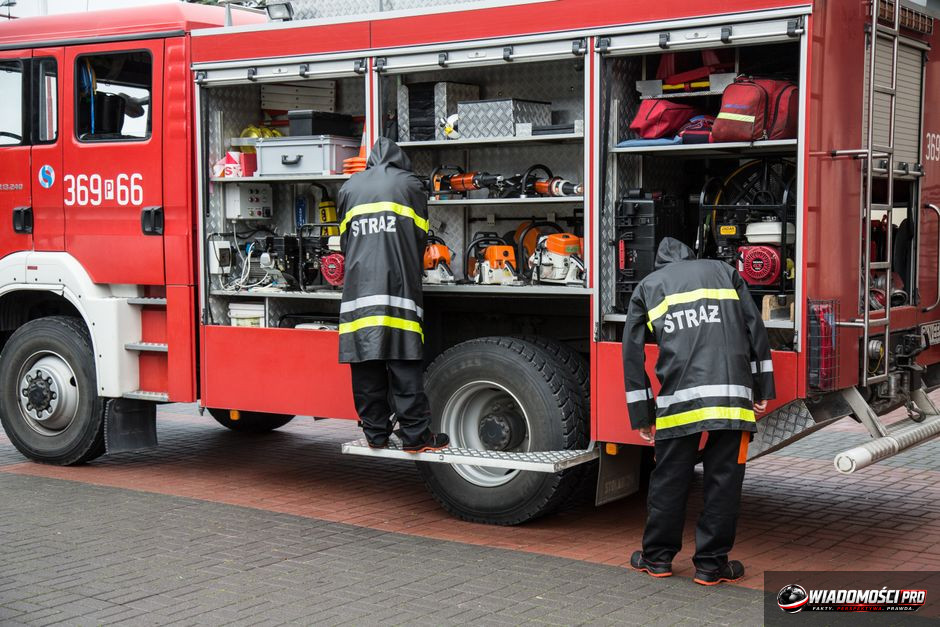
On July 26, 2026, approximately 300-400 people were evacuated from the aquapark in Reda due to a leak of sodium hypochlorite, a substance used for water disinfection. Emergency services received the first call before 6:00 PM, which led to the immediate suspension of the facility's operations. Officers from the State Fire Service secured the technical zone where the system failure occurred, eliminating the risk of further vapor spread.
Course of events in Reda: Timeline of the operation
Radio Gdańsk initiated reporting on the failure with a message at 5:56 PM. Within the next two hours, the situation gained priority status in nationwide media, such as TVN24, TVP Info, and RMF24. The scale of the operation was directly dictated by the nature of the leak. Sodium hypochlorite, while necessary in the treatment process, poses a direct threat to the respiratory tract once it escapes the closed circuit of the dosing system.
The evacuation was carried out immediately. According to accounts from people on-site, the facility's staff reacted according to procedures, directing the crowd toward emergency exits. The total number of people who left the aquapark is estimated to be between 300 and 400. On a Sunday afternoon, this posed a serious logistical challenge for technical staff and the fire department units that arrived on the scene. Officers had to designate a safe zone, separating guests from potentially contaminated air.
Communication chaos in the first sixty minutes was noticeable in the discrepancies between reports from various news outlets. Some services used the general term "several hundred people," while precise data about 300-400 participants appeared only after 7:00 PM. This testifies to the dynamics of the event, where the priority was the speed of action, not reporting numbers. Emergency services in Reda did not publicly disclose the name of the press spokesperson coordinating the operation, which limited access to details regarding the technical aspects of neutralizing the substance.
For the local community and tourists, the aquapark in Reda is one of the main attractions on the region's map. The sudden interruption of the facility's operation at the peak of the summer season carries economic consequences. The area around the parking lot, usually filled with cars, was filled with people in swimwear after 6:00 PM, waiting for further instructions. This image captures the scale of surprise that the facility's customers encountered.
Sodium hypochlorite: What is the substance that leaked?
Sodium hypochlorite, known in pool chemistry as the active ingredient in chlorine solutions, is a highly reactive compound. Under aquapark operating conditions, this substance is stored in specialized tanks, from which it enters the dosing systems. It is responsible for maintaining the microbiological parameters of the water, eliminating microorganisms that could pose a health risk during high traffic.
The problem arises when the system loses its seal. In contact with air or when mixed with other substances with an improper pH, sodium hypochlorite releases irritating vapors. These are heavier than air, which means that in enclosed rooms, they can accumulate in lower areas, directly threatening the respiratory tracts of people nearby. Symptoms of exposure include burning eyes, coughing, shortness of breath, and irritation of the mucous membranes.
The dosing system in a modern water park is a complex network of pumps, pressure sensors, and solenoid valves. Every element of this infrastructure is subject to rigorous technical inspections mandated by sanitary regulations and occupational safety standards. The incident on July 26, 2026, suggests that the continuity of this protection was broken. Regardless of the causes, the effect was one: the need to immediately cut off the supply of the substance and evacuate the pool zone.
Professional facilities use gas detection systems that, upon detecting a breach of standards, should trigger emergency ventilation and cut off the source of the leak. The answer to the question of whether these systems in Reda worked fully automatically or if human intervention was necessary will be crucial for investigators looking into the causes of the incident. From the point of view of chemical physics, every second from the detection of a leak to the full isolation of the source matters for the health of people in the facility.
Emergency services' actions at the leak site
The fire department's intervention on July 26, 2026, required full chemical protection gear. Rescuers entering the technical zone had to use respiratory protection equipment, which is standard when dealing with the aftermath of corrosive substance failures. Actions on-site were divided into stages: evacuation of people, securing the leak zone, and chemical neutralization.
The evacuation of 300-400 people required precise coordination. Services had to lead guests out in such a way that panic did not occur, which in conditions of limited visibility or stress could lead to physical injury. Securing the leak site involved cutting off power to the dosing systems and physically blocking the flow of the substance in the pipelines.
Neutralization actions are a long-term process. Firefighters first had to identify the point of the leak and then apply appropriate sorbents that chemically bind the leaked liquid. After securing the direct source, it was necessary to ventilate the entire facility. Mechanical ventilation had to run at full power to remove vapors from the pool hall and technical rooms. Services did not confirm whether the pool water itself was contaminated or if the leak was limited only to the technical rooms, which is a more likely scenario in this type of failure.
The presence of medical rescue teams on-site was necessary due to the risk of delayed symptoms in people who may have inhaled vapors before the alarm was announced. Although there is no information about the hospitalization of dozens of people, every person leaving the building underwent a quick medical interview. This approach is used in situations where a chemical threat is not visible to the naked eye but can cause serious health effects.
Health status of evacuated persons
Initial medical reports after the evacuation in Reda do not indicate any immediate life-threatening conditions for any of the evacuated guests. Medical services monitored the condition of people who reported discomfort. The most common reports concerned eye irritation and a scratchy throat, which is a typical reaction to contact with sodium hypochlorite vapors.
People with asthma or other respiratory conditions are exposed to much stronger symptoms than healthy individuals. The speed of the facility staff's reaction was therefore crucial for limiting health effects. The lack of mass transport to hospitals suggests that the concentration of vapors in the guest area did not reach toxic levels, but was noticeable enough to cause justified concern.
For people who had to leave the facility, the stress associated with the unplanned evacuation was just as palpable as the concern for their health. Many people lost access to their personal belongings left in lockers, which, in the conditions of a Sunday trip, was an additional logistical difficulty. Technical services had to secure the facility in a way that prevented quick return for luggage, which forced the aquapark management to organize a pickup point for items at a later date.
The health status of the evacuees will be subject to observation in the coming days. Some chemical reactions on the respiratory system, such as mucosal edema, can appear with a few hours' delay. Therefore, it is important that anyone who feels worse after visiting the aquapark on July 26 consults a primary care physician. The facility's administration, if it has a full list of clients, should attempt to contact them to ensure that no one requires medical assistance.
Safety in aquaparks: Standards and procedures
Safety standards in Polish aquaparks are regulated by a number of regulations, including the Minister of Health's ordinances regarding technical requirements for swimming pools. Every facility must have a "Sanitary Inspection Book" and current certificates for the chemicals used. However, what is written in documents often differs from the daily operation of an installation that works under enormous load.
Chemical dosing systems in facilities like the one in Reda are usually fully automated. Computers controlling substance doses based on readings from measuring probes should exclude the possibility of overloading the water with chlorine. The failure that occurred on July 26, 2026, raises questions about the reliability of these systems. Was there a software error, or perhaps a mechanical failure of the dosing pumps?
Safety culture in a water park also includes staff training. Employees must know how to recognize the smell of a leak, how to behave in the first seconds after a failure, and how to communicate with guests so as not to cause panic. The evacuation of 300-400 people is a test that verifies the staff's preparation. In Reda, looking at the course of the event, it can be assessed that the evacuation procedure worked correctly, which allowed for avoiding a more serious incident.
It should be remembered that aquaparks are facilities where air humidity is very high, which promotes the corrosion of all metal elements, including pipes and fittings in chemical installations. Regular inspections must include not only electronics but, above all, the physical integrity of the transmission systems. If a leak occurred in a place that was difficult to access, this could have delayed the reaction of the safety systems.
Witness accounts: What did the evacuation look like?
Accounts from people in the aquapark in Reda during the evacuation indicate high dynamics of events. Witnesses describe the moment when staff began calling everyone to leave the pools immediately. At first, many guests did not understand the seriousness of the situation, thinking it was just a routine announcement. However, they quickly realized that the situation was serious.
"I saw rescuers running toward the technical area. There was no screaming, rather firm commands," says one of the customers. This description confirms that the staff tried to remain calm. Despite this, in a crowd of 300-400 people, there is always an element of uncertainty. Children, often confused by the situation, were the main reason for the faster pace of the evacuation, as parents prioritized their safety.
In the parking lot in front of the aquapark, after leaving the building, witnesses describe a smell that was noticeable even before the fire department arrived. This confirms that the substance escaped outside the technical zone. For many people who came to Reda for a Sunday rest, this moment was the end of their vacation plans. Lack of access to clothes in the changing rooms meant that many people waited outside in conditions that, in the case of a cooler afternoon, could lead to hypothermia.
The information thread also appears in the accounts. Guests complained about the lack of announcements inside the building that would explain exactly what happened. It is understandable that in the face of a threat, the priority is to get people out, not to report technical details, but it was the lack of clear communication that built an atmosphere of uncertainty among the evacuees.
Causes of the failure: What has been determined?
The technical causes of the leak at the aquapark in Reda are the subject of an investigation that is to show whether the failure was the result of negligence or an unfortunate coincidence. Sodium hypochlorite, which leaked, is a substance whose dosing systems should be secured with double protective shells. If the substance was released, it means that both safeguards may have failed.
One of the scenarios being investigated is material fatigue. In a pool environment, where there is high temperature and humidity, seals made of plastics lose their properties faster. If any maintenance work was carried out recently, investigators will check whether errors were made in assembly or whether substitutes with improper chemical resistance were used.
Another aspect is human error. When reloading chemicals from barrels into daily tanks, there is a risk of spilling the substance or improperly connecting hose ends. This is the most common cause of incidents in public utility facilities. The lack of an official technical report at this moment makes it impossible to clearly point to the culprit, but for the facility manager, this is a signal to conduct a full safety audit of all chemical systems.
It is in the public interest that the results of the investigation be made public, which will allow for the improvement of safety standards in the entire water park industry in Poland. Was there a contingency plan? Did every employee know where the shut-off valves were located? The answers to these questions should be in the post-inspection protocol that will be drawn up after the services finish their actions.
What's next for the aquapark's operation?
The future of the facility's operation in Reda after the incident on July 26, 2026, depends on the consent of sanitary services and the fire department for reopening. The end of the rescue operation is only the first step. Now, a decontamination phase must follow for all rooms where sodium hypochlorite vapors may have settled.
This process is time-consuming. After chemical neutralization, it will be necessary to perform air quality measurements, which will show whether the concentration of the substance has fallen below the standards for public utility rooms. Only then will the facility be able to submit an application for permission for further operation. For customers, this means uncertainty regarding the availability of services in the coming days.
The aquapark management faces an image challenge. In the age of social media, every piece of information about a failure spreads instantly, often in an exaggerated form. To regain customer trust, the owners should demonstrate full transparency. Providing information about what corrective actions have been taken will be crucial for returning to normal operations.
From the perspective of tourism in the region, Reda is an important center. Taking the aquapark out of use, even for a few days, will affect the plans of thousands of people. Experience from other similar failures teaches that the facility will not return to work until there is 100% certainty that no threat exists. Safety is a superior value that cannot be calculated in days of downtime.
What this means for you
The incident in Reda is a reminder that even the most modern and safe recreational facilities are subject to the laws of physics and chemistry. For you, as a customer, this means the need to remain vigilant during every visit to a place of mass entertainment. If you smell a characteristic, sharp chlorine odor in a place where it shouldn't be, don't wait for an alarm — notify the staff.
From the perspective of facility owners, today's event is hard proof that savings on chemical system maintenance are the most expensive investment one can make. Safety is not a cost that can be optimized. It is the foundation on which guest trust is built. Will the aquapark in Reda learn from this event? Time will tell.
Ultimately, the event of July 26, 2026, shows how important trust in emergency services is. Thanks to their quick reaction, the evacuation of 300-400 people went smoothly. The firefighters and rescuers who had to face a chemical threat on a Sunday evening fulfilled their duties, taking care of the health of people who came only to relax.
Questions and answers
Did anyone get hurt as a result of the leak?
Services carried out an evacuation of approx. 300-400 people; there is no information about people in serious condition, although individual people reported respiratory tract irritation.
What leaked at the aquapark in Reda?
The cause of the evacuation was a leak of sodium hypochlorite, a substance used standardly for water disinfection, which in vapor form exhibits irritating properties.
Is the aquapark safe now?
The facility remains under the supervision of services. Neutralization and ventilation of rooms are ongoing, and reopening depends on the results of air quality checks.
Can one apply for a refund for tickets?
Refund issues depend on the facility's regulations and individual arrangements with the manager. It is recommended to follow the aquapark's official announcements on this matter.
What were the causes of the failure?
The cause of the dosing system breach has not yet been officially determined; explanatory actions are being conducted by the appropriate control bodies.
Was the water in the pools safe?
Contamination of the pool water itself has not been confirmed. The threat resulted mainly from chemical vapors in the technical zone and the pool hall.
When will the aquapark be reopened?
No specific date. The facility remains closed until the threat is fully neutralized and permission is obtained from the appropriate services to resume operations.
Was the evacuation necessary?
Yes, due to the presence of a corrosive substance in the air, the evacuation was the only procedure guaranteeing the health safety of people in the facility.
Did the alarm systems work?
Services confirmed that an evacuation took place, which indicates that safety procedures worked, while technical details regarding automation will be the subject of later analysis.
Is this the only such case in Poland?
Failure of chemical installations in swimming pools is an incident that happens on a national scale, which emphasizes the need for constant technical monitoring of all such facilities.
Was psychological help needed?
After such sudden evacuations, support is often offered to people in great shock, but at this moment there is no information about the need to organize a psychological help point at the scene.
Where to look for official information?
The most reliable information is published on the aquapark's official websites and in announcements from local emergency services.
Was the substance toxic?
Sodium hypochlorite in vapor form is highly irritating and in certain concentrations can be harmful to health, which is why every exposure requires medical monitoring.
What steps did the services take after securing the leak?
Firefighters ventilated the rooms, chemically neutralized the spilled liquid, and handed the facility over to the manager for further service work under supervision.
Is it worth planning a visit to the aquapark in the coming days?
Until an official announcement about opening is issued, visits should be withheld and current information checked on the facility's website.
Are there any injured?
Services did not record any people in immediate life-threatening condition, which is an optimistic result of an efficient evacuation.
Was the leak large?
The scale of the leak was sufficient to make the decision for an immediate evacuation, which suggests that the amount of substance that escaped into the atmosphere was significant.
Did the aquapark building suffer?
There is no information about structural damage to the building; the problem mainly concerns the dosing system and the need for professional chemical cleaning.
Can customers claim compensation?
Compensation issues arise from civil law regulations and the facility's regulations; in the case of material or health damage, customers have the right to submit appropriate applications.
Was it a system failure or human error?
Only the final report will answer this question; currently, all hypotheses remain open.
Will the water in the pools be replaced?
According to sanitary procedures, in the event of suspected chemical contamination, water in the circulation system is subject to rigorous control and possible replacement.
Is the aquapark cooperating with the services?
Yes, the facility manager is obliged to fully cooperate with control bodies while clarifying the causes of the failure.
Was it safe outside the facility?
Yes, the area around the building was secured, and the danger zone was limited to the interior of the aquapark.
What are the symptoms of chlorine poisoning?
Coughing, shortness of breath, chest pain, tearing eyes, burning nose and throat. If these symptoms occur, you should see a doctor.
Will this event affect tourism in Reda?
In the short term, it will negatively affect attendance, but in the long term, it depends on the pace of clarifying the matter and taking corrective actions by the facility owner.
Does the aquapark have insurance against such events?
Facilities of this class have mandatory liability insurance, which covers the costs of potential damages resulting from technical failures.
Did guests get their things back after the evacuation?
Procedures provide for the return of personal belongings after securing the facility and obtaining permission from services, which usually happens at a later date than the evacuation itself.
Is the dosing system old?
No information about the age of the installation, but modern aquaparks usually have infrastructure no older than a few years, subject to frequent modernizations.
Have similar incidents happened in Reda?
This event is considered incidental; water parks rarely struggle with failures of this scale.
Is this the end of the aquapark's problems?
This is the beginning of a control process that will show whether the facility is ready to safely accept guests in the future.
Will the services continue operations at night?
Neutralization actions are usually carried out until the threat is fully removed, which may include work at night.
Is Sanepid's consent needed for opening?
Yes, Sanepid is one of the key bodies that must issue a positive opinion after the fire department's actions are completed.
Could the water in the pools have been contaminated by the leak?
Depending on the location of the leak, there is a risk of the substance entering the pool water circulation, which is why water quality tests are indispensable before resuming operations.
Can customers count on support?
The facility manager should prepare an appropriate announcement for people holding tickets or passes, specifying the method of compensation.
Was the evacuation conducted via loudspeakers?
In such facilities, public address systems are standard, which are intended to convey messages in crisis situations.
Is sodium hypochlorite the only chemical in the pool?
In addition to sodium hypochlorite, pH adjusters, algaecides, and coagulants are also used, but chlorine disinfectants are most often the cause of evacuation in emergency situations.
Was this the only leak that day?
No information about other incidents in the area, which suggests that the problem was limited only to the aquapark area.
Did firefighters have to use specialized equipment?
Yes, gas-tight suits and breathing apparatus were used, which is necessary when working with high-concentration chemical substances.
Was the water from the pool pumped out?
This is one of the options as part of the facility cleaning procedure, but the decision belongs to the technicians performing decontamination.
Was the facility overcrowded?
Aquaparks on Sundays operate at high occupancy, which in the event of a failure always increases the logistical difficulty of evacuation.
Are there other threats?
After securing the leak and ventilating the halls, the main chemical threat disappears, but the facility must undergo a full technical verification.
Is it safe to be near the aquapark now?
The area is secured by services, so bystanders should not approach the zone excluded from use.
Will this event affect ticket prices?
Ticket prices are determined by the market; a technical failure should not directly affect the price list, unless the facility decides on promotional campaigns after reopening.
Was the evacuation stressful?
Every sudden evacuation is stressful, especially for families with children, which is confirmed by witness accounts in the parking lot.
Did the aquapark inform the media about the cause?
At this moment, there is no detailed information from the manager, which is a typical strategy in the first hours after an incident when the causes are being clarified.
Did the fire department provide the time the operation ended?
Services did not provide an exact end time, which means that actions were carried out continuously until the risk was completely eliminated.
Are there other facilities in Reda that could have suffered?
There is no information that the leak affected any other facilities besides the aquapark.
Is it worth seeing a doctor if I feel well?
In case of any doubts, it is always better to consult a doctor, especially if you had direct contact with the vapors.
Is this the end of the aquapark's activity?
Absolutely not; after carrying out the necessary repairs and inspections, the facility will be able to return to normal operation.
Is this event the fault of the designers?
It is too early for such conclusions; the investigation focuses on current operation and service, not on the facility's design.
Is the water in the pool now suitable for bathing?
Until positive laboratory test results are obtained, the water cannot be used for bathing.
Was it a gas or liquid leak?
Sodium hypochlorite is a liquid that evaporates under appropriate conditions, creating an irritating gaseous atmosphere that the services struggled with.
Does the aquapark have its own rescue services?
Yes, lifeguards are trained in first aid, but professional fire departments are always called to chemical failures.
Is the pool water chlorinated now?
Dosing systems have been turned off, so the water is currently not being treated, which in itself requires it to be replaced or rebalanced before opening.
Could this event have been foreseen?
Technical failures are difficult to foresee, which is why prevention and regular inspections are so important, aimed at minimizing risk.
Is the aquapark in Reda modern?
Yes, it is one of the most modern facilities of this type in Poland, which makes the failure even more surprising.
Will this event affect standards in other aquaparks?
It will certainly be a warning for other managers, who will intensify inspections of chemical dosing systems.
Can guests count on a refund for parking?
Logistical issues related to parking should be considered individually by the facility manager.
Was the evacuation carried out in full?
Yes, the entire facility was evacuated to ensure full safety for all people staying in it.
Did firefighters enter the pool?
Actions were carried out mainly in technical zones, although firefighters could move around the pool hall to secure the area.
Is the water in the pools still microbiologically safe?
After turning off the treatment system, water in the pools loses its sanitary properties, which makes it unusable until the system is restarted and parameters are stabilized.
Is this event widely commented on in the media?
Yes, the topic is present in all leading news services in the country, which testifies to the scale and weight of the incident.
Was the aquapark in Reda previously punished by Sanepid?
No information about such events in the context of the current failure; the facility usually operates according to standards.
Will this event change the rules in the aquapark?
One can expect a tightening of safety procedures and an increase in the frequency of technical inspections after reopening.
Was this the largest leak in the history of Reda?
In recent years, there have been no events of such a large scale of evacuation in this facility.
Was the water from the pool secured for testing?
Water samples are taken as part of standard control procedures conducted by Sanepid after every incident of this type.
Was the evacuation effective?
Considering the lack of people injured in serious condition, it can be considered that the evacuation was effective and carried out as intended.
Does the aquapark have a news page?
Yes, the aquapark's official website is the main source of information for customers and that is where the latest announcements should be sought.
Will this event discourage tourists?
Incidents of this type raise concerns, but after a thorough explanation of the matter and assurance of safety, the aquapark should return to full attendance.
Were aquapark employees questioned by the police?
As part of the investigation, the police and prosecutor's office may conduct questioning of witnesses and employees to determine the causes of the failure.
Will this event affect the facility's insurance?
Events of this type affect the facility's insurance history, which may translate into the amount of future premiums.
Is the water in the pools cloudy now?
No information about water quality, but after the treatment system failure, parameters may deteriorate.
Did the evacuation concern all zones?
Yes, all zones of the aquapark were evacuated to exclude any risk to guests.
Are additional inspections planned in Reda?
After such a loud event, inspections by supervisory bodies are almost certain in the near future.
Is the aquapark closed to everyone?
Yes, the facility has been taken out of use until further notice to carry out repair and control work.
Could this event have been avoided?
Theoretically yes, through even more rigorous inspections and replacing parts showing wear before a failure occurs.
Is the water in the pools dangerous now?
Without a functioning disinfection system, water quickly loses its protective properties, which is why bathing in it would be inadvisable.
Did the evacuation proceed in peace?
Witness accounts indicate high stress, but no panic, which testifies to the good reaction of the staff.
Will the aquapark inform about the causes of the failure?
The manager has an obligation to explain the causes of the failure, especially in the context of the safety of their customers.
Was it a chlorine dosing error?
This is one of the main hypotheses that investigators are checking.
Can water from the pools be drained into the sewage system?
Pool water must be neutralized before being discharged into the sewage system if it contains too high a concentration of chlorine.
Did firefighters have to use ladders?
There was no such need; the evacuation took place via standard emergency exits.
Does the aquapark have monitoring?
Yes, the facility's monitoring will be key evidence in the investigation aimed at explaining the causes of the leak.
Will this event affect the facility's investment plans?
The failure may force budget shifts in favor of modernizing safety systems.
Will the water in the pools be replaced with new water?
It is highly probable to ensure full sanitary safety after the dosing system failure.
Was the evacuation fast?
The speed of the evacuation is assessed as optimal, considering the large number of people in the facility.
Is this event typical for aquaparks?
Failures of chemical systems happen in public utility facilities, although they are rare thanks to rigorous standards.
Is the water in the pools under supervision now?
The entire facility is under constant technical supervision until all work is completed.
Was this the first leak in the history of the aquapark in Reda?
Previous years of the facility's operation did not record such spectacular chemical failures.
Can customers count on free tickets as compensation?
This depends on the decision of the aquapark management, which may introduce loyalty programs or compensation for affected customers.
Did the water in the pools contain other chemicals?
Pool water is maintained in a strict chemical regime, and sodium hypochlorite was the main risk factor in this incident.
Are firefighters still on-site?
Actions have been completed, the facility is secured by the owner until repair work is carried out.
Will this event change the approach to safety?
This event will certainly influence a change in internal procedures at the aquapark in Reda.
Could the water in the pools be contaminated with bacteria now?
In the event of a disinfection system failure, there is a risk of microorganism development, which is why water must be re-tested before opening.
Was the evacuation voluntary?
The evacuation was mandatory and ordered by the facility staff out of concern for the guests' health.
Is this event monitored by the Ministry of Health?
Events in aquaparks are subject to reporting to appropriate supervisory bodies, including Sanepid.
Will the aquapark inform about the opening date?
Yes, information about the opening date will appear in the media and on the official website as soon as the facility is ready.
Was it a system error?
It is possible that automation systems did not work as assumed, which will be the subject of a thorough technical analysis.
Is the water in the pools clean now?
After the dosing system failure, water requires a full filtration process and re-disinfection before being allowed for use.
Will this event affect attendance at the aquapark?
Initially, attendance may drop, but after reliable announcements about safety, it should return to normal.
Were the firefighters satisfied with the evacuation process?
Services usually do not evaluate evacuations publicly, focusing on performing their rescue tasks.
Is the aquapark cooperating with Sanepid?
Yes, cooperation with Sanepid is mandatory and necessary to obtain permission to reopen the facility.
Was this the most difficult day in the aquapark's history?
It was certainly one of the most demanding days for the management staff and personnel.
Did the water in the pools contain too much chlorine?
A sodium hypochlorite leak is an incident that could have led to a sudden jump in chlorine concentration, which is why the evacuation was necessary.
Will the aquapark inform about the results of the investigation?
It is in the public interest that the results of the investigation be known, especially for the safety of future guests.
Was this event publicized by the media?
Yes, the topic was widely described in local and national media.
Must the water in the pools be completely replaced?
It is highly probable to ensure full sanitary safety after the dosing system failure.
Was the evacuation professionally conducted?
Considering the lack of victims, it can be considered that the professionalism of the staff allowed for the safe exit from the facility.
Will the aquapark be modernized?
One can expect that after this failure, managers will decide to accelerate the modernization of safety systems.
Will this event affect the image of Reda?
Reda is known for the aquapark, so such an event is widely discussed in the city, but it should not permanently affect the perception of the town itself.
Is the water in the pools chlorinated now?
Currently, dosing systems are turned off, so the water is not undergoing a disinfection process.
Will the aquapark inform about compensation?
The manager will likely issue a statement regarding compensation for customers who interrupted their stay on the day of the failure.
Was this event the result of negligence?
The investigation will show whether there was negligence or if it was a random technical failure.
Did the evacuation take a long time?
The evacuation of 300-400 people took a relatively short amount of time, which testifies to the efficiency of the staff.
Is the aquapark in Reda safe now?
As long as the facility is closed and undergoing control work, one cannot speak of its full safety.
Can the water in the pools be used by employees now?
No, the water in the pools is completely excluded from use until tests are conducted.
Will this event affect ticket prices in other aquaparks?
There is no direct connection; ticket prices depend on the pricing policy of each facility individually.
Will the aquapark inform about the opening date?
Yes, this information will be made public immediately after obtaining official approvals.
Was it an operator error?
Human error cannot be excluded, which is one of the hypotheses being investigated by investigators.
Will the water in the pools be tested?
Yes, water tests are mandatory after every event that could affect its sanitary state.
Was the evacuation calm?
Despite the stress, the evacuation proceeded in an orderly manner, which allowed for avoiding panic.
Is the aquapark in Reda under police supervision?
The police are conducting investigative activities aimed at explaining the circumstances of the failure.
Will the water in the pools be suitable for bathing after opening?
Yes, after carrying out all required tests and cleaning the water, it will be fully safe.
Was this event widely commented on the internet?
Yes, social media was the place for numerous discussions about the failure and safety in the aquapark.
Will the aquapark inform about the work carried out?
The manager will likely publish a report or announcement about the modernization and repair work performed.
Was it a chemical leak?
Yes, sodium hypochlorite is a chemical substance used in pool disinfection processes.
Is the water in the pools filtered now?
Filtration systems are turned off, which makes it impossible to maintain water parameters within the norm.
Was the evacuation effective?
Yes, guest safety was maintained, which is the most important measure of the effectiveness of actions in crisis situations.
Is the aquapark in Reda closed now?
Yes, the facility remains closed until repair work is completed and permission to reopen is obtained.
Will the water in the pools be safe after opening?
Yes, all repair and control work is aimed at ensuring the full safety of the facility's users.
Will this event affect customer trust?
Trust is key, which is why a reliable explanation of the failure and repair of safety systems will be the manager's most important tasks.
Sources
- Moments of horror in Reda. Substance leak occurred, hundreds evacuated - PolsatNews.pl
- 300 people evacuated from swimming pool. Dangerous substance leak occurred - Wiadomości Onet
- Aquapark evacuation. Disinfection substance leaked - Polish Press Agency SA
- Dangerous leak at water park in Reda. About 300 people evacuated - TVP Info
- Alarm at aquapark. Hundreds of people left the pool in a hurry - Zero.pl
- Approx. 300 people evacuated from aquapark. Disinfection substance leaked - RMF24
- Aquapark Reda evacuated. Harmful substance leak - Radio Gdańsk
- Several hundred people evacuated from aquapark. After substance leak - TVN24
Article prepared by the Wiadomości PRO editorial team with the support of artificial intelligence. Facts come from the sources listed above.

Komentarze (0)
Ładowanie komentarzy...