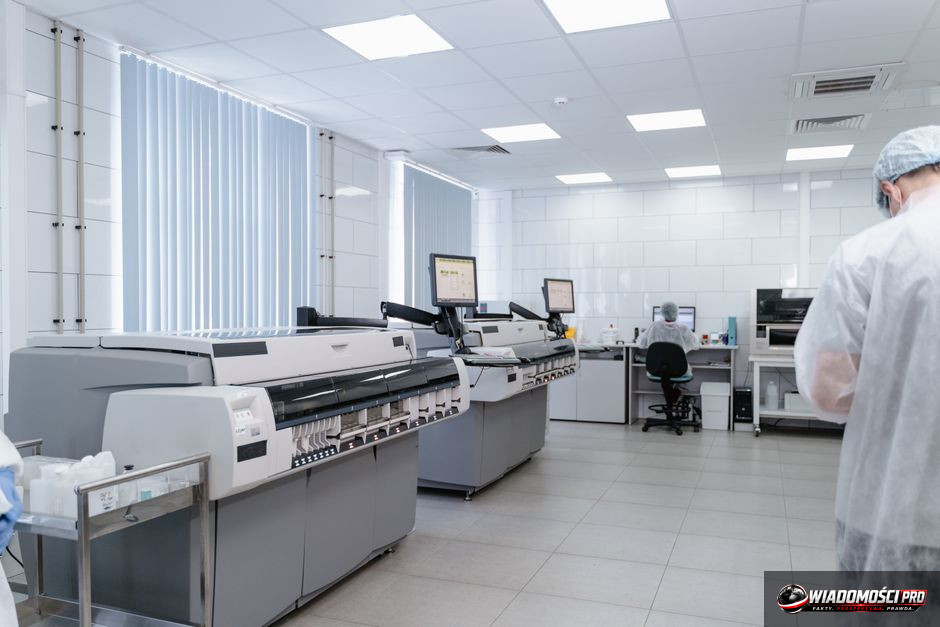
Yes, the International Institute of Analytical Chemistry of the PAS strengthens Poland's research potential through a unique structure focused on knowledge transfer, commercialization, and advanced research, including in the area of environmental protection. The Institute, which officially inaugurated its operations on July 24, 2026, in Toruń, represents an attempt to move away from the traditional academic model toward an entity closely linked to the country's economic needs. Official communications, including announcements by the President of the Polish Academy of Sciences on June 12, 2026, emphasized that the facility is intended to become a technological hub rather than merely a center for generating scientific publications.
Official inauguration: A new chapter for chemistry in Poland
Toruń became the site of the official opening of the International Institute of Analytical Chemistry of the PAS on July 24, 2026. This event, widely commented on in regional and academic media, concludes the formation process of the unit, which had been discussed since the middle of the year. The choice of Toruń as the seat of the institute is not accidental. The city possesses the appropriate research infrastructure, which was intended to serve as the foundation for the new facility. Unlike many PAS institutes that have functioned for decades in isolation from industry, the MIChA PAS has a mandate to engage directly in implementation projects.
Modern analytical chemistry is the foundation of environmental, pharmaceutical, and materials diagnostics. The Institute, in accordance with the declarations of the Academy's authorities, is to focus on providing precise data necessary to meet tightening EU standards. On the day of the opening, however, the names of the management staff and the unit's detailed operating budget were not made public. The lack of this data in source materials leaves the question of long-term research funding open. Transparency in this regard will be the first test for the new institution's leadership.
Instead of the traditional model, where success is measured by the number of citations, the MIChA PAS is to be evaluated through the lens of implemented technologies. This approach forces a change in the mentality of researchers who have previously been held accountable mainly for their publication record. In practice, this means that analytical chemists will have to cooperate with engineers and representatives of the private sector as early as the experimental planning stage. Such an approach to the problem is intended to prevent a situation where research results remain useless to the economy.
Unusual structure and strategic goals
The organizational structure of the MIChA PAS is the element that distinguishes it from other Academy facilities. The institute's statute provides for the introduction of mechanisms that have previously been rare in Polish science. The most important of these is the inclusion of industry representatives in the decision-making process, which is intended to ensure a constant flow of information about real market needs. The scientific council is to include experts from technology companies alongside distinguished professors, which forces the institute to be oriented toward application results.
Such a structure is a response to chronic problems with the commercialization of innovation. Many Polish patents, even those with high potential, end up in a drawer because there is no link connecting the laboratory to the production line. The MIChA PAS is intended to act as this missing link. The statute establishes a priority role for knowledge transfer, which in practice translates into an obligation to develop prototypes of analytical methods that can be licensed by external entities.
Realizing these assumptions, however, requires efficient administration that will not block scientific initiatives with overly complicated procedures. If the institute's structure proves flexible enough, it may become a model for other PAS units. Otherwise, it risks ossification in a bureaucratic machine. The success of this strategy will be determined not so much by the infrastructure itself as by the ability to attract business partners who will trust the Toruń-based unit enough to entrust it with their research and development projects.
Key research areas: Environmental protection
Environmental protection is the main pillar of the MIChA PAS's activities. In an era of growing climate challenges and the need for continuous monitoring of water, soil, and air quality, the demand for modern analytical chemistry methods is enormous. The Institute is to conduct research on the detection of trace amounts of toxic substances that are currently difficult to identify using standard techniques. This is a key task in the face of strict legal requirements imposed by regulatory bodies.
Research conducted at the Toruń facility is to primarily involve the development of rapid methods for detecting pollution in the field. Instead of sending samples to central laboratories, which involves long waiting times for results, the MIChA PAS intends to promote mobile solutions. Such an approach is extremely attractive to industry, which must constantly report the status of its emissions to the environment. Designing high-sensitivity chemical sensors is a direction that has a chance for rapid commercialization.
Additionally, the institute plans to analyze the long-term effects of the presence of new chemical substances in ecosystems. This knowledge is necessary for state administration when creating plans for the protection of areas threatened by degradation. If the Toruń center manages to develop certified research methods, it will become a key advisor to state institutions. In this area, the margin of error is zero, which means the institute must maintain the highest quality rigor. The lack of data on laboratory equipment in the source materials does not allow for an assessment of whether the facility already has equipment capable of achieving such ambitious goals, but the ambitions announced on the opening day are clear.
Knowledge transfer: From laboratory to industry
The activities of the MIChA PAS focus on translating theoretical knowledge into concrete solutions for business. On the day of the inauguration, it was emphasized that technology transfer has been part of the institute's mission from the first day of its existence. This means that every research project must have a so-called implementation path. Scientists do not receive grants for research that has no chance of practical application within a few years. This is a radical turn in the way research is funded within the PAS.
Cooperation with industry is intended to be two-way. On one hand, the institute receives orders for specific analyses; on the other, it proposes new methods that can improve production processes in chemical and pharmaceutical companies. Such an approach allows for faster adaptation to market changes. Toruń, thanks to the presence of a strong university center and the new PAS unit, can create an innovative ecosystem in which knowledge flows freely between the university, the institute, and business.
However, the success of this strategy requires time. The first effects of implementation work will be visible only after a full research cycle has been completed, which in analytical chemistry usually takes from two to four years. Difficulties in the scientist-entrepreneur relationship, resulting from differences in the perception of priorities, cannot be ruled out. Scientists strive for publications, entrepreneurs for profit. The role of the institute's management will be to mitigate these conflicts and maintain a balance between scientific rigor and economic requirements.
Why Toruń? The city's scientific potential
The choice of Toruń as the seat of the International Institute of Analytical Chemistry of the PAS by the President of the Polish Academy of Sciences is a decision that strengthens the city's position on Poland's scientific map. Toruń has long been associated with chemistry, which provides the appropriate personnel base in the form of qualified graduates and experienced scientific staff. This location offers the opportunity for close cooperation with local companies in the chemical industry, which may become the first recipients of the institute's services.
Consolidating research potential in one place is intended to increase cost-effectiveness. Instead of maintaining many scattered laboratories, focusing modern equipment in Toruń will allow for more complex and expensive analyses. This is an investment in quality, not quantity. The city gains a prestigious facility that can attract specialists from all over the country and even from abroad.
For the local labor market, the creation of such an institution means the emergence of jobs for high-class specialists. For the regional economy, in turn, it is an opportunity to raise technological standards. If the institute manages to build lasting relationships with local business, Toruń may become a competence center for the entire Kuyavian-Pomeranian region. This, however, requires consistency in action and avoiding the traps that other scientific centers have fallen into by focusing more on prestige than on real impact on the economy.
Development prospects and international aspirations
The development prospects of the International Institute of Analytical Chemistry of the PAS are closely linked to its ability to establish international cooperation. In analytical chemistry, standards are set at a global level, and participation in international research networks is a necessary condition for maintaining a high scientific level. The Institute, according to announcements, is to strive to obtain certifications allowing for the conduct of analyses accepted by foreign supervisory institutions.
In the coming years, the institute has a chance to become a leader in environmental diagnostics in Central and Eastern Europe. This is an ambitious goal, but achievable assuming that the facility quickly builds a brand based on reliability and speed of action. This, however, requires investment in staff development and constant equipping of laboratories with the most modern apparatus. Without a constant stream of funding, both from the state and commercial partners, maintaining a competitive advantage will be impossible.
The greatest threat to the facility's development is the pressure for quick results, which may lead to a decrease in the quality of research. The balance between the pace of work and its reliability is a critical success factor. Managing this relationship will require the institute's management to have great resistance to external pressure. If the MIChA PAS maintains a high standard, it may become a key partner for European environmental protection agencies, which will open the way to funding from international funds.
What this means for you
The establishment of the International Institute of Analytical Chemistry of the PAS in Toruń is a signal to Polish science that it is time for a radical change in the operating model. For the average citizen, this indirectly means better quality of water, soil, and air thanks to more advanced environmental monitoring methods. From the perspective of industry, the institute becomes a partner that can provide solutions improving the ecological efficiency of enterprises.
The catch remains the issue of transparency and management. The lack of information about the budget and the specific people responsible for the institute's success raises legitimate questions about the reality of the assumptions. If the facility becomes another bureaucratic entity, its impact on the economy will be negligible. If, however, the promises of a flexible structure and close cooperation with industry are implemented, Toruń will gain a center that will realistically raise the technological level of Polish chemistry.
In the near future, it will be crucial to observe the institute's first contracts. These will show whether the MIChA PAS can actually make money from its work or whether it will remain dependent on budget subsidies. Polish science desperately needs such "bridges" between the laboratory and the market, but building them is a tedious process prone to errors. The Toruń unit has a unique chance to become an example of a successful transformation, but it must prove its value in practice, not just in declarations.
Questions and answers
What exactly does the International Institute of Analytical Chemistry of the PAS do?
The Institute conducts advanced scientific research in the field of analytical chemistry, with a particular focus on environmental diagnostics, knowledge transfer, and the commercialization of research results for the industrial sector.
When did the facility officially begin operations?
The official inauguration of the International Institute of Analytical Chemistry of the PAS in Toruń took place on July 24, 2026.
Why is the institute's structure considered unusual?
This structure was designed in a way that forces the integration of science with the economy. It assumes the active participation of industry representatives in the work of the scientific council and the prioritization of commercial implementations in the process of accounting for the unit's research activities.
Are the names of the people managing the institute and the investment budget known?
The provided source materials regarding the inauguration did not state the names of the institute's management or the exact amount of the budget allocated for its operations and equipment.
What are the main challenges facing the new facility in Toruń?
The biggest challenge is the efficient transfer of knowledge from laboratories to industry and maintaining high research rigor while meeting market requirements. The facility must also prove its operational efficiency in realities that have previously favored theoretical work rather than practical implementations.
Will the institute's activities affect environmental protection in Poland?
Yes, by developing modern and rapid methods of pollution detection, the institute has the ambition to become a national center for environmental diagnostics, providing the tools necessary for effective monitoring and limiting the negative impact of chemical substances on ecosystems.
Sources
- International Institute of Analytical Chemistry of the PAS is already operating in Toruń. Research at the highest scientific level! - TVP Bydgoszcz
- Inauguration of the International Institute of Analytical Chemistry of the PAS in Toruń - Torun.pl
- International Institute of Analytical Chemistry of the PAS inaugurates operations - Forum Akademickie
- Prestigious scientific institution based in Toruń. It will conduct research, among others, in the field of environmental protection - Polskie Radio PiK
- International Institute of Analytical Chemistry opened. It has an unusual structure - Wyborcza.pl
- International Institute of Analytical Chemistry of the PAS established in Toruń - TVP Bydgoszcz
- MIChA PAS in Toruń: research, knowledge transfer, commercialization of science - Kujawsko-pomorskie.pl
- President of the PAS: decision made regarding the establishment of the International Institute of Analytical Chemistry in Toruń - Nauka w Polsce
Article prepared by the Wiadomości PRO editorial team with the support of artificial intelligence. Facts are derived from the sources listed above.



Komentarze (0)
Ładowanie komentarzy...