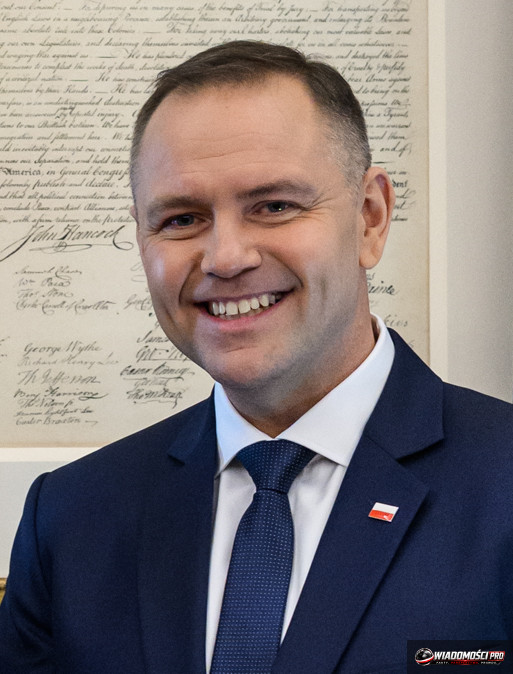
President Karol Nawrocki's decision to refer the windfall tax act to the Constitutional Tribunal means blocking exactly 4 billion PLN that was intended to bolster the state budget. These funds, included in this year's fiscal plan as guaranteed revenue, have suddenly become unavailable to the Ministry of Finance. This turn of events calls into question the stability of funding for key public tasks in the second half of the year.
Macroeconomic effects of freezing revenues
The Ministry of Finance operates on rigid assumptions where every billion zloty has its assigned place in the expenditure structure. When a sum of 4 billion disappears from the plans, we are not dealing with a simple accounting correction, but with the necessity of restructuring the entire schedule of state payments. From a macroeconomic perspective, the windfall tax was meant to act as a kind of safety valve, which, in times of inflationary economic overheating, was intended to somewhat balance social and investment spending.
Halting this cash inflow forces the government to make one of three painful decisions. The first is increasing the budget deficit, which in current market conditions means more expensive public debt financing, as foreign investors price in higher risk for a country that is not following its announced fiscal paths. The second option is cutting spending, which always hits specific social groups. The third path remains seeking new sources of taxation, which, in the middle of the fiscal year, is logistically almost impossible without triggering another shock in the capital markets.
The uncertainty regarding the fate of this money translates directly into GDP growth forecasts. If the government does not have the funds for planned infrastructure investments, a slowdown in the construction sector could become a reality as early as the third quarter. The state budget is a system of connected vessels. The lack of 4 billion in one place causes a weakening of investment capacity in another, which effectively limits the public spending multiplier. The economy loses momentum, and companies, not knowing whether the tax will ultimately come into effect, limit their development expenditures while waiting for the verdict of the Tribunal's judges.
Legal arguments: why must the Tribunal resolve the dispute?
President Nawrocki did not limit himself to generalities in his justification. A key argument circulating in the corridors of the Presidential Palace is the violation of the principle of citizen trust in the state, derived from Art. 2 of the Constitution of the Republic of Poland. In the context of the windfall tax, the president's lawyers point to the problematic issue of the so-called retroactivity of regulations. The question is whether the state has the right to tax profits that were generated during a period when the windfall tax act was not yet in force, or when its final shape was unknown to entrepreneurs.
From a constitutional point of view, the question of violating the principle of equal treatment of economic entities is also significant. This tax hits selected sectors, which, according to critics of the legislation, may bear the hallmarks of tax discrimination. The president argues that arbitrarily pointing out groups of companies that are to "share" above-average profits, without precise and objective economic justification, opens the door to the arbitrariness of the executive branch. It is precisely this arbitrariness that is a thorn in the side of constitutionalists. If the Tribunal finds that the act violates the right to a stable legal environment, the regulations could be repealed in their entirety, which for the budget would mean a definitive loss, not just a temporary suspension of revenues.
This dispute is therefore not just about money. It concerns the fundamental principle that tax law cannot be a tool for ad hoc patching of budget holes if it violates the acquired rights of entrepreneurs. The Constitutional Tribunal, while considering the president's motion, will have to answer the question of where the state's right to fair income redistribution ends and interference violating the foundations of economic freedom begins.
Concrete cost: halted programs and frozen projects
To understand the weight of the blocked 4 billion, it is worth looking at what this money could have financed. An example of a program that will face liquidity problems is the government project for the modernization of local heating networks, aimed at improving energy efficiency in smaller towns. This pool was supposed to provide subsidies for replacing outdated coal boilers with modern gas and electric installations, which is crucial for reducing smog during the winter season.
Without support from the windfall tax, local governments that have already prepared projects and conducted tenders will be left with a proverbial "budget hole." This means either the necessity of canceling tender procedures, which will discourage contractors from participating in future public auctions, or shifting costs to residents through heating price hikes. The scale of these hikes in smaller centers could reach as much as 15-20 percent. This is a real, tangible effect of the decision to block 4 billion PLN.
Another area threatened by this gap is the construction of selected sections of expressways, which were to be co-financed from the national budget as a supplement to EU funds. Delays in these investments not only mean longer travel times for thousands of drivers but also generate additional costs for logistics and transport, which in the long run drives up the prices of goods in stores. Every month of delay in implementing such projects is a real cost to the economy, calculated in millions of zlotys of lost benefits from improving the capacity of national transport routes.
Tensions between the Palace and the Government: politics over pragmatism
Relations between the Presidential Palace and the Ministry of Finance have entered a phase of deep polarization. The decision to refer the act to the Tribunal is not an isolated incident, but an element of a broader political strategy. President Nawrocki is consistently building the position of an arbiter who "brakes" the government's ambitions, which in practice means paralysis in key economic areas.
This type of confrontation has its roots in a deep lack of trust. The situation on June 22, when the president did not receive an invitation to a government conference, became a symbol of the permanent rupture of communication channels. From that moment on, every draft law that lands on the president's desk is analyzed not through the prism of its substantive content, but through the prism of whether his signature will strengthen or weaken the government's position.
The judicial appointments of May 11, 2026, clearly showed that the president does not intend to seek compromise on personnel issues, which affects the perception of the Constitutional Tribunal by the current ruling coalition. The declaration "there will be no Żurek, there will be no Tusk" became a political manifesto that drew the front line. As a result, every act referred by the president to the CT is treated by the government as a hostile act. In turn, for the president's entourage, it is the government that provokes conflict situations, ignoring the role of the head of state in the legislative process.
This lack of dialogue is most costly for citizens. In a normally functioning system, constitutional doubts would be clarified at the stage of parliamentary work, through a compromise between experts and the government side. Today, this process is moving to the courtroom of the Tribunal, where rulings are made in an atmosphere of political tension, not substantive debate about public finances.
Business in limbo: costs of uncertainty
For the business sector, and in particular for energy and fuel companies, the decision to refer the act to the CT means entering a period of "decision-making freeze." Financial directors of the largest companies in Poland do not know how to construct financial statements for the coming quarters. If the tax is ultimately upheld, companies will have to make massive write-downs, which will affect their stock market valuations and ability to pay dividends.
Conversely, if the CT finds the act inconsistent with the Constitution, companies that have already prepared reserves for the tax will have to "unfreeze" them, which in turn could lead to unplanned accounting profits and the need to correct forecasts. This mood swing serves no one. Foreign investors value predictability. Poland, as a country where key legal acts concerning the taxation of energy giants are referred to the Tribunal on an emergency basis, is becoming a higher-risk market.
Entrepreneurs point to one more aspect: the costs of legal and administrative support. Preparing for the implementation of a complex windfall tax system requires the involvement of a staff of lawyers, tax advisors, and IT specialists who must adapt accounting systems. These costs have already been incurred in many companies, and now it turns out that these were expenses for regulations that may never come into effect. This is a loss of pure capital that could have been allocated to innovation or wage increases.
Prospects for the profit tax act
The further fate of the tax depends on the work schedule of the Constitutional Tribunal. In the current political situation, a quick resolution is unlikely. Even if the case reaches the docket in the coming weeks, issuing a verdict may take months. During this time, the budget will have to deal with the gap mentioned by the Ministry of Finance.
The optimistic scenario for the government assumes that the CT will reject the president's motion, which will allow for the rapid activation of the tax collection mechanism this year. The pessimistic scenario is a multi-month blockade that will force the government to amend the budget. It is worth noting that every budget amendment in the conditions of Polish parliamentarism is an opportunity for a major political debate, which will further heat up the atmosphere before the upcoming elections.
From the state's perspective, the most important challenge is maintaining fiscal discipline. However, if the government decides to "wait out" the verdict, a situation may arise where the tax becomes a subject of political bargaining. One can imagine a situation where the ruling coalition proposes certain concessions in other acts in exchange for the "unblocking" of the windfall tax by the president. Such political trading, however, would be extremely dangerous for the stability of tax law in Poland.
What this means for you
As a citizen, you will feel the effects of this dispute indirectly, but acutely. If the budget does not receive 4 billion PLN, the government will have to cut spending or raise other levies to patch the hole. This could mean less availability of public services, slower road construction in your area, or higher energy prices if companies pass the cost of uncertainty on to the end consumer. The dispute between the Palace and the Government has ceased to be just a matter of political ambition – it has begun to directly affect the state of your wallet and the quality of the infrastructure you use every day.
Questions and answers
How much money did President Karol Nawrocki block?
The president blocked 4 billion PLN that was supposed to go to the state budget as a windfall tax by referring the act to the Constitutional Tribunal.
Why did the windfall tax act go to the Constitutional Tribunal?
The main reason is constitutional doubts regarding the legitimacy of introducing such a structured tax, including concerns about its retroactive nature and the violation of the principle of citizen trust in the state.
Do companies have to pay the windfall tax right now?
No, referring the act to the Constitutional Tribunal suspends its entry into force. Entrepreneurs are not obliged to pay this levy until the final decision by the CT.
What impact does the president's decision have on the state budget?
This decision creates a gap in planned budget revenues, which forces the government to verify expenditures, limit some investment programs, or seek other sources of funding to avoid an excessive increase in the deficit.
Does the dispute between the president and the government concern only this one act?
No, it is an element of a broader political conflict that also includes issues of judicial appointments and the lack of cooperation in the legislative process, which hinders the efficient management of the state.
What will happen if the Tribunal finds the act inconsistent with the Constitution?
In such a case, the windfall tax regulations will be repealed, which will mean a permanent loss of revenues planned by the Ministry of Finance and the necessity of completely removing this item from the budget.
Sources
- There will be no 4 billion PLN for the budget. Karol Nawrocki referred the new tax to the CT - Rzeczpospolita
- The president did not sign this act. "Constitutional doubts" - Fakt
- "President Nawrocki blocked another four billion zlotys for Poland's budget" - TVN24
- President referred the act to the Constitutional Tribunal. Minister of Finance: He blocked 4 billion PLN - PolsatNews.pl
- Karol Nawrocki without an invitation to the conference. Government spokesperson explains - Wiadomości Onet
- MPs agreed to the controversial windfall tax. However, there are constitutional doubts - edgp.gazetaprawna.pl
- Karol Nawrocki presented nominations to new judges. "There will be no Żurek, there will be no Tusk" - Wiadomości Onet
- It took less than a year. In this, Karol Nawrocki is already a record holder - Wiadomości Onet
Article prepared by the Wiadomości PRO editorial team with the support of artificial intelligence. Facts come from the sources listed above.

Komentarze (0)
Ładowanie komentarzy...