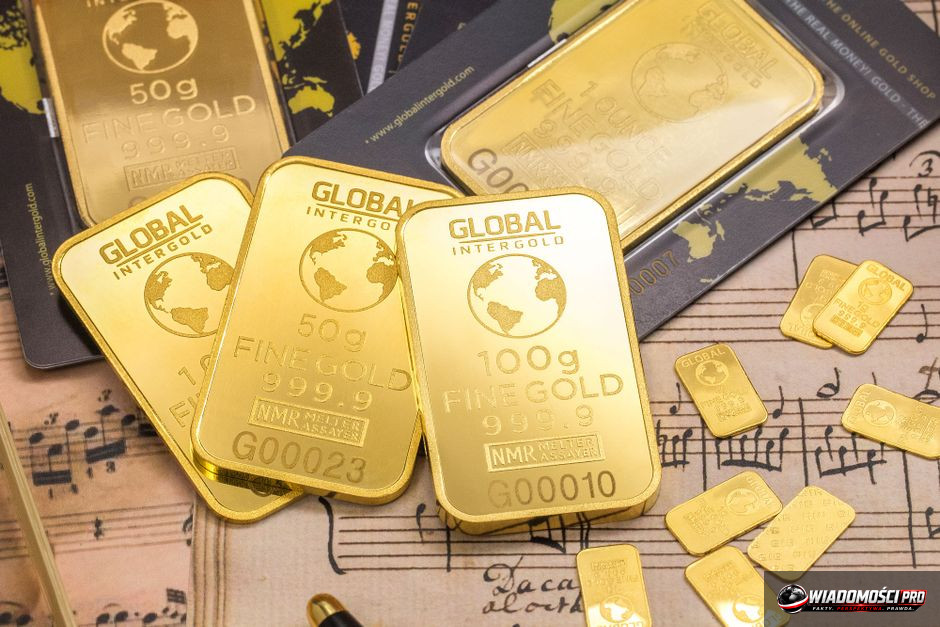
Beijing has carried out its largest gold purchases in two years, taking advantage of a sharp price drop of over 10 percent to systematically strengthen its foreign exchange reserves and overtake Russia in the ranking of bullion holders. This action is part of a long-term de-dollarization strategy aimed at securing the Chinese economy against the risk of financial sanctions. Through aggressive accumulation, the People's Bank of China is transforming its assets into a hard, physical foundation resistant to currency market volatility.
Geopolitical reserve architecture and the risk of sanctions
China's modern financial architecture is based on the assumption that the US dollar has ceased to function as the only safe asset for large-scale economies. Policymakers in Beijing look at the history of recent years and see how easily foreign exchange reserves can be frozen once they are in the SWIFT system or under the jurisdiction of American institutions. Gold, as a physical asset, eliminates this specific type of risk. It does not require the consent of any intermediary to maintain its value, nor is it subject to digital blocks.
When the gold market experienced a shock comparable to the bursting of a speculative bubble in October 2025, recording its largest drop in a decade, Beijing did not wait for sentiment to calm down. For them, the price drop was a technical fact, not a signal to flee. From the perspective of the Chinese central bank, every 10 percent drop in price is a discount on the cost of building financial sovereignty. Gold has ceased to be merely a precious metal for them. It has become a geopolitical tool of pressure that allows for the building of a sphere of influence independent of American monetary policy.
It is worth noting the way China conducts its transactions. This is not a sudden buy-up of all available resources, which would cause panic on the stock exchanges. It is a process spread over time, requiring discipline and precise liquidity management. These actions, ongoing for 16 months, show that Beijing prefers the method of small steps. Each month of purchases is another brick in the wall intended to protect the state from the effects of potential trade conflicts. If we look at this through the prism of tensions in the Strait of Hormuz, it becomes clear that for China, there is no alternative. The security of raw material supplies and the stability of reserves are two sides of the same coin.
The purchasing mechanism in the shadow of market volatility
The sharp price correction that hit the market in October 2025 exposed the weakness of many individual investors. When the media reported on the bubble bursting, speculative capital retreated, selling shares in bullion-based funds. At the same time, the People's Bank of China was increasing its commitment to physical bars. This mechanism is simple: the market prices gold based on macroeconomic data from the USA, while central banks price it based on the survival of the state.
Conflicting data flowing from the American economy introduces constant information noise. At one moment, the market believes in the maintenance of high interest rates, which theoretically harms gold, and the next, it fears a recession, which should boost it. Beijing ignores these short-term fluctuations. Utilizing a drop of over 10 percent allowed China to buy at prices that were unthinkable for many institutions just a few months earlier. This is a classic contrarian strategy, but executed at a state level.
Understanding this dynamic requires looking at the relationship between price and volume. When the price falls, demand from speculators decreases, which opens the field for large state players. China is not only benefiting from lower prices but is also effectively "cleaning" the market of frightened investors. As a result, when sentiment improves, it is the central banks, including China's, that will have greater resources acquired during the phase of deepest pessimism. It is a coldly calculated move that secures the state's interests against future, unpredictable fluctuations in fiat currency exchange rates.
The race for the podium: China vs. Russia
In 2026, the world is observing an unprecedented race within central bank structures. For years, Russia built its position as a leader in accumulating bullion, making it the main security for its reserves. Beijing, seeing this model, decided to replicate it, but using a much larger capital scale. Data from March 9, 2026, confirms that the Chinese purchasing strategy is the most consistent operation in the gold market in the current century.
Overtaking Russia in the ranking of bullion holders is not an end in itself, but the culmination of the process of building a negotiating position in the new balance of power. If China manages to realize its plans this year, it will become the main point of reference for all countries that want to become independent of the dollar. This is a situation where holding physical gold becomes a bargaining chip in relations with other powers. Russia, struggling with its own economic limitations, has no way of competing with the Chinese pace of purchases.
It is worth noting that this rivalry takes place in the silence of offices, far from newspaper headlines regarding current stock market quotes. While investors analyze charts, Chinese analysts analyze geopolitical flows. Every gram of gold that makes its way into Chinese vaults is simultaneously a signal to Washington that the influence of the American currency on Chinese political decisions is weakening. This is building one's own sphere of influence based on pure metal, which cannot be printed in response to a budget crisis.
Global trend: A record 863 tons as a foundation
The scale of China's purchases is not an isolated case. Reports from April 2026 indicate that global demand from central banks reached a record level of 863 tons of gold. This is hard proof that trust in traditional financial instruments, such as treasury bonds or currency deposits, is falling drastically. Institutions that should be the guarantor of financial stability are massively fleeing toward physical security.
Why now? The answer lies in the growing uncertainty regarding US economic policy. Data reaching investors in 2026 were often contradictory, which made long-term planning impossible. In such an atmosphere, gold becomes the only universal language of value. Central banks around the world, regardless of their political goals, have concluded that holding reserves in fiat currencies is too risky in a world where national debts are growing at an exponential rate.
The Chinese strategy fits into this broader trend, but does so with greater intensity. While smaller central banks buy gold for defensive purposes to protect the value of their assets against inflation, Beijing uses it to aggressively change the financial paradigm. Reaching the level of 863 tons by the institutional sector is a signal that the physical market has become too tight for all interested parties. When demand collides with limited supply, the price of bullion may react in a way that today's forecasting models are unable to fully capture.
World Bank forecasts: Is the bull market just beginning?
World Bank forecasts, indicating a possible 37 percent increase in gold prices and 76 percent for silver, shed new light on the sense of the Chinese strategy. If these predictions materialize, Beijing will emerge from the current accumulation phase as the biggest beneficiary of the increase in bullion value. Investors who sold gold in a panic in 2025 may face a fact where the price of the raw material will be unattainable for ordinary capital.
Financial institutions, unlike retail players, do not look at charts on a weekly scale. World Bank forecasts serve them as a basis for planning a long-term strategy. If analysts predict such drastic increases, it means they see imbalances in economic structures that cannot be fixed without currency devaluation. In this scenario, gold becomes a natural safety valve.
For a market observer, this situation is fascinating. On one hand, we have optimistic growth forecasts, and on the other, uncertainty resulting from tensions in the Strait of Hormuz. The situation in this region directly affects the security of energy raw material supplies, which translates into production costs and inflation. Gold, as a safe haven, gains value in every scenario where the global economy falls into turbulence. Beijing clearly assumes that this turbulence is inevitable and wants to be better prepared for it than anyone else. Will these forecasts prove accurate? Time will tell, but for China, price is not a matter of speculation, but a matter of survival in a changing world order.
The invisible foundation: Why will gold not lose its significance?
Many analysts ask themselves whether such huge accumulation of gold by central banks is not artificially maintaining valuations. However, it is worth looking at it from the other side: is it not the fiat currency market that is artificial in its nature? Gold possesses intrinsic value that cannot be liquidated through a political decision or a change in interest rates. In a world where national debts are becoming impossible to repay in a traditional way, physical bullion becomes the ultimate security.
Chinese purchases, carried out consistently for sixteen months, are proof that the financial elites in Beijing do not believe in a return to the stability of pre-pandemic times. Every sharp price drop, like the 10 percent one in October 2025, is an opportunity for them to increase their share of the world's real wealth. This is a long-term strategy whose time horizon extends beyond political terms or business cycles.
What does this mean for the average market participant? Above all, it is a signal that the rules of the game are changing. If the world's largest creditor (China) stops trusting the currency of its debtor (USA) and exchanges it for gold, this is a clear signal for anyone saving in paper money. This does not necessarily mean an immediate crash, but it points to a gradual shift of weight toward hard assets. Those who counted on a quick rebound after drops often get lost in the thicket of information, while states are building foundations that cannot be easily destabilized.
Risks in the Strait of Hormuz and supply security
Geopolitics has never been as close to the gold market as in the case of tensions around the Strait of Hormuz. This is a key point on the map of global energy trade, and any destabilization in this region triggers a domino effect. For China, which is a huge importer of raw materials, this situation is a direct threat. Gold in their reserves acts as "insurance" in case supply chains are broken or access to financial markets is drastically restricted.
It is worth noting that conflicting data coming from the USA regarding the situation in this region further intensifies uncertainty. The market does not know whether the situation will escalate or be resolved through diplomatic channels. In this atmosphere of uncertainty, gold becomes an asset that gains value not thanks to technical analysis, but thanks to fear of the unknown. Beijing, utilizing every such moment of market weakness, is building its resilience.
For the individual investor, the lesson from the Chinese strategy is clear. One should not look at gold as a tool for quick profit, but as a form of insurance policy. If states with billions of dollars in reserves decide they must hold gold to survive a crisis, then an individual investor should consider similar logic. It is not about speculating on 10 percent drops, but about possessing a foundation that will survive any storm.
Questions and answers
Are China's purchases limited only to moments of price drops?
No, China is implementing an accumulation strategy that is spread over time. Although they use sharp price drops, like the 10 percent one after the records of 2025, their purchases are systematic and have been ongoing for 16 months, which testifies to a long-term plan, not opportunism.
Why does Beijing want to overtake Russia in the gold ranking?
This is an element of building an independent sphere of influence. Holding the largest gold reserves in this part of the world gives China a strong bargaining chip and makes their economy independent of the US dollar, which in the face of the risk of sanctions is crucial for state security.
Are the World Bank's forecasts of a 37 percent price increase credible?
These forecasts are based on an analysis of macroeconomic and geopolitical imbalances. Although the gold market is volatile, the direction set by financial institutions indicates that the foundations supporting high bullion prices are more durable than short-term fluctuations in quotes.
Should an individual investor imitate China?
China operates on a different scale and with a different time horizon. For an individual investor, gold should be an element of portfolio diversification and protection against uncertainty, not a tool for aggressive speculation, which requires huge capital and resilience to multi-year market cycles.
What impact does the record 863 tons of gold in central banks have on the market?
Such a large amount of gold withdrawn from market circulation into state reserves drastically reduces liquidity in the physical market. This phenomenon creates upward pressure on prices in the long term, because demand from the world's most important players exceeds the supply capabilities of mining and recycling the raw material.
Sources
- War over Hormuz and conflicting data from the USA. Gold in a clinch of extreme trends - CEO Magazyn
- At this pace, China will overtake Russia this year. Gold bought for the 16th time in a row - Bankier.pl
- Gold price correction? Central banks are already increasing purchases. In the background, a record 863 tons - Comparic.pl
- World Bank forecasts a 37 percent increase in gold prices and 76 percent for silver - Parkiet
- Gold loses sharply after records. Largest drop in a decade - Biznes Alert
- Gold, silver, and copper, or a bull market born from fear - pb.pl
- Is the gold bubble bursting? A turnaround not seen in years - Money.pl
- This is not the end of high gold prices - wnp.pl
Article prepared by the Wiadomości PRO editorial team with the support of artificial intelligence. Facts come from the sources listed above.


Komentarze (0)
Ładowanie komentarzy...