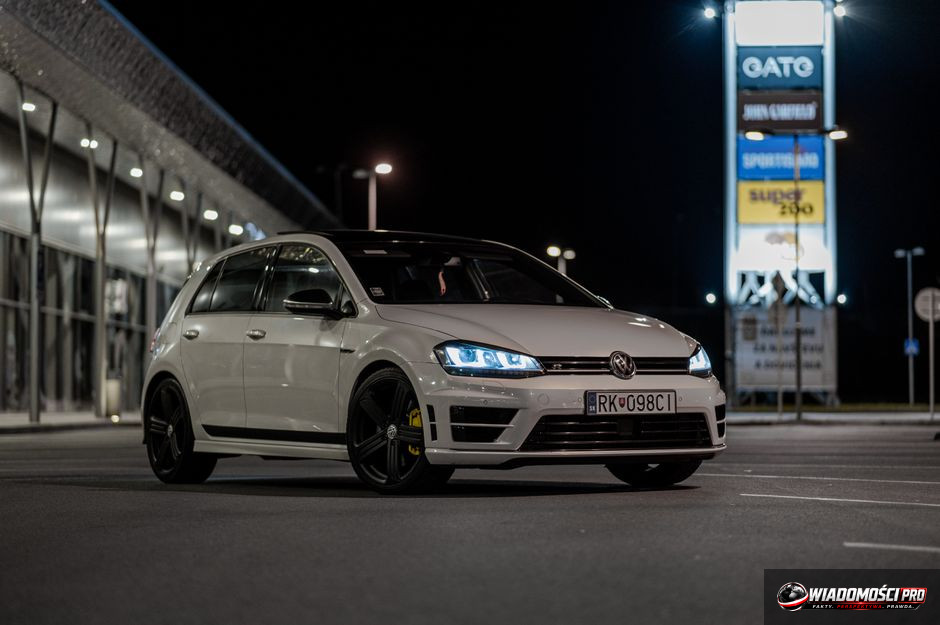
Volkswagen is introducing full hybrids to the Golf and T-Roc models, offering a real alternative for drivers skeptical of electric cars, which directly threatens Toyota's position in the family car segment. This move does not mean the immediate end of Toyota's dominance, but it represents the most significant correction to Wolfsburg's strategy since the start of its electric offensive. The Japanese maintain an advantage thanks to their technological experience, however, the arrival of hybrid Volkswagens in Polish showrooms, planned for September 2026, forces the market to revise existing sales forecasts.
Strategic pivot: Why is Volkswagen betting on hybrids?
Volkswagen has admitted to a mistake. For years, the pushed MEB platform and the focus exclusively on BEV (Battery Electric Vehicle) cars led to a loss of contact with a group of customers for whom electrification remains a financial or practical barrier. Internal reports, as reported by the Vehis service in July 2026, leave no illusions. The manufacturer had to face hard data: customers do not want to reorganize their lives around chargers. The decision to introduce a full hybrid (HEV) to the Golf and T-Roc is a technical admission that the compact market is not ready for full electrification.
This strategy is based on a simple premise. Since the compact car and crossover segment in Europe still generates the highest profits, Volkswagen must offer a product that meets emission standards without requiring the user to change their habits. Toyota built its empire on HEV technology, eliminating the need for external charging. The Germans, observing the stagnation of the BEV sector, decided to copy this proven business model. This is not sentiment, but a cold calculation of market share.
The Golf, as the foundation of the brand's sales, had to receive a powertrain capable of competing with the Corolla. Without a hybrid, Volkswagen was conceding the field without a fight. Now the situation is changing. The brand's communication is no longer focusing solely on electric range in kilometers. Instead, Wolfsburg is promoting operational predictability. This is a key image change. Customers who previously avoided Volkswagen's offer due to the lack of non-plug-in hybrids are now receiving a solution that does not require owning a garage with a wallbox.
Technology under the hood: How does the new Volkswagen hybrid work?
The new design described by autoexpert.pl in June 2026 is based on a self-charging system. This is a diametrical difference compared to plug-in hybrids, which required regular plugging into a socket. The solution in the Golf and T-Roc uses energy recovered during braking and the operation of the internal combustion engine in its most efficient RPM range. It is a system optimized for the urban cycle.
Engineers from Wolfsburg have integrated the electric motor with the combustion unit in a way that is intended to make the transition between modes almost imperceptible. The system manages energy intelligently. In traffic jams, the car moves more often using only the electric motor. The iMagazine service in April 2026 emphasized that the lack of need for one's own home infrastructure is the most important argument here. This is a 180-degree turn for a brand that has previously invested billions in the development of fast charging stations.
The efficiency of the system is intended to be a direct response to Japanese performance. Volkswagen has not yet published official fuel consumption figures in liters per hundred kilometers, but the engineers' goal is to achieve results on par with the hybrid Corolla. With European suspension characteristics, the Golf gains an advantage in the driving dynamics category. Production of the units is starting based on a new generation of components, which is intended to reduce the failure rate that was the bane of Volkswagen's early plug-in hybrids.
The lack of official fuel consumption data is not accidental. The manufacturer is deliberately withholding publication to avoid comparisons to pre-production versions. However, it is estimated that thanks to the new energy recovery system, the combustion engine will run nearly 20% less time in urban conditions than in conventional TSI units. This is a real saving that customers will feel at the pump.
Golf and T-Roc: A new offer for families in 2026
Volkswagen is introducing full hybrids to its two most important models, as confirmed by reports from MagazynAUTO in April 2026. The Golf remains the compact leader, which is intended to take on the role of the main rival to the Toyota Corolla. The T-Roc, which is in its second generation, provides an answer for families needing a taller body style but avoiding the electric ID.4.
The prices of the second-generation T-Roc, presented by samar.pl in November 2025, set a benchmark. Although the full price list of hybrids for Poland is not yet known, analysts predict a surcharge resulting from the higher complexity of the powertrain. Initial estimates indicate a difference of around 12,000-15,000 PLN compared to standard combustion versions with an automatic transmission. This is an amount that the user is expected to recover in lower fuel costs within three years of operation.
Volkswagen is betting on a proven base. The Golf and T-Roc offer interiors that set standards for ergonomics even before the introduction of new powertrains. Now, with a hybrid system, they become a complete product for a buyer looking for a car for years to come. The lack of need for grid charging is a key sales argument here. In the face of high electricity prices, a hybrid becomes a more financially secure choice for many families than a fully electric compact.
For the Polish customer, it is also crucial how Volkswagen will price these models relative to the competition from Japan. If the difference in purchase price between a hybrid Golf and a Corolla is less than 5%, Toyota may lose its main asset: its price advantage. The German brand is counting on the fact that the quality of finish and better interior ergonomics will convince the undecided.
Duel of the giants: Will Toyota lose its crown?
Volkswagen's actions are a direct attack on Toyota's hegemony. As noted by autoGALERIA in April 2026, the German manufacturer decided to enter the territory where the Japanese feel most confident. For decades, Toyota has defined the concept of a hybrid, creating an aura of reliability around it. Volkswagen, entering this game so late, must prove that its system is not only economical, but above all, durable.
Interia Motoryzacja in its analysis from April 24, 2026, pointed out that in this clash, "Toyota was right after all." This is a bitter lesson for the German brand, which just a few years ago assumed that hybrids were only a transitional stage. Currently, it is clear that this stage will last much longer than the strategy departments in Wolfsburg predicted. Will Toyota lose its crown? The market in 2026 shows that customer loyalty to the Japanese brand is huge, but limited by the body style offer. Toyota does not have a direct equivalent of the T-Roc in its range, which gives Volkswagen room to maneuver.
Volkswagen has an advantage in terms of handling and interior finish quality. In the family car segment, these features often tip the scales of victory. If Volkswagen's hybrid powertrain proves to be trouble-free in operation, the Japanese may lose some customers who have so far chosen the Corolla due to the lack of an alternative in German showrooms. This competition will force greater price flexibility on Toyota. For the driver, this means less rigid offers and a greater willingness of manufacturers to negotiate. This is a return to healthy competition for the customer's wallet.
Impact on the family car market: What do drivers gain?
Polish drivers, accustomed to the specifics of the local market, primarily gain more choice. Autocentrum.pl in April 2026 pointed out that a classic hybrid in the Golf means no need to change habits. A family planning to buy a car does not have to check if they have access to a socket in their apartment building or if the installation in the garage can handle charging an electric car.
The Golf with the new powertrain becomes a universal tool. In the city, it uses the electric motor; on the road, it uses an efficient combustion engine. This is a solution that eliminates range anxiety. Volkswagen, through the implementation of this technology, closes a gap in its offer that was the biggest barrier for the average customer.
Hybrid systems are more complex than simple combustion units. After the warranty period ends, this may generate higher service costs at authorized dealerships. This is a catch that should be kept in mind when calculating the total cost of ownership (TCO). Toyota has a well-developed service network and availability of parts in this regard, which Volkswagen will have to contend with. The projected 8% increase in Volkswagen's share of the hybrid segment over the next 18 months is an ambitious goal that depends solely on the reliability of these new systems.
The market will react to these changes very quickly. Volkswagen dealers are already receiving inquiries about the availability of the new versions. If the cars reach Polish showrooms in September 2026, it will be a signal for the secondary market, which will begin to value hybrid Golfs significantly higher than their combustion counterparts. Customers gain the stability that was missing in recent years of technological uncertainty.
Summary: Is this the beginning of a new era in Wolfsburg?
July 2026 is the time when Volkswagen finally abandoned the illusions of a quick transition to full electromobility. As reported by Vehis, the change in strategy is clear and forced by the market. The introduction of hybrids to the Golf and T-Roc is proof of the pragmatism that the brand has lacked in recent years.
The new era in Wolfsburg is not about building more electric models, but about fixing errors in the portfolio. Volkswagen is returning to its roots: producing cars that are an answer to the real needs of European drivers. Is this enough to catch up with Toyota? The answer to this question is not unambiguous. The Germans have a strong brand and an extensive dealer network, but the Japanese have decades of experience in the technology that VW is now trying to copy.
Skepticism toward electric cars will not disappear overnight. Volkswagen, by offering a hybrid, gives these people a reason to stay with the brand. This is the biggest benefit for the concern. However, if the build quality of the new hybrid systems is not at the highest level, the brand may permanently lose the trust of this group of customers. Time will tell whether the Golf and T-Roc with full hybrid power will become the new standard in the segment, or just a supplement to the offer for conservative buyers.
What this means for you
Drivers gain a real alternative to the hybrid offer dominated by Toyota. On the other hand, those who were counting on rapid price drops for electric cars due to mass production scale lose out – VW is shifting funds from BEV to HEV, which may slow down the development of cheaper "electrics." The catch lies in service costs: hybrids are more complex designs, and their repairs after the warranty may be more expensive than in the case of simple combustion engines. For the buyer, this is a balancing act between fuel savings and potentially higher long-term maintenance costs.
Questions and answers
Do Volkswagen's new hybrids require charging from a socket?
No, these are full hybrids (HEV). Energy is stored during braking and the operation of the combustion engine. They do not require charging from an external grid.
In which models will we find the new powertrain?
The new powertrain has been implemented in the Volkswagen Golf and the second-generation T-Roc model.
Why did Volkswagen decide on such a strategy change in 2026?
The manufacturer reacted to market signals and sales results, which showed that a large portion of customers expect the fuel savings offered by hybrids, while simultaneously rejecting the need to purchase a fully electric car.
Will the hybrid Golf be more expensive than the combustion version?
Although official price lists for Poland have not yet been fully published, the specifics of the hybrid system suggest that the purchase price will be higher than in the case of standard combustion units, which is typical for this class of technical solutions. Analysts estimate the surcharge at the level of 12,000-15,000 PLN.
Does this mean the end of Volkswagen's electric car development?
No, this is a strategy correction. Volkswagen is not giving up on electrification, but is shifting accents, recognizing full hybrids as a necessary element of the offer that will allow it to maintain its market position in the family car segment.
Competition analysis: The compact market in 2026
The market situation in 2026 is ruthless for manufacturers who do not offer a choice of powertrains. Data from industry reports indicate that the compact segment, in which the Golf has been the undisputed leader for decades, is undergoing a process of fragmentation. Customers are divided into two groups: BEV technology enthusiasts who take advantage of subsidies and infrastructure, and pragmatists for whom a car is a tool for moving from point A to point B without unnecessary restrictions.
Volkswagen ignored the second group for years, which allowed Toyota to strengthen its position as the leader in the hybrid segment. The Corolla has become a synonym for financial security – a car that is low-maintenance, economical in the city, and has a high residual value. The Golf, despite its design advantages, in the eyes of many customers became too complicated due to forced electrification. The return to a full hybrid in the Golf model is an attempt to regain that trust.
The German manufacturer must, however, be careful of traps. The complexity of the hybrid system, which combines a combustion engine, an electric motor, and extensive control electronics, places high demands on the quality control department. If the first batches of Golfs with the new powertrain struggle with the software problems that affected the ID.3 and ID.4 models, Volkswagen may permanently discourage conservative buyers. Trust is built over years and lost in a single model.
Toyota will not remain passive. The Japanese are already announcing cost optimization in the production of their fifth-generation hybrids. The fight for the customer's wallet will move from the level of technology to the level of financing and additional services. Volkswagen dealers will have to be more aggressive in their leasing offers and service packages to beat Toyota's offer, which has dominated this area for years.
HEV technology: Did VW learn from its mistakes?
Analyzing the design mentioned by autoexpert.pl, one can see a clear drive to maximize energy recovery. Volkswagen is using experience from mild hybrid (MHEV) systems, but is going a step further. The use of a larger electric motor and a more efficient battery allows for more frequent driving in zero-emission mode. This is a solution that works well in urban conditions, where the combustion engine is most inefficient.
The key to success will be software. In recent years, Volkswagen has struggled with problems in multimedia systems and engine controllers. A hybrid is a system where the synchronization of the combustion and electric units must take place in real-time. Any delay in response to the gas pedal will be immediately picked up by customers accustomed to the dynamics of TSI engines.
If Volkswagen manages to eliminate the teething problems that accompanied the premieres of electric models, it has a chance for a quick return to the top. It is worth noting, however, that the competition is not sleeping. Hyundai, Kia, and even Renault are intensively developing their hybrids, often offering a better price-to-equipment ratio. The rivalry with Toyota is just one of the fronts on which Volkswagen must fight.
Dealer perspective: How are customers receiving the changes?
In conversations with Volkswagen dealers in Poland, one can feel clear optimism, but also a dose of uncertainty. Customers who have been asking about a hybrid Golf for months are finally getting a concrete answer. This is a group that until now had been giving up on the purchase in favor of Toyota or Asian brands. The return of these people to Volkswagen showrooms is key to maintaining sales volume.
On the other hand, dealers point to costs. A hybrid Golf will require new competencies from service technicians. Training on handling high-voltage systems in HEV hybrids is a new challenge for authorized service stations (ASO). The cost of this training and specialized equipment will be included in the price of inspections, which may increase the costs of maintaining the car over a five-year perspective.
Is the customer ready for this? If the fuel savings are real and noticeable, the answer is: yes. Polish drivers are increasingly aware of TCO costs. They no longer look only at the purchase price, but at service costs and depreciation. In this context, the hybrid Golf must defend itself not only with low fuel consumption but also with reliability.
Market summary: What can we expect after 2026?
The year 2026 will be a year of verification for Volkswagen. The introduction of hybrids to the Golf and T-Roc is not just a change in price lists. It is a change in philosophy. The brand that wanted to be the leader of electromobility is returning to its roots. Does this mean the failure of the electric strategy? Not necessarily. It is rather proof of the maturity of a manufacturer that can admit that the market dictates the conditions, not the other way around.
For Toyota, the coming months will be a test of endurance. The Japanese must show that their technological advantage is still significant. If Volkswagen manages to offer comparable quality in hybrids, we are in for a fascinating fight for the customer. A fight in which the winner will be the driver, who finally receives what they expect from a family car: savings, reliability, and comfort.
It should be remembered, however, that a hybrid is not an ideal solution for everyone. On highway routes, where the combustion engine works under high load for a long time, the advantage of a hybrid over a traditional diesel or an efficient gasoline engine may be marginal. Nevertheless, in urbanized Europe, such a car is an optimal solution. Volkswagen, by betting on these models, is fitting into the strongest market trend of 2026. Will this be enough to dethrone Toyota? Time will tell, but one thing is certain: there will be no boredom in the showrooms.
The secondary market is watching these moves with attention. If Volkswagen's hybrids prove to be durable, their value after three years may be higher than that of combustion versions, which will additionally encourage customers to buy new examples. This is a mechanism that drives sales and allows the manufacturer to maintain high margins. Volkswagen, through this one strategic move, is reaching out to customers it has lost to the Japanese competition for years. Will it succeed in winning them back? We will know the answer in the autumn, when the first examples hit Polish roads.
Sources
- Volkswagen changes strategy. New hybrid for Golf and T-Roc to convince drivers who don't want an electric car - Vehis
- Volkswagen finally answers Toyota. Golf and T-Roc with full hybrids - MagazynAUTO
- No more choice? Golf and T-Roc get a classic hybrid - Autocentrum.pl
- How the new full Volkswagen hybrid works - autoexpert.pl
- New Volkswagen T-Roc. How much you have to pay for the second-generation model (video) - samar.pl
- Volkswagen Golf and T-Roc enter Toyota's backyard. The German brand reaches for the Japanese's biggest advantage - autoGALERIA
- New era of hybrids in Wolfsburg. Golf and T-Roc will gain an economical non-plug-in powertrain - iMagazine
- New powertrain in Volkswagen Golf and T-Roc. Toyota was right after all - Interia Motoryzacja
Article prepared by the Wiadomości PRO editorial team with the support of artificial intelligence. Facts come from the sources listed above.

Komentarze (0)
Ładowanie komentarzy...