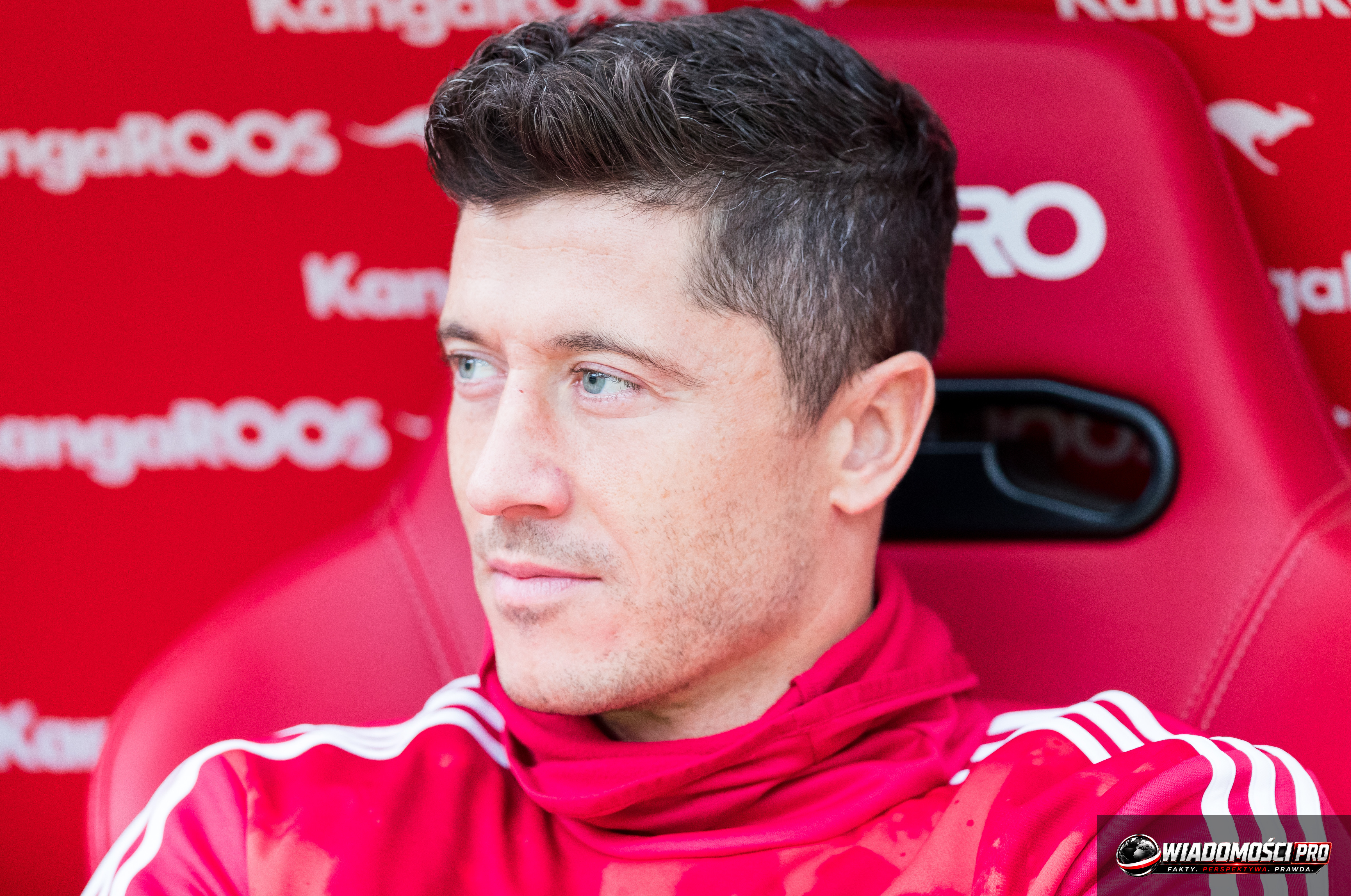
Robert Lewandowski made his debut for Chicago Fire in a 2-3 loss to Inter Miami, a match that saw a total of 5 goals scored. The Pole spent 63 minutes on the pitch, during which he recorded only 22 touches and managed one shot on target. This result, along with his modest individual statistics, serves as hard evidence of the deep structural problems within the Chicago team, which failed to create the conditions for their new leader to effectively finish plays against Inter Miami.
Chicago Fire's strategy for the match relied on trying to get Lewandowski involved, but the system in which the team operates proved ill-suited to the profile of a world-class striker. Inter Miami imposed a high tempo, exploiting gaps in the visitors' defensive setup. The three goals conceded were the result not only of individual errors but, above all, a lack of balance between the formations. Chicago's defenders were often left in one-on-one situations, forcing them into desperate interventions and frequent turnovers in areas where they should have been building a positional attack.
The statistic of 22 touches in over an hour of play is telling. For a striker who in Europe was accustomed to being the central point of the offense, such limited access to the ball means being completely cut off from the game. The Pole was forced to drop back near the center circle just to get a feel for the ball. Such behavior, while showing a desire to help the team, simultaneously deprived the side of an executor in the opponent's penalty area. Cooperation with the midfield was practically non-existent, and the lack of through balls forced Lewandowski to fight for aerial balls, which were doomed to failure against the tall Inter Miami defenders.
Inter Miami's high defensive line effectively neutralized attempts to launch Lewandowski with long balls. The opponents quickly read the intentions of the Chicago midfielders, tightening the space in front of their penalty area. The Pole took only one shot, which was the result of an individual effort rather than a worked-out tactical scheme. The Inter defense did not have to exert itself excessively to control the striker's movements because the Chicago Fire midfielders did not apply enough pressure on the players operating in front of their own defensive line.
Lewandowski's substitution in the 63rd minute was a logical move by the coaching staff. With the score not favoring the visitors, the coach had to look for new personnel solutions to turn the game around. This decision was not merely about saving the player, but stemmed from the fact that his presence on the pitch had become ineffective in the face of the chaos reigning in Chicago's ranks. After the Polish national team captain left the field, the game did not improve, which confirms the thesis of the team's systemic dysfunction.
Officiating in MLS matches differs significantly from European standards. The lack of frequent game stoppages after minor contacts forces players to change their habits regarding ball protection. Lewandowski, accustomed to the rigorous protection of referees in European leagues, often reacted with surprise at the lack of a whistle after clashes with Inter Miami defenders. The physicality of this match exceeded the level the Pole is used to. The aggressive play of the Miami defenders effectively threw him out of rhythm, which, combined with a lack of support from his teammates, made his debut an extremely difficult challenge.
Chicago Fire needs an immediate correction in their midfield setup. The gap between the second line and the attack is visible to the naked eye in every phase of transition from defense to attack. If the coach does not change the concept of building plays, Lewandowski will have to reconcile himself to the role of a playmaker rather than an executor. This is not an optimal use of his potential. His greatest asset is his instinct in the penalty area, and that can only be utilized if the ball is delivered into the right zones at the right tempo.
Inter Miami, playing boldly, exposed Chicago's helplessness in goal-scoring situations. The high pressing used by the hosts was lethal for the Chicago defenders, who could not keep the ball under pressure. Every turnover in the middle of the field ended in a lightning-fast counterattack, which forced the team to constantly chase the score. In such a dynamic match, Lewandowski was isolated. The Pole's attempts to direct the team often ended in misunderstandings, which testifies to a lack of cohesion and a communication barrier resulting from the short time spent training together.
The 2-3 defeat is not just a loss of points. It is a warning signal for the entire club, which invested huge resources in bringing in a world-class striker. If the defense does not start functioning at a higher level, even the best attacker will not be able to change the face of the team. Chicago Fire concedes goals too easily, which makes every match an open exchange of blows. In such an environment, there is no room for the tactical discipline necessary to win regularly in MLS.
It is worth noting that the dynamics of MLS force incredible endurance on players. Lewandowski, despite his vast experience, must learn to manage his energy in completely different conditions than those known from the Bundesliga or La Liga. The lack of time for regeneration between matches and specific climatic conditions are factors that determine the quality of a performance. In the match against Inter Miami, it was clear that after an hour of play, the intensity of his movements dropped, which was dictated not only by fatigue but also by frustration resulting from the lack of received passes.
For the Chicago Fire coaching staff, this debut is a harsh lesson. The team cannot rely solely on individuals. It takes time to develop schemes that will allow for full utilization of Lewandowski's potential. However, time in professional sports is a scarce commodity. Fans expect results immediately, and every subsequent match without a win will increase the pressure on the team. Lewandowski is not a player who solves a whole club's problems with the wave of a magic wand. He needs an efficient mechanism to fuel him.
From a tactical perspective, Inter Miami played this match almost flawlessly. They used every opportunity to expose Chicago's weaknesses. Their play was predictable only in its effectiveness. The high defensive line was risky but profitable, as the Chicago midfielders could not play the ball behind the defenders. Lewandowski tried to look for open spaces, but his teammates could not send the ball at the right moment.
An analysis of the statistics from the debut indicates an alarmingly low number of accurate passes in the entire Chicago Fire team. This was not the problem of one player, but of the whole team. Building attacks from the defense was ineffective, and the midfielders lost the ball too often in transition zones. In such a situation, a striker is merely an observer of events, not a participant. Lewandowski cannot be denied commitment, but in football, concrete numbers count, and those in this debut were negative.
Will Lewandowski's presence bring a breakthrough? This is the question everyone in Chicago is asking themselves now. The answer depends on whether the club decides on a deep restructuring of the defensive and midfield lines in the upcoming transfer window. If the board settles for the current squad, the Pole's presence will be merely a marketing success that will not translate into sporting results. Chicago Fire's potential is high, but it currently lacks the foundations to compete with the top of the league.
In the coming matches, attention will be focused on how Lewandowski influences the team's play after a longer training period. Will he manage to build an understanding with the midfielders? Will the coach dare to change the tactical setup to a more offensive one? These questions will find their answers soon. For now, however, the debut leaves much to be desired. The match against Inter Miami showed that a name on a jersey does not win matches in MLS. Here, you have to fight for every meter of the pitch, and in this case, Chicago Fire lost the battle for the midfield and control of the match.
For the player himself, the move to MLS is a change of football paradigm. He must find his place in a league that is less tactically organized but more demanding in terms of physicality. Every match is a new lesson. Lewandowski, known for his professional work ethic, will certainly draw conclusions from this defeat. The question is whether his teammates will be able to follow his pace and understand his way of moving on the pitch.
The depth of the Chicago Fire squad also raises doubts. In the match against Inter Miami, every substitution weakened the quality of the team's play. There are no players there who could take on the burden of the game in difficult moments when the main striker is marked by two defenders. This makes the game predictable. If the opponent shuts Lewandowski out of the game, Chicago Fire becomes a colorless team that cannot threaten the opponent's goal.
During the match, differences in the level of technical training between the players of both teams were also visible. Inter Miami presented itself as a more cohesive team, confident in its skills. Chicago Fire, on the other hand, played nervously, making mistakes in simple situations. Lewandowski tried to calm the game down, pointing out positioning to his teammates, but his comments were often ignored or misunderstood. This shows how much work awaits the coach in terms of building a winning mentality.
One cannot ignore the fact that the debut was a major media event. The stadium in Miami was full, and the eyes of the whole world were on Lewandowski. Such pressure does not make the debutant's task easier. Every move of his was analyzed under a microscope, which certainly affected his concentration. Despite this, a professional of his caliber should handle such expectations, provided he has support in the team. That support was missing in the match against Inter.
Looking at the course of the match, one gets the impression that Chicago Fire was not prepared for Inter's aggressive play. Surprise at the pace of the match was visible in every formation. If the Chicago team wants to think about success in MLS, it must change its approach to physical and tactical preparation. Every match in this league requires full readiness for the full 90 minutes, and in the clash with Inter Miami, Chicago was present on the pitch only in fragments.
The analysis of the 2-3 defeat must be a turning point for the club. The coaching staff has a difficult task ahead of them. They must not only integrate Lewandowski into the team but, above all, seal the defense, which in its current form does not give a chance to fight for top spots in the table. Every mistake in MLS is punished mercilessly, as the Chicago players learned in the match against Inter.
For Lewandowski, this challenge is something completely new. For years in Europe, he played in teams dominated by technical players, where tactical schemes were refined to perfection. Now he must learn to improvise in conditions that are not always conducive to beautiful play. This will be a test of his football maturity. If he manages to adapt to the realities of MLS, he will certainly become the star the fans are counting on. For now, however, he must face a reality where the defeat to Inter Miami is a painful beginning.
Subsequent matches will show whether this match was just an accident at work. Chicago Fire has a tight schedule ahead, which does not allow time for long analyses. Every subsequent match will be a verification of the team's progress. Lewandowski must quickly become not only an executor but also a mentor for younger players who need role models. His role at the club goes beyond just playing on the pitch.
Everything indicates that the process of building a strong Chicago Fire will take much longer than optimists assumed. Lewandowski's transfer is a huge boost for the league, but in itself, it will not be enough to win matches. A coherent vision for the club's development is needed, supported by concrete personnel moves. If Chicago Fire does not draw conclusions from their star's debut, they risk wasting the potential that the Polish national team captain brings with him.
A sporting disaster in the debut? That is too strong a word, but disappointment is a fact. 63 minutes on the pitch, one shot, and no points is a balance that must give everyone in the club's decision-making positions something to think about. Lewandowski came to the United States to compete for the highest goals, not to lose in matches where the defense resembles a sieve. The coming weeks will be crucial for his future in MLS.
Chicago Fire is facing a chance for a rebuild like never before in their history. Lewandowski's presence is an opportunity to attract sponsors and build a new club brand. But without results on the pitch, this brand will quickly lose value. Fans in Chicago are not patient, and every defeat will cause increasing dissatisfaction. Lewandowski must find his way in this reality as quickly as possible and show that he can win even in conditions that are not comfortable for him.
In summary, Robert Lewandowski's debut for Chicago Fire was an event that attracted attention, but on the pitch, it brought disappointment. The 2-3 loss to Inter Miami is a result that fully reflects the disproportion between the club's ambitions and the actual quality of play. The Pole has a long way to go to find his place in American realities, and the Chicago Fire coaching staff has an even longer job ahead of them to stabilize the defense. MLS is not a league where names win matches. Here, the collective counts, which is currently lacking in Chicago.
The upcoming matches will show whether this debut was just an accident at work or the beginning of a difficult period for the Polish striker. Fans who were counting on quick goals and victories must arm themselves with patience. The process of Lewandowski entering the game in MLS has only just begun, and the first verification turned out negative. However, in football, nothing is constant, and one defeat does not define the entire season. Everything depends on how quickly Lewandowski learns to play in a league where anything can happen.
Chicago Fire must now answer the question of whether they want to build a team around Lewandowski or just use his image. If the former, changes are inevitable. If the latter, the club condemns itself to mediocrity. Lewandowski came to Chicago for success, not to lose matches against Inter Miami. His determination will be crucial in the coming months. Whether he manages to change the face of Chicago Fire depends on many factors, including the transfers the club must carry out before the window closes.
One cannot forget that MLS is a very physically demanding league. Lewandowski, despite his experience, must shift to a different rhythm of play. It is not about technique, because that remains at the highest level, but about endurance and the ability to deal with the aggressive play of defenders. In the match against Inter, it was clear that the Pole needs time to understand the specifics of the officiating and the style of play of his opponents. If he gets that time, he can become a star of the league. For now, however, he must face a reality that is far from his expectations.
All eyes are now on the next Chicago Fire match. Will Lewandowski start in the basic lineup? Will the coach decide on changes in tactics? These are questions we will know the answers to in the near future. One thing is certain: the debut is behind us, and the real work is just beginning. Lewandowski did not come to the United States to retire, but to prove his worth in a completely new environment. The defeat to Inter Miami is only the first chapter of this story, which can go in any direction.
Chicago Fire has the potential to become a force in MLS, but for that, they need much more than just Lewandowski's presence on the pitch. They need a stable defense, creative midfield, and a coach who knows how to manage such personalities. Lewandowski brought quality to the club that was not there before, but that quality must be used in the right way. If that happens, success is a matter of time. If not, then Lewandowski's time in Chicago may turn out to be a disappointment for both sides.
Every great player who came to MLS needed time to learn the new league. Lewandowski is no exception. His debut was difficult, but also instructive. Now everything depends on his work in training and how quickly he finds a common language with his new teammates. Chicago Fire is a club that has ambitions but lacks experience in managing stars of this caliber. Lewandowski can be a catalyst for changes that will put this club on the right track.
The situation after the debut is complicated. On one hand, we have a great media buzz and fan expectations, and on the other, the harsh reality of the pitch, which does not forgive mistakes. Lewandowski must find a way to become a leader of this team, not only on paper but above all on the pitch. His 63 minutes against Inter Miami were only the beginning, which showed how much work is ahead of him and the entire Chicago Fire coaching staff.
Sources
- Inter Miami - Chicago Fire [LIVE COVERAGE] - Przegląd Sportowy
- Five goals in the Inter Miami – Chicago Fire match. Lewandowski debuted [VIDEO] - Goal.pl
- Lewandowski debuted for Chicago Fire. This is what his first match looked like - Zero.pl
- Lewandowski's debut overseas. Polish striker substituted early - PolsatNews.pl
- Chicago Fire plays Inter Miami. Will Lewandowski debut? - TVP Info
- MLS League. Robert Lewandowski debuted for Chicago Fire. The Pole played 63 minutes in the match against Inter Miami - sport.tvp.pl
- Inter Miami - Chicago Fire. What time is Lewandowski's debut? Will it be on TV? - SportoweFakty
- Robert Lewandowski debuted in MLS. Chicago Fire lost to Inter Miami after an exciting match - Deon24
Article prepared by the Wiadomości PRO editorial team with the support of artificial intelligence. Facts are sourced from the links provided above.


Komentarze (0)
Ładowanie komentarzy...