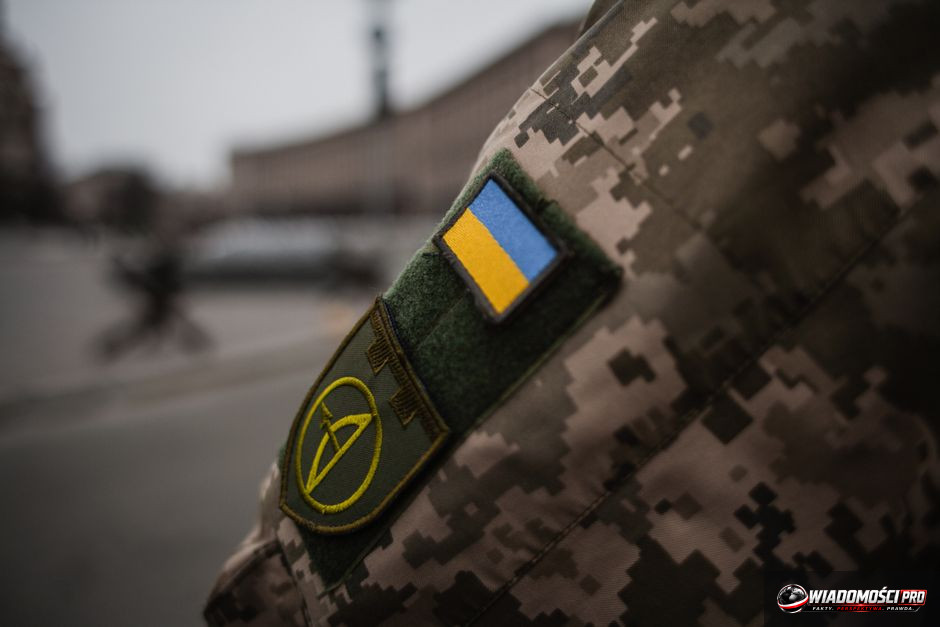
Mykhailo Drapatyi has replaced Oleksandr Syrskyi as Commander-in-Chief, a key element of the largest reconstruction of command structures since the beginning of the war, aimed at extinguishing the wave of social protests. However, this personnel change is not a move based strictly on military grounds, but a desperate attempt to regain the legitimacy of power in Kyiv. The appointment of the "Snow Leopard" is a branding exercise intended to convince the public that the army is now led by a commander closer to the soldiers than to staff maps; however, his real impact on the operational situation at the front remains doubtful.
On July 22, 2026, the administration of President Volodymyr Zelenskyy announced a decision that definitively ends the command tenure of Oleksandr Syrskyi. This reconstruction is the most far-reaching change in the armed forces' structures since February 2022. Kyiv, finding itself at a critical point in terms of public trust, concluded that the existing model of army management had exhausted its utility. The protests that have spilled onto the streets of Ukrainian cities in recent weeks created pressure that the president could not ignore. The change at the top is meant to be a clear signal to citizens: the government hears the anger of the streets and is ready for radical cuts, even at the cost of command stability during the ongoing conflict.
The genesis of the promotion: Why Drapatyi?
Drapatyi, known in the army by the call sign "Bars" (Snow Leopard), did not reach this position by accident. His image as a frontline commander, rather than a cabinet official, is crucial to the project being implemented by Kyiv. While Syrskyi was perceived as an "old school" general, burdened with responsibility for the difficult defensive situation, Drapatyi is intended to embody new energy. His experience, gained in direct clashes, including during operations in the Kharkiv region, is meant to be a guarantee that the command understands the realities of the trenches. It is precisely this contrast between the "staff officer" and the "frontline soldier" that is the main marketing product of this appointment.
Analysts point to the fact that Drapatyi built his brand over the years by commanding operational units, such as the famous 72nd Mechanized Brigade. This experience in commanding line units is his greatest asset in the eyes of public opinion. When a soldier sees a commander who was present in hotspots, morale rises. When a citizen sees such a commander on television, their trust in the state grows. However, moving from the level of brigade command to managing the entirety of the Armed Forces of Ukraine is a leap of enormous difficulty. Managing logistics, strategic reserves, and military diplomacy requires competencies that cannot be acquired solely in direct combat with the enemy.
The strategic significance of the "wanted list"
The fact that Drapatyi is on a wanted list by the Russian Federation gives his appointment an additional political dimension. For the Kremlin, such a decision by Kyiv is a clear message of a hardening course. Moscow, tracking the careers of Ukrainian commanders, treats "Bars" not as a political player, but as a real operational threat. The fact that Russian services are pursuing him with arrest warrants is used by propaganda in Kyiv as proof of the general's effectiveness. However, this is a double-edged sword.
From the Russian perspective, Drapatyi becomes a high-priority target. Every one of his decisions and every strategic mistake will be highlighted by Moscow and used to undermine his image as an "invincible commander." By betting on a general so heavily burdened by Russian rhetoric, Ukraine is entering an open image conflict. If the front does not record successes under Drapatyi's command, his "wanted list" status will cease to be an asset and will become merely a reminder of another commander who failed to stop the Russian advance.
A reconstruction broader than just the army
The departure of Oleksandr Syrskyi is not an isolated incident. It is part of a larger plan in which the Zelenskyy administration is carrying out a deep purge of state structures. The dismissal of Mykhailo Fedorov, the previous pillar of the state's digitalization, shows that the president is looking for a "new opening" on every level. Kyiv must extinguish social dissatisfaction, and removing faces associated with the previous strategy is an extremely effective tool in the short term.
However, it is worth asking: what happens to command continuity? At a moment when Ukraine needs a coherent strategy, the replacement of key personnel introduces an element of uncertainty. New commanders must not only implement their own operational plans but also clear the staffs of people loyal to their predecessors. This is a process that, in wartime conditions, always carries the risk of a decline in operational effectiveness. Every week spent on reorganizing the staff is a week in which Russia can gain an advantage at the front.
The goals that Kyiv has set for itself are clear:
- Calming social moods through radical personnel changes.
- An attempt to cut the current administration off from the mistakes of the past attributed to Syrskyi.
- An attempt to impose a new narrative of "active defense" under the command of the "Snow Leopard."
However, these goals are political, not military. The presidential administration seems to believe that changing the faces on posters will change the reality on the maps. This is an extremely risky assumption, especially since Zelenskyy's political base is currently extremely exhausted. Every subsequent concession to the street, every subsequent dismissal, exposes the scale of the crisis in which the state has found itself.
Is the experience from Kharkiv enough?
Drapatyi gained fame thanks to his courageous actions in the Kharkiv region. It was there that his tactical skills allowed for the holding of key positions and, later, for the execution of effective counterattacks. His command style is based on the speed of decision-making and close cooperation with line unit commanders. In conditions where Ukraine is struggling with shortages of ammunition and equipment, the ability to improvise and optimally use available resources is extremely valuable.
However, the war in 2026 looks different than in 2022. The current battlefield is saturated with technology, drones, and satellite reconnaissance, which drastically limit the possibility of maneuver. "Bars" will have to face the fact that even the most courageous general will not win against the enemy's numerical superiority if he does not have adequate fire support. His experience in commanding a brigade was a success in tactical conditions. Commanding the entire Armed Forces is managing large-scale strategy, where field intuition often has to give way to cold calculation of raw materials and the industrial capabilities of the state.
Many observers are asking whether Drapatyi will be "burned" by politics. If his appointment turns out to be merely an attempt to buy social peace, the general could become a scapegoat within a few months. If the front begins to crack, it will not be the politicians, but the new commander-in-chief who will have to explain the failures. This is a trap into which many Ukrainian commanders before him have already fallen.
The pressure of the street as a determinant of strategy
Social protests in Ukraine in 2026 are multidimensional. It is not just about war fatigue, but about the feeling that the government lives in a bubble and the military command does not value the lives of soldiers. The dismissal of Syrskyi was a demand that had been appearing in public discourse for many months. Zelenskyy's decision to finally yield to this pressure shows that the president has stopped trusting in the effectiveness of the existing narrative of "national unity."
What happened on July 22 is undoubtedly a victory of the street over the staff. But is it a victory for Ukraine? The answer to this question is not unambiguous. On one hand, replacing a commander who has lost his mandate of trust is necessary in any democratic state. On the other hand, the army should not be a hostage to polls and the moods of the crowd. Kyiv has entered a path where every subsequent strategic decision will be analyzed through the prism of whether it "pleases the people" or not. This is the shortest path to command paralysis.
Moscow is watching and drawing conclusions
The Kremlin is not remaining passive toward these changes. The Russian propaganda machine is already creating an image of Ukraine as a state mired in chaos, where generals are fired to the rhythm of successive protests. For the Russians, the appointment of Drapatyi is proof that the Ukrainian political base is in a state of decay. Moscow, analyzing every move of the new commander-in-chief, will look for weak points in his command system.
Information warfare in this case is just as important as actions at the front. If Drapatyi is presented as "Zelenskyy's man" rather than an "army general," his authority in the eyes of the military may suffer. Russia will do everything to emphasize the political nature of this appointment. For the Kremlin, the "Snow Leopard" is just another piece of the puzzle they want to break.
The future: Great challenges for "Bars"
Mykhailo Drapatyi faces challenges that no single person could handle alone. Stabilizing the front while simultaneously managing an internal political crisis is a task of historical scale. The new commander-in-chief must first define whether his role is limited to being the "face of the army" in the media, or whether he will actually have the freedom to shape defensive strategy.
If he receives real power, the first thing he must do is cut himself off from the political games that led to his appointment. He must build a staff around him of people who are not afraid to tell the truth about the state of the army, even if that truth is not convenient for the president. Only then can he have a chance of avoiding the fate of his predecessors.
However, the history of the last two years in Ukraine shows that politics always ultimately prevails over pure military professionalism. Drapatyi is entering a system that is steeped in personal dependencies. His success will depend on whether he manages to carve out his own space for command, or whether he becomes just another cog in a machine that has ceased to function effectively.
What does this mean for the average citizen?
For a Ukrainian who feels the effects of the conflict daily, the change in the position of commander-in-chief can be perceived in two ways. The first is the hope that a new person at the top will change "something" in the way operations are conducted, which will translate into greater security. The second is skepticism, stemming from the conviction that reshuffles at the top have no influence on what happens in the trenches or in frontline areas.
In reality, this change is a signal to the average citizen that the state is looking for solutions in situations where it previously failed to react. Whether Drapatyi will "save Ukraine" is a poorly formulated question. Ukraine does not need a single savior, but a stable management system that does not change under the influence of waves of protests. As long as politics dictates the movements of the army, the state will remain in a state of constant uncertainty.
Questions and answers
Why did Zelenskyy dismiss Syrskyi?
The decision was a direct result of growing social pressure and a wave of protests that forced the president to carry out the largest command reconstruction since the beginning of the war in order to regain the trust of citizens.
Who is the new commander Mykhailo Drapatyi?
He is an experienced line commander, known as "Bars" (Snow Leopard), who gained recognition thanks to his direct involvement in frontline operations, including in the Kharkiv region, and is on the list of persons wanted by the Russian Federation.
Does the dismissal of Fedorov mean the end of the army's digitalization?
This is not the end of the process, but an element of a broader personnel exchange in the government, aimed at changing the image of the state administration and silencing social moods by introducing new faces into the power structures.
Will Drapatyi's appointment realistically change the situation at the front?
This appointment has primarily a political and image dimension. Although Drapatyi has frontline experience, operational successes depend on resources, logistics, and a coherent strategy, which a mere change of name in the position of commander-in-chief cannot guarantee.
How did Russia react to this change?
Russia treats Drapatyi's appointment as a hardening of the course and a direct threat, which is confirmed by the fact that he remains on the wanted list, using this situation for propaganda purposes aimed at the Ukrainian command.
Is Drapatyi sufficiently prepared to perform this function?
Drapatyi has strong tactical experience as a field commander, however, managing the entire Armed Forces during a war of this scale requires strategic and diplomatic competencies, which are only verified by practice at this highest level.
What is the main goal of this reconstruction?
The main goal is to stabilize the internal situation in Ukraine by calming social moods and cutting off the controversies that have grown around the command in recent months.
Can the situation at the front improve thanks to this change?
Improving the situation at the front depends on many external and internal factors, and the change of commander is merely an attempt to introduce a new dynamic in army management, the effectiveness of which will only be verified in the coming months.
What does the call sign "Snow Leopard" mean?
The call sign "Bars" (Snow Leopard) refers to Drapatyi's reputation as an operational commander who showed courage and effectiveness in difficult frontline conditions, which became the foundation of his myth as a "frontline general."
What challenges now await the Ukrainian command?
The new staff faces an impossible task: the need to simultaneously calm society, carry out deep structural reforms in the army, and stop Russian military pressure with limited resources.
Will this change affect cooperation with allies?
The change in the position of commander-in-chief will be closely watched by Ukraine's Western partners, for whom the stability and effectiveness of Ukrainian command structures are key in the context of further military support.
What are the risks associated with this decision?
The main risk is the destabilization of command structures at a critical moment of the war and the possibility that the new face at the head of the army will not bring the expected military results, which will lead to an even deeper crisis of trust.
Will Drapatyi manage to control the chaos in the army?
Time will tell whether the experience of the "Snow Leopard" is enough to organize the command structures, or whether he will become just another element in a political puzzle that does not solve the systemic problems of the Ukrainian military.
Sources
- Mykhailo Drapatyi is the new Commander-in-Chief of the Armed Forces of Ukraine - Nowy Kurier Galicyjski
- Possible reshuffles in the Ukrainian army. He is the one who would replace Gen. Syrskyi - Wiadomości Onet
- Ukraine changes army chief during a wave of protests, the largest reconstruction since the beginning of the conflict. - Vietnam.vn
- Zelenskyy scared of protests? He may dismiss Syrskyi - Do Rzeczy
- The new commander-in-chief of Ukraine is on the list of persons wanted by Russia. - Vietnam.vn
- He commands "Bars", or "Snow Leopard". The Ukrainian army with new generals and facing great challenges - Wyborcza.pl
- Portrait of the new, extremely courageous commander-in-chief of Ukraine on the frontline. - Vietnam.vn
- Drapatyi replaced Syrskyi: new commander of the Armed Forces of Ukraine - 112.ua
Article prepared by the Wiadomości PRO editorial team with the support of artificial intelligence. Facts are derived from the sources provided above.

Komentarze (0)
Ładowanie komentarzy...