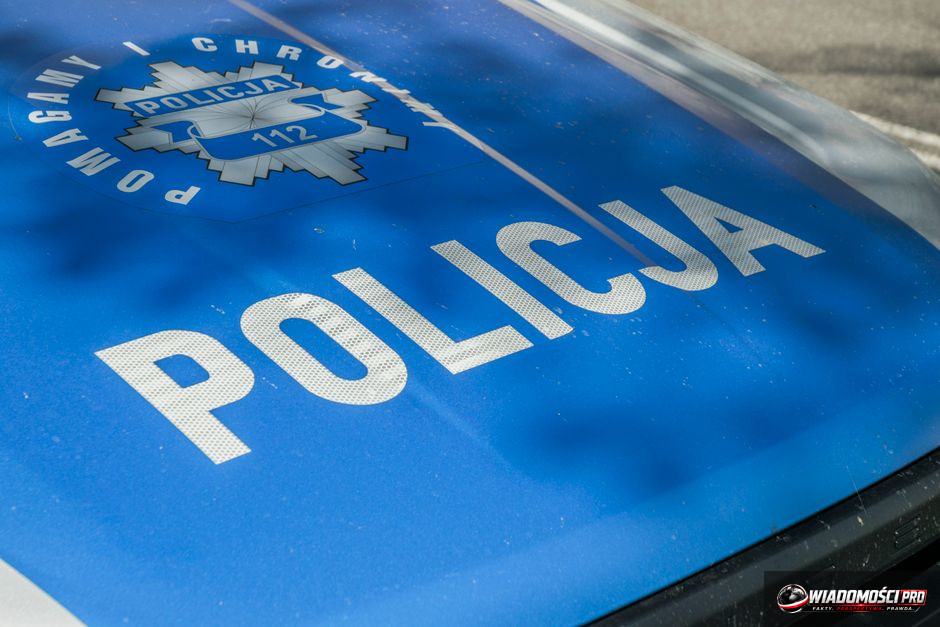
Traditional roadblocks have been replaced by automated selective checks, which in Ostróda allowed for the inspection of 1,300 drivers in just 3 hours using new selection algorithms. This system is based on ANPR (Automatic Number Plate Recognition) technology, which scans license plates in real-time and instantly links them with the CEPiK database and registers of wanted persons or those with driving bans. Instead of stopping every person passing through a given road section, the police receive a signal about a vehicle whose profile (or owner's history) raises systemic suspicions, allowing for surgical precision in operations while maintaining traffic flow.
From mass pressure to surgical selection
The change in the Polish police's philosophy is a clear reaction to the traffic paralysis that accompanied the old "sober morning" operations. For years, the standard was a total blockade of arterial roads, which led to multi-kilometer traffic jams during peak hours. The incident on February 27, 2026, on the S3 expressway, where mass sobriety checks led to a total blockade of the expressway, became a symbol of the failure of this method. Drivers, stuck in an endless queue, became proof that the "check everyone" method had ceased to be socially and logistically acceptable.
Modern selection algorithms are changing the nature of the interaction with the officer. The police officer is no longer someone who randomly pulls a car out of the crowd based on a hunch. The system, using traffic monitoring cameras and integrated databases, performs a preliminary selection even before the patrol intervenes. From an operational logistics point of view, this is a qualitative change. Officers operate on a selected group of vehicles, which drastically reduces the time needed to eliminate a threat. The Ostróda data from March 11, 2026, serves as a benchmark here – 1,300 drivers checked in three hours is a result that, with old methods, would have required the involvement of several times more officers and blocking traffic on a much longer section.
Skeptics note, however, that this solution creates a new form of uncertainty. A driver passing by a police car does not know if they were selected by an algorithm or if the system deemed their vehicle "clean." The old predictability is gone. Drivers once knew that during a "sober morning" operation, everyone had to blow into a breathalyzer. Today, the check has become a lottery where the rules of the game are written in software code to which the average citizen has no access. Are these algorithms objective? Do they favor certain car brands or travel routes? The lack of transparency in the criteria used by the system remains the biggest question mark in the new strategy.
The passenger in the eyes of the law: new police powers
The most important change in the structure of checks is the expansion of officers' powers regarding passengers, which came into effect on February 23, 2026. The legal basis for these actions is Article 15, paragraph 1, point 1 of the Act of April 6, 1990, on the Police, which entitles officers to verify the identity of persons and, in the context of a road check, to check the sobriety of persons in the vehicle if there is a reasonable suspicion that they may take over the wheel.
In practice, this means the end of the illusion of anonymity for those traveling in the passenger seat. The police have gained a tool that, in theory, is intended to seal the system and prevent attempts to switch drivers during a check, which was a common maneuver for people under the influence of alcohol. Now, the passenger becomes a full participant in the police intervention. If an officer decides that the situation inside the car requires clarification, the passenger must be prepared to undergo a breath alcohol test.
The expansion of these powers raises concerns regarding privacy. While the right to check a driver's sobriety is widely accepted as an element of ensuring road safety, involving passengers in this process is a step toward deeper surveillance of the vehicle's interior. The police argue that this is necessary to improve effectiveness, but civil rights advocates point to the possibility of abuse. Does a passenger who has no intention of driving the car need to be checked by the authorities? This question remains open, and the practice of recent months shows that police officers are increasingly willing to use this legal "skeleton key" to check the entire contents of a vehicle.
Effectiveness versus infrastructure: a bottleneck in the system
The technical success in Ostróda (1,300 checks in 3 hours, 3 intoxicated drivers) is impressive only when looking at the process of catching offenders. The problem begins when the police have to do something with the detained intoxicated driver. Here, a bottleneck appears, which the Local Government Portal (Portal Samorządowy) reported on February 11, 2026: the lack of systemic solutions regarding sobering-up centers.
For months, the police have been demanding that local governments have a statutory obligation to create and maintain places where intoxicated people could safely sober up. Currently, the situation resembles a "skeleton key, not a system." Officers who, thanks to algorithms, efficiently catch intoxicated people, lose hours securing these individuals because municipalities do not want to take on the costs of operating sobering-up centers. It is a bizarre situation: technology allows for the lightning-fast elimination of a threat from traffic, but the lack of infrastructure means that police officers are tied up by the logistics of handling detainees.
For a driver caught during a check, this means a prolonged procedure, and for the system – a bottleneck. Detection effectiveness is increasing, but the ability to isolate offenders is standing still. Until the legislator forces local governments to take a systemic approach to the problem of sobering up, even the most sophisticated control systems will only be a half-measure. The police do not need more algorithms to catch people, but specific places where these people could be placed without engaging patrol resources. Without this, police actions on the roads will remain merely an impressive display of capabilities, not a complete solution to the problem of intoxication.
Data as the foundation of operational activities
The modern police strategy is based on hard geographical and statistical data. The example of the Silesian Voivodeship, where accident data was analyzed on July 13, 2026, shows that the police no longer act intuitively. Officers map locations with the highest accident rates, and IT systems optimize the deployment of patrols in real-time. This is a paradigm shift: instead of blindly checking everyone, the police strike where the probability of breaking the law is highest.
The statistics from Ostróda from March 11, 2026, are key to understanding the scale. Detecting three intoxicated drivers in a group of 1,300 people proves high selectivity. Instead of stopping everyone and wasting the time of honest drivers, the systems point to individuals whose behavior deviates from the norm. From a logistics point of view, this is a success. Fewer police officers on the road, smoother traffic, and no irritation among motorists who previously lost dozens of minutes in queues.
However, mathematics has its limits. An algorithm is only as good as the data it works on. If an AI-based system misses someone who has consumed alcohol but is driving according to the rules, the real threat remains on the road. The Ostróda example proves that with current technology, the police can sift through thousands of cars in a short time, catching the fraction of those who should never have gotten behind the wheel. These are no longer assumptions; these are hard data from operational reports. The question of whether such precise selection will become a pretext for even broader surveillance of road users in the future remains a topic of public debate.
Long weekends under special supervision
Periods of increased traffic, such as long weekends, are a testing ground for new methods for the police. As early as June 4, 2026, the portal Autocentrum.pl confirmed that the police are focusing on exit roads, using changed tactics. Instead of stopping everyone individually, officers use procedures that allow for rapid vehicle rotation. In practice, this means that if you do not fall into the selected "high-risk" group, you will pass the police car without any delay.
For the driver, this is seemingly good news because holiday traffic flow benefits from it. However, the devil is in the details of the algorithm. Since the police select drivers based on undisclosed criteria, drivers do not know what actually draws the attention of the officers. Is it the driving style, or perhaps an automatic analysis of license plates linked to databases? We do not know. The police have gained a tool that allows them to act surgically, but this comes at the cost of control predictability. The old routine, where everyone was treated equally, is gone. Now, officers pull cars out of the crowd that the system deems suspicious.
While this method proved effective in Ostróda for detecting intoxicated drivers, for drivers, it means a new, unclear rule of the game. The question is whether such precise selection will not become a pretext for even broader surveillance of road users in the future. It is worth remembering that every second saved thanks to algorithms is a second in which the system collects data about us. Every license plate scan goes into a central database, which builds a digital profile of the driver that many of us are unaware of.
Technology in the service of order: how does it work?
The technical side of the new checks is fascinating and terrifying at the same time. ANPR cameras mounted on police cars or road gantries scan license plates at a speed of several vehicles per second. The image is processed by OCR (Optical Character Recognition) systems, and the result reaches the CEPiK database in a fraction of a second. If the system detects that a given vehicle has previously been noted in connection with traffic offenses, has an expired technical inspection, or the owner is listed in registers as a person with an active driving ban, the police receive a notification on their mobile terminals.
This is not the future; this is the present of the Polish traffic police. In Ostróda, it was this solution that allowed for such efficient operation. Officers no longer have to manually check every document in the system. The algorithm does it in the background, allowing them to focus on the stop and sobriety verification itself. This drastically shortens the intervention time. From the police's perspective, this is optimization; from the citizen's perspective – the end of anonymity on the road.
Moreover, these systems are constantly being developed. There are plans to integrate them with data on third-party liability insurance and other state registers. This will mean that in the future, the police will know everything about us the moment we pass by a police car. Is this good? From a safety point of view – yes. From the point of view of civil liberties – it is a topic for a deep discussion that has essentially not yet begun in Poland.
Challenges for local governments: sobering-up centers under fire
The problem with sobering-up centers, signaled by the Local Government Portal, touches the very foundation of the system's efficiency. If the police catch an intoxicated driver, they must isolate them somewhere. If there is no sobering-up center in the area, the offender ends up at the police station, occupying a space in the detention room (PDOZ), which takes officers out of field operations. This is a vicious circle that makes the entire system inefficient despite the high effectiveness of selection.
Local governments defend themselves against creating centers, arguing that this task should be funded centrally. The police, in turn, point out that without these places, the fight against intoxicated drivers on the roads is a Sisyphean task. In Ostróda, despite successes in the number of checks, the problem of the lack of infrastructure for detainees is palpable. This shows that technology is only one side of the coin. The other is the lack of political and financial will to create a coherent system for combating intoxication.
Without sobering-up centers, police actions will remain merely an impressive display of capabilities, not a complete solution to the problem of intoxication behind the wheel. The police do not need more technologies to catch drivers, but a place where they can safely place those who pose a threat. Without this, police actions on the roads will always be a "half-measure" that does not solve the problem but only moves it from the road to the police station.
Editorial perspective: is this the end of sober mornings?
The end of "sober mornings" in their traditional form is a fact. The Ostróda data from March 11, 2026, is the best proof of this. The police have moved to a model where data decides who to check. This is convenient for drivers who no longer have to waste hours in traffic jams, but it is also the beginning of a new era in citizen-state relations.
All road users gain, while those who counted on the predictability of police roadblocks lose. The catch lies in the expanded powers regarding passengers, which changes the dynamics of every road check. The police have gained a tool that allows them to act surgically, but this comes at the cost of control predictability. The old routine, where everyone was treated equally, is gone. Now, officers pull cars out of the crowd that the system deems suspicious.
While this method proved effective in Ostróda for detecting intoxicated drivers, for drivers, it means a new, unclear rule of the game. The question is whether such precise selection will not become a pretext for even broader surveillance of road users in the future. However, it is worth remembering that road safety is a paramount value, even if the price paid for it is higher in the context of privacy. Does the presence of a sober passenger actually guarantee safety, or does it become just another point in the police protocol? We will know the answer to this question when statistics from the coming months show whether these actions have actually influenced the number of intoxicated people on the roads.
Questions and answers
Can the police now check my passenger?
Yes, in accordance with the new powers introduced in February 2026 (based on Article 15 of the Police Act), officers have the right to verify passengers during a road check if there is a suspicion that they may take over the wheel.
Why were traditional sober mornings abandoned?
The main reason was low traffic flow and the creation of giant traffic jams, such as the one on the S3 route from February 2026, while new selective methods, which work better in high-traffic conditions, have high effectiveness.
How effective is the new control method?
The example from Ostróda shows that 1,300 drivers can be checked in 3 hours, which, using modern selection algorithms, allows for faster detection of intoxicated drivers than in the case of classic road blocks.
Sources
- Police surprised drivers. New sobriety check method - Auto Świat
- Holiday hit? Oh yes! Memes about kayakers are disarming. Check it out - Głos Wielkopolski
- Over 1,300 sobriety checks and 3 intoxicated drivers in 3 hours of operations - District Police Headquarters in Ostróda
- Driving on a long weekend? Police announce increased checks on roads - Autocentrum.pl
- New police powers. They will check your passenger - Spider's Web
- Giant traffic jam on S3 after sobriety check. Is a police operation on an expressway a good idea? - TVP 3 Gorzów Wielkopolski
- Silesian roads under police scrutiny. Latest accident data available - Życie Częstochowy i powiatu
- Police want mandatory creation of sobering-up centers by local governments. "We have a skeleton key, not a system” - Portal Samorządowy
Article prepared by the Wiadomości PRO editorial team with the support of artificial intelligence. Facts come from the sources listed above.
Komentarze (0)
Ładowanie komentarzy...