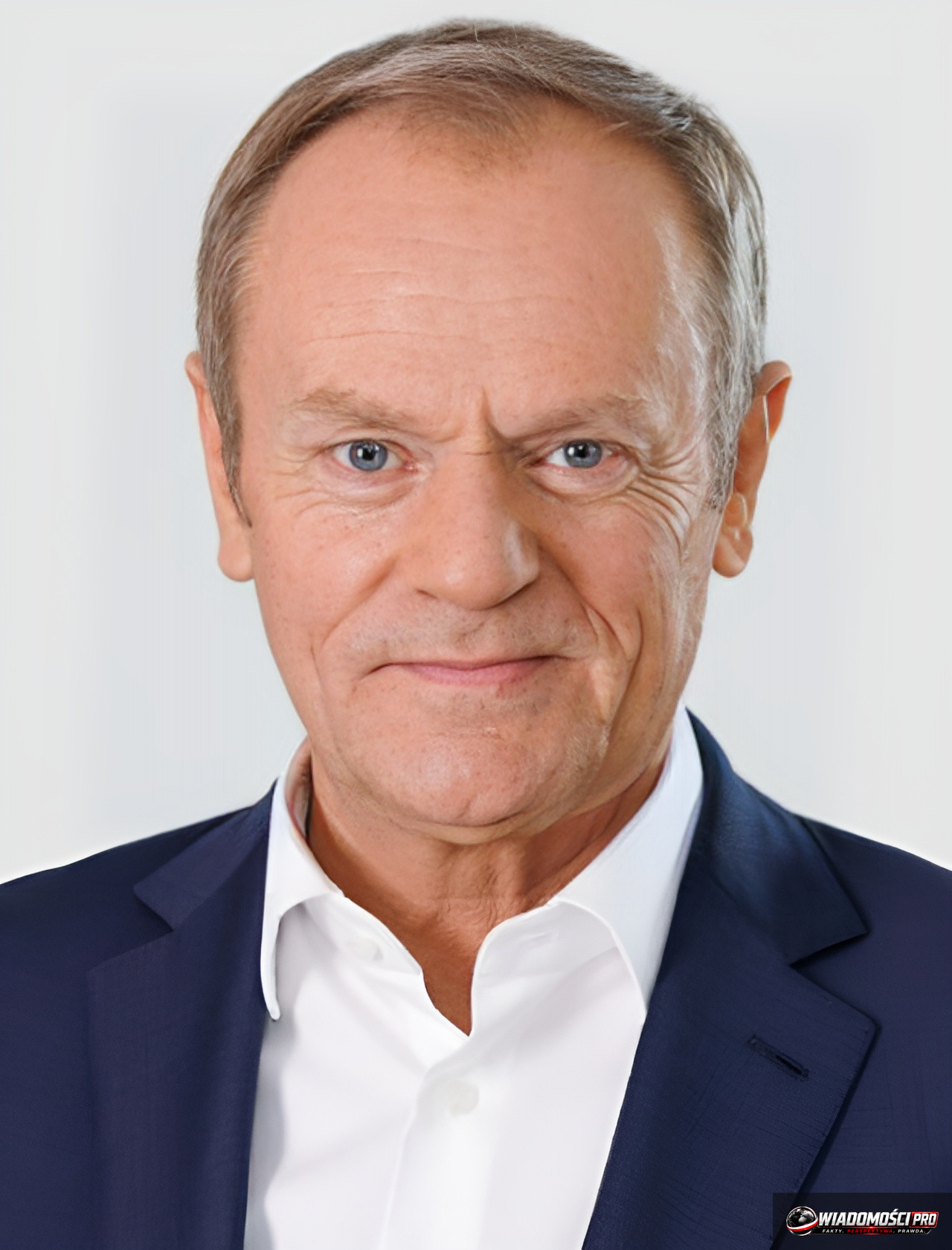
In June 2026, industrial production increased by 9.8% year-on-year, and the construction and assembly sector by 12.4%, which Prime Minister Donald Tusk assessed as a key impulse for GDP growth. This result does not constitute a historical peak, but is a clear rebound from the deep trough in which the Polish economy had been stuck for the last two years. This momentum significantly exceeds the average of the last decade, which was only 4.2% in the corresponding period, which clearly indicates a strong statistical base effect.
Industry on the offensive
The transformation of Polish industry over the last twenty-four months has taken place under conditions of extreme uncertainty. In 2024, the manufacturing sector struggled with energy costs, which became an insurmountable barrier for many plants. Today's 9.8% production growth is the result of process optimization that management forced to avoid a restructuring scenario. Entities employing more than nine people, whose data is collected by GUS, have shown an ability to adapt. Increased demand for raw materials is a signal that plants have stopped merely shutting down unprofitable lines and have begun to rebuild production capacities.
Structural analysis indicates that this result is mainly driven by heavy industry and the sector of medium-sized manufacturing plants. Companies that survived the energy crisis and wage pressure are now operating on higher margins than in 2024. At that time, the operating margin in the manufacturing sector often fell below 2%, which made any investment in innovation impossible. Currently, the financial situation of enterprises is more stable, but this does not mean a return to pre-inflation times. Every percentage of growth is paid for with higher energy efficiency, which allows companies to better manage working capital.
For investors and management, the biggest challenge remains the durability of this trend. Is 9.8% a result that will be maintained in the coming quarters? GUS statistics show that Polish factories have become hubs for European supply chains. However, this phenomenon forces a constant fight for price competitiveness. Without further investment in automation, the growth in production volume may slow down under the influence of rising labor costs, which are growing faster than productivity in Polish industry.
Construction between record and restructuring
The construction and assembly sector, with a result of 12.4% y/y, dominates the statistics, but this figure hides the dramatic history of the last two years. In June 2024, the industry was in a state of collapse. Data from that period are brutal: 52 construction companies went bankrupt, and 597 had to initiate restructuring procedures. This wave of market cleansing created a new reality in which only players with adequate financial backing survived.
The 12.4% growth in construction is a direct result of the low base from previous years. Investments that were frozen in 2024 due to a lack of liquidity and cost uncertainty were launched when infrastructure funds were unblocked. Construction companies that survived are now operating under conditions of less competition for public contracts. This allows them to more rigorously price offers and improve the profitability of projects that were carried out on the verge of profitability in 2024.
Attention should be paid to the cost structure. Prices of building materials and wage pressure in assembly teams remain factors that could stifle this growth. Even with a 12.4 percent jump in production, construction companies operate on a thin margin. Any fluctuation in raw material prices hits the financial result directly, because long-term contracts often do not provide for indexation sufficient to cover sudden increases in labor costs.
The mechanism by which construction drives GDP is based on the multiplier effect. Investments in infrastructure activate local labor markets and stimulate demand for construction-related services. However, in the Polish context, where project implementation costs are under constant inflationary pressure, every percentage of production growth is paid for with enormous organizational effort. Companies that did not optimize management processes during the restructuring period are now having difficulty keeping up with industry leaders.
Growth mechanics and the reader's wallet
For the average entrepreneur and consumer, data on 9.8% growth in industry and 12.4% in construction have a measurable impact on interest rates on working capital loans. The banking sector is reacting to stabilization in high-risk industries – and construction was one until recently. The reduction in the number of bankruptcies and the improvement in liquidity in the construction sector translates into a better credit score for companies in this area.
Entrepreneurs using working capital loans can count on a more flexible approach from banks in the face of better sector results. In 2024, banks drastically limited credit lines for the construction industry, which was the main cause of 597 restructurings. Today, when GUS statistics confirm the growth momentum, the costs of debt financing may be adjusted downwards. For a construction company owner, this means lower debt service costs, which directly increases net profit.
From the employee's perspective, improvement in these sectors primarily means employment stability. 9.8% growth in industry means that plants need hands to work. Wage pressure, although still present, becomes more predictable when companies have secured order books for the coming quarters. This, in turn, translates into greater certainty about the future of households, which is crucial for the dynamics of internal consumption.
However, production growth does not mean an automatic drop in prices in stores. Cost inflation in the construction sector is still being passed on to the end investor. If building a housing estate becomes 12.4% more expensive y/y, the final price per square meter of real estate will not fall. Growth in construction production is therefore a signal of economic recovery, but for the consumer, it may mean maintaining high prices for capital goods.
The government's role in stimulating the economy
Political narratives around GUS data often overlook the fact that the economy reacts to external stimuli with a delay. Prime Minister Donald Tusk, taking credit for the current result, points to the effectiveness of government actions in terms of investment. This is a thesis that is justified in the statistics but requires verification in the field. Government support, including the unblocking of infrastructure funds, undoubtedly provided an impulse for the construction sector. However, it was the entrepreneurs who had to show flexibility to translate these funds into real results.
In June 2026, the Polish economy proved that it can adapt to new conditions, provided it receives appropriate support in the form of predictable law and stable sources of financing. The open question remains how long the government will be able to maintain this momentum. Wage pressure and rising energy costs are factors that cannot be "conjured away" in statistics. If 9.8% industrial production growth is to last, it will be necessary to maintain the competitiveness of Polish goods in foreign markets.
The government faces a challenge: how to support growth without simultaneously fueling inflationary pressure that could stifle internal demand? Prime Minister Tusk, commenting on the June results, rightly notes that construction and industry work in tandem. This is true – the development of industrial infrastructure entails demand for materials and construction services. This is a feedback loop that, under favorable conditions, creates a so-called positive spiral of growth. But was June 2026 really a breakthrough? It was probably the moment when the economy entered a path of stabilization, moving away from the trauma of 2024–2025.
Innovation as the key to the future
In the face of record results, it is worth looking at the quality of growth. The construction industry, which in 2020, according to Ukraїner data, was only experimenting with technologies such as hemp construction, is now beginning to implement these solutions on a wider scale. Although traditional technologies still dominate, innovation is becoming an element of building a competitive advantage. The transition to alternative building materials is no longer just a matter of fashion, but a requirement resulting from EU regulations regarding the carbon footprint.
Companies that invest in prefabrication and ecological raw materials go through certification processes faster and find contractors more easily. It is these entities that have the best chance of survival when the current business cycle slows down. Can innovation save the industry from another wave of restructuring? Experiences from 2024 show that a construction company without technological capital is defenseless against price fluctuations. Investments in prefabrication allow for shorter working times, which is a key success factor given the current shortage of workers.
The 12.4% growth in construction would not have been possible without increasing work efficiency, and this can only be achieved through the modernization of the machinery park and construction methods. However, one must be careful about the trap of excessive optimism. Innovation requires initial investments, which may be difficult to finance in conditions of high interest rates. Therefore, the government's role in stimulating research and development in the construction sector is just as important as direct investment in infrastructure. If Polish companies do not become innovative, 12.4% growth will remain only an episode, and not the beginning of a new era in Polish construction.
Forecasts for the second half of 2026
The second half of 2026 will be a test for Polish business. Achieving industrial production growth of 9.8% and construction sector growth of 12.4% is an excellent starting point, but the market does not forgive stagnation. Entrepreneurs must now prove that they can manage growth in a sustainable way. A key threat remains the condition of the small and medium-sized enterprise (SME) segment. Even if big players are posting great results, it is the smaller companies that are the barometer of the real economy. If we see an increase in the number of restructurings in the coming months, it will mean that June's optimism was premature.
The history of 2024–2026 teaches us that the economy is a connected vessel – the weakness of subcontractors eventually hits big projects. For investors, there is a clear conclusion from this: selection. Not every company in the construction or industrial sector is a safe partner. It is worth analyzing financial statements and monitoring the situation in restructuring registers. GUS statistics on 9.8% and 12.4% growth are averages that mask huge differences between individual entities. Is stabilization ahead? Much points to it. As long as there are no unforeseen external shocks, such as sudden changes in energy prices or geopolitical turmoil, the Polish economy has a chance to maintain its current momentum.
Prime Minister Tusk is right that the GDP growth impulse is real, but its durability depends on the financial discipline of the entire private sector. It is worth noting that in 2024, many companies went bankrupt not for lack of orders, but because of poor liquidity management in the face of rising money costs. Today, as interest rates have stabilized at a higher level, entrepreneurs have learned to calculate the cost of capital in a more rigorous way. This is a key change in business culture that could save the country from another wave of insolvency.
What does this mean for the average Pole?
For employees in the industrial and construction sectors, the June results are primarily a signal of employment stability. 9.8% growth in industry and 12.4% in construction translates into job security and greater certainty about the future. Companies that record such momentum are usually recruiting, which improves the situation in the labor market and increases pressure for wage growth. However, for the average consumer, production growth does not always mean an automatic drop in prices in stores. Economic growth is a long-term process. From the perspective of the household budget, it is important that inflation remains in check and that GDP growth translates into the real purchasing power of money.
Current GUS data give hope that the Polish economy is on the right track, which in the long term should favor the stabilization of prices for products and services. At the same time, it is worth remembering that the economy is not just bars in a GUS report. It is also thousands of decisions made every day by entrepreneurs and managers. If these decisions are based on rational premises, and not on short-term euphoria, we have a chance for a period of lasting development. June 2026 will be remembered as the month in which statistics finally began to match the real feeling of improving business conditions.
For people paying off mortgages, GDP growth stimulated by industry and construction is a signal that the economy is able to "bear" current interest rates. If the growth momentum continues, the pressure for further rate hikes will decrease. This is good news for the wallet of every Pole burdened with debt. Macroeconomic stability, supported by hard data from industry, is the foundation on which long-term financial plans can be built. The Polish economy in 2026 is at a turning point – from fighting for survival to fighting for growth.
Questions and answers
Does production growth mean lower prices in stores?
Not directly. Industrial production growth of 9.8% improves the condition of the economy and increases the supply of goods, which in the long term may stabilize the price level, but this is not an immediate process.
Is the construction industry completely safe now?
Despite 12.4% growth, the sector is still undergoing adjustment processes. After the experiences of 2024, when hundreds of companies had to restructure, the industry remains sensitive to liquidity risk, and success depends on the effectiveness of the implemented technologies.
Where does this production data come from?
The data are based on official announcements from Statistics Poland (GUS) for June 2026, which are the only reliable point of reference for assessing the dynamics of the Polish economy.
Is 12.4% growth in construction a record result?
This is a very high result compared to recent years, however, it should be considered in the context of the low base from 2024, when the industry was struggling with a wave of bankruptcies and numerous restructuring processes.
Why does Prime Minister Donald Tusk link these results to GDP?
The Prime Minister points out that industry and construction are the main engines of the Polish economy, and their combined acceleration creates a multiplier effect that directly affects the growth of Gross Domestic Product.
Do smaller construction companies also benefit from this growth?
The situation is varied. Although the sector is growing, smaller entities often face greater challenges in the area of liquidity management, which means their condition does not always reflect the general GUS data for large players.
What risks does the Polish economy face in the second half of 2026?
The biggest challenges remain wage pressure, high energy costs, and the need to maintain rigorous financial discipline in the face of market uncertainty, which never completely disappears from the construction sector.
Finally, it is worth emphasizing that every forecast in this regard is burdened with the risk of external variables. The Polish economy, being part of a global system, remains dependent on the economic situation of its main trading partners. If demand in the eurozone weakens, even the best statistics from June 2026 will be quickly corrected by the market. Entrepreneurs who learned lessons from 2024–2025 should remain vigilant and not succumb to the temptation of over-leveraging their projects. Stability is more valuable than a momentary record, and the construction and industrial market in Poland has proven that it can be brutal to those who ignore the basic principles of financial risk management. The future will belong to companies that maintain liquidity and the ability to innovate, regardless of what the next GUS reports bring. June 2026 is only the beginning of the road to full stabilization, not its end. Each subsequent quarter will verify whether Polish enterprises can turn current growth into a lasting economic foundation, or whether they will remain in a "rebound-slowdown" cycle. The choice belongs to the management staff and the investment decisions that will be made in the coming months. The Polish economy on fire with records needs not so much enthusiasm as cool calculation and discipline, which will allow it to survive every subsequent storm. The coming months will show whether June was a breakthrough moment or just a momentary respite after a period of the greatest market uncertainty in years. All eyes are on liquidity indicators and order books, which at this moment are becoming the most important measures of the condition of Polish companies. There is no room for mistakes of the past when capital costs are high and competition in international markets is extremely fierce. The construction and industrial industry entered the second half of the year with full order books, which gives hope for subsequent months of growth, but requires vigilance in every aspect of operational activity. Only in this way will Polish business be able to defend its positions and continue the path of development, even if the global environment becomes more demanding. Stability begins with the understanding that 9.8% or 12.4% growth is a statistic behind which there are specific financial results and real risks. Managing them is today the most important competence of every manager in Poland. June 2026 went down in history as a month that gave hope, but it depends on the following months whether this hope will turn into long-term economic success for the entire country. Every entrepreneur who makes an investment decision at this time takes responsibility not only for their own company but also for the entire supply chain in which they operate. This is a responsibility that cannot be ignored when planning for the future for the second half of 2026. Only a consistent pursuit of efficiency will allow maintaining competitiveness in a market that has undergone such drastic changes in recent years. The Polish economy is currently in a recovery phase, and June was its strongest impulse. Now it is time to maintain the pace and ensure that this growth does not become the cause of overheating, which in the past often ended in a painful correction. Entrepreneurs, managers, and the government – everyone is now in one process, the goal of which is lasting, sustainable development based on strong foundations, and not on momentary euphoria. This is the most important conclusion from the June reports.
Sources
- Industrial production – a positive surprise - wGospodarce
- Building with hemp - Ukraїner
- 52 construction companies went bankrupt, 597 are in restructuring - wGospodarce
Article prepared by the Wiadomości PRO editorial team with the support of artificial intelligence. Facts come from the sources listed above.

Komentarze (0)
Ładowanie komentarzy...