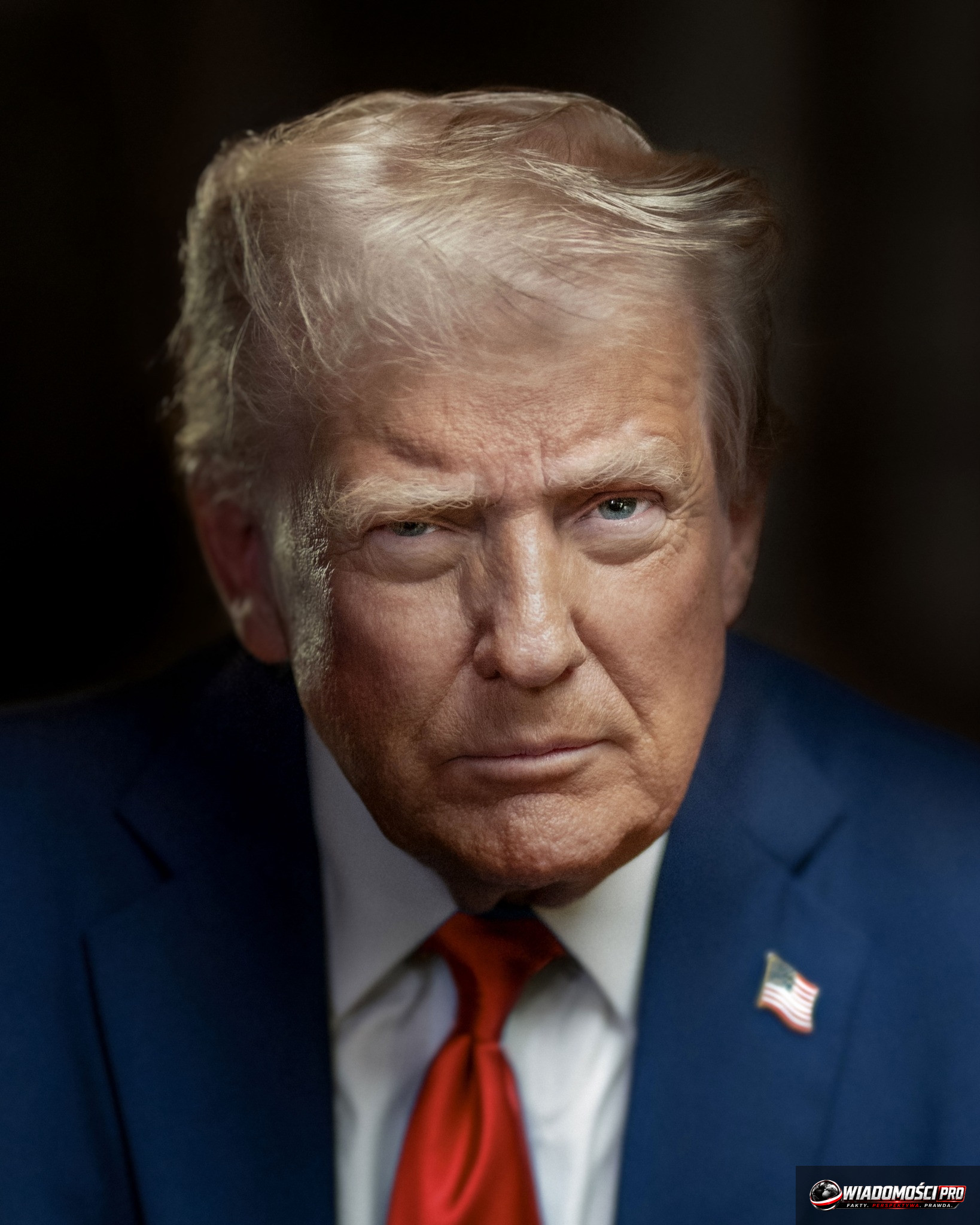
Donald Trump has raised global tariffs from 10 to 15 percent, and the new policy now covers 60 countries, representing a significant intensification of protectionism. This decision, formalized in February 2026, finally ends the period of market anticipation for a more conciliatory approach from the American administration. For businesses and global supply chains, this means the necessity of an immediate revision of cost estimates in the face of a drastic increase in trade barriers.
From 10 to 15 percent: The evolution of Trump's tariff policy
The US presidential administration has made a radical correction to its approach to foreign trade. The transition from 10 to 15 percent is not merely a technical change in rates, but a signal that Washington treats tariffs as its primary diplomatic tool. This change, confirmed on February 21, 2026, shocked analysts who had been counting on a slowdown in protectionist tendencies. Media outlets such as TVN24, RMF24, Euronews, and Bankier.pl reported in unison that the original plans were no longer current.
A five-percentage-point difference in the scale of global trade generates billions of dollars in additional costs. Importers who had calculated their margins based on lower rates suddenly faced the prospect of lost profitability. The White House opted for a strategy of confrontation, concluding that previous assumptions did not provide adequate protection for the American domestic market.
February 2026 went down in economic history as the moment when campaign rhetoric transformed into a hard, legislative apparatus of pressure. Experts noted that the administration is no longer seeking compromises, but is trying to force concessions from partners by directly striking at their export profits. This approach breaks with the long-standing tradition of American trade policy, which for decades was based on the liberalization of trade. Today, the priority is isolationism, and every subsequent decision by the White House confirms that Washington is prepared for long-term tensions with almost every significant player on the international stage.
The effects of this decision are being felt in consumer wallets, as tariff costs are passed on to end-users. This mechanism triggers inflationary pressure that cannot be ignored. Companies operating in complex networks of dependencies must now decide whether to absorb the cost increase or raise product prices, which could lead to a drop in demand. This uncertainty has become the new normal for the private sector.
60 countries in the crosshairs: The scale of protectionism
Donald Trump has moved from threats to the systemic implementation of solutions that are turning the balance of power in global trade upside down. According to information from July 2026, American trade barriers have been imposed on 60 countries. This is an unprecedented scale that includes not only political rivals but also close allies with whom the US had maintained stable trade relations for years.
This approach hits the global supply architecture, forcing governments from Europe to Asia to feverishly search for alternative markets. Instead of a smooth flow of goods, we are observing the creation of isolated economic zones. Entrepreneurs who invested in exports to the US have been forced to factor the new rate into the price of every good. This leads to the paralysis of many industries, especially those where margins are low and competition in the American market is extremely strong.
Many observers point out that opening such a broad economic front is an attempt to force global manufacturers to move factories to the United States. This strategy is based on the assumption that high tariffs will make imports unprofitable, which in theory is supposed to stimulate domestic production. However, in practice, most companies encounter the barrier of a lack of appropriate resources and a skilled workforce in the US, which makes this process extremely difficult and costly in the short term.
The scale of the impact of these actions is so large that financial markets have begun to price in the risk of a permanent recession in countries most dependent on American consumers. Every state in the group of 60 countries subject to restrictions must now face the necessity of revising its own fiscal policy. Some governments are already announcing the introduction of retaliatory tariffs, which creates the risk of the conflict escalating to the level of an open trade war. This is a vicious cycle in which every subsequent round of hikes worsens the situation for all parties involved.
Global trade war: Is this the new reality?
The observed escalation is not a sudden impulse, but the result of a long-term strategy that we have been able to track since the beginning of 2026. Already in January, when reports of disputes regarding Greenland emerged, it became clear that raw materials and economic security would become the main flashpoints. The Trump administration treats trade as an instrument of diplomatic pressure, which was visible in Washington's subsequent moves.
The trade war has ceased to be a metaphor and has become a hard reality. The market has stopped counting on a softening of the course by American authorities. The White House is openly abandoning multilateral concessions in favor of a hard game based on fiscal dictates. This is not an isolated case, but rather a consistent implementation of a political line whose foundation is the conviction in the strength of the American market as the main bargaining chip.
Experts view these actions with great reservation, pointing out that opening such a broad front will hit supply chains that have been built over the last three decades. The order based on free trade has been rejected in favor of protectionism that takes no prisoners. Investors and governments must now calculate losses in a world where tariffs are the main tool of foreign policy. A lack of predictability makes capital more nervous, and long-term investments are being put on hold until the situation clarifies.
The United States, through its actions, is in a way forcing the rest of the world to redefine alliances. Countries affected by the restrictions are tightening cooperation among themselves, creating blocks resistant to American pressure. This leads to the fragmentation of the global trading system. Instead of one integrated market, we are beginning to observe the emergence of isolated ecosystems, which in the long term may lead to irreversible changes in the structure of the world economy.
Financial market reactions to Washington's decision
Stock exchanges reacted nervously to the news of the hardening trade course. Raising the global tariff rate triggered a wave of sell-offs of high-risk assets. Investors, who hate uncertainty, began to flee toward safe assets such as Treasury bonds or gold. From Frankfurt to Tokyo, capital is looking for safe havens, which in practice means the strengthening of the dollar and the destabilization of local currencies.
The announcements of the hike triggered immediate concerns about global stability. Trading floors had not priced in such a drastic move, assuming that earlier rhetoric was merely a negotiating tool. Now that the real rate has risen, the valuations of export companies have fallen sharply. Analysts have no doubts: this is a fundamental change in the rules of the game for global supply chains. The risk of rising inflation in the US and globally as a result of the introduction of new burdens is becoming a new baseline scenario for the markets.
The sudden turn in trade policy forces investment funds to completely revise their portfolios. No one wants to be left with shares in companies whose margins will be devoured by new levies. Volatility on indices is at its highest in months. Today, sentiment on stock exchanges resembles nervous anticipation of the White House's next steps, and every mention of expanding the list of countries subject to tariffs triggers immediate reactions from trading algorithms.
The market is no longer pricing in just an economic slowdown, but a real trade war in which costs will be passed directly on to end consumers. The optimism that had recently driven the bull market has evaporated in the face of uncompromising protectionism. Investors realize that even the strongest corporations may have difficulty adapting to such rapid changes in the regulatory environment.
Forecasts for global trade: Who will lose the most?
The decision to raise tariffs is not just a technical correction. It is a signal that the American market, hitherto one of the most open to foreign contractors, is closing its gates on a large scale. The mechanism is brutally simple. Goods imported from the 60 countries subject to restrictions become drastically more expensive at the customs clearance stage. As a result, every product – from advanced electronics to everyday clothing – becomes less price-competitive compared to goods manufactured within the United States.
The American consumer will pay more, but it is exporters from countries affected by the new tariff who will bear the greatest burden of market loss. In the economics of international trade, a five-percentage-point difference is a chasm that can decide the "to be or not to be" of many companies. Enterprises that operated on margins of 3-4 percent become unprofitable overnight. This applies especially to economies heavily dependent on sales to the US.
Analysts point to one more aspect. Protectionism in this form is not just higher prices in stores, but above all, the destabilization of supply chains. Entrepreneurs who invested in exports to the US are hitting a wall. Either they will pass the costs on to recipients, which may lead to a collapse in demand, or they will give up their presence in this market. There is no third way. For many exporters, this is a blow that cannot be cushioned in the short term. The American market is therefore ceasing to be an easy target, becoming a fortress to which access requires enormous financial outlays.
In this situation, developing countries whose economies are based on the export of cheap goods lose the most. For them, the loss of access to the American market is not just a loss of income, but often also the paralysis of entire industrial sectors. This leads to an increase in unemployment and social unrest, which can have negative consequences for the stability of entire regions. The US, through its policy, is indirectly exporting an economic crisis to countries that do not have sufficient tools to defend themselves against it.
The future of trade relations under Trump
Donald Trump has finally rejected the path of negotiations, opting for open economic confrontation. The decision of July 21, 2026, leaves no illusions: the US administration does not intend to back down from the aggressive rhetoric that has defined American foreign policy for months. The consistency with which the president is raising the stakes suggests a complete lack of will for compromise.
The White House treats trade not as a tool for exchange, but as an instrument of political pressure. For the global economy, this means long-term destabilization. The mechanism is simple: the United States imposes higher import costs, forcing partners to revise their own budgets and export strategies. A lack of willingness to talk means that supply chains built over the last decades must be reorganized in emergency mode.
The market does not like uncertainty, and the tariff policy of the US administration is its pure definition. The scale of protectionism – 60 countries under pressure – shows that Washington is not aiming at specific competitors, but at rebuilding the entire international trade system on its own, rigid terms. No one can feel safe. If anyone was counting on a softening of the course, today's facts are brutally verifying those expectations.
Trump is playing for high stakes and does not care about the costs that, in the long term, will be borne not only by the rest of the world but also by the American consumer themselves. The prospect of a multi-year trade war is changing the way companies think about globalization. Instead of cost optimization, the new priority is the security and resilience of supply chains to political shocks. This means higher prices for everyone, because production efficiency is being sacrificed on the altar of political sovereignty.
What this means for you
For the average consumer, Trump's decision means the end of the era of cheap imported goods. The increase in tariffs translates directly into higher prices in stores, ranging from electronic equipment to food. Inflation, which had been extinguished in recent years, may return with redoubled force, becoming a direct side effect of Washington's protectionist policy.
Entrepreneurs must prepare for a difficult time. Companies that rely on the import of semi-finished products from abroad will feel a drop in margins unless they decide to raise the prices of final products. This, in turn, may weaken demand, leading to an economic slowdown. Only local American producers will gain, as they will gain a price advantage thanks to the tariffs, but in the long term, a lack of competition may negatively affect the innovation and quality of their products.
The catch lies in the risk of retaliation. If countries subject to restrictions introduce their own tariffs on American goods, US exporters will suffer, which may lead to job losses in key sectors of the economy. A global recession, triggered by mutual restrictions, is a scenario that almost all economists fear. In a world where trade is the main engine of growth, such actions are like throwing sand into the gears of a great machine.
Ultimately, there are no winners in this game. Even if the US manages to improve its trade balance in the short term, it will do so at the expense of relations with allies and the stability of the global financial order. For the ordinary person, this means less money in their wallet and greater uncertainty about tomorrow. The era of free trade, which for years fueled global prosperity, is giving way to an era in which borders are becoming tighter and politics is taking precedence over economic logic.
Questions and answers
What tariffs are currently in effect on goods imported into the US?
Donald Trump has raised the global tariff rate to 15 percent, which applies to the 60 countries covered by the new trade policy, representing an intensification of protectionism.
Were the originally planned tariffs lower?
Yes, a 10 percent rate was initially announced, but in February 2026, the Trump administration decided to raise it to 15 percent, which is a significant change for importers.
How many countries are covered by the new restrictions?
According to reports from July 2026, the new tariffs hit 60 countries around the world, which is a signal of a drastic expansion of trade barriers by Washington.
Sources
- Donald Trump resumes trade war. Will hit 60 countries with new tariffs - Rzeczpospolita
- Trump: global tariffs will be 15 percent, not 10 percent - TVN24
- Trump raises new global tariffs from 10 to 15 percent - RMF24
- Donald Trump fights for Greenland. Goes to trade war - Business Insider Polska
- Trump raises global tariffs from 10 to 15 percent - Euronews
- Donald Trump is not stopping. Announced tariffs will be even higher - PolsatNews.pl
- New decision by Donald Trump regarding global tariffs. No longer 10 percent - Wiadomości Onet
- Trump announced raising the global tariff rate from 10 to 15 percent - Bankier.pl
Article prepared by the Wiadomości PRO editorial team with the support of artificial intelligence. Facts come from the sources listed above.

Komentarze (0)
Ładowanie komentarzy...