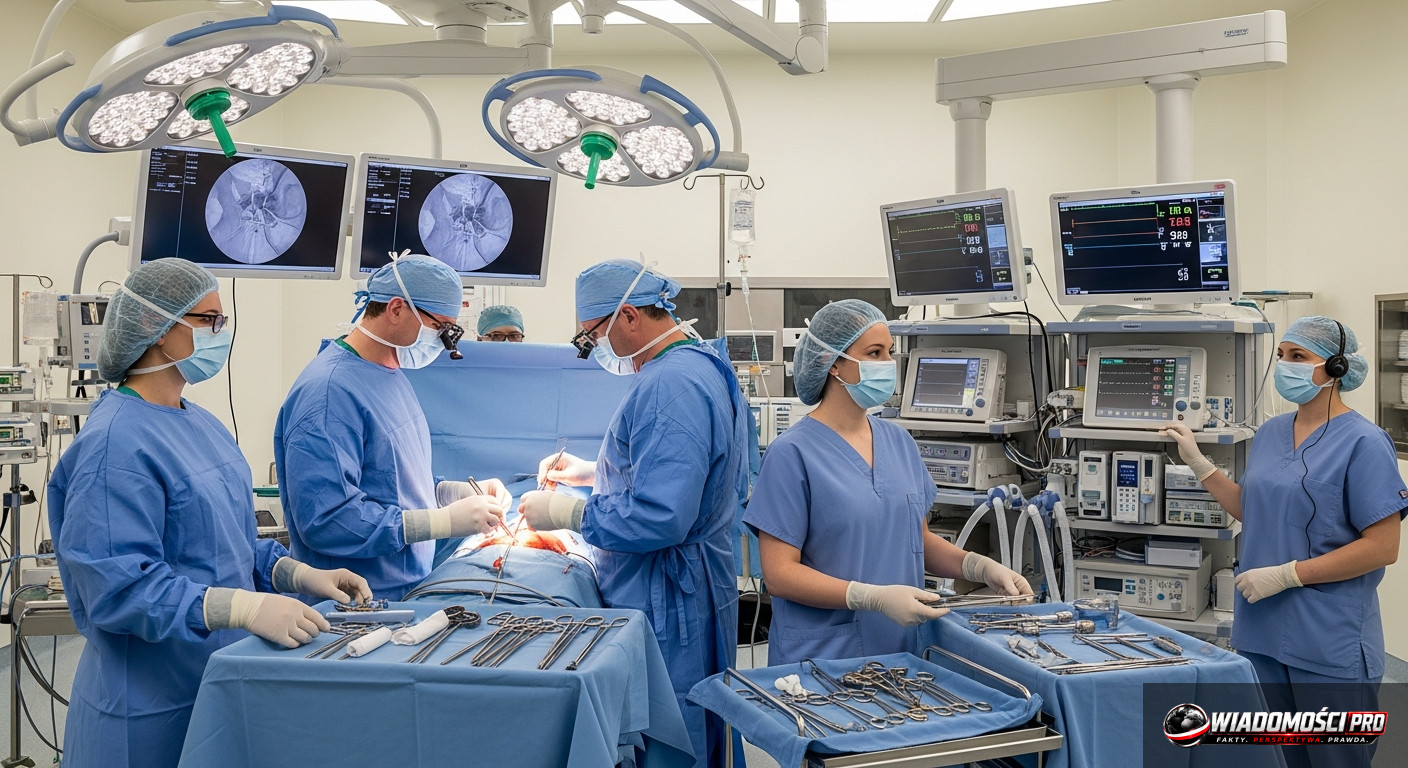
This is the world's first medical success for the MUW team, in which, by implanting liver fragments from two different donors, they managed to save the life of a cancer patient for whom standard methods were a death sentence. The surgical connection of blood vessels and bile ducts of two separate lobes from distinct donors allowed for the creation of a single, fully functional organ capable of performing metabolic functions in the recipient's body. The surgery, led by Prof. Krzysztof Zieniewicz from the Department of General, Transplant and Liver Surgery at the Medical University of Warsaw, was performed in July 2026, placing the Polish center at the forefront of global liver surgery.
In July 2026, the Medical University of Warsaw team performed a procedure that had previously existed only in the realm of theoretical considerations among transplantologists. Combining organ fragments from two different donors into a single recipient required surgeons not only to be proficient in the split liver technique but, above all, to have precision in vascular reconstruction, which in such a unique anatomical arrangement carries an extremely high risk of complications. For a patient with an advanced oncological process who had exhausted all available therapeutic options, this surgery represented the last line of defense against the inevitable progression of the disease. The event of July 17, 2026, is not merely a media success, but above all proof that barriers which once seemed insurmountable are becoming achievable through specialized knowledge.
The genesis and significance of the pioneering surgery at MUW
The evolution of transplant methods at MUW is a process that has been ongoing for years. The foundation for the current success was previous experience in split liver procedures, carried out since February 2023. At that time, surgeons from Warsaw, for the first time in Poland, divided one organ between two recipients, which allowed for more effective use of the scarce resource that is a healthy liver. Doctors then had to master the technique of precise division of the liver parenchyma while maintaining the continuity of the main blood supply and drainage vessels. This experience became an essential training ground before performing the reverse procedure – that is, merging two fragments into one functional whole.
The shortage of organs for transplantation is a permanent challenge for every healthcare system. Every method that allows for the use of more donors effectively shortens waiting lists. In the case of a chimeric transplant, the logistical challenge lies in the simultaneous synchronization of the work of teams harvesting organs from two independent donors. The entire process must be coordinated with the implantation time in the recipient to minimize tissue ischemia time, which in the case of the liver is critically short and usually amounts to less than 12 hours. This operation required the involvement of dozens of specialists, including transplant surgeons, anesthesiologists, hepatologists, and transplant coordinators, who worked in a rotational system for several hours.
The scalability of this solution remains a subject of analysis by the medical community. Polish transplantology has demonstrated that this technique is feasible in clinical conditions, but its replication depends on the availability of qualified personnel and adequate infrastructure to secure organ transport logistics. Clinical data regarding patient survival after such an unusual procedure will now be closely monitored by national and international transplant commissions.
Chimeric transplantation technique: what is the key to success?
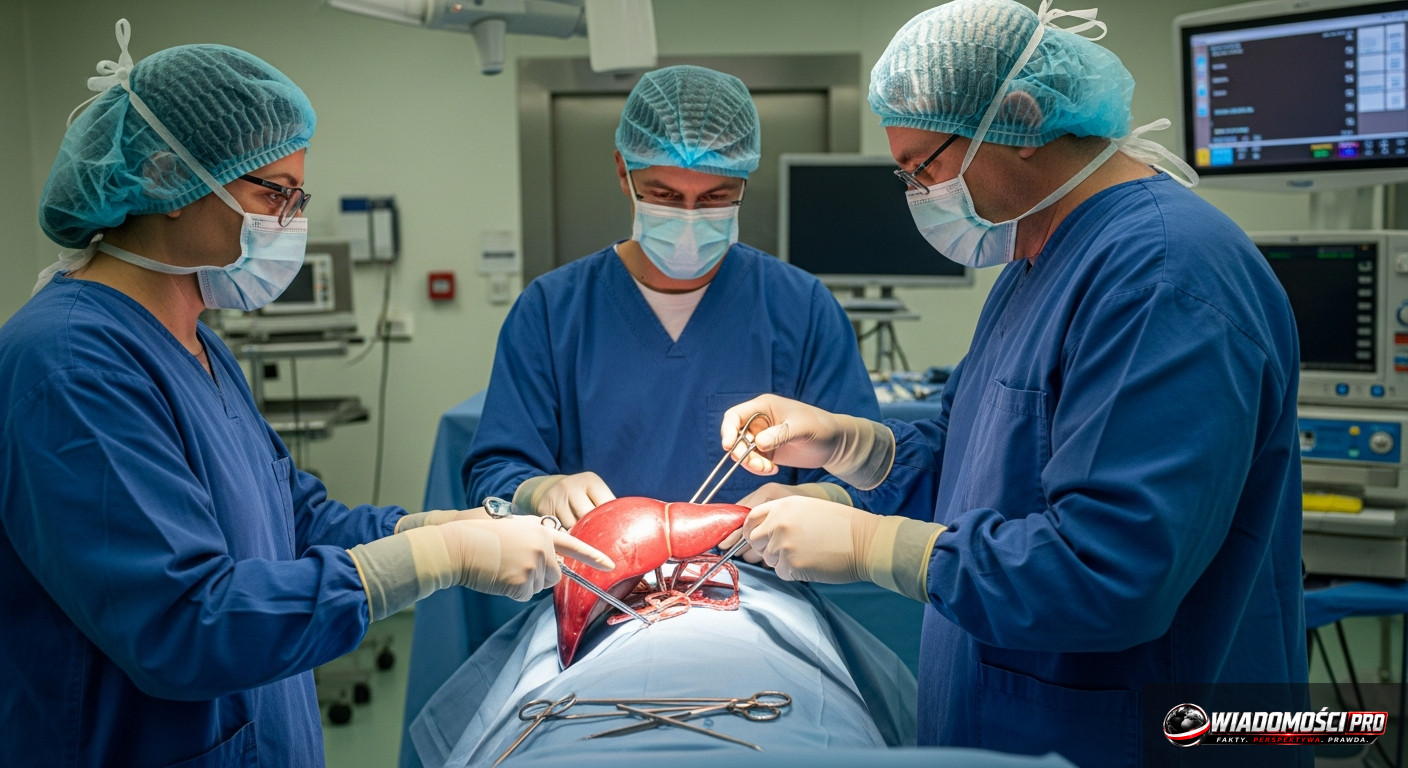
At the Warsaw medical center, an operation was performed that pushes the boundaries of modern surgery. A team of specialists from the Medical University of Warsaw performed a procedure using liver fragments from two different donors to create a single, fully functional organ in the recipient. In the medical community, this procedure is referred to as a chimeric transplant. This name accurately reflects the hybrid nature of the procedure, in which the patient's body accepts tissues from two separate sources, creating a biological whole from them. This is not a routine procedure. It requires extreme precision, especially at the stage of connecting blood vessels and bile ducts originating from two different organs. The slightest error in the anastomosis could lead to ischemia of the liver fragments or their irreversible damage, which in the case of an oncology patient would be a death sentence.
Surgeons at MUW were able to risk such a difficult operation thanks to experience gained during previous procedures, including pioneering laparoscopic liver fragment harvesting surgeries, which the medical community was talking about as early as March 2023. At that time, they learned how to safely harvest material; today, they can precisely combine it. The logistics of such an operation – requiring the simultaneous synchronization of two donors and a recipient – remain a massive organizational challenge, which in the current healthcare system constitutes a barrier for most centers. MUW has proven that having a highly specialized team capable of coordinating actions on so many levels allows for going beyond the rigid framework of standard transplant protocols. This success is proof that innovation in medicine requires not only technical knowledge but also courage in making decisions in borderline situations.

Why has liver cancer ceased to be a death sentence?
Until now, for many oncology patients, the traditional waiting list for a full organ was a mathematical equation with a brutal result. The waiting time for a transplant often proved to be much longer than the rate of tumor growth. The patient would die before any organ could reach them. The procedure performed in July 2026 by the Medical University of Warsaw team changes this binary reality. Doctors no longer wait for one perfectly matched organ. Thanks to the method using liver fragments from two different donors, they have gained a surgical response to the progressing disease.
This approach opens a completely new chapter in transplant oncology, where time is the most ruthless opponent. The success of MUW proves that even in situations where standard methods have failed and patients were written off as hopeless cases, there is a real alternative. From a medical point of view, this is a chance to save a life where previously nothing could be done. The benefits for patients are measurable and concrete:
- A faster response to progressing liver cancer becomes possible because the system is no longer a hostage to the availability of full, single organs.
- The pool of available liver fragments increases, which directly reduces the waiting time for the procedure for people with a high MELD score.
- Patients for whom previous treatment protocols were a death sentence gain a chance for surgery while the cancer is still in the operable phase.
- This method gives hope to thousands of patients in Poland and around the world, opening doors to procedures that were beyond the reach of transplant medicine just months ago.
This is a complicated operation requiring immense surgical and immunological experience. Not every facility will be able to repeat this feat. This success pushes the boundary of what we consider possible in transplantology, although it does not mean that every oncology patient will automatically receive help in this way.
The evolution of transplantology: from split liver to two donors
Polish surgeons from the Medical University of Warsaw have redefined the boundaries of organ surgery. This year's procedure is not just another modification of known techniques, but a radical change in approach: combining two different sources of transplant material for one patient. Just three years ago, such an operation seemed like pure speculation. Today, it is a medical fact that opens doors for patients previously condemned to failure due to a shortage of organs or their insufficient quality. The pace of development in this field in Poland is dizzying. One only needs to trace the timeline of innovation implementation by the MUW team to understand the scale of the technological leap achieved. We are not talking about minor corrections here, but a completely new paradigm of oncological treatment.
Comparison of the development of liver transplantology in Poland:
- Beginnings of the split liver method (dividing one organ for two people) — 2023.
- Pioneering transplants from living donors — 2024.
- Use of two different sources of material for one recipient — 2026.
Previous achievements, such as the widely commented laparoscopic harvesting of liver fragments from living donors in 2023, were the foundation. They allowed surgeons to gain proficiency in operating on small, precisely excised organ lobes. The current success, however, is a level higher. Connecting two fragments from different people is an operation fraught with enormous immunological and technical risk. MUW is consistently building its position as a leader. While the surgical technique has ceased to be a barrier, logistics and ethical issues related to "chimeric" transplantation are only now becoming a subject of debate in the medical community. Patients have gained a chance they never had before, but it is the doctors who must prove that this method is repeatable and safe in the long term.

Ethical and logistical challenges of the operation
The operation that saved a cancer patient was not just a surgical feat. It was a logistical testing ground. Coordinating two donors at the same time required the hospital in Warsaw to have a level of precision where there was essentially no margin for error. The schedule had to be synchronized almost to the minute so that the liver fragments from both donors reached the recipient in a state guaranteeing their full functionality. Any delay in transport or in the preparation room would have meant the failure of the entire undertaking.
Questions also arose that transplant medicine had hardly asked before. Ethical issues regarding donor consent in such a specific, chimeric arrangement became a flashpoint in bioethics committee debates. How to protect the interests of both parties when organs from two different people are transplanted? The answer was an extremely restrictive immunological matching protocol. Without perfect tissue matching, the risk of rejection by the recipient's body would be twice as high as in a standard procedure.
This success would not have been possible without close cooperation between anesthesiology teams, surgical teams, and transplant coordinators. They had to act as one cohesive organism. MUW developed safety procedures that, in effect, became the standard for this type of operation, although it is hard to shake the impression that this is an extreme solution. Doubts are raised by the scale of availability of such procedures in the future – will the Polish healthcare system bear the logistical burden of so many procedures at once, or will they remain merely a spectacular exception for individual cases for whom standard methods were the final sentence.
The future of transplantology in Poland after the MUW success
The success of July 2026 is not just a one-off triumph for surgeons at the Medical University of Warsaw. This event positions Polish transplant surgery at the very top of the world, setting new parameters for life-saving procedures in cases that previously condemned patients to a lack of hope. The technically complicated operation, in which organ fragments from two different donors were combined, proved that anatomical and immunological barriers, previously impassable, are beginning to yield to precise surgery.
In the coming years, it is expected that this method will become a standard in referral centers. This does not automatically mean mass availability of the procedure, as it requires gigantic logistics and superhuman precision in synchronizing the time of harvesting and tissue implantation. Poland, thanks to this achievement, is becoming an innovation hub in the field of organ transplantology, attracting the attention of centers from Europe and the United States, which will certainly want to subject this procedure to thorough analysis.
However, a key challenge remains: immunology. The MUW team, aware of the risk of rejection, already indicates that further research into liver regeneration mechanisms and advanced transplant immunology is an absolute priority. Without mastering the long-term reaction of the body to a "chimeric" organ, this success will remain only a spectacular experiment, not a permanent systemic solution. Will the Polish healthcare system bear the funding of such complex research once the emotions after the first successful operation subside? This question remains unanswered. For now, we are celebrating a global primacy, but it is the laboratory work in the coming months that will verify whether we have truly changed the rules of the game in transplant oncology.
What this means for you
For patients, this means a reduction in waiting time for a life-saving procedure. For the Polish healthcare system, it is a huge prestige, but also a financial and organizational challenge, requiring the maintenance of the highest staffing standards at MUW. Each case is analyzed individually, which guarantees the safety of the procedure but at the same time limits its prevalence. Patients qualified for this type of operation gain a chance that did not exist in medical textbooks just a few years ago.
Questions and answers
Can every liver cancer patient count on such an operation?
No, this method is reserved for clinical cases where other treatment methods are insufficient, and qualification takes place based on strict medical guidelines taking into account the recipient's immunological status.
Is a transplant from two donors safer than from one?
It is a much more technically complicated procedure, however, for a patient who would not receive an organ in any other way, it is the only chance for survival while maintaining the full safety of the procedures implemented at MUW.
What are the chances of popularizing this method in other hospitals?
The success of MUW is just the beginning; the popularization of the method depends on training personnel in other centers and providing appropriate logistical infrastructure, which is currently available only in a few centers with the highest degree of referral.
Does the patient require special immunosuppressive treatment after the operation?
Yes, patients after chimeric transplants require advanced immunological care to minimize the risk of rejection of tissues originating from two different genetic sources.
Will the MUW success affect the waiting time for a standard transplant?
The introduction of a new method allows for an increase in the pool of available organ fragments, which indirectly helps to relieve waiting lists, but it does not solve the problem of chronic organ shortage on a national scale.
What was the biggest technical challenge during the operation?
The biggest challenge was the reconstruction of blood vessels in such a way as to ensure proper blood flow through both transplanted liver fragments, which required extraordinary precision in microsurgical anastomoses.
Is the Polish legal system ready for this type of procedure?
Regulations regarding transplantology in Poland allow for such innovations, however, every procedure requiring the use of tissues from two donors is supervised by bioethics committees, which assess the justification and safety of such a solution in each individual case.
Who can be a donor in the case of a chimeric operation?
Donors can be deceased or living donors, provided there is perfect immunological and anatomical matching, which is verified by a specialized MUW medical team before each qualification for the procedure.
Does a patient after a chimeric transplant live the same as after a regular transplant?
Long-term prognoses are the subject of research, however, preliminary observations suggest that patients can lead a normal life, provided they follow medical recommendations and regularly monitor their health status.
Where to look for information about the possibility of qualification for such an operation?
Qualification takes place exclusively in transplant centers with the highest degree of referral, such as MUW, after a prior referral from the doctor managing the patient's oncological process.
*Author: Medical Editorial Team*
Sources
- Global success of Polish doctors: world's first transplant from two donors - national-geographic.pl
- Liver cancer seemed like a death sentence. Surgeons from MUW performed a miracle as the first in the world - PoradnikZdrowie.pl
- Chimeric liver transplantation at MUW - Medycyna Praktyczna
- One donor, two recipients. First such liver transplant in Poland - PolsatNews.pl
- Pioneering liver transplant from a living donor - Podyplomie.pl
- First such transplant in Poland. One liver donor, two recipients - MedExpress.pl
- MUW: first laparoscopic liver fragment harvesting from a living donor in Poland - Puls Medycyny
- One liver divided between two patients. First such transplant in Poland - Zdrowie Wprost
Article prepared by the Wiadomości PRO editorial team with the support of artificial intelligence. Facts are derived from the sources provided above.
Komentarze (0)
Ładowanie komentarzy...