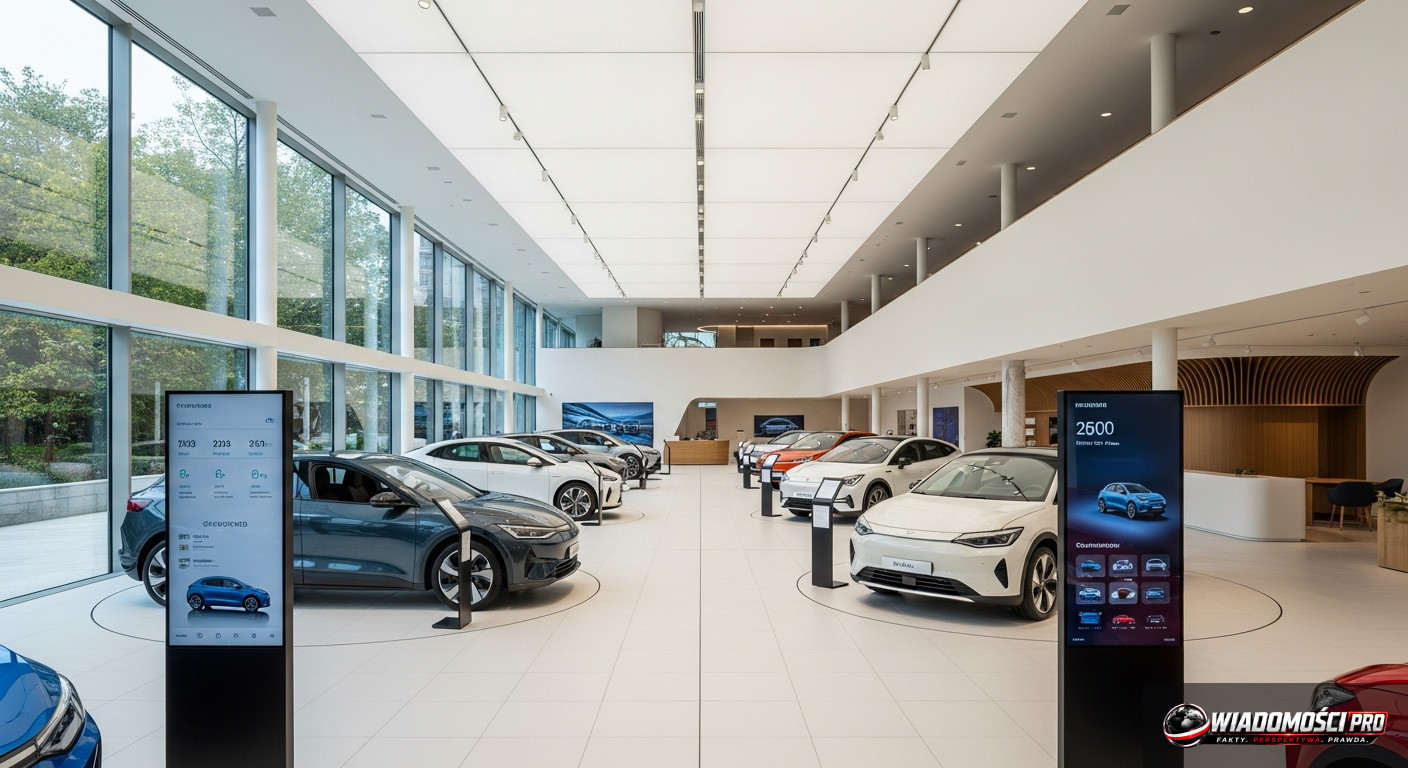
The French program allows one to obtain a new electric car for the equivalent of approx. 400 PLN per month, yet in Poland, there is currently no direct equivalent to this solution. The discrepancy in the policies of both countries stems from different budgetary priorities and the lack of national financing mechanisms that would be capable of such deep intervention in the price structure of the automotive market. While Paris treats electromobility as an element of social policy, the Polish approach is based on ad-hoc subsidies that do not eliminate the entry barrier for less affluent social groups.
The French social leasing model: launch on July 16, 2026
The mechanism launched on July 16, 2026, in France goes beyond traditional subsidies for vehicle purchases. The government in Paris has taken on the financial burden of the difference between the market leasing installment and the preferential rate, which allows qualifying citizens to use an electric vehicle for about 400 PLN per month. This system was designed with lower-income households in mind, for whom standard leasing of a BEV-powered vehicle had previously remained an unattainable expense.
Understanding this success requires looking at the structure of the contracts. Social leasing is not a one-time bonus, but a long-term commitment by the state to finance mobility. The duration of the contract is strictly linked to service requirements and mileage limits, which ensures the stability of the system. The French ministry has set income thresholds that exclude the wealthiest individuals from the program, directing support exclusively to groups most in need of assistance in the energy transition.
Poland is at a completely different point. The Polish Alternative Fuels Association (PSPA) has been pointing out for months that the main problem of the domestic market is the lack of tools that could realistically lower the monthly cost of maintaining a car for the average citizen. Subsidy systems operating in Poland are based on a model of refunding part of the purchase costs, which in practice means the necessity of having a high down payment or the creditworthiness required to take out a standard lease. Without shifting the focus from capital subsidies to operational support, i.e., subsidies for the installment, the market will continue to be dominated by wealthy users or corporate fleets.
Legal analysis shows that implementing such a model in Poland would require not only the European Commission's approval for the notification of state aid, but above all, a change in the philosophy of managing funds from the NFOŚiGW (National Fund for Environmental Protection and Water Management). Currently, these funds are distributed in a way that prefers either rapid car turnover in companies or purchases by the wealthiest individuals. There is a lack of an instrument that would combine a low monthly cost with a state guarantee for banks financing such contracts.

Scale of success: 33 thousand electric cars in a month
The January 2026 sales results in France became a benchmark for all of Europe. The registration of 33 thousand electric cars in one month proves that demand for electromobility exists, provided that the price barrier is removed. The share of "electric cars" in the new vehicle market at the level of 25.3 percent is not a coincidence, but a direct effect of the social program, which prompted thousands of drivers to abandon combustion engine cars.
These statistics expose the weakness of the Polish market. In Poland, where the share of electric cars in registrations still hovers around a few percent, France's success seems like a distant vision. Automotive industry experts note that the high number of registrations across the Seine results from the fact that social leasing eliminated the need to look for compromises. The driver receives a new, safe car with a manufacturer's warranty at a price that competes with the maintenance costs of a several-year-old used car.
In Poland, the debate on subsidies has reached a dead end. Instead of building mass demand, the system focuses on tax optimization for companies. There is a lack of debate on introducing solutions that would allow for a similar "storming of showrooms" in domestic conditions. Analysis of data from France indicates that 33 thousand cars are not just numbers, but above all, a change in the transport habits of thousands of families who previously could not afford modern technology.
However, there is a risk that is less frequently discussed in the context of such dynamic growth. The rapid increase in the number of electric vehicles forces the state not only to spend on subsidies but also to make huge investments in charging infrastructure. The French model assumes that social leasing is part of a broader strategy in which the state also takes care of the availability of power points. Poland, not having a sufficiently developed network of chargers in smaller towns, even with the introduction of social leasing, would encounter barriers that the French no longer have to take into account to the same extent.
10 billion euro strategy: goal for 2030
Paris is implementing a strategy on a scale that seems impossible to bear in Polish budgetary conditions. Annual expenditures of 10 billion euros on electrification do not serve only subsidies. It is a fund meant to ensure the predictability of the manufacturing and trade industry. The goal set for 2030, assuming that two-thirds of new cars will be electric, is supported by such gigantic public capital commitment that it becomes a political goal, not just a market one.
A comparison with Poland shows a chasm. Our national budget allocated to electromobility is a fraction of this amount, which translates into a smaller scale of operations and a lack of stability in offers for consumers. While the French market can count on guaranteed budgetary support, Polish buyers live in uncertainty regarding the availability of subsequent editions of subsidy programs. The lack of continuity of funding is one of the biggest brakes on the development of electromobility along the Vistula.
Experts emphasize that 10 billion euros is an investment in industrial transformation. France focuses on local production and European supply chains, which allows for the retention of capital within the economy. Poland, largely being a sales market for foreign brands, does not possess its own strong production base for electric cars, which makes every zloty spent on subsidies a transfer of capital outside the country's borders. This is a fundamental difference in economic logic that blocks the introduction of analogous solutions in Poland.
The question about the future of Polish electromobility must therefore concern not only the subsidies themselves but also the building of industrial competencies. Without its own production or strong technological partnerships, an attempt to copy the French model would be merely expensive subsidizing of imports. The French strategy is coherent: money from the budget flows to the citizen who buys a car produced in the European ecosystem, which closes the economic circuit. Poland, standing astride between the need for ecology and the lack of a native EV industry, has not developed a model that would combine these two spheres.
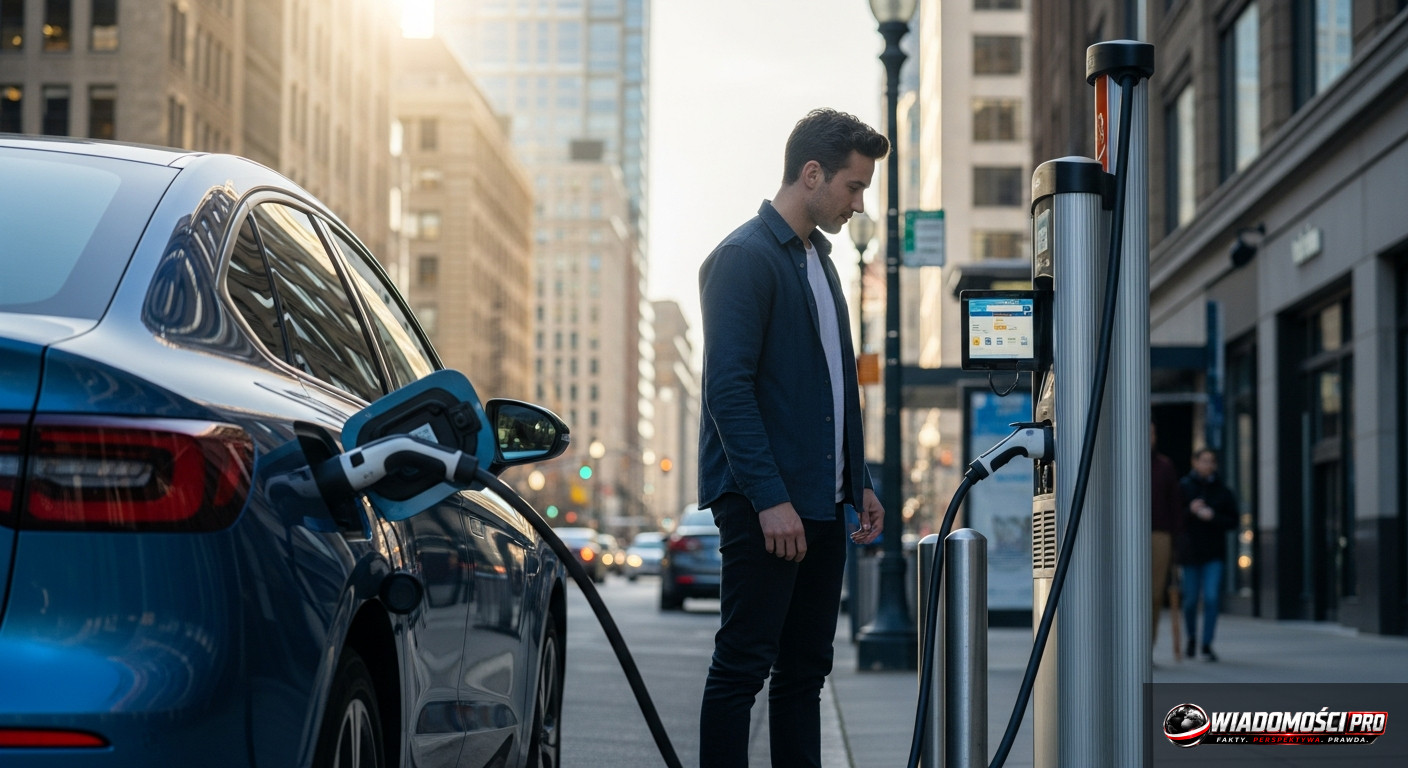
Restrictions for China and the third round of subsidies
The French subsidy policy has become a tool for protecting the internal market. The third round of support, launched on June 29, 2026, introduced rigorous restrictions for vehicles produced in China. Paris clearly communicates that financial support applies only to those cars that meet strict emission standards at the production stage, which in practice excludes many cheap models from Asia. This is an example of protectionism that Poland observes only from a distance, not possessing the tools to shape such a bold trade policy.
For the Polish customer, the situation is unfavorable. The lack of a direct equivalent to French social leasing means that Polish drivers are left to standard market offers, where cars from China often constitute the only real price alternative. Excluding them from the subsidy system, without simultaneously offering a cheap European alternative – as the French did – would lead to a total freezing of demand for electric cars among less affluent people in Poland.
Introducing restrictions in France was possible because the government there offered citizens an alternative in the form of cheap leasing for European cars. In Poland, the lack of such an alternative causes the debate about the quality of electric cars to often lose out to the debate about their price. The Polish Alternative Fuels Association points out that without securing the supply of affordable vehicles, any attempt to limit consumer choice will hit the pace of private fleet electrification.
The French have shown that it is possible to combine social policy with the protection of one's own industrial market. Poland, being a member of the European Union, is limited by the rules of the common market, however, within the same regulations, France found a way to promote "its own." This is proof that legal barriers are often a convenient explanation for the lack of political will or budgetary means. Poland does not use available EU instruments in as integrated a way as the administration in Paris does.
Is Poland ready for social leasing?
The Polish automotive reality differs from the French one primarily in the structure of financing. While the French can use a system in which the state subsidizes the monthly installment, a Polish driver must rely on their own creditworthiness. The demand for cheap financing is huge, which is confirmed by the results of the few private subscription programs, which, however, have not reached a mass scale.
The third round of support in Poland, launched in June 2026, shows that the government still focuses on purchase subsidies, not on changing the model of usage. The lack of a direct equivalent to French social leasing stems from the fear of long-term costs. The state budget, burdened with many other obligations, is unable to guarantee stable subsidies for thousands of leasing contracts over a period of several years. This is a short-sighted approach that preserves the current state of the market.
Experts point out that for the Polish banking sector, social leasing would be a huge challenge. It would require creating a completely new class of financial products, in which credit risk would be partially assumed by the state. Without such a guarantee, banks will not be willing to lower margins to a level allowing for an installment of around 400 PLN. France solved this problem through the direct involvement of state institutions in the process of providing financing.
Poland's financial limitations are real, but they cannot be explained solely by the lack of capital. It is about the way it is distributed. Shifting funds from less effective support programs to social leasing would require political courage that has not been presented so far. Polish drivers, accustomed to second-hand combustion cars, need a strong stimulus to make a change. Social leasing is exactly such a stimulus – simple, clear, and above all, financially accessible.
The twilight of the hybrid era: what do the data say?
The automotive market in France is undergoing a process that is barely noticeable in Poland. The decline in the popularity of hybrids in favor of fully electric drives (BEV) is a direct result of policies promoting electrification. Data from January 2026, speaking of a 25.3 percent share of electric cars in the market, confirm that drivers are massively abandoning transitional technologies. This phenomenon shows that with appropriate support, consumers do not need an "adaptation period" with hybrids.
In Poland, hybrids still constitute a safe haven for those who fear full electrification. The lack of infrastructure, high costs of purchasing electric cars, and the lack of cheap financing mean that a hybrid is perceived as an optimal compromise. The French example proves that this is a compromise forced by the lack of an alternative. As soon as the state removes the price barrier, hybrids cease to be attractive.
The numbers from the beginning of 2026 are merciless for proponents of slow evolution. 33 thousand registered electric cars in France in one month is proof that the market is ready to switch to BEV, provided that the state takes the burden of transformation upon itself. Poland, relying on hybrids, is losing distance to countries that have invested in full electrification. This is not just a matter of ecology, but above all, the technological competitiveness of the Polish economy.
Observing the French market, one can come to the conclusion that the era of hybrids is coming to an end where the state shows determination. Poland, not possessing analogous tools, condemns itself to being a sales market for technologies that are beginning to be displaced in Western Europe. Without a systemic approach, hybrids will remain our dominant choice for many years, which in the context of EU climate policy may become an economic burden for Polish drivers.
What this means for you
The benefits of the French model are felt primarily by households with limited budgets, gaining access to modern, safe vehicles without the need to take out high loans. From the consumer's perspective, social leasing changes a car from a luxury gadget into a tool for daily use.
For the market as a whole, the consequences are, however, more complex. Excluding cars from outside Europe from the subsidy system puts local manufacturers in a better position, which is a strategy of protecting one's own industry. From the point of view of the Polish reader, this situation means that as long as an analogous system is not created in the country, electrification will remain a privilege, not a common standard. The cost of this delay is borne by everyone, paying higher prices for energy and maintaining an outdated fleet of vehicles.
Questions and answers
How much does social leasing cost per month in France?
The cost for the end user is the equivalent of about 400 PLN per month, which was achieved thanks to the state's direct subsidy to the leasing installment.
Does the program cover all electric cars available on the market?
No, the program has rigorous restrictions. In the third round of support, vehicles produced in China were excluded from it, which is intended to protect the European automotive industry.
Is a direct equivalent of French social leasing planned in Poland?
Currently, there are no official government plans to implement a system that would so directly lower the monthly leasing installment for broad social groups. Poland relies on purchase subsidies, which does not solve the barrier of high financing costs.
What are the main barriers to implementing this model in Poland?
Experts point to the lack of appropriate budgetary funds, the lack of a stable mechanism of state guarantees for financial institutions, and the lack of a national production base that could benefit from such mass demand.
Why are the French turning away from hybrid cars?
Mass interest in electric cars (BEV) stems from the fact that thanks to state support, they have become more profitable to use than hybrids, which makes the latter a redundant technology for the average driver.
Sources
- New car for the equivalent of 400 PLN a month. The storming of showrooms has begun - Interia Motoryzacja
- Changes taking place in France in July 2026 - iFrancja
- FRANCE with a record share of electric cars in January 2026. As much as 25.3 percent of new cars. Social leasing helped - Elektrowoz.pl
- Social leasing boosted electric car sales. 33 thousand e-cars registered in January - Elektromobilni.pl
- Third round of subsidies for electric cars begins. Restrictions for cars from China - Interia Motoryzacja
- Drastic drop in hybrid sales, the French are switching over en masse - GlobEnergia
- French EV strategy. 10 billion euros annually and an ambitious goal - Autocentrum.pl
- FRANCE wants to spend 10 billion euros annually on electrification. In 2030 electric cars 2/3 of new ones, heat pumps, but also restrictions - Elektrowoz.pl
Article prepared by the Wiadomości PRO editorial team with the support of artificial intelligence. Facts come from the sources provided above.


Komentarze (0)
Ładowanie komentarzy...