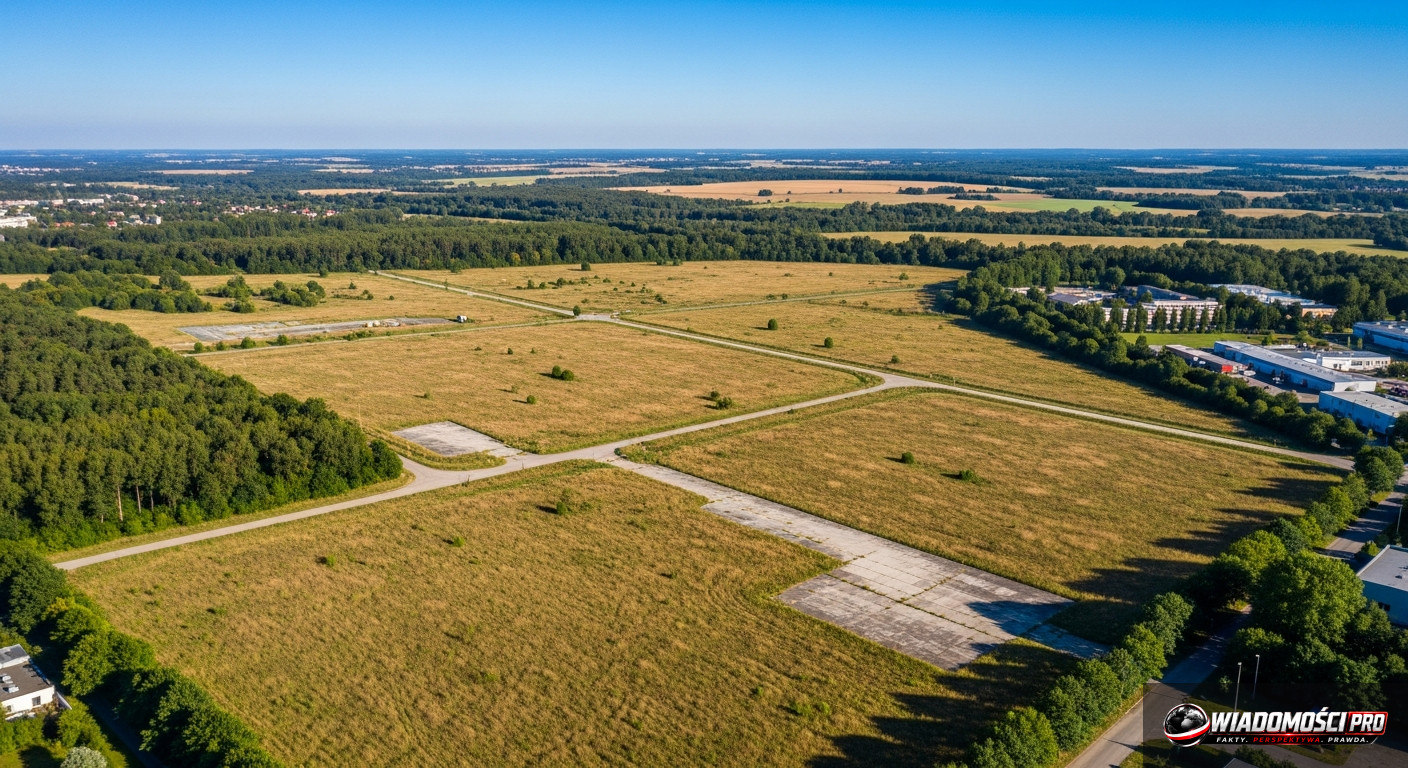
As part of the construction of a new technology center by the Taiwanese association near Wrocław, 40,000 new jobs will be created. This gigantic investment, officially announced in June 2026, is a direct response to the withdrawal of the American corporation Intel from its original plans to build a semiconductor plant in the region. The initiative, implemented by the Taiwanese organization TEEMA (Taiwan Electrical and Electronic Manufacturers' Association), completely changes the industrial landscape of Lower Silesia, transforming the site of the abandoned American investment into the heart of Asian electronics production in this part of Europe.
The plot of land near Wrocław, which for two years functioned in the public consciousness as a symbol of the opportunity for advanced processor manufacturing, had to undergo a rapid reassessment of its purpose. When Intel made the decision to withdraw, the land with ready-made infrastructure became the most sought-after prize on Poland's investment map. Representatives of TEEMA did not waste time. As early as November 2025, the first technical auditors appeared on the site near Wrocław to assess the area's readiness to accommodate a completely different production profile. Instead of silicon wafers and highly specialized lithography equipment, the investors opted for a model that has brought success to Taiwanese giants on a global scale – mass assembly of consumer electronics.
The change in the lead player is not just about the name on the construction site fence. It is, above all, a drastic adjustment of expectations regarding the Polish labor market and industrial base. While processor manufacturing required unique knowledge in solid-state physics and chemistry, the assembly of consumer electronics, including devices like smartphones, is based on efficiency, logistics, and the ability to manage huge teams of people. This is a transition from niche technology to an economy of scale.
The scale of the investor's financial commitment itself indicates long-term plans. We are not talking about an assembly plant that will move to a cheaper location after a few years. Building a technology park of such magnitude requires billions in expenditures not only for the halls themselves but for all accompanying infrastructure. Roads, power grids with increased capacity, logistics systems – all of this must be built at a pace that would be unattainable for many Polish local governments. Government decisions from May 2026 provided the entire process with a legal framework that allows for the acceleration of administrative procedures.
However, the numbers bring a challenge that the region will have to face in the coming years. Attracting such a large number of employees to one place is a situation unprecedented in the history of the Third Polish Republic. Lower Silesia has long struggled with low unemployment, which means that almost everyone who wants to work already has employment. Attracting such a large workforce will require not only an aggressive wage policy but also the creation of conditions for thousands of people from other parts of the country and abroad to settle down.
The problem with labor availability is the most pressing question asked by labor market analysts. Is the education system capable of providing the appropriate number of engineers, technicians, and production line operators in such a short time? For now, there are no clear declarations from the investor regarding proprietary vocational academies that could train candidates without technical preparation. If the company relies solely on recruiting ready-made specialists, it will lead to a drain of staff from existing manufacturing plants and R&D centers in Wrocław and the surrounding area. This, in turn, will trigger wage pressure that smaller, local enterprises may not be able to handle.
Foxconn, emerging as the main technological partner of the investment, has experience in managing gigantic facilities. In the technology industry, there has been a belief for months that the Wrocław park is intended to become a European assembly hub for premium segment equipment. The scale of operations planned by TEEMA does not allow for dealing with low-margin electronics. This must be a high-efficiency project, operating to the rhythm of global supply chains.
The entry of such a powerful player into the Polish market is a double-edged sword for domestic companies in the electronics industry. On one hand, the presence of the giant will force the modernization of technical facilities and the raising of quality standards, which may benefit the entire ecosystem of subcontractors. On the other hand, there is a risk that Polish enterprises will be pushed into the role of low-margin component suppliers, losing the chance for independent technological development. Integration with the Asian supply chain means that the Wrocław park will work for the needs of global markets, which imposes rigorous requirements regarding timeliness and quality.
Observing the work schedule, one should pay attention to the dynamics of the actions. From November 2025, when the plots after Intel were first checked, to June 2026, when the decision to build the park was announced, only seven months passed. This pace testifies to the high degree of determination of the investors and strong political support. The investors do not hide their intentions: to minimize the time from breaking ground to launching full production capacity. For the residents of Wrocław and the surrounding area, this means not only the chance for well-paid jobs but also challenges related to urban infrastructure.
Public transport, housing availability, or even the capacity of access roads to the industrial zone – all of this must be adapted to the new reality. If the pace of infrastructure development does not match the pace of factory construction, the region faces logistical paralysis. Local governments are facing a task that goes beyond simple spatial planning. They must prepare the background in the coming months that will bear the weight of an investment on a scale they have not dealt with before.
It is also worth looking at the issue of technology transfer. For years, Poland has strived to stop being just an assembly plant. Does the entry of the Taiwanese association bring us closer to this goal? From an engineering perspective, any work on advanced production lines allows one to gain know-how that is not taught at universities. This is concrete knowledge about production processes, optimization, and quality management. If Polish engineers have the chance to advance to design departments, and not just operate machines, the long-term gain for the economy could be significant.
However, the optimism of government announcements must be contrasted with the hard demographic reality. Poland's population is aging, and the influx of new workers from outside is limited. Every 40,000 jobs created by investors is 40,000 people who must come from somewhere. If not from the local market, then from other cities, which in turn will deepen deficits in other regions of the country. This is a connected vessels effect, which may be difficult to balance for the economy as a whole.
One must also remember the political and macroeconomic risks. Investments of this type are highly dependent on the stability of supply chains and energy costs. In the era of global technological competition, decisions about the location of production are made at the highest corporate and political levels. The change in strategy by Intel, which opened the way for TEEMA, showed how volatile the plans of the biggest players can be. Although the current arrangements seem durable, one should maintain a certain distance from all declarations until the first production lines start running at full capacity.
The Wrocław economic zone is currently undergoing one of the greatest transformations in its history. The transition from the vision of American semiconductors to a Taiwanese consumer electronics center is a process that redefines the meaning of Lower Silesia as an industrial center of Europe. Will this prove to be a lasting foundation for growth, or just a stage in the constant race for cost-efficiency? We will know the answer to this question when the first finished products leave the halls near Wrocław.
This investment is also an exam for Polish universities. Wrocław University of Science and Technology and other regional academic centers must urgently adapt their curricula to the standards imposed by Taiwanese investors. If specialists prepared to work with modern automation do not hit the market, investors may be forced to bring in staff from abroad, which will lower the project's attractiveness to the local community.
In the corridors, there is also talk about the issue of real estate prices and the cost of living in Wrocław. Such a powerful accumulation of new employees in one place must trigger an increase in demand for residential premises. Developers are already looking at the situation, expecting increased movement in the market. For current residents, this unfortunately means the risk of further price increases, which is the other side of the coin of every investment success.
The scale of the project also imposes the necessity of cross-sector cooperation. Industrial energy must secure electricity supplies at a level that will not disrupt the functioning of other enterprises in the region. This is a task for transmission system operators, who will have to carry out modernizations in time measured in months. A lack of adequate power supply could block the development of the investment at the startup stage.
In summary, the project implemented by the Taiwanese association near Wrocław is an operation of huge scale that is changing the balance of power on Poland's economic map. The success of this undertaking depends on the synchronization of actions between the investor, the government, and local authorities. Although the announcements sound impressive, the real challenge remains logistics, demographics, and technical education. In the coming years, we will see if the region will be able to bear such pressure and if the promises of June 2026 will be reflected in concrete employment numbers that will not turn out to be just a temporary surge, but a lasting economic pillar of Lower Silesia.
It is worth noting that media reports to date, including information from wroclaw.pl or TVN24, consistently emphasize the importance of this investment for the entire country. National media point out that Poland is becoming a key link in the Asian supply chain, which is an opportunity to gain know-how unattainable in other conditions. However, the voice of skeptics, pointing to the drain of staff and risks for domestic companies, is equally important. The true picture of the situation will emerge only when the first production halls are fully equipped and operational.
Ultimately, the quality of this project will be judged by the labor market. If it manages to attract qualified specialists and maintain the pace of growth, Lower Silesia will strengthen its position as a European center of modern production. If, however, logistical and staffing problems outweigh the benefits, the investment may become a warning against excessive optimism in planning industrial mega-projects. For the moment, however, the attention of the whole country is focused on Wrocław, where a new era of Polish electronics industry is being born.

40,000 jobs: who will find work?
The scale of the operation leaves no doubt. The Taiwanese association's investment in a technology park near Wrocław is a direct promise of a massive injection of new jobs. This is a number that has no precedent on the local market, exceeding standard investment frameworks in this region. The question of who will fill these vacancies, therefore, becomes the most important point of the debate about the future of Lower Silesia.
The electronics sector, which is the foundation of the planned center, requires a specific candidate profile. The willingness to work on a production line is not enough. Investors are looking for people with a concrete, technical background.
Here are the challenges facing the local labor market:
- The necessity of acquiring thousands of engineers and semiconductor specialists, which the market is currently unable to generate in such a short time.
- The risk of a staff drain from existing manufacturing plants and R&D centers, which could trigger a wage spiral.
- Pressure on the higher and vocational education system to urgently adapt curricula to Taiwanese standards.
For the local economy, this is an injection of energy, but also a logistical headache. Filling such a huge number of jobs will not happen in a vacuum. It requires not only recruitment but also attracting a massive wave of workers from other regions of Poland or abroad to the Wrocław agglomeration.
There is a lack of concrete declarations from the investor regarding a training program for the future crew. At this moment, we do not know if the company intends to rely entirely on ready-made staff or if it will create its own system of vocational academies. Without a clear staffing strategy, the declared number of jobs may turn out to be an insurmountable challenge for the local market, which is already struggling with record-low unemployment. The enthusiasm of politicians clashes here with the hard demographic reality.
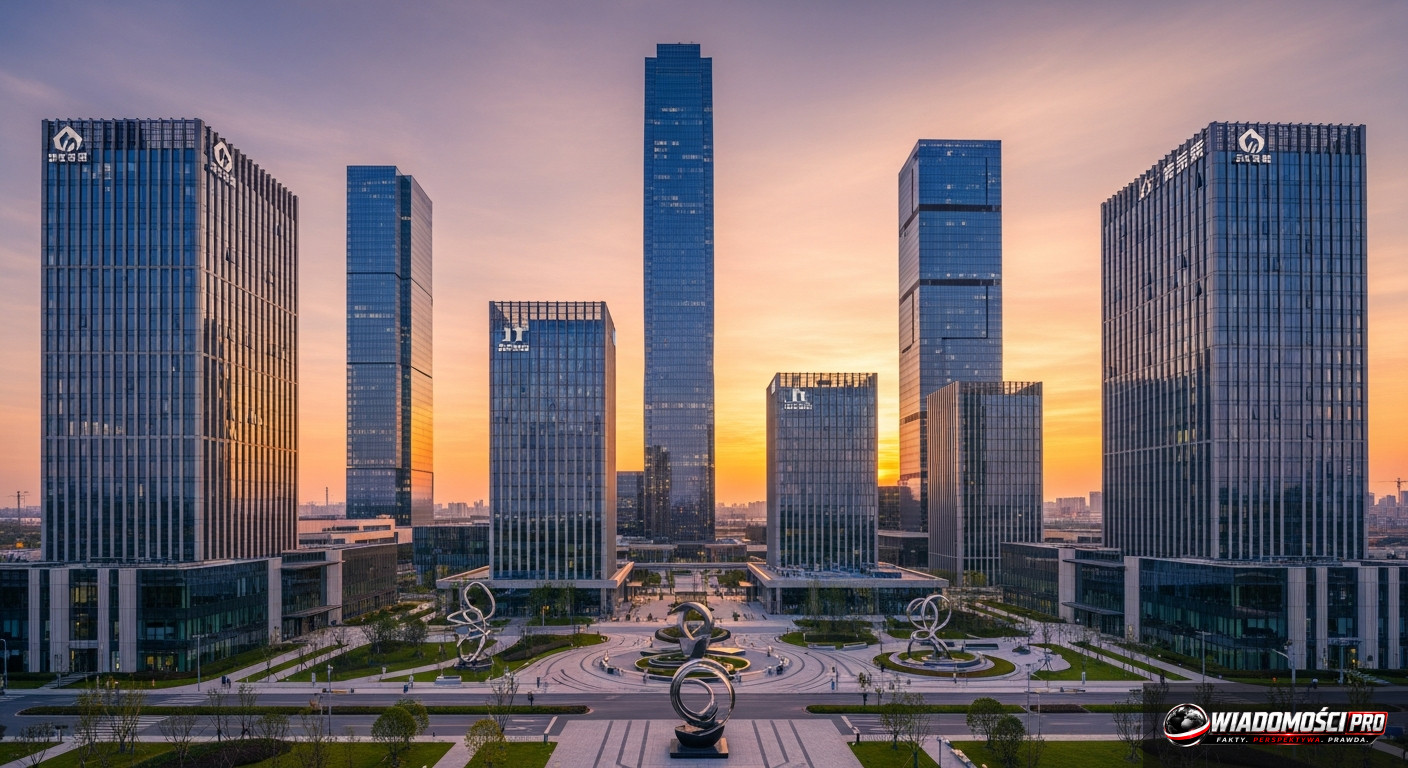
Foxconn and consumer electronics production
Foxconn is emerging as the main technological partner of the investment near Wrocław, which definitively shifts the center of gravity of the entire project. After plans to build a semiconductor plant in this region were put on ice, investors from Taiwan took a new course. Instead of producing silicon wafers, on the plot after the failed Intel investment, the company is focusing on advanced assembly of consumer electronics.
The technology sector is watching this move with great interest. There have been speculations in the industry for months that the Polish factory is to become a European assembly hub for iPhones. Although official communications avoid confirming specific models, the scale of the operation leaves no illusions about Foxconn's intentions. The giant does not build such huge infrastructure to deal with niche electronics.
Such a change in strategy is information of fundamental importance for the local labor market. The labor market in Lower Silesia is already heavily exploited today, and attracting such a huge crowd of workers from other regions or from abroad will be a logistical challenge on an unprecedented scale.
The transition from complex semiconductor technologies to mass assembly also means a change in the profile of the sought-after employee. Instead of thousands of engineers with PhDs, the factory will need a powerful army of production line operators and logisticians. The enthusiasm of politicians announcing big numbers must therefore clash with the hard reality. The question is whether the region is ready for such wage and demographic pressure.
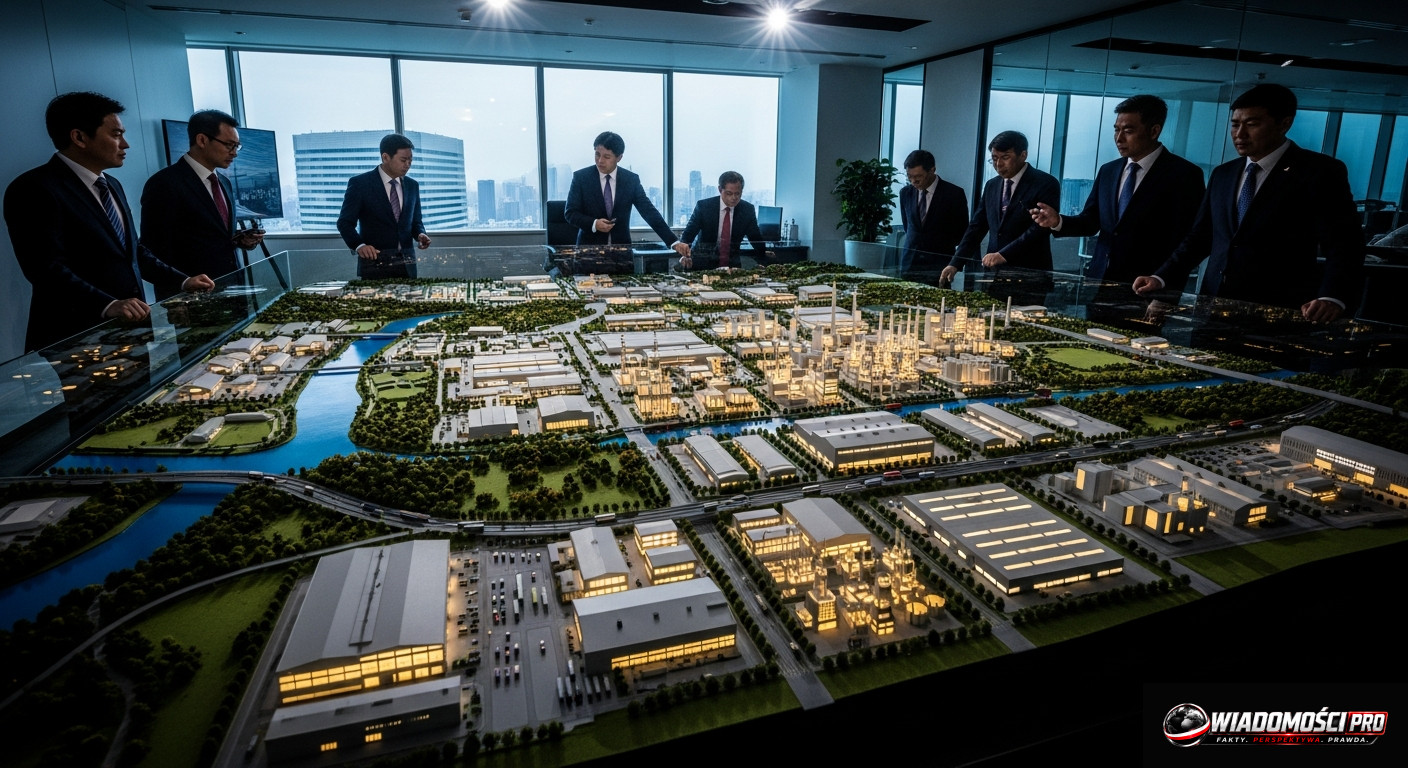
Schedule for building the new industrial city
The investment, which started for good after the official announcement of the mega-investment in June 2026, did not come from a vacuum. The entire process began much earlier, with discreet technical visits that took place as early as November 2025. It was then that representatives of the Taiwanese giant first carefully inspected the plots after the failed Intel plant. Today, these areas are to become the economic heart of the region.
The pace of work is relentless and assumes a lightning-fast adaptation of infrastructure, which is the main factor driving the development of the local market. Investors do not hide that their goal is to minimize the time from breaking ground to launching production lines. For the residents of Lower Silesia, this means one thing: a gigantic demand for workers.
An open question remains the issue of the logistical capacity of the Wrocław area. Will the road network and energy sector bear such a load at the assumed pace? The optimism of investors clashes with the hard bureaucratic and engineering reality, which is being talked about more and more loudly in the corridors.
Here are the key data regarding the scale of this project, which confirm media reports:
- Official announcement of the mega-investment — June 2026 (source: wroclaw.pl, 22.06.2026)
- Start of technical visits to the plots — November 2025 (source: Gazeta Wrocławska, 21.11.2025)
- Confirmation of the investment by national media — June 2026 (source: TVN24, 22.06.2026)
The implementation of this schedule is a test for local authorities, who must prepare the appropriate background in time measured in months, not years. If the pace of work slows down, ambitious plans may become only a paper declaration, and not real support for the regional budget.
Questions and answers
Is this the definitive end of Intel's presence in Poland?
Yes, the area near Wrocław, originally prepared for Intel, has been taken over by the Taiwanese association.
What devices will be produced near Wrocław?
There is speculation about the assembly of consumer electronics, including iPhone-type devices, by Foxconn.
Will the investment affect earnings in the region?
The influx of a technology giant and the demand for tens of thousands of employees will likely force wage growth for specialists in the sector.
Sources
- Foxconn factory in Poland? Giant from Taiwan to replace Intel - Polish Industry
- Will an iPhone factory be built near Wrocław? Taiwanese visit the plot after Intel - Gazeta Wrocławska
- Mega-investment near Wrocław. Taiwanese to invest billions and build a powerful Technology Park! - wroclaw.pl
- Taiwanese to build a technology park in Poland. Tens of thousands of new jobs - TVN24
- Gigantic investor bets on Poland. Government: thousands of jobs will be created [INTERVIEW] - Business Insider Poland
- iPhone assembler to build a big factory here. "40,000 jobs" - Spider's Web
- Technology giant to build more than just a factory in Poland. Turnaround regarding the big investment - wnp.pl
- "Semiconductors an opportunity for Lower Silesia". Is there a chance for cooperation with Taiwanese companies? - Radio Wrocław
Article prepared by the Wiadomości PRO editorial team with the support of artificial intelligence. Facts come from the sources provided above.
Komentarze (0)
Ładowanie komentarzy...