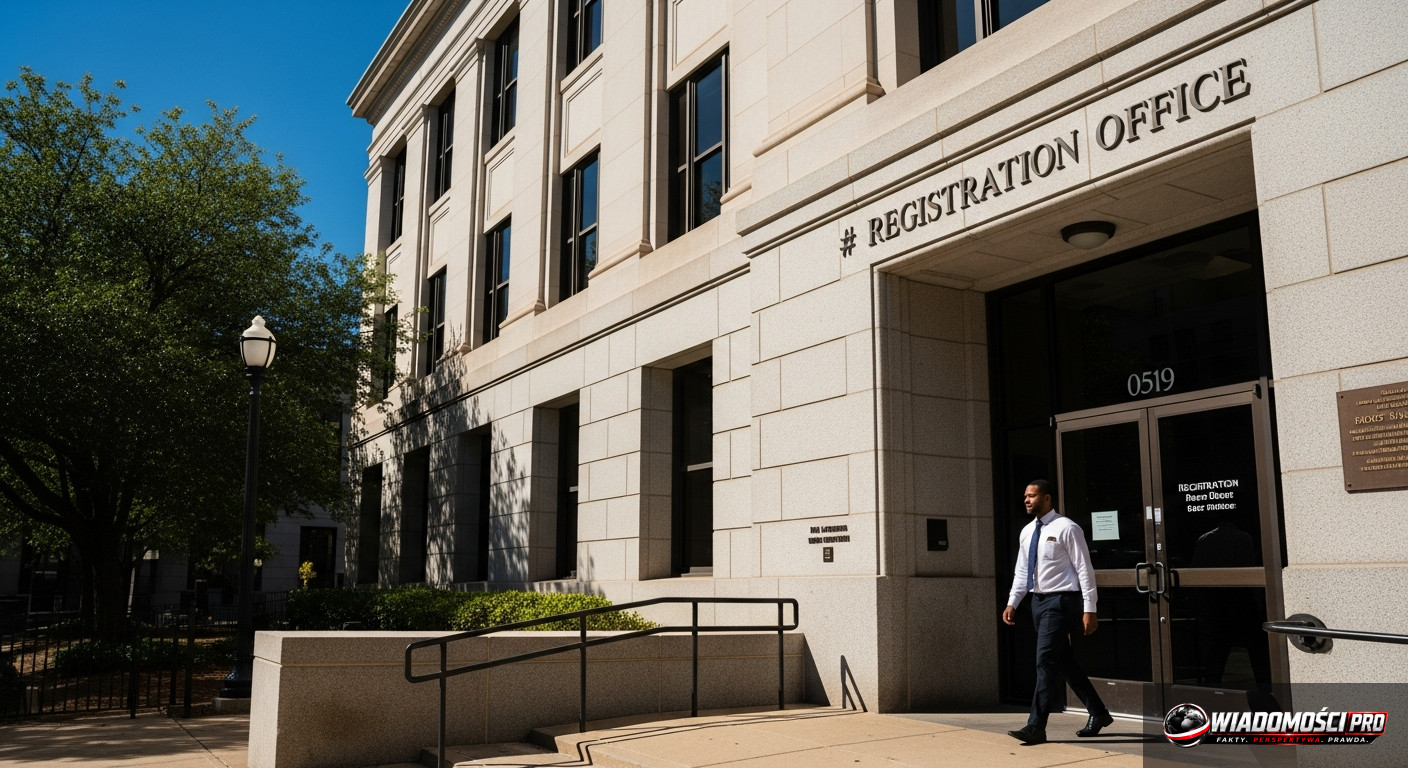
As of June 10, 2026, drivers no longer need to unscrew license plates themselves or have them physically verified at the office, which means an end to the necessity of using tools at vehicle registration facilities. This change is a direct result of the amendment to the Road Traffic Act, for which legislative work was finalized in December 2025. From this moment on, vehicle verification is based on digital data rather than a visual assessment by an official checking plates in the parking lot.
Digital trust in practice
The introduction of the new regulations was not a sudden decision, but the result of months of work on integrating the IT systems that handle vehicle registration. A key element of this change is the full utilization of the CEPiK system, the Central Register of Vehicles and Drivers. Until now, officials often felt obligated to go outside the office building to compare the numbers stamped on the plates with the data contained in the registration certificate or the system. This was an archaic procedure, dating back to times when databases were not fully integrated and the risk of errors in paper documentation was significantly higher.
Currently, the verification process takes place within the system. The official enters the VIN and other vehicle identification data into the CEPiK database, which connects to central registers in real time. If the system confirms that all parameters match, there is no need for the official to leave their workstation. This approach shifts the burden of responsibility for the legal status of the vehicle onto the owner, who, by signing the application, makes a declaration regarding the truthfulness of the data. The previous practice, which required the physical removal of the plates, was merely a mechanical safeguard against potential clerical error, which is now effectively eliminated by verification algorithms.

Genesis of the changes: From the December amendment to the June implementation
The legal basis for these changes is the amendment to the Road Traffic Act, which was adopted on December 2, 2025. This document assumed far-reaching digitalization of services provided by vehicle registration offices. Legislators concluded that forcing citizens to interfere with the vehicle's structure on office premises is inconsistent with the spirit of modern administration. These regulations were designed to enable a smooth transition to an electronic model, in which electronic documents have the same legal weight as physical license plates.
It is worth noting that this process did not occur without resistance within the administration itself. Many offices in smaller municipalities had developed their own internal control procedures over the years, which often went beyond statutory requirements. The transition to a model of absolute trust in system data therefore required not only a change in law but also a change in the mentality of lower-level officials. As of June 10, 2026, this situation has been standardized across the entire country. Every office, regardless of the size of the city or the number of applicants served, must respect the new guidelines that eliminate the requirement to remove plates.
What does this mean for the vehicle owner?
A driver registering a car after June 10, 2026, primarily gains time and peace of mind. The need to prepare for a visit to the office from a technical standpoint has disappeared. No one has to check anymore if the screws holding the plate are seized, or worry about damaging the bumper paint while hastily unscrewing the "plates" in the parking lot. From the citizen's perspective, this is a real convenience that makes a visit to the office a purely administrative, rather than technical, task.
However, one important issue must be kept in mind. Shifting responsibility to the citizen means that any inaccuracies in the documents become the owner's problem, not the official's. In a system where CEPiK is the oracle, any discrepancy in numbering or technical data can result in the suspension of registration. While previously an official could check "by eye" whether a plate was legible and consistent with the registration certificate, now every statement made under penalty of perjury must be fully accurate. An error in documentation submitted at the counter is no longer fixed by a quick trip to the parking lot, but requires re-processing the application, which may extend the waiting time for the issuance of the set of documents.
Safety and supporting technologies
Vehicle registration is just one piece of a broader puzzle that Polish automotive is creating in 2026. In parallel with the simplifications in registration offices, the law has begun to impose stricter requirements regarding active safety. From July 2026, new cars registered in Poland must be equipped with advanced cyclist and pedestrian recognition systems. This shows that the state is changing its approach: it is moving away from meticulous analog control (like checking plates) and focusing on enforcing safety standards in the vehicle's construction itself.
The integration of these actions means that vehicle verification now happens at the homologation and database level. The official at the registration office no longer needs to check the plates because the CEPiK system knows everything about a given vehicle: from the date of manufacture and service history to the specification of safety systems. Such data transparency is the foundation upon which the abolition of the physical verification requirement was based. Trust in the IT system is therefore fully justified in this case, provided that the server infrastructure can withstand the load generated by millions of queries per day.

System risks: Technology versus reality
Despite the optimism accompanying the introduction of the new regulations, it is worth looking at the matter critically. Every digital system is prone to failure. What will happen when, on the day of the visit to the office, the CEPiK network is unavailable? Until now, an official could go out to the car and check the chassis number or plates directly on the vehicle. In the current legal state, if the system is not working, the registration procedure is effectively frozen.
This raises the question of the flexibility of the new regulations. Did the legislator provide for an emergency procedure that would allow for offline registration? Available information indicates that the emphasis was placed on full digitalization, which in the event of a failure could lead to the paralysis of registration offices. Drivers planning a visit to the office should be aware that although convenience has increased, the dependence on the proper functioning of IT systems has become absolute. In this new reality, it is not the dexterity of a mechanic's hands, but the speed of data flow between ministries that determines whether a car will legally hit the road.
Differences in office approaches
It is also worth noting that the implementation of the regulations in different parts of the country is proceeding asymmetrically. Although the law has been in effect since June 10, 2026, the degree of digital advancement in individual districts varies greatly. In large metropolitan areas, where systems are fully integrated with the central database, the registration process is instantaneous. In smaller units, further away from administrative centers, officials may still be accustomed to the old work model.
Such bureaucratic inertia is a natural phenomenon, but from the citizen's point of view, it can be frustrating. If you end up in an office where an official still tries to go out to the parking lot "just to be sure," it is worth remembering your rights. The regulations are clear: physical verification of plates is no longer an obligation. Citing the amendment to the Road Traffic Act of December 2025 should be enough to end the discussion about the need to remove the plates. The state has finally stopped treating the car owner like a potential fraudster, which is the greatest success of this change.
Future prospects
Is this change permanent? Everything indicates that it is. The retreat from physical inspection of vehicle components in offices is part of a broader trend that will cover other aspects of registration in the coming years. Ultimately, there is talk of completely eliminating the need to visit the facility, which would become possible thanks to the full digitalization of the process through the trusted profile and mobile applications.
For now, however, we are enjoying the stage where workshop tools have become unnecessary in office corridors. This is a significant relief for anyone who has ever had to fix clerical errors with a wrench in hand. In retrospect, the need to unscrew plates in the rain or cold will be remembered as an absurd relic of a bygone era, in which the administration did not trust its own databases.
Questions and answers
Do I have to remove the plates if I am registering a car for the first time?
No, as of June 10, 2026, the regulations exempt you from the obligation of physical removal of plates at the office, regardless of the type of registration. The entire process is based on verification in the CEPiK system.
Do I need any tools at the vehicle registration office?
No, the new regulations have eliminated the need to use a screwdriver or other tools during the registration procedure. Officials use digital data, not physical inspections.
Do the changes also apply to used cars?
Yes, the new regulations regarding simplified registration cover all vehicles subject to the registration obligation in Poland. This applies to both new cars from the dealership and vehicles imported or used on the secondary market.
What should I do if an official demands physical proof of the plates despite the regulations?
You should cite the amended Road Traffic Act, which came into force on June 10, 2026. These regulations clearly abolish the obligation of physical verification of vehicle markings, replacing it with system verification.
Is the CEPiK system 100% reliable?
The system is based on data entered by authorized entities. Despite advanced algorithms, errors in databases can happen. In such a case, it is worth ensuring the completeness of documentation, which in the event of a system failure will serve as the only proof of vehicle ownership.
Will the change in regulations affect the waiting time at the office?
Yes, the elimination of the technical task of vehicle inspection shortens the service time for one applicant. Thanks to this, queues at the counters should be shorter, and officials can focus on faster processing of applications in the electronic system.
Summary of the process in the new standard
Understanding that as of June 10, 2026, the state has moved to a model of trust in system data is crucial for every driver. Public administration has recognized that digital confirmations are sufficient to ensure the integrity of the system. This means that from the point of view of the law, what is in the registers is the truth about your vehicle. The official is no longer a technical inspector in the parking lot, but a data operator.
For us, the citizens, this means a transition to a civilized model of service. We no longer have to be mechanics in our own case before entering the vehicle registration office. Although IT systems can be a challenge and bureaucracy has its inertia, this change is a step toward a state that makes life easier instead of complicating it. So, at the next car registration, it is worth simply leaving the tools in the garage and focusing on the correctness of the data in the submitted documents. They are now the most important thing.
Ultimately, the success of this reform will not be decided by laws, but by the efficient operation of state servers. If the flow of data between ministries is smooth, drivers will quickly forget about cumbersome visits to offices. If, however, the infrastructure fails, we will be reminded that in the world of technology, a lack of access to data can be just as troublesome as a rusty screw holding a license plate. It remains to be hoped that the digital trust placed in citizens will be adequately secured by stable technology.
It is worth remembering that every such change is a continuous process. In 2026, car registration is becoming an increasingly virtual activity. The next step, which experts are already discussing, is the full transfer of the process to the web, which would eliminate the need for physical presence at the office altogether. Until then, however, we enjoy the fact that our presence at the registration office is limited to paperwork, not struggling with metal vehicle parts.
For those who are not yet used to the new rules, we remind you: double-check the correctness of the VIN numbers in the application. This is now the most important point of registration. The consistency of data in the CEPiK system is a guarantee that the entire process will proceed without disruptions. The system takes over the rest of the formalities, working since June of this year to simplify the lives of Polish drivers. It is a small but significant relief that genuinely improves the comfort of using public services in Poland.
The last issue to be raised is responsibility. Since the system is based on declarations, the quality of these declarations must be of the highest standard. Every driver should approach filling out applications with due diligence. This is the only way to avoid potential misunderstandings with officials, who in the new work model will verify the correctness of electronic records even more strictly. Such an approach will allow for quick and efficient handling of the matter in the spirit of the new, customer-friendly regulations, which have become the standard across the country as of June 10, 2026.
All these changes create a coherent picture of a modern administration that is beginning to recognize the needs of the citizen. No more archaisms, it is time for digital efficiency. This is the only way for Polish vehicle registration offices to stop being associated with a bureaucratic nightmare and become a place of professional customer service. Time will tell if all municipalities will rise to this task, but it is already clear that the direction of change is correct and expected by millions of motorized Poles.
From the editorial perspective, we believe this is one of the few reforms where the benefit to the citizen is felt almost immediately after the regulations come into force. Without the need to wait for years of jurisprudence, without months-long transition periods. It just works. And if something works, it is worth appreciating, even if we had to wait so long for it. From June 2026, Polish roads are becoming not only safer thanks to new technologies but also more friendly to every owner of four wheels. It is a good time for the Polish automotive industry.
Sources
- As of June 10, 2026, simpler vehicle registration – fewer formalities for drivers - Samorzad.gov.pl
- From July 2026, new cars will recognize cyclists - Rzeczpospolita
- Car registration the new way. To the office without a screwdriver - Bankier.pl
- Easier car registration from June 10. Important regulatory changes come into force - samar.pl
- New facilities in vehicle registration – changes in the Road Traffic Act - Prawo.pl
- From today, no more "struggling" with plates. They have to take your word for it - Auto Świat
- June 10 change in vehicle registration. New regulations come into force - Autokult
- End of a cumbersome obligation. From June 10, 2026, changes in car registration - Forsal.pl
Article prepared by the Wiadomości PRO editorial team with the support of artificial intelligence. Facts are derived from the sources listed above.



Komentarze (0)
Ładowanie komentarzy...