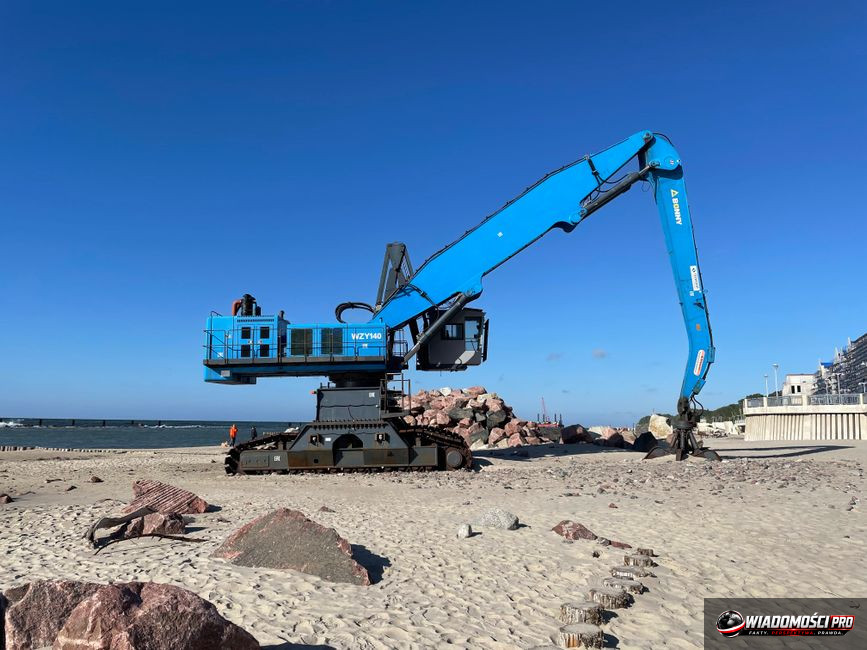
Heavy machinery has entered the site of the future Cape Pomerania. The construction of the technical road is the first physical stage of an investment estimated to cost 10 billion PLN. The project aims to create a logistics hub on a scale unprecedented in this part of the Baltic Sea.
The location was not chosen by accident. Experts point to the deep-water approach, which will allow for the handling of the largest container ships operating in the world. This is an opportunity to make Polish ports independent of transshipments carried out in German or Dutch ports.
The government assumes that Cape Pomerania will become a driving engine for the local economy. Despite the huge financial outlays, there is currently no detailed schedule for the return on investment. The question of whether the market can handle such massive capacity remains open.
Logistics in question
The investment is sparking emotions among transport market analysts. Building the port itself is just the tip of the iceberg. Without modern rail and road infrastructure connecting the coast to the rest of the country, Cape Pomerania could become a costly monument to ambition.
The current capacities of railway lines leading to northern Poland are at their limit. Modernizing transport routes requires further billions of zlotys, which are rarely mentioned in the investor's official statements. Without these connections, the port will merely be an island with no real impact on the supply chain.
Costs are rising faster than assumed in the initial calculations. Inflation in construction material prices and wages in the engineering sector could cause the final bill to exceed the projected 10 billion. Private investors are currently observing the situation from a distance, waiting for concrete state guarantees.
Economy versus ecology
Local environmental organizations are already announcing protests. Building a port of this scale interferes with the delicate ecosystem of the coast. Investors assure that they are using technologies to minimize the environmental impact, yet the details of the environmental impact reports have not been fully disclosed to the public.
For the residents of the region, this is a promise of thousands of new jobs. The port industry is not just about transshipments, but a whole chain of accompanying services: from vessel servicing to customs and warehouse handling. However, enthusiasm is dampened by fears of a sharp rise in real estate prices in nearby towns.
Strategically, Poland is gaining a bargaining chip in trade negotiations with partners from Scandinavia and Asia. But is 10 billion PLN an amount that will pay off in a reasonable time? We will only know the answer to this question in a few years, when the first vessels begin to moor at the new port's quays.
This article was prepared automatically by the Wiadomości PRO editorial team with the support of artificial intelligence.

Komentarze (0)
Ładowanie komentarzy...