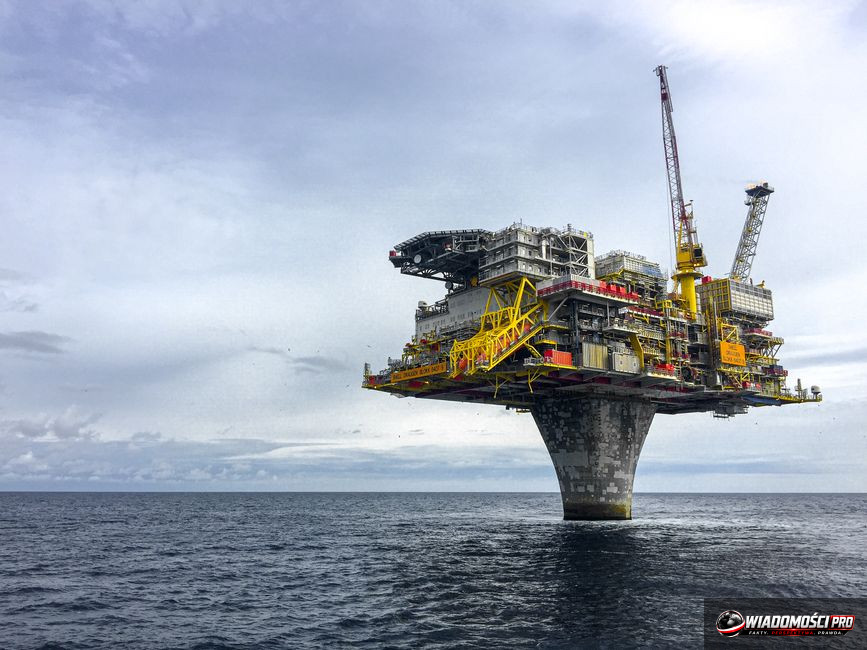
German organizations and activists, funded by public grants, are actively trying to block Polish extraction, citing EU climate policy and demanding a share of future revenues from the Baltic deposits. This coordinated campaign, which has been intensifying since April 2025, poses a direct challenge to Polish energy sovereignty. The government in Warsaw rejects these claims, recognizing the deposits in the Polish exclusive economic zone as a foundation of national security, the exploitation of which is not subject to negotiation with foreign entities.
The discovery of vast gas and oil resources under the Baltic seabed in April 2025 changed the balance of power in the region. The Biznes Alert portal was one of the first to signal the importance of this find. For the Polish energy sector, these deposits are more than just a raw material. They are an opportunity for permanent independence from external suppliers. However, as early as July 2025, as reported by Money.pl, it became clear that Polish aspirations to independently develop the shelf were stirring extreme emotions in Berlin. German resistance is not merely a matter of ecology. It is a game for economic influence, in which Poland ceases to be a client and becomes a sovereign producer.
The mechanism for blocking investments is based on precisely applied legal pressure. German non-governmental organizations, benefiting from public grants, have adopted a tactic of paralyzing projects by raising environmental issues. They argue that any drilling in the Baltic Sea is contrary to EU climate goals, including the "Fit for 55" package and the guidelines of the European Green Deal. Activists are shifting the discussion from an economic plane to an ideological one. They suggest that Poland, by striving to extract its own raw materials, is violating the Community's climate solidarity. The source materials do not name the specific organizations behind these actions, which makes it difficult to verify their direct links to the German administration, but the fact that they benefit from generous public support is indisputable.
A legal analysis of this conflict requires reference to the 1982 United Nations Convention on the Law of the Sea (UNCLOS). According to its provisions, a coastal state has sovereign rights to explore and exploit natural resources in its exclusive economic zone. Poland, as a signatory to this convention, has the full right to extract oil and gas in the Baltic. German activists, however, are trying to circumvent these arrangements by using EU instruments, such as the Environmental Impact Assessment (EIA) Directive and the Aarhus Convention. These allow non-governmental organizations to challenge investment decisions, even if they concern the sovereign waters of another state. Berlin is thus creating a legal trap. Every attempt to start drilling is presented in Germany as a threat to the ecosystem, which in the eyes of EU officials makes the project "inconsistent with climate policy." This is a dangerous precedent. If such an argument is accepted as binding, any offshore extraction activity could be blocked by any NGO from a neighboring country.
These actions intensified in August 2026. As reported by the portal Donald.pl, the protests gained a new dimension, and demands for a total ban on extraction became an official point of debate. Kresy.pl on August 4, 2026, pointed to the close link between grant funding and the effectiveness of paralyzing infrastructure. These actions resemble campaigns conducted during other strategic investments, where work was effectively delayed through long-term administrative processes and appeals to tribunals. The goal is not solely to protect the sea. The goal is to force Poland into the status of a state dependent on energy imports.
Parallel to environmental arguments, demands regarding profit sharing are emerging. As early as July 23, 2025, polskieradio24.pl reported on the demands of German media, which openly suggested that Poland should share revenues from extraction in its economic zone. This is a precedent-setting situation in European politics. A neighboring state is demanding participation in profits from resources located within the sovereign borders of another country. This has no basis in EU treaties or international law. It is pure economic pressure. Berlin, losing access to cheap energy from Russia, is looking for new sources of funding or market stabilization, and Polish deposits are becoming a bargaining chip for it.
The Polish government has reacted firmly to these attempts. As noted by Fakt on July 25, 2025, a response was issued that left no doubt: Poland does not accept interference in its sovereign decisions. Warsaw's position is clear – natural resources on the Polish shelf are state property. Attempts to force profit sharing are treated as unjustified pressure that finds no support in any EU regulation. Nevertheless, on August 4, 2025, Radio Bezpieczna Podróż reported on further attempts to undermine the Polish energy strategy under the guise of environmental protection.
For the citizen, this means a long-term hybrid conflict. On one hand, we are observing a tough fight for energy security, which directly translates into energy prices for households and businesses. On the other hand, there is an attempt to impose on Poland the role of a state that must ask for permission to manage its own national assets. If these projects are halted, Poland will lose the chance for stable energy sources, which in the long run will affect the competitiveness of the entire economy. NGOs are counting on the fact that through administrative paralysis, they will discourage investors from financing Polish projects. The political risk generated by protests is often a sufficient reason for banks and funds to withdraw from financing.
Poland must not only win the battle in the courts but also conduct an effective information policy that exposes the true intentions of German activists. What does this mean for Polish industry? First and foremost, the need to secure investments against legal claims. Every extraction project in the Baltic will now be under the scrutiny of organizations with powerful financial backing. It is necessary to demonstrate that extraction is carried out in accordance with the highest environmental protection standards. This is the only effective weapon against accusations of destroying the ecosystem. The government must clearly communicate that sharing profits from resources extracted on the Polish shelf with foreign entities is excluded.
The history of conflicts over natural resources teaches that states that cannot defend their right to exploit deposits quickly lose control over their own security. In the case of the Baltic, the stakes are exceptionally high. If Berlin manages to push through the narrative of "incompatibility with climate policy," it will create a mechanism that can be applied to any state in the EU. This is a matter that goes beyond Polish-German relations. It concerns the sovereignty of all member states in terms of managing their own territory.
German resistance to Polish drilling in the Baltic constitutes a mixture of ideology, economic pressure, and regional politics. NGOs, funded by public grants, serve as a soft tool of pressure intended to torpedo Polish energy independence. Poland, standing on the position of sovereignty, must show determination in continuing extraction work, ignoring Berlin's baseless financial claims. The issue of extraction in the Baltic remains open. Every meter of drilled well is currently a flashpoint, requiring not only technical preparation but, above all, tough diplomacy and intransigence in defending national interests. Observing the course of the discussion so far, one should expect further attempts to block investments. This makes this topic one of the most important challenges for Polish foreign and economic policy for the coming years. Will arguments based on international law outweigh ideological pressure? The answer to this question will define the shape of Polish energy security for decades. Poland cannot allow EU climate policy to become a tool for blocking the development of a state that is exercising its right to sovereign use of the gifts of nature located within the borders of its economic zone. The scale of these deposits, although often discussed in generalities, is treated by ministries as a strategic priority, which means that no concessions are on the table. Berlin must understand that the time when Poland asked for permission for its own development has passed irrevocably. The question remains as to the durability of this stance in the face of growing pressure from EU institutions, which may be used to further escalate the legal conflict.
Questions and answers
Does Poland have the legal basis to extract raw materials in the Baltic despite German protests?
Yes. According to the United Nations Convention on the Law of the Sea (UNCLOS), Poland has exclusive rights to exploit natural resources in its exclusive economic zone. No provisions of EU law invalidate these rights, despite attempts to undermine them by environmental organizations.
On what basis do the Germans demand a share of the extraction profits?
German demands have no basis in international law. They result from political pressure and attempts to influence the energy balance of the region, where Poland, after starting extraction, ceases to be dependent on external suppliers, which changes the balance of economic power in the Baltic.
Why are NGOs so actively involved in this conflict?
These organizations use environmental protection issues and EU climate policy (e.g., "Fit for 55") as a tool of pressure. Funding from public grants allows them to conduct costly legal and media campaigns aimed at paralyzing infrastructure investments that they consider inconsistent with their ideology.
Does Polish extraction really threaten the Baltic ecosystem?
Poland is obliged to comply with strict environmental protection standards. The accusations from the German side are mainly political in nature, which is confirmed by the fact that they are raised regardless of the real technological safeguards used during drilling.
What are the future prospects for this dispute?
One should expect a continuation of attempts to block investments through administrative processes and lobbying in Brussels. The effectiveness of the Polish authorities will depend on consistency in defending sovereign rights and the ability to conduct an effective information policy, unmasking the non-meritocratic reasons for German resistance.
Sources
- Powerful oil deposits discovered in the Baltic. Germany wants to block extraction - polskieradio.pl
- German organizations using public grants want to block Polish oil and gas extraction in the Baltic - Kresy.pl
- Giant gas deposits in the Baltic. Germany says "no" to extraction - Biznes Alert
- Huge deposits in the Baltic. "Poland has priority. This is security" - Money.pl
- Germany demanded deposits under the Baltic. A sharp response was given - Fakt
- Discovery of gas and oil deposits in the Baltic triggered protests by German activists, they want a ban on extraction - Donald.pl
- Oil deposits in the Baltic. German media: Poland should share revenues - polskieradio24.pl
- Germany blocks Polish development – Gas and Oil deposits in the Baltic inconsistent with EU climate policy - Radio Bezpieczna Podróż


Komentarze (0)
Ładowanie komentarzy...