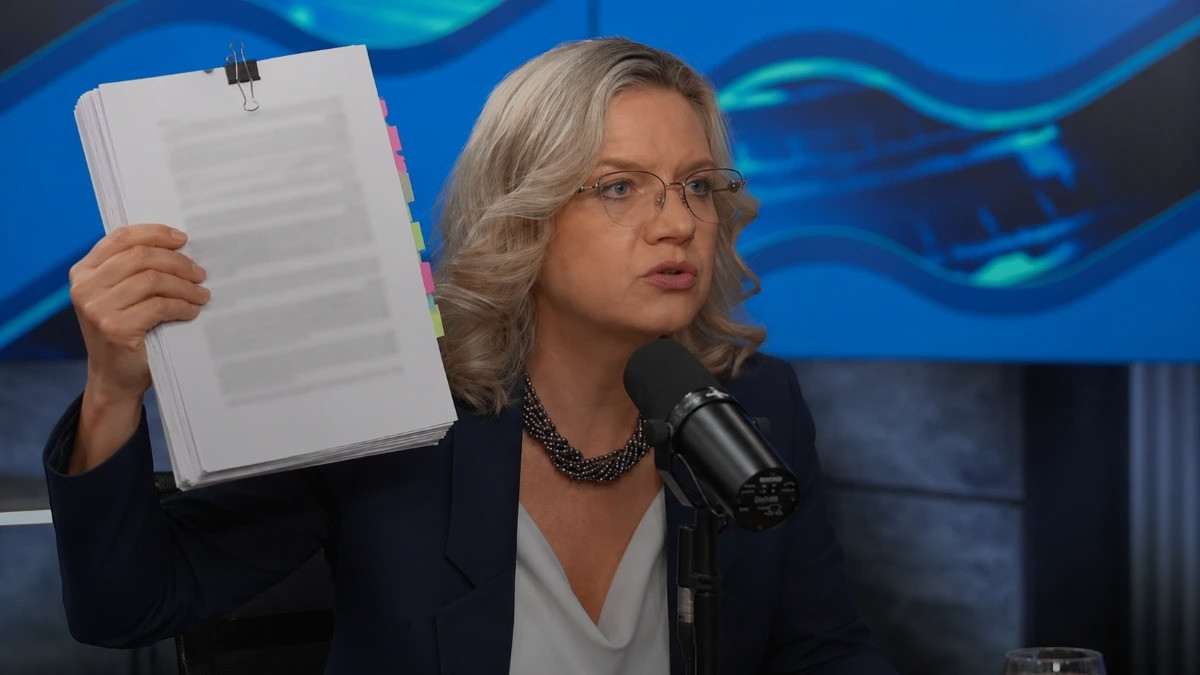
Małgorzata Wassermann accuses the Warsaw authorities of a lack of proper oversight of the investment and irregularities in the management of the facility, which are leading to multi-million losses. The MP points to a lack of transparency in spending funds and hindered access to key medical services for patients. This dispute centers around three areas: the lack of verifiable financial audits, the operational inefficiency of departments, and unclear procedures for ownership supervision exercised by the city hall.
The genesis of the conflict and the role of Małgorzata Wassermann
The actions of Małgorzata Wassermann, a Law and Justice MP, regarding the Southern Hospital in Warsaw are not incidental. They are the result of an analysis of documentation she managed to access, as well as signals coming directly from the facility's environment. The foundation of the accusations is not merely an ad-hoc assessment of the quality of services provided, but an allegation of systemic supervisory failure, for which the capital's city hall is entirely responsible.
Wassermann raises the issue of financial settlements, claiming that the lack of insight into detailed expenditure statements makes it impossible to reliably assess management efficiency. The MP uses the concept of losses counted in millions of zlotys, which, in the realities of managing a public healthcare unit, is an allegation of significant weight requiring explanation. The lack of transparency in the expenditure of public funds calls into question the legitimacy of individual equipment investments and operating costs incurred by the company running the hospital.
The situation is complicated by the lack of available audit results for the year 2026. No document confirming the conduct of a comprehensive financial audit, which could shed light on the facility's debt status, appears in public registers. The lack of official data means that every attempt to assess the situation turns into speculation. If the city does not present documentation confirming the reliability of purchasing and management processes, the narrative of wasting public funds will gain the status of the only available interpretation. For the residents of Warsaw, this means uncertainty about the future of the hospital, which was supposed to be a modern medical facility, but currently operates in an atmosphere of political dispute.
Main flashpoints in hospital management
The conflict surrounding the Southern Hospital is based on three specific pillars that require separate analysis. The first is the efficiency of spending funds. Wassermann points to a lack of transparency in financing investments, which raises suspicions of unjustified operating costs. Instead of building a stable expenditure structure, the facility seems to generate costs whose justification is difficult to defend without insight into the full invoice of expenses.
The second point concerns the availability of specialist departments. Despite declarations of readiness to accept patients, residents encounter barriers in accessing services. The hospital, which was supposed to relieve other facilities in the capital, in practice struggles with problems that limit its throughput. Patients often cannot use services that, according to design plans, should be available under the contract with the National Health Fund.
The third point is the discrepancy between investment plans and reality. The design documentation promised a high-standard center, meanwhile, the current state of infrastructure and staffing shortages suggest that management ambitions are out of sync with executive capabilities. Wassermann does not provide a precise amount of losses, which is a consequence of the lack of public access to full accounting documentation, however, the scale of the problems she speaks of indicates a deep dysfunction in the management of municipal assets. The patient who ends up in the hospital becomes a hostage to this situation, not knowing whether the facility will be able to ensure continuity of treatment in the long term.
Reaction of supervisory institutions
Relations between the hospital management and the supervisory bodies of the Capital City of Warsaw resemble the process of extinguishing a fire with laconic statements. MP Wassermann points to the direct responsibility of city officials for the organizational chaos. In her opinion, ownership supervision boils down to superficial actions that have no impact on improving the facility's financial situation.
The criticism concerns primarily the lack of readiness to present audit reports. Instead of a substantive discussion based on numbers, the public receives assurances that there are no problems at all. Every attempt to gain insight into expenditure documentation meets with resistance. Officials hide behind internal procedures, which in practice makes it impossible to reliably verify the allegations made by the MP.
As of August 23, 2026, no data regarding the company's current debt has been officially confirmed. City authorities avoid providing specific amounts, which only intensifies suspicions of irregularities. The lack of financial transparency is the main problem here. Patients, for whom access to medical services is limited, remain in an information vacuum. Instead of a debate on cost optimization, we are observing a stalling tactic, where the stake is the continued functioning of the facility as a public unit. The lack of clear declarations from the supervisors suggests that the situation inside the company may be far more serious than the optimistic press releases from city hall suggest.
Perspectives for patients and the future of the facility
The situation of the Southern Hospital has ceased to be solely a political issue and has become a real threat to the continuity of medical care. The atmosphere of uncertainty affects the work of doctors and support staff, who must operate in the face of constant inspections and a lack of clear guidelines regarding development strategy. Warsaw residents using the facility ask directly about the possibility of obtaining medical help, to which there is still no answer.
Małgorzata Wassermann demands an independent external audit to verify the actual scale of the losses. In her opinion, without external control, it is impossible to break the spiral of irregularities. The lack of transparency the MP speaks of is a barrier limiting access to services. When the management of a facility becomes the subject of political disputes, the patient always loses, because medical priorities give way to fights for influence in municipal companies.
So far, no significant personnel decisions have been made in the hospital's management that could indicate a will to improve the situation. The state of suspension continues, and the lack of personnel changes suggests that city authorities either do not see the scale of the problem or decision-making paralysis prevents any constructive changes. For the patient, this means maintaining the status quo, which in the opinion of critics is a path to further deepening the crisis. Time works to the detriment of the facility, and every day of delay in making concrete management decisions brings the hospital closer to the moment when drastic cuts in the medical offer will be necessary.
What this means for you
From an editorial perspective, the situation surrounding the Southern Hospital is a textbook example of a dispute over the transparency of public spending in Polish local government. Politicians building capital on control gain from this, while patients lose, for whom the uncertainty surrounding the hospital means less comfort in treatment and the risk of decision-making paralysis at the facility. The catch lies in the lack of full audit documentation, which allows for a debate based on emotions rather than hard numerical data. The lack of concrete financial reports for the year 2026 makes it impossible to objectively assess whether the losses are the result of poor management or objective market difficulties. The reader should be aware that without access to full documentation, each side of the dispute operates with arguments that serve its political interests, leaving the patient without an answer to the question about the future of treatment at this facility.
Questions and answers
What specific irregularities does MP Wassermann point out?
The MP points out primarily the lack of proper oversight of the investment, ambiguities in financial settlements, and a lack of transparency in spending funds, which in her assessment harms the interests of taxpayers and patients.
Has the Southern Hospital case already reached a conclusion in court?
As of August 23, 2026, there is no information about any final court judgments regarding the management of the hospital in the described scope.
What are the main concerns of patients in this matter?
Patients are primarily concerned about the limitation of access to key specialist departments and the destabilization of the facility's work resulting from ongoing political conflicts over how it is managed.
Have city authorities addressed the allegations of financial losses?
Warsaw authorities consistently avoid providing specific debt amounts, hiding behind ongoing internal analyses, which makes it difficult to verify claims of multi-million losses.
Why is the audit for the year 2026 so important?
The lack of a publicly available audit for the year 2026 makes it impossible to assess the current financial condition of the hospital, which creates space for speculation about the reliability of the internal controls being conducted.
Have there been any personnel changes at the facility as a result of the intervention?
As of August 23, 2026, no final personnel decisions in the hospital's management resulting directly from the raised allegations have been announced.
Is access to medical services at the hospital currently fully ensured?
Wassermann points out that the availability of services is limited and does not correspond to the declarations made at the investment planning stage, which makes the facility largely inefficient in the eyes of critics.
Is there a chance for an independent audit of the hospital?
MP Wassermann firmly advocates for the necessity of conducting an independent audit that could clarify the state of finances, however, the current position of city hall does not indicate a readiness to submit to such external verification.


Komentarze (0)
Ładowanie komentarzy...