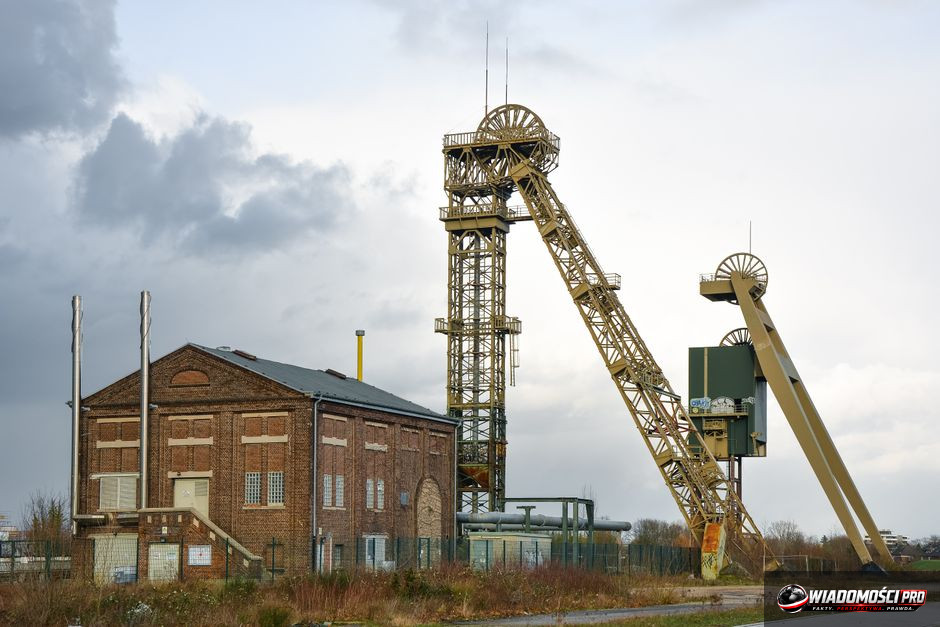
The government refused to return 1.6 billion PLN of the solidarity levy in October 2025, prioritizing the needs of the state budget over the financial liquidity of Jastrzębska Spółka Węglowa. This decision triggered a sharp collapse in JSW's stock price, which cut the company off from cheap capital and forced the management to sell off assets in 2026 to ensure miners' salaries were paid. The refusal to return funds, which were intended to support the sector during tougher times, became the foundation of the subsequent operational crisis.
Genesis of the dispute: The blocked liquidity mechanism
The Ministry of Finance's October decision to keep 1.6 billion PLN in the state budget was not merely an accounting move. For JSW, it meant the loss of a safety buffer at a time when coking coal prices on global markets began to show signs of destabilization. The solidarity levy, collected from the company during a period of record profits, became "frozen assets" for the government in 2025. The government's argument boiled down to the necessity of patching the budget deficit, ignoring the fact that JSW – as a publicly traded company with State Treasury participation – needed these funds for the modernization of mining infrastructure and maintaining the profitability of mines.
Institutional investors reacted immediately. The failure to return the funds was interpreted as a signal that the company could not count on real support from its owner, even in critical situations. The stock market price, which had previously been a benchmark of confidence in the stability of coking coal production, plummeted within a few hours. The capital outflow forced the management to look for alternative sources of cash, which in practice meant abandoning development plans. Instead of financing new production levels, equity began to be "eaten up" to cover current costs.
Asset sales as a survival method
The liquidity crisis, initiated in October 2025, reached its peak in the first quarter of 2026. JSW's management, having no access to liquid funds from the recovered levy, faced the real specter of insolvency. In March 2026, an official plan to sell subsidiaries was announced. This decision was an admission of failure of the existing management strategy, in which the sale of fixed assets became the only way to avoid a paralysis of salary payments for thousands of employees.
The sale of assets was not a process designed with business synergies in mind. It was a forced sale. Commodity market analysts noted at the time that the company was getting rid of entities that, under normal market conditions, would constitute the strength of the capital group. On March 9, 2026, the worst fears were confirmed: the management officially admitted that without obtaining cash from divestments, salary payments were not guaranteed. Such a state of affairs testified to a deep exhaustion of operational reserves, which in a normally managed enterprise should have been enough to secure liquidity for at least several quarters.
In April 2026, the situation began to stabilize slightly in formal terms, though not financially. A recovery plan was adopted, which aimed to curb losses, but it was burdened with enormous risk. Despite optimistic assumptions, the market remained skeptical. The specter of losing liquidity still hung over the company, because the costs of coal extraction in Polish geological conditions drastically exceeded the prices that could be obtained on long-term contracts.
Social and political tensions: Who runs the mine?
Tensions at JSW were never solely about finances. They were political tensions in which the company's management, trade unions, and government representatives played a permanent game for influence. As early as January 12, 2026, "Rzeczpospolita" published an investigation that shed light on the mechanisms leading the giant to the brink of bankruptcy. Journalists demonstrated that decision-making processes in the company were hostages to party interests. Every attempt at restructuring met with resistance from trade unions, which saw politicians as guarantors of maintaining the status quo.
On February 18, 2026, Jacek Sasin publicly warned against the privatization of the company, which sparked another wave of protests. Political rhetoric effectively paralyzed any remedial actions that would have required sacrifices from the crew. Trade unions, fearing the loss of privileges, effectively blocked the management from implementing cost cuts. At the same time, the government, on one hand refusing to return the levy, and on the other promising support to employees, created a schizophrenic situation.
It was not until May 25, 2026, that an agreement was reached, ending the most turbulent stage of the dispute. Miners won guarantees for severance pay, which in practice meant increasing the company's budgetary burden in the face of its assets being sold off. This agreement, although it temporarily calmed social moods, deepened the financial crisis in the long term. The company was left with fewer assets and greater social obligations, which makes it even less attractive to future capital investors.
What this means for you
If you are a stock market investor, the JSW case should be a lesson for you about the so-called political risk in companies with State Treasury participation. In Poland, strategic sectors, such as mining, are notoriously used as instruments of fiscal policy. When the government needs "quick cash" to patch the budget, these companies are treated like private piggy banks, which happens at the direct cost of the stock's market valuation.
Warning: Do not treat dividends or government promises regarding "stability" as a certainty. In the case of JSW, despite having huge coal deposits, the decision to withhold the solidarity levy won over economic calculation. If your investment portfolios are concentrated in companies dependent on political decisions, you must include the risk of "sudden decision-making paralysis" in your forecasts. Investing in such entities requires monitoring not only financial results, but above all the election calendar and the moods within trade unions, which in the Polish economic system act as the de facto management of state assets.
Questions and answers
Why didn't the government return 1.6 billion PLN to JSW?
The government refused to return the solidarity levy to keep these funds in the state budget, treating them as a source of financing for central expenditures, even though the lack of this money directly threatened the company's financial liquidity.
How does JSW pay salaries after losing such a large amount?
The company was forced to sell off its fixed assets, including subsidiaries, which allowed for the acquisition of cash necessary to cover current payroll obligations in the first half of 2026.
Is JSW still threatened with bankruptcy?
Yes, despite the implementation of a recovery plan in April 2026 and the conclusion of an agreement with the unions in May of the same year, the company's financial situation remains unstable, and the sale of assets has permanently weakened the foundations of its operational activities.
Who lost the most in the dispute over the levy?
Minority shareholders suffered the most, as their shares lost value drastically after the crash in October 2025, as did the company itself, which was deprived of capital for development investments, reducing its long-term ability to compete in the coking coal market.
Did trade unions play a role in deepening the crisis?
Yes, the "Rzeczpospolita" investigation from early 2026 indicated that strong resistance from trade unions to necessary reforms and political pressure effectively prevented the introduction of changes that could have saved liquidity without the need to sell off assets.
What was Jacek Sasin's role in this conflict?
The former minister, by speaking out publicly against privatization in February 2026, fueled social unrest among the crew, which further hindered JSW's management from implementing necessary restructuring steps, deepening the decision-making paralysis within the company.
What is the result of the agreement from May 25, 2026?
This agreement primarily secured severance pay for employees, but it did not solve the company's structural problems, as it was concluded in the shadow of the need to continuously sell off assets to maintain operational liquidity.
Was the sale of assets the only solution for JSW?
From the management's perspective, in the face of the failure to return billions from the budget, it was the only way to ensure cash for salaries, but from an economic point of view, it was a last-resort method, leading to the gradual loss of production potential and the competitiveness of the JSW capital group on the European market.
Sources
- JSW recovery plan: Smaller loss, but the specter of losing liquidity is still real - Parkiet
- Help for employees of the state giant. The government has decided - money.pl
- There is an agreement between JSW and the government. Miners got their way, they will get large severance packages - INNPoland.pl
- Over a billion zlotys for JSW. Selling companies is supposed to help pay salaries - Strefa Biznesu
- Sasin: they want to privatize you. It's boiling over in JSW again - Bizblog.pl
- JSW with a billion-zloty loss, the government will not return the levy - Energetyka24
- The government will not return the 1.6 billion PLN solidarity levy to JSW. Stock price plummeted - pb.pl
- JSW on the brink of bankruptcy. How politicians and unionists finished it off – "Rzeczpospolita" investigation - Rzeczpospolita

Komentarze (0)
Ładowanie komentarzy...