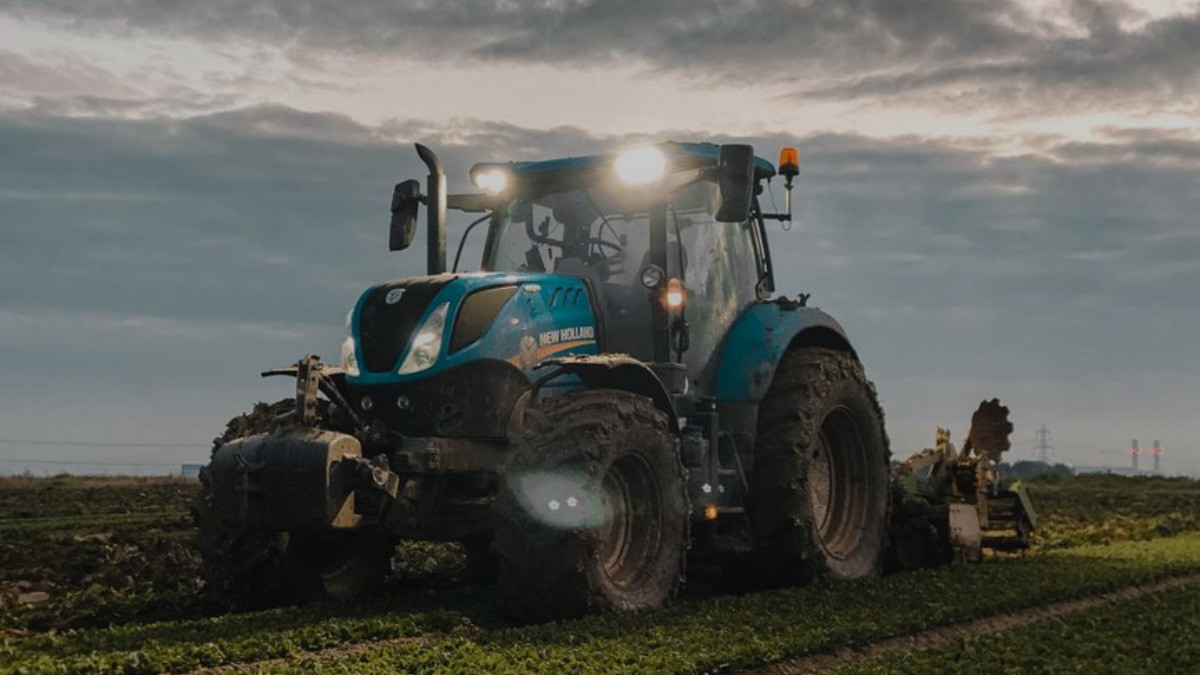
Machinery prices have risen as a result of global cost inflation and pressure on agriculture, which is confirmed by the market with 10.6 thousand new tractors registered in 2025, alongside an increase in the prices of agricultural services and fertilizers. Farmers are no longer buying equipment out of excess capital, but as a defense of farm efficiency, where every hectare must generate a higher margin in an extremely difficult economic environment. This change in the business model means that Polish agriculture has entered a stage where access to modern technology is strictly regulated by rising capital and operating costs, pushing entities with too small a scale of production out of the market.
Dynamics of the machinery market: 2020–2025
The year 2025 closed with a result of 10.6 thousand new tractor registrations. This number, although it may seem high to a layman, is a warning signal in the industry. Trend analysis indicates that demand does not stem from investment optimism, but from the technological necessity of replacement. The machinery fleet on Polish farms has reached its efficiency limit. The service costs of older units, produced in the previous decade, began to exceed the leasing installments for new machines. Farmers found themselves in a trap: repairing a worn-out engine or transmission became unprofitable, and purchasing a new machine burdens the budget in a way that is difficult to bear at current agricultural produce purchase prices.
Between 2020 and 2025, every tractor purchase transaction was burdened with increasingly higher risk. In 2020, the purchase of a mid-range tractor with power oscillating around 150 HP was a planned development investment, the cost of which paid for itself within a few seasons. Today, the situation looks different. In 2025, the same segment of machines became several dozen percent more expensive compared to 2020 prices. This increase was not a matter of chance, but a direct derivative of the costs of energy, steel, and electronic components, which drove up the final prices of agricultural products during the pandemic and the subsequent destabilization of supply chains.
The machine manufacturer, passing costs on to the buyer, left no room for negotiation. Farmers, wanting to remain competitive in the market, had to accept these terms, often going into debt for years. This phenomenon has permanently changed the relationship between farm efficiency and its debt. In 2025, the purchase of a tractor became a rescue operation for labor efficiency, rather than a choice of farm management style. This change is permanent and forces food producers to completely re-evaluate their financial strategy.
Economic domino: services and fertilizers under the fire of price hikes
The rise in operating costs has become the main burden for Polish food producers. An analysis conducted in May 2025 showed that agricultural services have become more expensive to a degree that makes it impossible to simply calculate costs from previous years. A farmer commissioning spraying or fertilizer spreading had to include in their budget not only the price of fuel, but above all the costs of servicing machines. In the last five years, these have become much more complex and expensive to maintain.
For example, the price of plowing or sowing services increased by over 40–50 percent between 2020 and 2025. If in 2020 a farmer paid a rate of 250–300 PLN per hectare for plowing, in 2025 this range shifted towards 400–450 PLN. A similar trend applies to grain sowing, where the increases in service provider rates are directly linked to the depreciation of machines with large working widths. Higher machinery prices forced service providers to raise rates, which in effect hit farmers using external support. This is a mechanism that has permanently changed the cost structure of food production in Poland.
The situation in the fertilizer market further worsened this dynamic. The lack of systemic compensation, which was warned about in December 2025, meant that farmers were left to fend for themselves in the face of rising prices per ton of fertilizer. Top Agrar pointed out at the time that higher tariffs and the introduction of the CBAM mechanism were the main factors that destabilized the fertilizer market. CBAM, or the Carbon Border Adjustment Mechanism, became a new burden for the supply chain. In practice, this means that fertilizer production within the European Union, burdened with emission costs, became more expensive, and imports from outside the EU were covered by new tariff barriers.
This economic domino hit the foundations of farms. A farmer who decided to buy a modern tractor in 2025 had to simultaneously secure funds for fertilizers, the price of which was shaped by the Union's climate and trade policy. This cost trap meant that even high crop yields often did not translate into a satisfactory margin. The profit that theoretically should have remained in the farmer's pocket was consumed by rising expenditures on production inputs and servicing loans taken out for the modernization of the machinery fleet.
Challenges of 2026: tariffs, CBAM, and construction costs
The year 2026 brings new challenges that may prove decisive for many farms in the context of survival. The CBAM mechanism, which was a subject of analysis last year, is now becoming a real cost built into every ton of steel used for machine production and into the price of mineral fertilizers. Agricultural machinery importers are already signaling that the prices of components that must meet new environmental standards will not allow for final price reductions. This means that a farmer planning purchases in 2026 must prepare for further price stagnation of equipment at a high level.
Another aspect is the cost of building agricultural infrastructure. The construction of machinery halls, warehouses, or silos in 2026 is significantly more expensive than in 2020. The rise in prices of construction services and materials, as reported by sources from the beginning of 2026, means that farmers are postponing key investments in infrastructure. The lack of modern warehouses limits the ability to hold agricultural produce until better market prices, which traps farmers in a cycle of selling at prices imposed by the market during the harvest period.
The potato market in 2026 is struggling with the problem of surpluses and difficult forecasts. This situation shows how unstable the agricultural produce market is, where the lack of modern storage infrastructure exacerbates losses. When a farmer cannot store goods, they must sell them cheaply to pay installments for machines bought in 2025. This is a vicious circle in which investment in modernity does not guarantee financial security, but only increases the level of risk. Farms that do not have their own storage base are currently completely dependent on the price dictates of purchasing centers at the peak of supply.
Building a new storage facility in 2026 is an expense 30–50 percent higher than just a few years earlier. The rise in labor costs, prices of concrete, reinforcing steel, and ventilation systems makes this investment unattainable for medium-sized farms without external subsidies. The lack of these investments is a straight path to losing competitiveness, as a farmer without a warehouse is forced to quickly sell off goods, which drastically reduces revenue per unit of area.
Poland against the backdrop of the world: why does food remain expensive?
The Polish food economy operates under specific conditions that distinguish us from global trends. While global food prices were recording declines in October 2025, the Polish market remained in an upward phase. This discrepancy results from local cost pressure. High energy, fertilizer, and agricultural service prices, which grew more in Poland than in many of our neighbors, made food production costs disproportionately high.
In 2025, 10.6 thousand new tractors were registered in Poland, which testifies to the enormous investment effort of farmers. However, this statistic, when compared with data on food prices, shows a sad picture: farmers are investing in technology to reduce unit costs, but the macroeconomic environment – tariffs, CBAM, lack of compensation – negates these savings. As a result, the consumer pays more, and the farmer earns less, despite owning modern equipment. This phenomenon has its social consequences. Small producers, lacking the scale of operation that would allow for the amortization of the costs of modern machines, are withdrawing from the market.
Their place is taken by larger farms that are better at handling debt, which leads to the concentration of production. Polish agriculture is becoming increasingly industrialized, and decisions about buying a tractor are no longer a choice of work style, but a raw economic calculation based on precise assumptions regarding efficiency per hectare. The agricultural sector in Poland has become a hostage to global supply chains that it cannot control, and the only way to stay in business is to increase scale.
Editorial perspective: is there a way out of the cost trap?
The situation in which Polish farmers find themselves is the result of a combination of factors over which an individual producer has negligible influence. Investments in modern equipment, although necessary, have become a huge financial burden. The farmer pays for steel, for technology, but also pays for trade and climate policy, which passes CBAM costs directly onto final production inputs. The key problem remains the lack of a long-term support strategy that would allow for the amortization of these shocks.
Without systemic compensation, with the continuous rise in fertilizer and service prices, agriculture in Poland is becoming a high-risk sector. Technology suppliers, who achieve their sales goals, are the ones gaining, while farmers become hostages to costs that they must finance themselves. In 2026, the key skill will no longer be just agronomic knowledge, but above all the ability to manage financial liquidity in conditions where every investment must be doubly thought out.
Agriculture has ceased to be a profession and has become asset management in an environment of high interest rates and uncertain trade policy. Farms that cannot precisely calculate costs per hectare, including the costs of machinery depreciation and services, are doomed to marginalization. The future of the Polish countryside is painted in colors of capital concentration, where only those who can optimize production processes to the limits of technical possibilities will survive. This is a brutal reality, determined by the prices of tractors, fertilizers, and the costs of building infrastructure.
There is no return to the low-cost model, in which a farmer was able to build wealth using simple, cheap-to-maintain machines. Today's technology requires capital, and EU policy imposes costs that make every ton of fertilizer and every hour of machine work more expensive than ever in history. The farmer is becoming a risk manager, not just a food producer. This change is permanent and irreversible, regardless of what forecasts may come from the ministries of agriculture. The real challenge for the coming years is therefore not so much production, as survival in realities where every investment in development is simultaneously a risky bet on the stability of the entire farm.
Questions and answers
Will agricultural machinery prices start to fall in 2026?
Taking into account rising production costs, the introduction of the CBAM mechanism, and the lack of fertilizer compensation, forecasts indicate the maintenance of high cost pressure. There are no premises indicating permanent price reductions for agricultural equipment.
How many tractors did farmers buy in 2025?
In 2025, over 10.6 thousand new tractors were registered in Poland. This number reflects the necessity of replacing the machinery fleet despite high purchase prices.
Why is food in Poland getting more expensive, even though the world is getting cheaper?
Data from October 2025 indicate local cost pressure in Poland, resulting from higher energy and fertilizer costs and the lack of systemic compensation, which distinguishes the Polish market from global trends.
How does the CBAM mechanism affect the farmer?
CBAM, by imposing fees related to CO2 emissions on goods imported into the EU, directly raises the costs of mineral fertilizers and the steel from which agricultural machines are produced. The farmer feels this as a direct increase in production costs.
Is building warehouses in 2026 a good idea?
Building storage infrastructure is currently much more expensive than a few years ago due to the rise in prices of construction materials and services. Although warehouses are needed to stabilize sales, the high cost of investment makes it a luxury for the largest farms.
Sources
- Expert calculates how much it might cost to build a house in 2026. There is something to be happy about - Bezprawnik
- Potato prices: how is the market dealing with surpluses and what are the forecasts? - Top Agrar
- Agricultural service prices: what has become most expensive? How much does a farmer pay for spraying and fertilizer spreading? [ANALYSIS 2020-2025] - Tygodnik - rolniczy
- Fertilizer prices are rising again. Lack of compensation, higher tariffs, and CBAM will hit production costs in 2026 - Top Agrar
- Food prices – October 2025: the world is getting cheaper, Poland is still getting more expensive - agroprofil.pl
- Over 10.6 thousand new tractors in 2025. Who was the market leader? - AgroFakt.pl
- Building a house is more expensive than a few years ago. What must Poles be ready for? - Money.pl


Komentarze (0)
Ładowanie komentarzy...