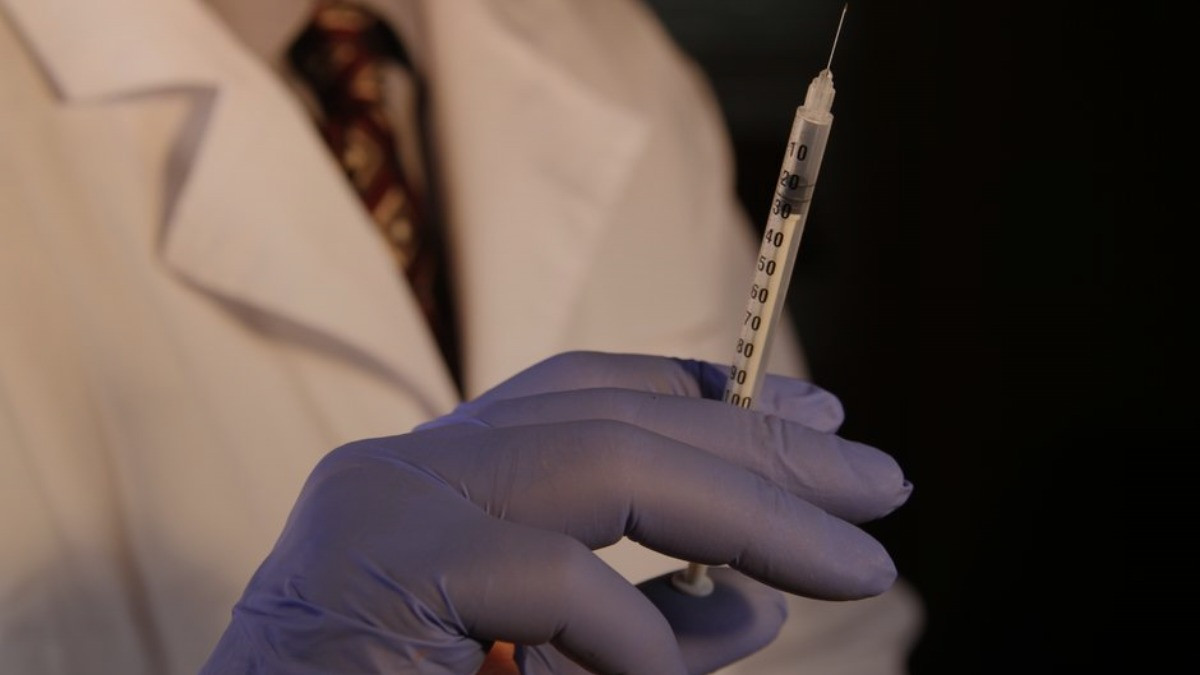
Poland has one of the most extensive mandatory vaccination schedules in Europe, covering over 10 items, all of which are free of charge, placing us at the forefront in terms of the number of legal requirements. Unlike many European Union member states that have moved away from rigid compulsion in favor of a model based on medical recommendations, the Polish system retains the character of a hard administrative order. A comparison of data from 2025 indicates that while countries such as Sweden have abandoned statutory obligations in favor of voluntary participation, Polish legislation maintains a rigor whose enforcement is becoming an increasing challenge for sanitary supervision authorities.
The structure of the Polish Protective Vaccination Program (PSO) is a list of preparations that every child residing in the country must receive at a specific age. The list includes protection against tuberculosis, hepatitis B, diphtheria, tetanus, pertussis, polio, Haemophilus influenzae type b, as well as measles, mumps, and rubella. The administrative corset in which the Polish patient functions stems from a model of centralized public health management. The Ministry of Health sets the deadlines, and clinics implement these guidelines under contracts with the National Health Fund. However, the lack of flexibility in this system is becoming a source of growing tension between the legislator and parents, who are increasingly seeking alternative solutions within private medicine.
Comparison of European vaccination models
Differences in the approach to immunization within the European Union are drastic and result from different legal traditions. Poland represents a model of conservative mandate, in which every disease entity covered by the PSO constitutes an element of a legally binding list. The situation is different for our western neighbors. Germany, often cited in the debate as an example, has withdrawn from universal vaccination mandates as such, introducing only targeted compulsion. Since 2020, the so-called Masernschutzgesetz, or the Measles Protection Act, has been in force in Germany. This is, de facto, one hard, legal obligation concerning a specific disease entity, rather than an entire schedule in the Polish sense. It is worth noting that in Germany, the system is based on strong recommendations from pediatricians, rather than on threats of administrative sanctions.
The following table shows how much Polish specificity deviates from the rest of Europe in terms of its approach to legal requirements.
| Country | Number of mandatory vaccinations | Dominant model |
| :--- | :--- | :--- |
| **Poland** | 10+ | Statutory obligation |
| **Germany** | 1 (measles) | Recommendation + targeted compulsion |
| **France** | 11 | Statutory obligation |
| **Sweden** | 0 | Voluntary (recommendations) |
Analysis of data from 2025 shows that France, despite having a similar number of mandatory vaccinations to Poland, is facing similar social problems. The introduction of a broad catalog of mandates there was a reaction to a decline in vaccination rates, but the effect was only temporary. Sweden, on the other hand, remains a model where the level of trust in state institutions allows for maintaining vaccination rates above 95% without the use of financial penalties. Poland, while maintaining a high level of statutory requirements, does not possess the same capital of trust, which makes our system exceptionally fragile in the face of growing reluctance among part of the society.
Vaccination rates: Statistics vs. reality
The latest data from the Central Statistical Office (GUS) from September 2025 indicate a slow erosion of the system. Although general statistics still oscillate around acceptable values, detailed analyses show clear cracks. In some districts of eastern Poland and in large urban agglomerations, the percentage of children vaccinated against MMR has fallen below 90%. This is an alarm signal, as herd immunity for measles requires a level of 95%. Sanitary inspectors admitted in reports from March 2025 that the administrative machinery, designed in a different era, is unable to effectively react to mass evasion of the obligation.
The effectiveness of law enforcement is low. Available data show that administrative proceedings against parents often last for years. Many of them end only with warnings, which have no enforcement power. According to data from March 2025, the percentage of proceedings ending in a real financial penalty is marginal on a national scale. The sanitary inspection, instead of being an educational institution, has become a hostage to its own regulations. Parents take advantage of legal loopholes, appeals, and the protracted nature of proceedings, which makes the system dead in practice, despite very lively provisions in the laws.
Financing and accessibility barriers
The foundation of the Polish model is the belief in free healthcare. The state finances preparations from the mandatory schedule, removing the cost of purchasing vaccines from parents. However, this system creates an artificial division into "free" and "better" vaccinations. If a parent wants to use highly combined preparations, e.g., 6-in-1, they must pay for them out of their own pocket. The cost of one dose of a 6-in-1 vaccine ranges in Polish pharmacies from 200 to 300 PLN, depending on the margin and availability. Since a child usually needs four doses of this preparation in a full vaccination cycle, the total cost for a family is between 800 and 1200 PLN.
This creates a situation where prevention becomes a luxury good. Parents with lower material status are condemned to the standard schedule, which means more injections for the child. In turn, recommended vaccinations, such as those against rotavirus or influenza, are in most cases not reimbursed to a degree sufficient to be accessible to everyone. In other European countries, where a subsidy model exists, the financial barrier is much lower. Polish health policy in this regard resembles a two-track system: the mandatory is free, but not necessarily modern, while one must pay cash for comfort and a reduction in the number of injections.
Ideologization of medicine: Will the system hold?
In recent quarters, the debate about vaccinations has ceased to be the domain of epidemiologists and has become a battlefield for politics. In October 2025, Confederation MPs sent a letter to the president in which they explicitly question the legitimacy of maintaining mandatory vaccinations. This event showed how deeply this topic has entered the bloodstream of Polish politics. From a medical perspective, such actions introduce chaos. Parents, listening to contradictory messages, begin to lose trust in doctors, who in this puzzle become merely executors of top-down regulations.
The lack of reliable education that would explain the mechanisms of immunization has been replaced by a "vaccination war." Both sides of the barricade are reinforcing their arguments, and the healthcare system is losing out on this. Public health experts warn that when the law becomes a tool for ideological struggle, its effectiveness drops drastically. The state, instead of acting as an educator, has become an administrator of mandates. In the 21st century, in an era of easy access to information, a strategy based solely on compulsion is not very effective. The question is whether the Ministry of Health will decide to reform, or whether it will continue to stick to a model that, in the face of modern social skepticism, is slowly ceasing to work.
The catch of the system: The illusion of control
The main problem with Polish vaccination policy is the belief that a mere entry in the law ensures population safety. Reality shows that without social consent and a high level of trust, the law is just a dead provision. Poland is a leader in the number of mandates, which looks impressive in legal statistics, but in the context of public health, it is a system with a growing level of risk. People who value medical freedom feel stifled in Poland, while parents expecting a clear path for healthcare feel lost in a maze of contradictory messages.
The catch is the high administrative pressure, which in the face of growing skeptical movements is becoming increasingly difficult to maintain. If the Ministry of Health does not propose a model based on dialogue instead of penalties, the current system may lose its foundation – high population vaccination coverage. Only political players gain from this, while all citizens lose, becoming hostages to an endless dispute over the boundaries of freedom in healthcare. The lack of changes in the way of communicating with parents and the lack of reimbursement for more modern preparations will only deepen this crisis, leading to a situation where vaccinations become a matter of political, not medical, choice.
Questions and answers
How many vaccinations are mandatory in Poland?
In Poland, there are over 10 items in the mandatory vaccination schedule, covering a wide range of childhood infectious diseases, including tuberculosis, diphtheria, tetanus, and measles.
Are all vaccinations in Poland free?
Only preparations included in the mandatory vaccination schedule are free. Recommended vaccinations, as well as highly combined preparations such as 6-in-1, involve out-of-pocket costs that the parent must cover in full if they decide on such a form of protecting the child.
Does Poland have a more restrictive vaccination system than Germany?
Yes. Poland maintains a broad mandatory model with administrative sanctions, while Germany bases its system to a greater extent on recommendations, applying legal obligation only in selected cases, such as vaccination against measles.
Why is enforcing vaccinations in Poland becoming more difficult?
The main reason is growing social resistance and a loss of trust in public health institutions. Bureaucratic control mechanisms cannot keep up with changes in sentiment, and the debate about vaccinations has become highly politicized, which makes effective enforcement of regulations in practice difficult and leads to protracted administrative proceedings.
Sources
- Vaccination schedule in 2023. - Szczepienia.Info
- "Voluntary vaccinations". Sounds good when they want to manipulate you - TVN24
- European Vaccination Week 2025. Prevent. Protect. Vaccinate. - Gov.pl
- Confederation MP goes to war over vaccinations. Writes to the president - PolitykaZdrowotna.com
- Poland at the forefront of Europe? New GUS data on child vaccination rates - WP parenting
- Poland vs. Germany: what does vaccination policy really look like? - Pravda Association
- Vaccination schedule 2023. Mandatory and recommended vaccination for 2023 - PoradnikZdrowie.pl
- Mandatory child vaccinations. There are difficulties in enforcing regulations - Gazeta Prawna


Komentarze (0)
Ładowanie komentarzy...