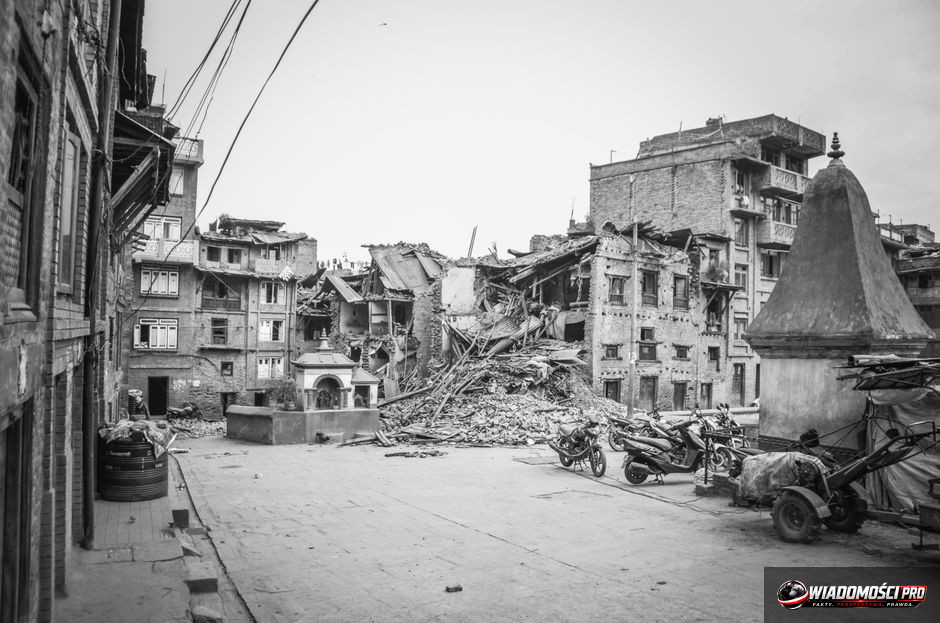
According to data from August 27, 2026, more than 160 people have died as a result of floods and an earthquake in Nepal, and hundreds of others remain missing, including many tourists. The disaster, which affected the border areas with China, is the result of a devastating sequence of events, where a flood wave occurred seven minutes after the seismic tremors. Rescuers are still combing through the rubble, fearing that the actual number of victims will significantly exceed current statistics.
Sequence of tragedy: from tremors to floods
The phenomenon that led to the current situation was cascading in nature. A high-magnitude earthquake, the epicenter of which was in the immediate vicinity of the Nepal-China border in the Himalayas, caused the destabilization of slopes and the river system. The specifics of this terrain, characterized by deep valleys and a high degree of erosion, meant that rainwater combined with masses of earth moved down the riverbed in less than ten minutes.
Residents of districts located along the border rivers did not have time to evacuate. Road infrastructure, the only escape route for local communities and tourists in the region, was completely destroyed in the first phase of the tremors. Landslides blocked transport routes, which made it impossible for heavy construction equipment and medical rescue units to reach the points most affected by the disaster.
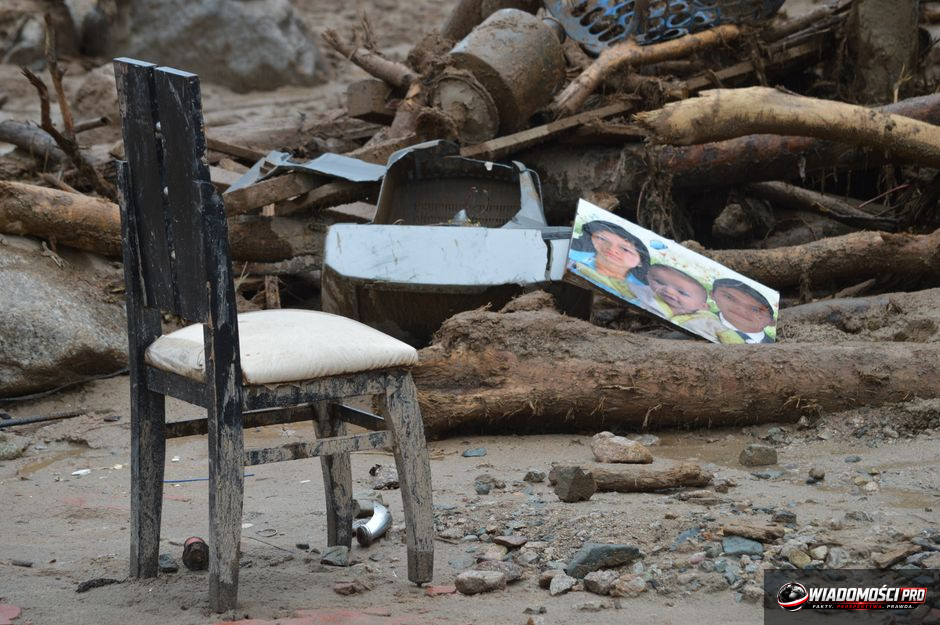
Most of the destroyed buildings were structures made of stone and unfired brick, which did not have adequate seismic resistance during strong tremors. After the flood wave hit, carrying boulders, mud, and building debris, the area resembled ground zero. Rescuers indicate that the main problem in conducting search operations is currently the lingering layer of silt, which in many places has reached a thickness exceeding two meters. The use of advanced equipment to detect signals from mobile phones is hindered by the fact that most base stations in the region stopped functioning at the moment the tremors occurred.
Death toll and search for the missing
The official statement from Nepalese crisis management services confirms the death of 160 people, however, this statistic is fluid. The number of missing, estimated in the hundreds, is based on reports from families and travel agencies organizing trekking expeditions in the area. Among those with whom contact has been lost are citizens of several countries, which is forcing consular services to intensify verification efforts.
The work of rescue teams is focused on two priorities. The first is to find people who may have survived in air pockets created under the rubble. The second, much more difficult task, is to secure the bodies of the victims to prevent the spread of infectious diseases in conditions where there is no access to clean drinking water. Local Nepalese authorities, in consultation with the Chinese disaster monitoring center, announced that more victims are expected to be found in the coming hours, which is a result of progress in clearing riverbeds of deposited rock material.
The situation is complicated by the lack of a coherent database of people staying in the mountains. Many tourist groups choose unauthorized routes, which makes it impossible to precisely determine how many people were actually in the impact zone. Families of the missing, trying to obtain information, direct inquiries directly to embassies, but these – in the face of the logistical cutoff of the region – only have data provided by local authorities, who are focusing on rescuing those who can be reached by air.
International reaction and aid for the victims
The United Nations, through its agencies, including the Office for the Coordination of Humanitarian Affairs, has begun the process of assessing the damage. UN representatives note that without air support, reaching all affected villages in this high-mountain terrain is impossible. There is a risk that many communities will remain without help for days to come until minimal capacity of communication routes is restored.
The Polish Ministry of Foreign Affairs, responding to reports of missing tourists, has launched verification procedures. The diplomatic department remains in close contact with posts in Kathmandu and Beijing, trying to determine the status of Polish citizens who may have been in the region affected by the cataclysm. The MFA statement emphasizes that the situation is being monitored on an ongoing basis, and any information regarding Poles will be published as it is confirmed by local law enforcement agencies.
It is worth noting that the international response in the case of disasters of such a large scale in hard-to-reach regions always encounters bureaucratic barriers. Cooperation between Nepal and China regarding border management is being put to the test, as both sides have different procedures regarding rescue operations in border areas. The lack of a unified protocol for information exchange between the agencies of both countries in the first 48 hours after the tragedy significantly slowed the pace of search operations.
Perspectives for the coming days
Forecasts regarding search operations for the coming days remain pessimistic. Meteorologists warn of rainfall in the Himalayan region, which could lead to further mudslides and landslides in areas already weakened by the earthquake. For rescuers, this means the necessity of withdrawing from the most dangerous zones, which directly translates into lower chances of finding survivors.
From a logistical point of view, the biggest challenge is delivering fuel to helicopters, which serve as the only means of transport for medical teams. Fuel infrastructure in the mountainous regions of Nepal is residual, and the destruction of roads prevents the transport of tankers. Nepalese authorities have appealed for support in the form of light rescue helicopters that are capable of landing on small, unsecured landing pads in difficult terrain.
Crisis management experts indicate that after the immediate threat subsides, the next stage will be the long-term process of removing the effects of the disaster. Rebuilding the roads connecting Nepal with China could take months, which will affect supply chains and cross-border trade. This means that the region, which was already struggling with infrastructure problems, will be excluded from normal functioning for a long time. For residents, this means the necessity of adapting to extreme conditions, often without access to basic public services.
What this means for you
This cataclysm shows how fragile high-mountain tourism is in the face of unpredictable geological phenomena. People planning expeditions to seismically active regions often do not take into account the risk that in a few minutes the landscape can change beyond recognition, cutting off all return routes. For the tourism industry, this is a signal to revise safety standards and real-time tourist location systems.
Skepticism towards rapid relief efforts is fully justified in this case. The scale of destruction we are dealing with in Nepal and China exceeds the technical capabilities of local services. The reader should be aware that official numbers, although tragic, may not reflect the full extent of the losses until access to isolated villages is fully restored. We will probably only know the true toll of the disaster when engineering teams manage to clear the main communication routes, which in Himalayan conditions is a challenge for the best specialists in the world.
Questions and answers
Is it known if there are Poles among the missing?
The Polish MFA is verifying lists of the missing in consultation with local authorities. At this moment, no specific data regarding the number or identity of missing Poles has been made public, which is standard procedure until these details are confirmed by the appropriate consular services.
Why did the flood occur so soon after the earthquake?
This phenomenon results from the destabilization of natural barriers in riverbeds. Seismic tremors led to landslides that blocked the flow of water. After a few minutes, the pressure of the dammed water led to the breaking of these temporary dams, which triggered a violent flood wave with enormous kinetic energy.
Has international aid already reached the site?
The United Nations is coordinating relief efforts, however, physically reaching the most affected areas is limited by destroyed infrastructure. International aid in the first phase is focusing on aerial reconnaissance and delivering the most needed medical supplies via helicopters, which is a slow process dependent on weather conditions.
Sources
- "Unimaginable scale of destruction". Hundreds missing after flood on the China-Nepal border - Interia Wydarzenia
- Tragedy in Nepal. Seven minutes after the earthquake - WP Wiadomości
- Powerful flood in Nepal leveled houses. Many tourists missing - Gazeta
- Powerful flood in Nepal. Over 160 victims, hundreds missing - Polskie Radio 24
- Hundreds missing after flood in Nepal. Dramatic recordings - Wiadomości Onet
- "We expect to find more bodies" - TVN24
- UN on floods in Nepal and China - Radio Zachód
- Devastating flood in Nepal, hundreds of missing tourists. Statement from the Polish MFA - Interia Wydarzenia


Komentarze (0)
Ładowanie komentarzy...