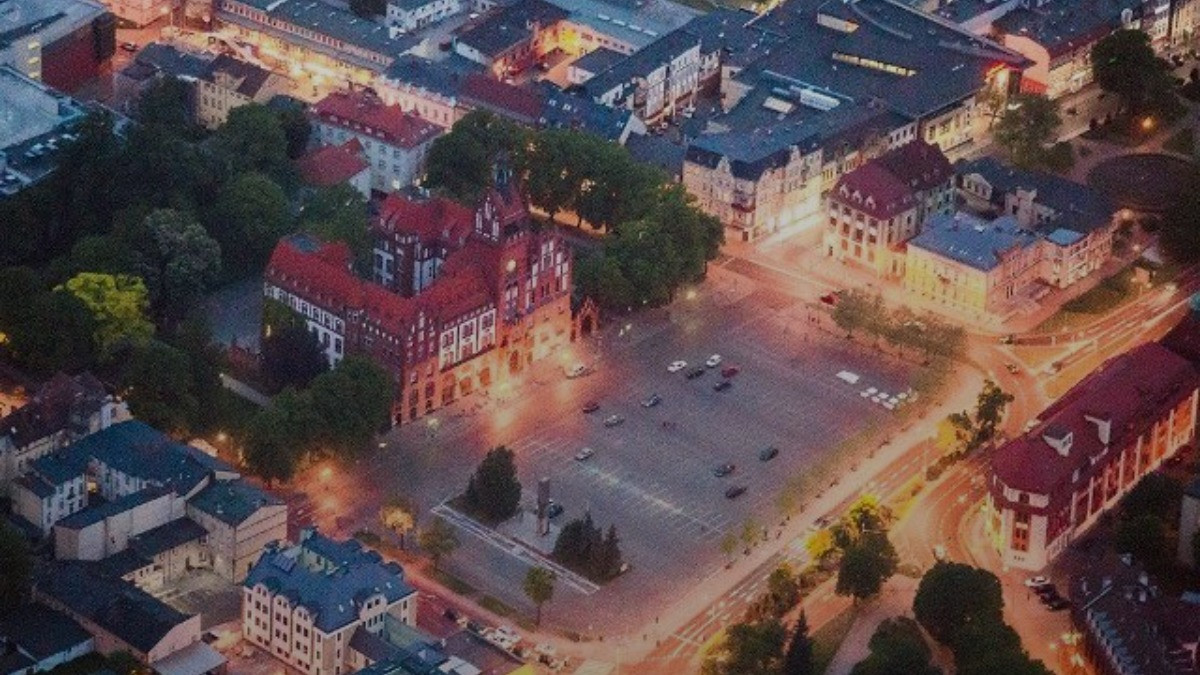
As of August 19, 2026, there is no official police data confirming the existence of "exclusion zones," and the debate among council members is based on the subjective feelings of residents regarding lighting and revitalization. In their informal accounts, residents primarily point to the area around Wojska Polskiego Street and the neglected underpasses in the Zatorze housing estate, where they feel clear discomfort after dark. The lack of hard forensic evidence of a threat in these locations does not change the fact that this topic has become the axis of a dispute in the city council, dividing politicians into defenders of police statistics and proponents of the "areas of fear" theory.
The political mechanism triggered during the last session is based on the anonymity of accusations. The councilwoman who caused the media storm surrounding safety remains an unnamed person in the official meeting minutes, which in practice makes it impossible to hold her accountable for the theses she puts forward. The lack of a name in the public record of proceedings is a convenient loophole in local politics. It allows for the construction of a narrative about "dangerous zones" without the need to present reliable evidence or even point to a specific district report that would justify such a formulation. When the councilwoman raises the alarm, not a single case number or date of an incident is mentioned that would confirm that there are enclaves in Słupsk where the police are afraid to enter. This is political fuel that drives emotions but does not provide any solutions to the problem.
The police in Słupsk consistently deny the theses about losing control over any area of the city. Statistics from August 2026 show a stable situation. Officers operate on numbers, and these do not show any anomaly that would justify the use of the drastic term "exclusion zone." If residents are afraid of specific places, the causes must be sought in the infrastructure. Non-functioning streetlights on Wojska Polskiego St. or damaged surfaces in the underpasses in Zatorze are objective problems that affect the sense of safety. Politicians, however, deliberately blur the line between a "dark sidewalk" and a "dangerous neighborhood." Instead of talking about a tender for replacing lighting fixtures, they build a narrative in which alleged crime is responsible for the state of the lamps.
In the 2026 budget, theoretical funds were secured for the modernization of LED infrastructure, but the exact amounts allocated for this purpose, broken down by individual streets, were not presented to the councilors in a transparent manner. Residents did not receive an answer as to how much of these funds would go toward improving lighting in the areas they identified as problematic. The lack of transparency in spending this money makes the discussion about safety a sterile dispute over rhetoric. Councilors do not indicate how much it would specifically cost to illuminate the underpasses in Zatorze; they prefer to discuss "fear." This allows them to avoid holding the city hall accountable for the pace of modernization work, because it is easier to manage fear than an investment schedule.
An analysis of crowd psychology shows that anxiety is a derivative of urban aesthetics. A dark, dilapidated tenement facade combined with a single flickering sodium lamp triggers an instinctive fear in a passerby, even if police patrols monitor the area regularly. This mechanism is used to force city authorities to increase investment spending under the guise of fighting crime. There is nothing wrong with this, as long as we call things by their proper names. We are not fighting criminal groups; we are modernizing lighting to improve the quality of life for residents. Politicians, however, prefer to dramatize because "zone of fear" sounds better in the media than "lack of power grid maintenance."
Law enforcement services consistently refer people to the National Map of Safety Threats. This tool is marginalized in Słupsk by the residents themselves, who prefer to complain at council sessions than to mark a specific point on the interactive map. However, if residents are afraid not of thugs, but simply of dark alleys, then the police become the recipient of the wrong expectations. Repairing streetlights is a task for the investment department, not for the city police chief. Shifting the burden of responsibility for infrastructure onto officers is an attempt to escape political responsibility.
The approaching autumn, when dusk falls much earlier, will be a period of increased activity for politicians building capital on fear. If the councilwoman who initiated this dispute does not present documentation regarding the mentioned streets, we will be dealing with a classic red herring. Residents may gain new lamps, but the reputational cost to the city, which is painted as dangerous by the councilors themselves, will be enormous. Investments in LED lighting, which are so often talked about in city hall, are necessary, but they cannot be the only element of a safety strategy. Lighting is just one layer. The second is cooperation with the local community. If there are places where residents are afraid to go out after dark, the cause lies in urban planning neglect that has lasted for years. The lack of a coherent revitalization policy means that some quarters of Słupsk are simply neglected, not dangerous in a criminal sense.
For the average Słupsk resident, this means the need to independently filter information coming from the council chamber. Fear of a dark alley is an authentic feeling, but it does not have to be evidence of a public safety crisis. Instead of believing in the existence of "exclusion zones," one should verify the incident statistics that are available at the city police station. Using fear for political purposes is a game in which residents always lose, regardless of whether they eventually replace the bulbs with LEDs. Safety is too serious a matter to be treated as a hostage in the fight for investment funds.
Residents deserve concrete data. Instead of emotional speeches, we need an audit of lighting infrastructure. Councilors have a duty to tell the truth about the scale of problems, not to build an image of the city as a dangerous place, while in reality, the only problem is insufficient lighting. Until the debate moves from the level of slogans to the level of technical findings, residents will live in uncertainty that is not reflected in any official police reports. This is the greatest cost of the current dispute: a sense of threat that is completely unjustified statistically, yet effectively spoils the quality of life in the city.
Verification of every claim about "dangerous zones" should be a standard for local media. If they cannot point to even one street in the city council where the risk is above average, these statements should be considered an element of a political game. Residents' safety is not a testing ground for rhetoric before the upcoming elections. Słupsk residents expect clear answers: where, when, and for how much will the lighting be improved, which realistically affects their sense of safety.
Ultimately, if the debate is to bring real change, it must move from the level of general slogans about "fear" to the level of technical findings. We need a lighting audit, not a debate about fear. We need concrete amounts in the budget for modernization, not general assurances about caring for residents. Until councilors stop using fear as fuel for their demands, the sense of uncertainty will remain merely an artificially created problem that spoils the quality of life in the city. The city needs functional streetlights, not politicians who look for opportunities to appear in the media in the dark.
Questions and answers
Are there places in Słupsk where the police are afraid to intervene?
There is no information confirming the existence of such places; the police carry out interventions throughout the city, and statistics do not indicate the existence of areas excluded from the jurisdiction of the services.
Has the number of crimes in Słupsk increased in 2026?
There is no data confirming a sharp increase in crime, which suggests that the problem is of an image and infrastructure nature rather than criminal.
Where do residents report safety problems?
Residents can report dangerous places via the National Map of Safety Threats or directly to district councilors, which allows for the collection of hard data instead of relying on subjective feelings.
Which councilwoman caused the storm around "zones of fear"?
In the available minutes of city council meetings, the councilwoman's name has not been disclosed, which makes it impossible to identify the person responsible for introducing this term into the public debate.
Is the budget for lighting in 2026 known in detail?
No. Although funds for the modernization of LED infrastructure were secured in the budget, the exact amounts broken down by individual streets remain undisclosed, which makes it difficult to verify planned investments.
Which streets are mentioned in residents' rumors as dangerous?
Residents most often point to the area around Wojska Polskiego Street and the underpasses in the Zatorze housing estate, but these are concerns with an infrastructural, not criminal, basis.

Komentarze (0)
Ładowanie komentarzy...