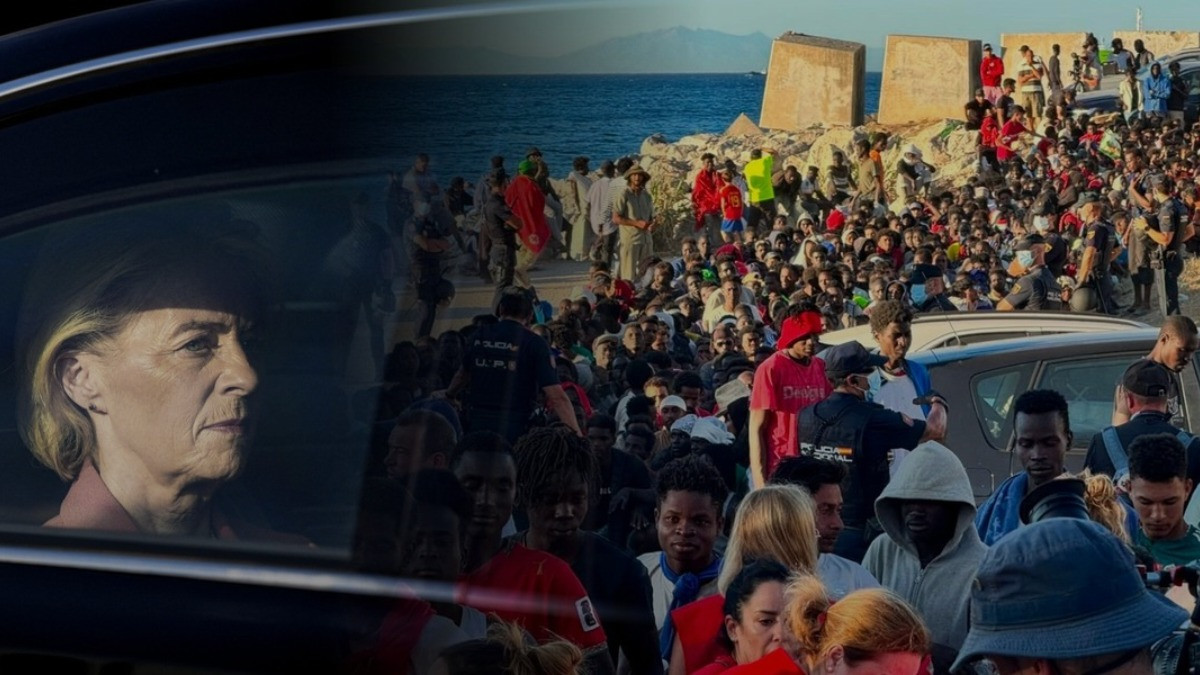
Currently, there are no official reports confirming the abuse of five children by immigrants in Ceuta in 2026; the matter remains unverified by the Spanish Ministry of the Interior. No law enforcement agency has yet published a report that could serve as a basis for such serious accusations. Spanish services remain completely silent on this issue, which, in the context of public safety, creates a vacuum filled by unverified reports.
The source of the confusion is not press releases, but digital communication channels, including Telegram groups and profiles on X (formerly Twitter) that specialize in publishing anti-immigrant content. It was there, in the first half of February 2026, that the first mentions of the alleged incident began to appear. The mechanism for the spread of these accusations is typical of modern disinformation: an anonymous post without attached medical or police documentation becomes the starting point for thousands of shares. The algorithms of the aforementioned platforms additionally promote content that triggers strong emotional reactions, which, in the case of child protection, happens rapidly.
The Guardia Civil, the unit responsible for border protection in Ceuta, has not recorded any incident in its logs that corresponds to the description circulating online. Officers operating at the so-called "tarja," the high fence separating the enclave from Moroccan territory, have also not received reports from medical services or non-governmental organizations involved in supporting migrants. There are no names, dates, or specific locations within the centers for minors that could point to the credibility of these reports. In professional police information circulation, every criminal incident leaves a trace in the form of an operational report. Here, we are dealing solely with a narrative based on conjecture that ignores the principles of fact-checking.
Ceuta is an enclave where every incident takes on political weight. This border, which constitutes the external frontier of the European Union on the African continent, is under constant observation not only by Spanish authorities but also by international media. The tension between Morocco and Spain regarding migration issues means that any information, even the most drastic, can be used as a tool of pressure. The lack of reaction from the ministry headed by Fernando Grande-Marlaska is, in this case, a signal that the situation has no foundation in reality. If the allegations of child abuse were true, Spanish law provides for the immediate initiation of criminal procedures, which the public would learn about from official statements by the prosecutor's office.
The protection of minors in the Spanish legal system is regulated by rigorous provisions, in particular the Ley Orgánica 8/2021. This is a legal act that introduced comprehensive mechanisms for preventing violence against children and adolescents. Every facility in Ceuta that takes minors into its care must adhere to strictly defined standards. These require, among other things, regular inspections conducted by the Servicios Sociales. Personnel working with children have a statutory obligation to provide a certificate of no criminal record, including in the scope of sexual offenses. This system was designed to minimize the risk of abuse, and any irregularity in the functioning of a center is immediately investigated by the appropriate oversight bodies.
The lack of any mention of this incident in court documentation and police registers is the strongest argument against the credibility of the disseminated accusations. In an environment where every case involving minors becomes a priority for the justice system, it is impossible to "silence" a crime on such a scale. Information circulating online often deliberately omits the fact that Spanish law protects the identity of victims; however, in this case, we are not dealing with the protection of sensitive data, but with a complete lack of reporting of a prohibited act.
Disinformation in this region serves a polarizing function. People spreading this content often cite "unofficial sources in the police," which is a manipulative technique aimed at lending credibility to a lie. In reality, officers of the Guardia Civil and the local police in Ceuta are bound by professional secrecy and do not pass on details of investigations to outsiders or administrators of social media channels. Every attempt to verify these revelations at the source ends in a lack of confirmation. This phenomenon shows how easily fear for the safety of the youngest can be transformed into fuel for the radicalization of social moods.
For the recipient, the key conclusion is the necessity of verifying sources. In the era of rapid information flow, we often forget that the lack of an official position from state bodies is information in itself. If the Spanish Ministry of the Interior does not issue a statement, it means that it does not possess evidence that would allow for legal action. Building a narrative based on unconfirmed reports does not serve to clarify the matter, but rather to deepen divisions in society.
Editorial angle: In this matter, those who lose out most are the people actually involved in humanitarian aid in Ceuta, whose work is undermined by information noise. Meanwhile, entities building reach on fear are the ones gaining. The catch lies in the lack of an evidentiary requirement on social media – an accusation is enough to trigger a wave of outrage that cannot be extinguished by a correction. The reader should treat every such message as an attempt at manipulation until it is confirmed by an institution with statutory authority to conduct investigations.
Questions and answers
Has the matter been reported to the police?
There is no confirmation of the receipt of any reports of sexual offenses against minors in Ceuta in 2026 by Spanish law enforcement agencies.
Where does this information come from?
These reports are based solely on unverified posts on X (formerly Twitter) and selected channels on the Telegram messenger, which do not present any evidence in the form of procedural documentation.
What are the consequences of spreading unconfirmed data?
Spreading false accusations in Spain can lead to defamation proceedings, and in extreme cases, if it violates public order, it may become a subject of interest for the prosecutor's office as part of the fight against disinformation.
Why is the Ministry of the Interior not issuing a statement on this matter?
State institutions usually do not address rumors that have no basis in fact, so as not to give them the status of official topics of public debate and not to legitimize disinformation.



Komentarze (0)
Ładowanie komentarzy...