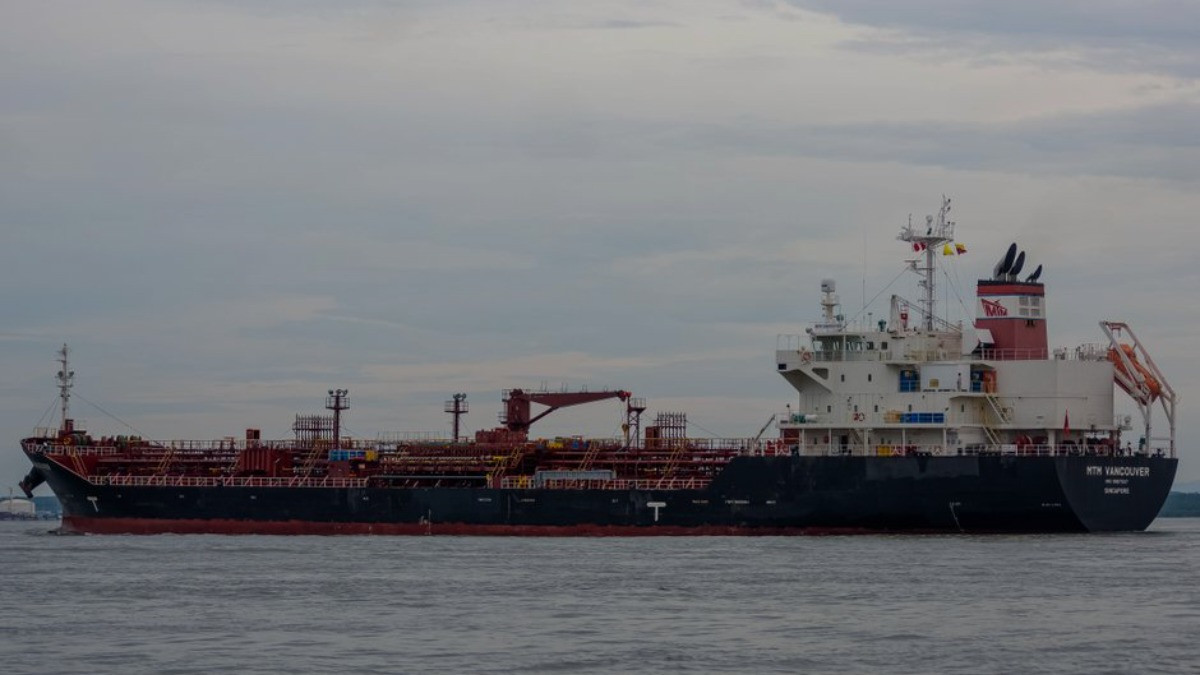
Russia is using obsolete vessels with an average age exceeding 15 years to transport oil while bypassing G7 price caps. Italian authorities detained a tanker in August 2024 due to safety regulation violations and the evasion of oil sanctions. The name of the vessel and the exact port where the intervention took place have not been officially disclosed by the Guardia di Finanza, which prevents verification of the ship's full technical documentation.
Anatomy of the shadow fleet: The economics of 15-year-old hulls
Russia's transport strategy is based on a simple economic calculation. Moscow buys up tankers whose age is approaching the 15–20 year mark. Under normal market conditions, such vessels would head to scrap yards because the costs of maintaining their class are unprofitable for shipowners who adhere to IMO standards. In the Russian system, these ships gain a second life.
Standard P&I (Protection & Indemnity) insurance for a modern tanker costs from several hundred thousand to even a million dollars a year, depending on tonnage and risk class. It covers civil liability for oil spills, damage to port infrastructure, and the costs of cleaning up environmental disasters. The shadow fleet operates based on alternative, often fictitious policies issued by lesser-known entities based in Russia, Dubai, or Southeast Asia. These documents are worthless in the event of a real spill off the coast of Europe. In the event of an accident, the costs of cleaning the coastline fall on the country in whose waters the incident occurred. Russia shifts the financial risk of a disaster onto the countries that are theoretically the targets of the sanctions.
Technically, these ships are ticking environmental bombs. The lack of regular inspections in shipyards certified by organizations such as Lloyd’s Register or DNV means that the technical condition of the hulls is not monitored in a transparent manner. Corrosion of cargo tanks, pump wear, and malfunctioning rescue systems are standard in this fleet. The owners of these units use advanced legal engineering, registering ships in countries with minimal oversight, such as Gabon, Cameroon, the Cook Islands, or Panama. Such jurisdiction allows for the concealment of the actual beneficiary of the cargo. According to maritime trade monitoring data, this fleet numbers hundreds of units, and its size has been systematically growing in 2024.
Italian intervention: The mechanics of control
During the inspection of the detained tanker, Guardia di Finanza officers did not focus solely on the origin of the raw material. Technical analysis revealed deficiencies that would have excluded the vessel from operation in any civilized port. The detention was the result of finding gross violations of maritime safety regulations. The ship did not meet standards regarding the technical condition of fire protection systems and the documentation of life-saving equipment.
The suspicion of transporting embargoed oil is the second pillar of this case. The G7 price caps, set at $60 per barrel for Urals crude, are bypassed by manipulating shipping documents, which show a price lower than the market rate, while the actual settlement transfer takes place through a different financial channel. Italian maritime services detected that the tanker was operating in a manner suggesting an attempt to hide its route. Turning off the AIS (Automatic Identification System) near Russian terminals, such as Primorsk or Novorossiysk, is a common practice. The services identified these anomalies during the analysis of data from satellites monitoring ship traffic in the Mediterranean.
The failure of Italian services to provide the name of the vessel is part of a broader diplomatic game. Disclosing the data could lead to pressure from the flag state, which often serves only as a facade for Russian interests. The Italian Guardia di Finanza, acting within the limits of its authority, is trying to enforce the law, but without full international cooperation regarding access to insurance registers, this fight is limited to individual cases.
Environmental and financial risk: Who pays for the practice?
The operation of 15-year-old tankers is Russia's way of bypassing G7 price caps. For global shipping, however, it is a systemic threat. The lack of certification by Western classification societies means that in the event of an accident on the high seas, tracking down the owner of the vessel is nearly impossible. Shadow fleet owners create special purpose vehicles (SPVs) that have no assets other than the vessel itself. If the ship sinks or breaks down, the company declares bankruptcy within hours.
The costs of cleaning up contamination, which in the case of a large tanker can reach billions of dollars, are borne solely by coastal states. Italian authorities, by detaining a tanker due to regulation violations, act as the first line of defense against disaster. The problem is that the scale of the phenomenon is too large for individual port administrations. Thanks to savings on maintenance and insurance, Russian raw materials become price-competitive for refineries in India or China. The mechanism is banal: cheap oil flows on old ships for which no one wants to take responsibility.
The disparity between the profit from a single voyage and the potential environmental loss is drastic. The margin achieved from transporting oil via the shadow fleet allows for the rapid amortization of the purchase of an old tanker. In the event of a ship being detained, Russian intermediaries lose only the value of one unit, which is a negligible amount on the scale of global revenues. This makes the shadow fleet systemically resistant to targeted sanction attacks.
The future of sanctions: Can the shadow fleet be stopped?
Since 2025, EU ports have intensified inspections, but fighting the shadow fleet is like trying to hold water in your hands. After detaining the vessel, Italian maritime services had to face the fact that the ship was merely a link in the supply chain. Cooperation within the G7 is now focusing on tightening the AIS monitoring system, which was habitually turned off by captains wanting to hide the cargo's route.
The AIS system is crucial for safety. Shadow fleet ships turn off their transmitters near Russian terminals and turn them back on only after reaching international waters. Such action is directly contrary to the SOLAS (International Convention for the Safety of Life at Sea) convention. Enforcing this regulation against units from countries that have not signed cooperation agreements is almost impossible. Even if individual units are eliminated, the market is flooded with dozens of others whose technical condition threatens the safety of navigation.
The impact of these actions on the global price of Brent crude remains unclear. No official data confirms that the restrictions have significantly lowered Moscow's raw material revenues. The effectiveness of sanctions is limited as long as the demand for cheap oil in Asia outweighs the risks associated with using exploited units. Port administrations face a dilemma: either paralyze trade through meticulous inspections, which leads to bottlenecks in supply chains, or allow tankers to sail, which in the event of an accident could lead to an environmental disaster off the coast of Europe. Current mechanisms do not guarantee that the shadow fleet will be eliminated in the coming months. This is a long-term process of weakening logistics, not a sudden cutoff of cash flow.
The logistics of oil transport in Russia have undergone a complete overhaul over the last two years. Instead of using the services of global shipping giants, Moscow has created a parallel supply system based on anonymous shipowners. Every ship in this fleet is a potential diplomatic problem. When Italy detains a tanker, it must count on the diplomatic reaction of the flag state, which is often unable to provide any technical or legal support for its unit. This shows how decentralized and unpredictable the oil transport market has become.
The further development of the situation depends on the determination of European Union member states to enforce maritime law. If inspections become the norm rather than the exception, the operating costs of the shadow fleet will rise. Shipowners will have to pay higher rates for P&I insurance, if they can obtain it at all, which will directly translate into the margins of Russian suppliers. However, as long as the demand for Russian oil remains high, the market will find ways to bypass regulations. Every new tanker entering the shadow fleet is proof that sanctions are merely a dam through which the water still finds a way.
What this means for you
The shadow fleet phenomenon is a game between Russian intermediaries and Western regulators. Russian state budgets gain from this, while European countries exposed to the environmental consequences of old ship accidents lose. The catch is the inevitable technical degradation of these units, which makes each of them a ticking environmental bomb. As a fuel consumer, you will not directly feel the detention of one tanker, but as a resident of Europe, you are exposed to the costs of cleaning up potential oil spills that could happen in your territorial waters. This is a problem that goes beyond politics and directly affects the ecological security of the continent.
Questions and answers
Why does the shadow fleet consist of old tankers?
Older units are cheap to purchase and harder to link to major Russian entities, which limits legal risk for the owners. Their low book value means that in the event of confiscation, the financial losses for Russian principals are minimal.
Can Italy confiscate such ships permanently?
Italy has the right to detain a vessel in the event of a violation of safety regulations or sanctions, which often leads to months of legal proceedings. Confiscation is possible, but it requires proving intentional violation of the law by the shipowner, which, given the complex ownership structure, is a tedious and expensive process.
What is the main threat to the environment?
The lack of insurance and regular technical inspections increases the risk of an oil spill in the event of an accident, for which no one wants to take financial responsibility. Older hulls show higher susceptibility to corrosion, which, when transporting heavy oil fractions, can lead to irreversible damage to marine ecosystems.
To understand the scale of the problem, one must look at the ship-to-ship (STS) process. This is an operation of transferring oil from tanker to tanker on the high seas. This often takes place out of range of port radars, in international waters, where control is illusory. In this way, oil from the Russian terminal in Primorsk reaches a "ghost" ship, which then transfers the cargo to another unit, already with "clean" documentation. This procedure allows for the effective blurring of the traces of the raw material's origin.
P&I insurance costs for the shadow fleet are effectively hidden in the sales margin. Instead of paying premiums to international insurance clubs (such as the International Group of P&I Clubs, which brings together the world's largest insurers), Russian carriers opt for so-called "self-insurance." This means that in the event of a disaster, the capital for compensation simply does not exist. It is a gamble where the stake is the safety of European ports and the cleanliness of territorial waters.
From a logistics point of view, the restructuring of Russian exports is impressive. In two years, Moscow has created a system that allows for the transport of millions of barrels of oil per day despite a full embargo. Every tanker that passes through the Suez Canal or the Turkish straits is a challenge for officials. Many of these ships have certificates issued by institutions that have no recognition in the international maritime system. This creates a parallel world of trade in which maritime law is ignored at every step.
The Italian Guardia di Finanza, by intervening, acts in the area of so-called port state control (PSC). This authority allows port states to inspect foreign-flagged ships. If a ship does not meet the standards of the SOLAS or MARPOL (concerning pollution prevention) conventions, it can be detained until the defects are corrected. In the case of the shadow fleet, these defects are often impossible to fix without expensive shipyard repairs, which makes the tanker useless to Russian shipowners.
This situation shows that sanctions are effective only when we have the physical ability to enforce them. Paper bans will not stop a ship on the high seas. There is a need for the presence of services, readiness for long-term legal proceedings, and determination in pursuing shell companies. As long as the demand for Russian oil in Asian countries remains high, the shadow fleet will have a reason to exist. Russia sells the raw material at a price that allows for covering the risks associated with transport, and even for the loss of several units per year as a result of the actions of services such as the Italian Guardia di Finanza.
In summary, the fight against the shadow fleet is not only a matter of politics, but above all a matter of maritime safety. Every old tanker that sails past the coasts of Italy or Greece is a potential source of an environmental disaster, the effects of which we will feel for decades. The fact that there hasn't been a major tragedy so far is more a matter of luck than the effectiveness of safeguards. If Europe does not intensify inspections, and flag states are not held accountable for the lack of oversight of their ships, the shadow fleet will continue to freely use European waterways, mocking all attempts to limit Russian profits from oil exports. Every tanker that is detained is a small success, but on a global scale, it is merely the tip of the iceberg, the size and dangers of which to the marine environment are still not fully recognized by the public.
Komentarze (0)
Ładowanie komentarzy...