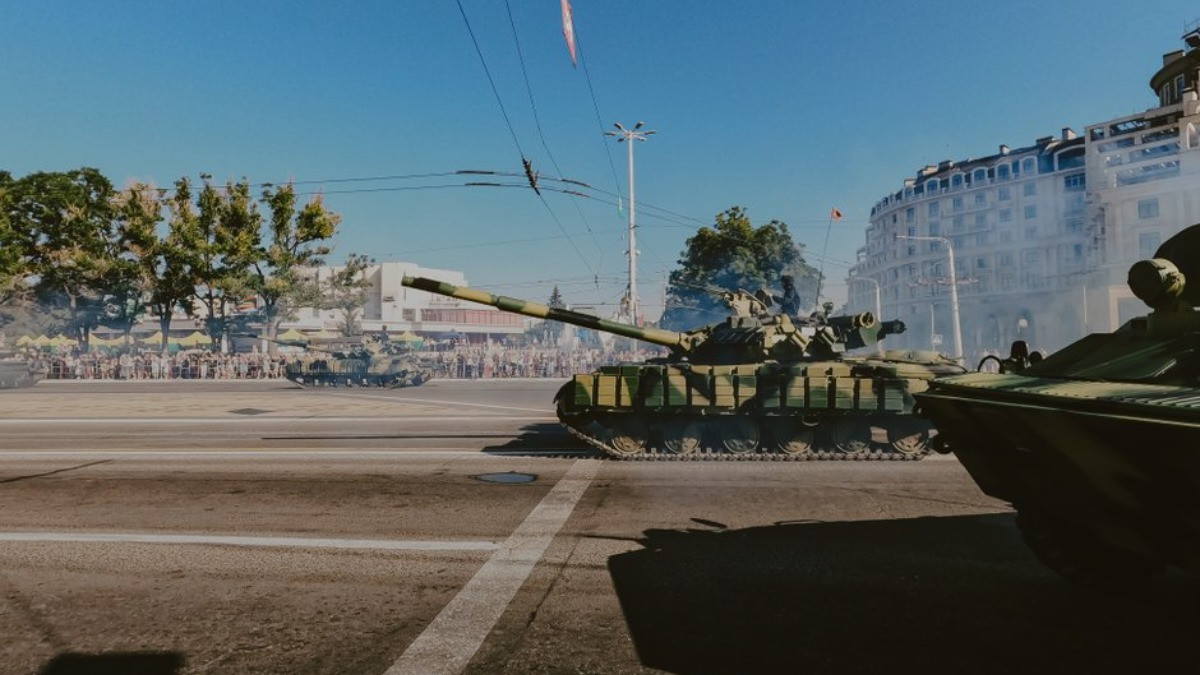
The Polish army in 2026 is a facade, because despite an injection of 44 billion euros from the SAFE fund, reports from the Supreme Audit Office (NIK) point to serious risks in the continuity of technical modernization. Real operational readiness depends on the pace of equipment deliveries, which remains the subject of heated debate among experts. Despite the impressive parade, military units are still struggling with gaps in logistics and a lack of spare parts, which casts a shadow over the state's real combat power.
The 2026 parade was a masterpiece of strategic communication. On the parade grounds shone K2 tanks, modern artillery systems, and engineering vehicles that just a few years ago existed only in the design phase. The public saw power, but military analysts looked at license plates and signs of equipment wear, which do not always correspond to the declared readiness. An analysis by Onet from August 15, 2026, ruthlessly exposed the discrepancy between what was shown before the cameras and what is actually in the warehouses of line units.
The problem is not a lack of money, but its freezing in contracts that do not generate combat capability at the pace envisioned by staff officers. Reports prepared by Defence24 experts at the beginning of 2026 indicate that although the Ministry of Defense has a record budget, supply chains are inefficient. K2 tank maintenance systems have not yet reached full operational capability in Poland, which means that every major breakdown requires complicated international logistics instead of routine inspection at a domestic facility. Such dependence on foreign services in peacetime is an inconvenience, but in the face of a potential conflict – a critical threat to the continuity of operations.
The financing of armaments in 2026 is based on a foundation that is becoming an increasingly fragile construct with each passing month. The use of the EU's SAFE instrument allowed for the avoidance of a payment collapse in the short term, but it did not remove structural barriers in the defense industry. The Supreme Audit Office, in its report from December 2025, pointed to dangerous practices in the management of the Armed Forces Support Fund. Auditors noted that funds are being spent without adequate security for ammunition supplies. For example, the production of 155 mm ammunition still does not keep up with the rate of consumption expected in war scenarios, which means that a modern army possesses sophisticated equipment that, without a sufficient amount of "fire," becomes merely an expensive exhibit.
The financial situation, although it looks impressive on paper, is becoming a hostage to bureaucracy and production constraints. Polskie Radio 24 explained in May 2026 how complicated it is to settle funds from SAFE, which in practice means that unit commanders often do not know when they will receive ordered components. Technical modernization, which the Military Portal mentioned as early as 2024 in the context of engineering vehicles, has stalled. The lack of an adequate number of engineering support vehicles means that even the most powerful armored division becomes defenseless in difficult terrain, unable to break through barriers or force water obstacles.
The technical uncertainty that accompanies modernization is compounded by the lack of clear delivery schedules. Defence24, in a report from January 5, 2026, points to delays in the delivery of key electronic components, without which battlefield management systems cannot fully function. This is not a problem of a lack of will, but of a systemic underestimation of the difficulties in the global supply chain. Instead of building independent potential, Poland has taken on the role of a client who pays for priority treatment, but in the face of global demand for weapons, this priority is merely nominal.
The public, watching the parades, builds its trust in the Polish Armed Forces on visual messaging. IBRIS surveys cited by the website wszystkoconajwazniejsze.pl in September 2025 show a clear trend: Poles trust the army and NATO, but are increasingly skeptical of EU institutions, even though it is precisely from EU funds that key purchases are financed. This cognitive dissonance is used politically, but from a military point of view, it is irrelevant. A soldier at a training ground does not care whether the money for his equipment comes from the national budget or from Brussels – he needs a working sight, a functional engine, and full magazines.
Survey-based trust, however, does not translate into the technical condition of units. DziennikZbrojny.pl already warned in April 2025 that technical modernization could hit a financial wall if it is not supplemented by investments in repair infrastructure. The Polish army has purchased hundreds of modern equipment units but has not created an adequate repair base in the country. This means that in the event of a real conflict, damaged equipment, instead of reaching repair units within hours, will have to wait weeks for transport to the manufacturer.
The catch in this whole operation is that modernization has become an element of internal politics, not an operational plan. Defense corporations benefit from this, as they have guaranteed orders for years, but the taxpayer loses due to a lack of transparency in the spending of funds from the Armed Forces Support Fund. NIK clearly notes in its reports that the lack of auditability of some contracts is a direct path to waste. Money that could have financed the development of logistical support is often shifted to spectacular purchases of ready-made platforms, which become a burden without logistical support.
For the citizen, this means that the sense of security built during parades is largely illusory. The Polish Armed Forces in 2026 possess equipment that previous generations could only dream of, but it lacks a "bloodstream" – that is, an efficient maintenance system, training of crews on the latest equipment at a pace that keeps up with deliveries, and the saturation of units with ammunition. Without these elements, even the most advanced tanks are just a parade facade.
The key to fixing this situation is not increasing funding, which has already reached a record level, but changing priorities. Instead of further contracts for new platforms, the Ministry of Defense should focus on "closing" the current ones. This means building maintenance centers for K2s in Poland, increasing production capacity for 155 mm ammunition, and investing in logistics, which is currently the Achilles' heel of Polish defense.
Experts emphasize that the time of parades must give way to the time of organic work. If logistics do not improve by 2027, the Polish army will possess the most expensive collection of machines in Europe, which, in conditions of a prolonged conflict, will not be able to maintain combat capability for more than a few weeks. National security is a matter of mathematics and logistics, not just the number of machines shown at a parade.
Questions and answers
Is the Polish army the strongest in Europe?
Although spending on armaments is at a record level, experts emphasize that strength is determined not only by a parade, but by the continuity of deliveries and equipment maintenance, which is flagged as risky in NIK reports. Poland possesses the most modern equipment, but its operational readiness is limited by shortages in logistical support.
What exactly is the funding from the SAFE instrument used for?
These funds support technical modernization, including the purchase of engineering vehicles and artillery systems. They are crucial for financing contracts that, without this support, could have been halted due to liquidity problems in the Armed Forces Support Fund.
Is the modernization of the Polish Armed Forces at risk?
Analyses from 2025-2026, including NIK reports, point to risks related to the financial liquidity of the FWSZ and the industry's inefficiency regarding the supply of ammunition and spare parts. The main challenge is not so much a lack of money as a lack of capacity for rapid maintenance of modern equipment in the country.
Why is NIK warning about risks?
Auditors point to a lack of transparency in some contracts and a dangerous dependence of modernization continuity on external funds and foreign services, which in crisis conditions could lead to a paralysis of the combat capabilities of units.
Does the parade reflect the real state of the army?
The parade is a tool of strategic communication intended to build a sense of security. In operational reality, many units are still waiting for equipment ordered years ago, and existing resources are struggling with problems in spare parts supply chains.
What are the biggest shortcomings in logistics?
The biggest challenge remains the maintenance of modern equipment (e.g., K2 tanks) and the production of 155 mm caliber ammunition, the quantity of which in warehouses does not match the army's modernization ambitions.
Sources
- Parade versus reality. Military personnel reveal the bitter truth about the Polish army [ANALYSIS] - Onet News
- Secret spending from SAFE. We explain where the 44 billion euros will go - Polskie Radio 24
- Records and an uncertain future. 2025 in the modernization of the Polish Armed Forces - Defence24
- Modernization of the Polish Armed Forces 2024 – new engineering vehicles - Military Portal
- Lack of money for further technical modernization of the Polish Armed Forces? Analysis. - DziennikZbrojny.pl
- What will the Polish Armed Forces get in 2026? [REPORT] - Defence24
- What about further technical modernization of the Polish Armed Forces? NIK report on the Armed Forces Support Fund and the EU SAFE instrument - Military Portal
- Trust in NATO and the Polish Armed Forces is growing, trust in the Union is falling [IBRIS] - wszystkoconajwazniejsze.pl



Komentarze (0)
Ładowanie komentarzy...