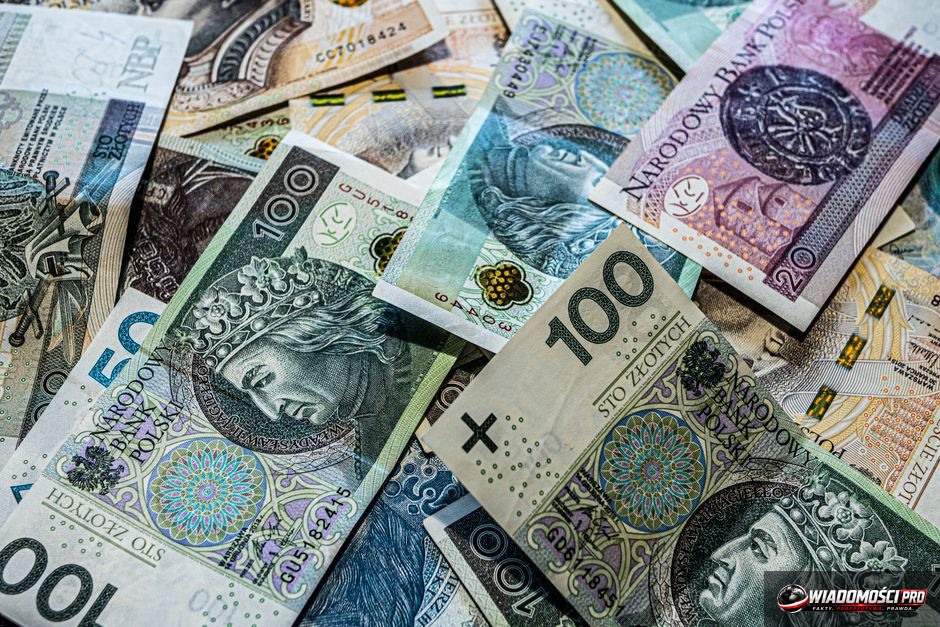
The year 2026 brought a record deficit and rapid growth in public debt, which, according to analyses by FOR and the IMF, puts Polish finances in a more difficult situation than during the PiS government period. Data from the Ministry of Finance, which came to light on March 2, 2026, confirm that the dynamics of debt have spiraled out of the control seen in the previous decade. The mechanism for financing the state is currently based on rising service costs, which are crowding out investment expenditures and forcing a revision of earlier budget assumptions.
Record deficit: The 2026 budget under spending pressure
The state budget for 2026 became an arena of conflict between political promises and hard fiscal mathematics. As early as November 19, 2025, the Civil Development Forum (FOR), in its analyses published in "Rzeczpospolita," pointed out that systemic "excessive spending" would lead to a situation where the deficit would become an uncontrollable burden. These forecasts were not merely a theoretical warning.
When the Ministry of Finance published official data on March 2, 2026, Business Insider Polska noted that these figures were significantly higher than the ministry's initial assumptions. Poland entered a state where every zloty allocated to rigid expenditures must be financed by debt, the cost of servicing which is growing at a double-digit rate. Unlike the 2015–2023 period, when low interest rates and relatively stable GDP growth allowed debt to be kept in check, the year 2026 is characterized by a lack of fiscal space.
An analysis of the debt structure points to the dominance of service costs for obligations incurred in previous years, which are now becoming the main brake on development. Instead of building reserves, the budget focuses on current debt rollover. This means that every subsequent issuance of treasury bonds is more expensive than the previous one, which drastically reduces the efficiency of public spending. A system in which the state must borrow money to pay interest on earlier debt is a self-propelling loop.
Politicians, as noted by the Money.pl service on July 27, 2026, avoid public debate on the real scale of this phenomenon. Instead of concrete austerity plans, we observe a rhetoric of shifts that does not change the balance sheet. The value of debt in relation to GDP in 2026 is dangerously approaching levels that in the past would have forced the activation of corrective procedures; however, today these mechanisms seem to be suspended in a political vacuum.
Moment of truth: Poland is losing its financial cushion
The January warnings from "Forbes" on January 16, 2026, turned out to be the most accurate forecast of the beginning of the year. The loss of the financial cushion is not just an economic term, but an actual state of lacking reserves in the event of external economic shocks. In previous years, this cushion allowed for a relatively smooth transition through crises – from the pandemic to energy turmoil. In 2026, this buffer ceased to exist.
The loss of state financial liquidity means that in the event of a sudden economic downturn, the government does not have the funds for intervention. This drastically differentiates the current situation from the years of PiS rule, when, despite high debt, the state maintained the capacity for a rapid fiscal response. Currently, every attempt to support the economy is associated with the need to increase the deficit, which, at current market debt prices, is a risky action.
Economists collaborating with FOR have repeatedly emphasized that 2026 would be a time of verification. Financial institutions, observing the lack of budgetary discipline, began to raise risk margins for Polish securities. This translates directly into the cost of money for the entire country. If the financial cushion has been consumed for expenditures that do not bring a return in the form of increased productivity, this means a long-term decline in the competitiveness of the Polish economy.
There is no room here for the optimism mentioned by some government agencies at the beginning of the year. "Forbes" indicated that the moment of truth would come with the first budget execution data in the second quarter. These data confirmed that Polish public finances are in a state of chronic deficit, and the lack of an exit strategy from this situation is the most pressing problem for foreign investors.
Poland at the tail end of Europe: IMF and EC perspective
Poland's status as the country with the fastest-growing deficit in the region is becoming a fact that is increasingly difficult to hide from partners in the European Union. An INNPoland.pl publication from April 27, 2026, clearly stated that Poland has found itself at the "tail end of Europe" in terms of fiscal discipline. While other EU countries made attempts to limit spending after the period of pandemic stimulus, Poland continued a policy of "pedal to the metal."
The European Funds Portal on May 25, 2026, commenting on the European Commission's forecasts, pointed to a significant risk of losing financial credibility. The EC draws attention to the fact that Poland's structural deficit remains at a level that is unacceptable in the current economic realities of the eurozone and countries associated with it. A lack of adjustment means that Poland is becoming susceptible to speculative attacks on its currency and drastic credit rating downgrades.
Paradoxically, the situation is worsened by International Monetary Fund forecasts. As reported by the xyz.pl service on April 14, 2026, the IMF warns of stagflation. This is a scenario in which economic growth slows to near-zero levels, while inflationary pressure remains high due to debt service costs. For the citizen, this means the necessity of paying higher taxes or accepting a decline in the quality of public services while simultaneously seeing a rise in the prices of goods and services.
The comparison with neighboring countries is devastating for Poland. Countries in the region, such as the Czech Republic or the Baltic states, despite their own problems, managed their deficits more effectively in 2026. Poland, by maintaining high social spending while lacking structural reforms, is closing off its path to sustainable development in the next decade.
Comparison with the PiS era: What has changed in public finances?
The debate over whether the current state of finances is worse than in the PiS era is no longer a rhetorical question. Data show that it is not so much the scale of the debt itself that has changed, but its quality and predictability. Under the PiS government, despite many criticized decisions, there was a certain fiscal predictability based on the assumption that economic growth would "cover" the debt. In 2026, this mechanism stopped working.
Company forecasts published on January 11, 2026, in "wszystkoconajwazniejsze.pl" suggested that the private sector is preparing for a period of high interest rates and tax instability. Entrepreneurs, seeing that the state is unable to curb the deficit, are limiting investments, which further weakens the tax base. This is a vicious circle that was not as strongly felt during the PiS era, as the state was then able to effectively stimulate domestic demand.
Moreover, the current government is struggling with the problem of "hidden debt." Money.pl in July 2026 drew attention to the fact that beyond official indicators, there is a huge mass of off-budget obligations that can become due at any moment. During the PiS government period, special-purpose funds (e.g., in BGK) were also used to finance expenditures outside parliamentary control, but the current scale of this phenomenon under conditions of high inflation and debt service costs creates a systemic threat.
The following data summary illustrates how the burden of responsibility for the current situation is distributed:
- 19.11.2025: Rzeczpospolita – FOR sounds the alarm about excessive spending as the main factor of the deficit.
- 11.01.2026: wszystkoconajwazniejsze.pl – Company forecasts predict a departure from fiscal stability.
- 16.01.2026: Forbes – Loss of the financial cushion as a key turning point.
- 02.03.2026: Business Insider Polska – Ministry of Finance confirms record pace of debt.
- 14.04.2026: xyz.pl – IMF warns of a stagflation scenario.
- 27.04.2026: INNPoland.pl – Poland at the tail end of Europe due to fiscal policy.
- 25.05.2026: European Funds Portal – EC criticizes Polish budgetary discipline.
- 27.07.2026: Money.pl – Politicians avoid admitting the scale of public debt.
The conclusions are unambiguous. The current government not only inherited debt from its predecessors but, through a lack of reforms and the maintenance of high spending, has led to a collapse of financial stability. If a radical change in policy does not occur in 2027, debt service costs may consume such a portion of the budget that it will be impossible to finance healthcare or education at the current level.
What this means for you
As a taxpayer, you face the prospect of higher fiscal burdens or drastic cuts to public services. The state, having lost its financial cushion, ceases to be your guarantor of security in times of crisis. The catch is that politicians promise stabilization, while the numbers point to the necessity of painful reforms for which there is no majority in the current parliament. The state's creditors gain, for whom every day of delay in reforms means higher interest on bonds; you lose – in the form of inflation and the lower purchasing power of money.
Questions and answers
Is Poland's debt growing faster than under previous governments?
Yes, data from 2026 indicate an acceleration in the pace of debt accumulation and record deficits, which, combined with higher debt service costs, puts the current situation in a more difficult position than in the years 2015–2023.
Why does the IMF forecast worse results for Poland?
The IMF draws attention to stagflation – the simultaneous slowdown of economic growth and persistent price pressure, which limits the government's ability to stimulate the economy without further deepening the deficit.
What does the loss of the financial cushion mean for the state budget?
The loss of the financial cushion, reported by "Forbes" in January 2026, means that the state does not have reserves in case of sudden crises, which makes the Polish economy much more vulnerable to external shocks than in previous years.
Sources
- Poland's debt is rising sharply again. "Politicians don't want to admit it" - Money.pl
- Commentary on the European Commission's Spring Forecast 2026 - European Funds Portal
- Massive growth in Polish debt. Ministry publishes data - Business Insider Polska
- 2026 Budget according to FOR: Excessive spending, record deficit and rising public debt - Rzeczpospolita
- "Poland is losing its financial cushion." The year 2026 will be a moment of truth for public finances - Forbes
- Company forecasts for 2026 - wszystkoconajwazniejsze.pl
- Poland at the tail end of Europe due to deficit. But we are still pressing the pedal to the metal - INNPoland.pl
- The paradox of the higher IMF forecast for Poland. The global economy will slow down, and price growth will accelerate - xyz.pl



Komentarze (0)
Ładowanie komentarzy...