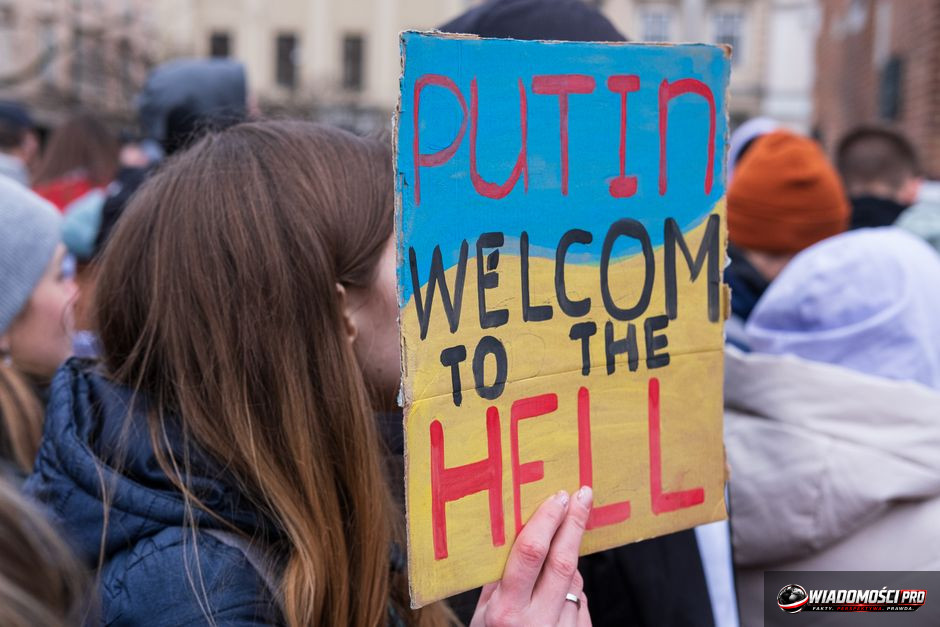
Available data from public opinion research centers show that both countries have recorded an increase in so-called "compassion fatigue," with approximately 35-40% of respondents in the Czech Republic perceiving refugees as a burden, a result similar to the decline in support indicators in Poland from 2025. Greater aversion is present in the Czech Republic, where strong political polarization surrounding integration costs has shifted the weight of the debate from the humanitarian dimension to a purely budgetary one. The dynamics of sentiment in Prague and Warsaw point to the exhaustion of social capital for solidarity, which in 2026 has become the main fuel for groups using anti-immigrant narratives in election campaigns.
Evolution of sentiment in the Czech Republic: from solidarity to pragmatism
Czech society, until recently considered an example of European solidarity, has undergone a profound transformation in its approach to migration issues. Studies by the STEM institute from 2025 and 2026 indicate that about 40% of Czechs feel discomfort related to the presence of refugees in their environment, pointing to their impact on the labor market and access to public services. This change in attitude is no longer the result of temporary fatigue, but of a cost calculation carried out by citizens. A narrative about budgetary burdens dominates the Czech public debate, in which politicians increasingly question integration expenditures, treating them as a balance sheet item requiring cuts.
This pragmatism has become the foundation of the political strategy of the Czech SPD party (Freedom and Direct Democracy) led by Tomio Okamura. This group is successfully building capital on radical rhetoric, pointing to the alleged privileging of refugees in access to medical care and housing. The increase in support for the SPD is directly correlated with the hardening of the message regarding migration, which has ceased to be a fringe issue and has entered the mainstream of the Czech political campaign.
In the Czech Republic, the instrumentalization of fear regarding integration costs has become a more effective electoral tool than in Poland. The lack of detailed data on the exact breakdown of expenditures in the 2027 Czech budget makes it impossible to fully verify these concerns, which fuels social tensions. The public debate in Prague focuses on linguistic assimilation and education, where a lack of proficiency in the Czech language and difficulties in the systemic integration of refugee children in schools are the main flashpoints. The lack of transparent data on the real impact of refugees on the state budget allows politicians to operate on the thesis of "hidden costs," which effectively destabilizes public sentiment.
Polish reality 2026: decline in enthusiasm vs. stability of attitudes
August 2026 in Poland defines a departure from the emotional uplift of the first months of the war in favor of cold, economic calculation. CBOS data from 2025 and 2026 indicate a decline in the percentage of people declaring "decided support" for helping refugees by nearly 30 percentage points compared to the peak period of 2022. Inflation and economic pressure have become the main moderators of empathy, shifting Poles' priorities toward the financial security of their own households.
In Polish politics, the Confederation party is primarily trying to build capital on anti-Ukrainian rhetoric. Politicians of this group consistently raise arguments about the alleged "privileging" of refugees, which in 2026 is becoming an element of a broader political strategy ahead of upcoming election cycles. Unlike in the Czech Republic, where the debate focuses on education, in Poland the main axis of dispute remains the real estate market. Opponents of the presence of refugees argue that their influx drives up housing prices and limits market access, which for many citizens constitutes an existential problem.
In mid-2026, we do not have official data confirming a sharp increase in hostility or social aggression, which is a significant feature of the Polish model of reaction to migration. Most Poles are stuck in a phase of indifference, manifested in the phenomenon of "looking away." Although we do not observe mass acts of violence, the polarization of attitudes is noticeable. The lack of hard data on radicalization does not testify to social calm, but to a withdrawal from active forms of support. For the ruling parties, this is a warning signal, as economic frustration can be redirected toward negative opposition to the refugee group at any moment.
Comparison of flashpoints: what divides Poles and Czechs?
The phenomenon of compassion fatigue has become a common denominator for both societies, although the causes of dissatisfaction differ depending on national priorities. In the Czech Republic, about 35-40% of respondents perceive the presence of refugees as a burden, which is a result almost identical to the Polish indicators of declining support recorded in 2025. The mechanism of social empathy burnout is clear here, resulting from maintaining a high level of engagement for a long time while the macroeconomic situation has deteriorated.
While the diagnosis of sentiment is similar, the catalysts for aversion point to different internal policy priorities of both states. The Polish public debate focuses on the real estate market, where renting and buying apartments have become a scarce commodity, which affects the perception of refugees as competition in this market. Among our southern neighbors, the emphasis is placed on the assimilation of children in schools and systemic education, which is the main condition for social acceptance there. A common point remains the public healthcare system, where citizens of both countries see refugees as competitors for medical specialists.
Statistical institutions in both countries are working on a methodology to isolate the impact of migration on queues for doctors from the general collapse of the healthcare system. As of August 23, 2026, no exact numerical data regarding the direct impact of refugees on the availability of medical services has been confirmed. The lack of hard evidence, however, does not stop politicians from using healthcare as an argument in the discussion about limiting support. In this information vacuum, theses about "system inefficiency caused by migration" are gaining strength, regardless of their actual basis in medical statistics.
Forecasts for the second half of 2026
The coming months will be a period of testing for social stability in Poland and the Czech Republic. Analyzing current sentiment, specialists point to several factors that will determine the dynamics of relations with refugees until the end of 2026. First, migration issues have been permanently included in the election campaign agenda, which guarantees a hardening of rhetoric in mainstream media. Second, experts predict further polarization of sentiment, provided that inflation and energy prices do not show clear improvement.
There is a lack of hard data confirming mass acts of aggression based on nationality, which is a significant difference compared to historical migration crises in Western Europe. The catch, however, lies in smaller-scale incidents, which are less frequently reported by national media, but which build local tensions. The lack of reports of organized violence does not mean a lack of social frustration. In the face of elections, the topic of refugees becomes too useful a political tool for parties to afford to silence it. Populist groups will gain from this, while centrist parties will be stuck on the defensive. If the economy slows down, sentiment could radically change its vector from indifference to hostility, which will require new communication strategies from governments.
What this means for you
Social fatigue is a fact, but it does not automatically translate into mass radicalism, but rather into a quiet withdrawal of support. Populist parties, which effectively monetize the fear of economic uncertainty, gain from this change, while groups most vulnerable to exclusion, including the refugees themselves, lose. The catch lies in the lack of long-term integration strategies and transparent state information policy. In 2026, it is this lack of concrete data on the costs and benefits of migration that is becoming the main fuel for social unrest, which may escalate with every percentage point increase in energy or food prices.
Questions and answers
Are there more frequent attacks on refugees in the Czech Republic than in Poland?
There is a lack of statistical data from 2026 confirming a significant increase in physical violence in both countries; sentiment remains mainly in the sphere of public discourse and political rhetoric.
Why are Poles more critical of refugees than in 2022?
The main reason is so-called compassion fatigue and inflationary pressure, which forces citizens to take greater care of their own financial resources and limit spending on aid purposes.
Are the governments of Poland and the Czech Republic planning to tighten policy toward refugees?
In mid-2026, both governments are focusing on tightening benefit systems, which is interpreted as a response to social sentiment and an attempt to regain the support of voters discouraged by the costs of maintaining the support system.


Komentarze (0)
Ładowanie komentarzy...