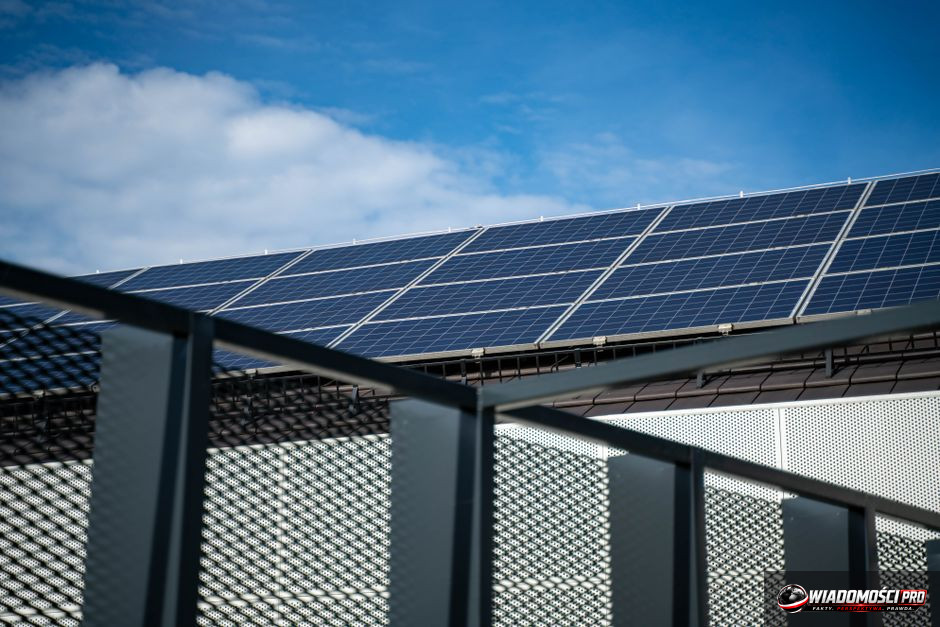
As of October 9, 2025, regulations adapting Polish law to the WEEE directive have come into force, imposing on the market an obligation to finance the disposal of modules, which translates into a real increase in service and operating costs for prosumers. For a typical prosumer with a 5 kWp installation, this means an increase in annual maintenance costs of about 15 percent, which translates into an additional burden of about 60-90 PLN per single module over the device's life cycle. The introduced regulations finally close a legal loophole that for years allowed for the avoidance of financial responsibility for used electrical and electronic equipment in the micro-installation sector.
New legal reality: The WEEE Directive and its Polish implementation
Adapting the Polish legal system to the WEEE directive is not merely a technical adjustment of regulations, but a deep interference in the business model of installation companies and the way energy assets are managed by households. The basis for the changes is the amendment of waste processing requirements, about which the Polish Agency for Enterprise Development (PARP) informed as early as September 23, 2024. This document clearly indicated that every entity introducing equipment to the market must secure funds for its subsequent disposal.
In the Polish legal order, this process gained momentum in May 2025, when the government adopted a package of regulations imposing rigorous reporting obligations on the photovoltaic industry. As Business Insider Polska pointed out in a publication on May 22, 2025, photovoltaic panels have become an official target of legislation regarding e-waste. Officials decided to remove the existing ambiguity in financing recycling, which means that every silicon cell must be recorded, and the costs of its disposal – calculated and secured.
Previously, these costs were dispersed or hidden in distributor margins, which created the illusion of a cost-free installation life cycle. According to information provided by Bizblog.pl (04.06.2025) and Portal Samorządowy (11.08.2025), every installation owner must be aware that at the end of the device's service life, the financial burden of its recycling rests on them. This mechanism functions as an operating cost built into service contracts, spare parts costs, and future dismantling fees.
Why is photovoltaics ceasing to be cheap?
Analyzing the operating costs of a photovoltaic installation under the new regime requires understanding how the recycling fee is structured. It is not a direct tax on the sun, but a contribution to a disposal fund, resulting from the requirement to ensure a closed product life cycle. The installation industry, burdened with new obligations, passes these costs on to the end user. In practice, this means that every service, inspection, or system upgrade now includes a contribution for future e-waste management.
If we look at a standard installation with a capacity of 5 to 10 kWp, we will notice that it consists on average of 12 to 25 modules. Each of these modules contains raw materials whose recovery is technically complex. According to data published by GlobEnergia in June 2025, the scale of the burden depends on the type of panels and their estimated durability. In the case of a 10 kWp installation, these costs become noticeable as soon as it is necessary to replace an inverter or a damaged panel, where the recycling fee is added to the disposal costs of the old device.
Industry reports mentioned by Forsal.pl in January 2026 point to a phenomenon of double burden. On one hand, prosumers have to pay for maintaining the technical efficiency of the installation, and on the other – their wallets are burdened by financial reserves for future waste storage. The profitability of investments, which seemed certain just two years ago, is today subject to revision. Private investors who previously ignored disposal clauses in contracts are now facing the necessity of amending these documents or accepting higher service costs.
The energy transition, which was supposed to be a process bringing savings, has become a source of new financial obligations. Looking from the point of view of EU legislation, recycling is a necessary stage in building a circular economy. The costs that Poles are facing are the price for underestimating disposal expenses during the popularization phase of photovoltaics before 2025.
Responsibility for waste: Who will pay the most?
The division of responsibility for waste in the micro-installation sector has become one of the most sensitive points of discussion in the renewable energy industry. Murator.pl in its article from June 5, 2025, asked directly: who will pay the most? The answer is disappointing for owners of installations from before 2025. Many older contracts did not provide for disposal reserves, which, in light of the new regulations, forces current owners to cover recycling costs at the time of dismantling the installation or in the event of the need to dispose of individual modules before the warranty expires.
The financial mechanism works in a cascading manner. The manufacturer passes the disposal cost to the distributor, the distributor to the installer, and the installer finally charges the prosumer. As a result, for a 10 kWp installation, the costs associated with waste management increase the annual service cost by a dozen or so percent. This is not an amount that will ruin a household budget on a monthly basis, but over the 20-year life of the installation, it accumulates to a sum that changes the original business plan of the investment.
The lack of a uniform price list for recycling fees causes market chaos. Some companies try to include these costs in the installation price, which means that new customers pay for the disposal of equipment they will use for the next two decades. In turn, customers who already have operating installations are forced to sign new service contracts that explicitly separate the contribution for e-waste management. This transparency, although necessary from a legal point of view, is most painful for consumers because it reveals previously hidden expenses.
Polish law in this regard is an implementation of EU guidelines. In other member states, this process took place in a more spread-out manner, which allowed the market to better prepare for the changes. In Poland, the pace of adapting regulations to WEEE requirements forced a rapid reaction, which in many cases proved shocking for prosumers. The lack of prior education in this area meant that many panel owners felt surprised by additional invoices for disposal.
What does this mean for the Polish prosumer?
EU requirements are becoming a challenge for Polish prosumers, not only logistically but primarily financially. Shifting the costs of a product's life cycle to the citizen is a consistent action of the EU strategy, which assumes that the one who uses the energy pays for the environmental footprint. This approach, although consistent with the "polluter pays" principle, is in practice difficult to accept for people who invested in photovoltaics in good faith, counting on full energy independence.
In the face of rising costs, the role of the prosumer is changing from an active energy producer to a hazardous waste manager. Owners of micro-installations must now maintain technical documentation of their panels, store warranty cards, and ensure that the disposal process complies with rigorous standards. Every module that stops working becomes a legal problem. If it is disposed of in an improper way, the owner may be subject to administrative penalties.
Is there a chance for these costs to decrease in the future? Theoretically, yes. If the photovoltaic panel recycling market in Poland reaches an appropriate scale, the unit costs of recovering raw materials such as silver, silicon, or copper should fall. However, at this moment, the infrastructure dealing with disposal is in the construction phase, which keeps service prices at a high level. Prosumers therefore remain in a situation where they must finance the development of this infrastructure by paying higher margins to service companies.
Questions and answers
Do I have to pay for the disposal of my panels right now?
The disposal fee is not collected as a possession tax, but is included in service and operating costs. This means that you actually incur this expense with every service activity or at the moment of purchasing new components for the installation, which by law must have a disposal security.
Why are panels called e-waste after 10 years?
This classification results directly from the EU WEEE directive, which treats used PV equipment as specialized waste. After 10 years, due to natural material wear and a decrease in efficiency, panels often require disposal in professional facilities, which is a costly process requiring specialized knowledge.
Who will feel the changes in regulations the most?
The greatest burden will be felt by installation owners who do not have current service contracts or have invested in equipment whose manufacturers do not fulfill their reporting obligations in Poland. In such cases, the entire financial burden of disposal may fall directly on the owner at the time of system dismantling.
Can I avoid these fees?
Avoiding disposal fees is impossible if the installation is to be serviced in accordance with the law. Every professional service technician is obliged to comply with e-waste regulations, which means that this cost will always appear on the invoice for technical work performed.
Sources
- Photovoltaic panel owners will experience a double price-hike shock. Free solar energy will become even more expensive - Forsal.pl
- New fee for photovoltaics. It starts on October 9 - Portal Samorządowy
- Additional fees for photovoltaics. Who will pay the most? - Murator.pl
- Who is responsible for used electrical and electronic equipment, or the change of the WEEE Directive - PARP
- Do you have photovoltaics? Check if you will be covered by the module disposal fee - GlobEnergia
- Government changes e-waste regulations. Photovoltaic panels in the crosshairs - Business Insider Polska
- October 9 important change – new fee for photovoltaics - Bizblog.pl


Komentarze (0)
Ładowanie komentarzy...