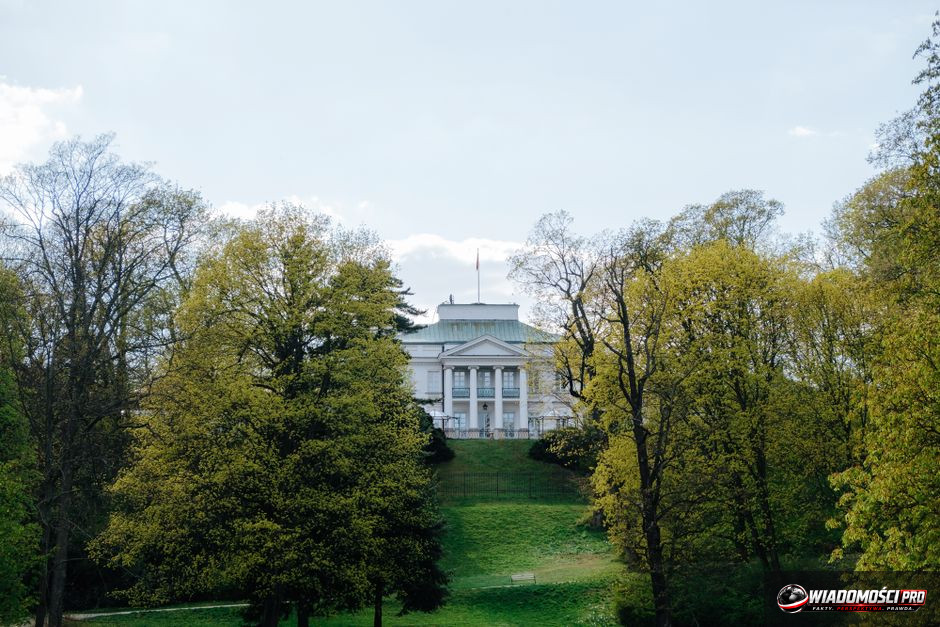
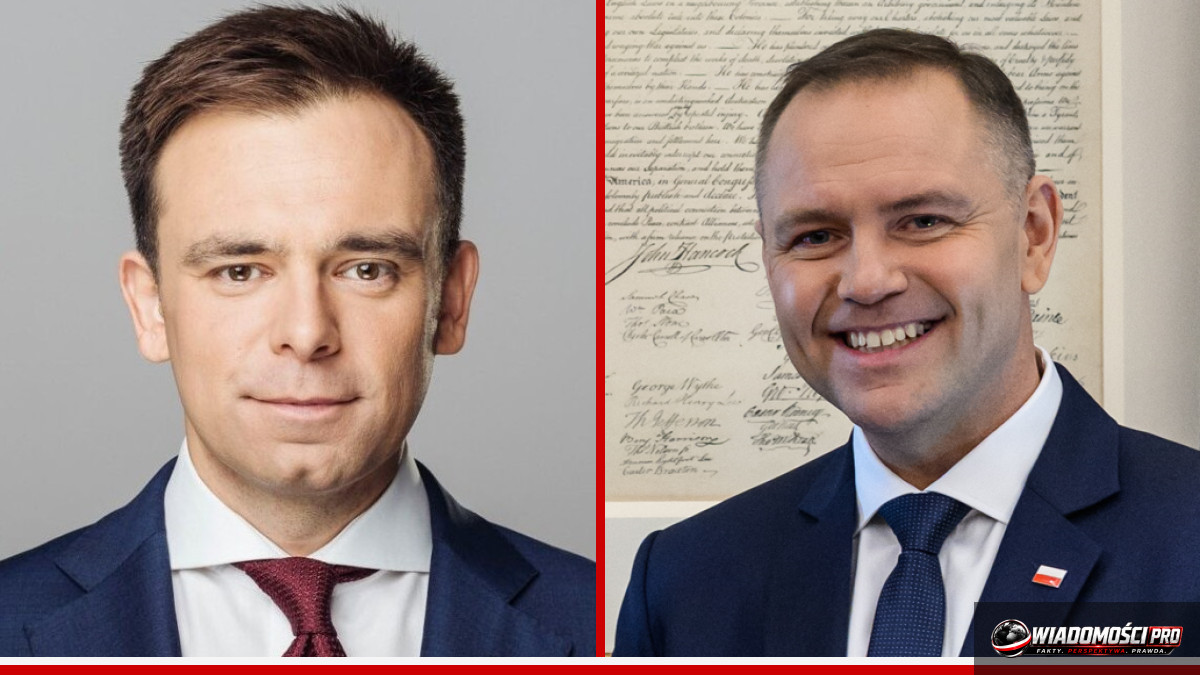
President Nawrocki has pardoned Staruchowicz and Pytel. Who is the third person?
President Karol Nawrocki has pardoned a total of three people, among whom are Piotr Staruchowicz ("Staruch") and Piotr Pytel. The third person covered by the same act of clemency remains unknown to the public. The announcements from the Presidential Chancellery on August 3, 2026, do not contain the personal data of this beneficiary, which calls into question the transparency of the pardon procedure.
Behind the scenes of President Nawrocki's decision
The pardon procedure in the Polish legal system is based on Article 139 of the Constitution of the Republic of Poland. According to this provision, the president exercises the power of pardon in individual cases. This prerogative is exclusive and does not require the countersignature of a member of the Council of Ministers. In the case of Piotr Staruchowicz and Piotr Pytel, this process took place at a pace that deviates from the standard administrative path. A typical pardon application requires obtaining opinions from the courts that ruled in the first and second instances. Subsequently, the documentation goes to the Prosecutor General, who presents the president with an application along with their own position.
Shortening this process in the described cases suggests that the Presidential Chancellery treated these applications as a priority. The selection of individuals covered by the amnesty is selective. Piotr Staruchowicz, a leader of fan circles, has struggled for years with accusations regarding stadium activities. Meanwhile, Piotr Pytel, a former special services officer, was a key figure in disputes regarding the functioning of the Polish security apparatus. Combining these two names in a single act of clemency makes the president's decision go beyond the framework of a technical remission of a sentence. It becomes a political manifesto that defines the head of state's attitude toward specific social and professional groups.
The lack of transparency regarding the third person makes it difficult to conduct a full analysis of the president's intentions. Speculation is appearing in the public sphere as to whether this pardon is not part of a broader political strategy aimed at securing the interests of individuals associated with the current ruling camp. The silence of the Presidential Palace regarding the identity of the third beneficiary is a fact. On August 3, 2026, when the decisions were announced, this important detail was omitted. This state of affairs makes it impossible to verify whether the pardon was humanitarian or political in nature. Observers of public life point out that the power of pardon is one of the least controllable powers of the president, which makes every such decision susceptible to accusations of arbitrariness.
Political echoes of the stadium pardon
President Nawrocki's decision to pardon Piotr Staruchowicz triggered an immediate reaction from politicians. Donald Tusk, speaking on the matter, emphasized the political weight of the decision, which in his view goes beyond the framework of an ordinary humanitarian act. In turn, Adam Szłapka focused on the symbolic dimension, pointing to the return of "Staruch" to the stands as an event that could affect the safety of mass events. For opposition politicians, this is an opportunity to demonstrate that President Nawrocki is not so much fixing the system's errors as personally influencing court verdicts in cases with a high emotional charge.
Media such as WP, RMF24, and Interia have been analyzing not only the list of those pardoned but also social reactions from the first hours after the announcement of the decision. A division into two main currents is noticeable. The first, supporting the president, argues that the power of pardon is a sovereign privilege that the head of state can use without regard for current polls. The second, critical, points to the potential risk of instrumentalizing the law for the purpose of building support in specific social groups.
The argumentation of the opponents of the pardon is based on the conviction that in a democratic state ruled by law, court verdicts should be executed consistently, and undermining them by the president weakens the authority of the courts. From the perspective of the Presidential Palace, however, the pardoning of Staruchowicz and Pytel is an attempt to "clear" cases that, in the president's assessment, were conducted in a controversial or overly repressive manner. This conflict of narratives means that every subsequent pardon decision will now be analyzed in terms of political utility, and not just legal premises.
Who are the pardoned? List of names
Understanding why the president decided to take such a step requires looking at the profiles of the people who received the pardon. Piotr Staruchowicz, known more widely as "Staruch," is a figure with an established position in the fan world, whose problems with the law have been present in the media for years. His pardon by Karol Nawrocki is a 180-degree turn from the policy pursued by previous administrations, which tried to tighten the course toward stadium environments.
Piotr Pytel, the second person on the list, is a figure whose presence in this compilation is a surprise to many observers. His activity in the state security structures and subsequent involvement in court proceedings meant that every decision concerning him is commented on as an element of a power struggle in the state apparatus. The pardoning of Pytel by the president is interpreted by security experts as a gesture intended to close a certain stage in clarifying matters related to Polish special services.
The third person remains in the shadows. The legal representative who confirmed the issuance of the act of clemency in an interview with "Fakt" did not reveal the personal details, citing personal data protection and client discretion. Such an approach, although legally permissible, raises numerous questions about transparency standards in the face of such a high-profile case. The lack of information about the identity of the third pardoned person means that the public does not have a full picture of the decisions made by President Nawrocki. Is this person as media-friendly as Staruchowicz, or perhaps someone who prefers to avoid publicity, and whose case was more technical in nature? This question remains unanswered.
Argumentation of the Presidential Palace
Official communications from the Presidential Palace after August 3, 2026, are sparing in words. Instead of a detailed justification for each of the cases, the chancellery refers to the general formula of the power of pardon, which is intended to serve to "redress wrongs" or "take into account special life circumstances." Such an approach, although formally correct, does not extinguish emotions. The president's press services avoid engaging in polemics with politicians, which is a strategy calculated to wait out the hottest period of the discussion.
Analysis of reports from "Przegląd Sportowy" suggests that the case of Staruchowicz's pardon may be a signal to sports circles that the president is ready for dialogue, even if it means entering into an open conflict with part of the political scene. However, this strategy carries a risk. If the pardoned do not confirm the trust the president has placed in them, the political costs of this decision may quickly outweigh the potential image gains.
President Nawrocki, by signing the acts of clemency for three people, showed a determination that is, on one hand, praised by his supporters as proof of independence, and on the other, criticized by opponents as a manifestation of disregard for procedures that, in the normal course, should decide on guilt or innocence. Each pardon case, including the one concerning Piotr Pytel, is considered in isolation from judicial control, which in practice makes the president the highest judge, whose verdict is indisputable.
Analysis of legal consequences
The legal consequences of a presidential pardon are immediate and definitive. From the moment the act of clemency is signed by President Nawrocki, the conviction loses its legal force to the extent specified by the head of state. In the Polish legal system, a pardon does not mean finding a person innocent. It is an act of remitting a sentence, in whole or in part, or expunging a conviction. In the case of Piotr Staruchowicz, this means that the court verdicts that have weighed on his criminal record until now cease to be enforced. It also means that any penal measures, such as stadium bans, can be lifted, which automatically restores the pardoned person's full civil rights.
For Piotr Pytel, this decision is significant in the context of criminal proceedings conducted against him. A pardon can lead to the dismissal of ongoing trials if the president has decided to remit the sentence before the verdict becomes final, which in practice closes the path to further proceedings by common courts. From a legal perspective, this case is finally concluded. There is no appeal against it, and courts do not have the competence to question the president's decision.
The analysis of the legal consequences of the pardon indicates a deep asymmetry. The gain of the pardoned is measurable – they regain their freedom or a clean record. Society, however, loses the possibility of full control over the process of justice. In the case of the third person, whose identity remains unknown, the legal effect of the pardon is identical – this person ceases to be punished by the state. The lack of public justification for each of these acts makes it impossible for lawyers to assess whether the criteria used by the president were consistent with jurisprudence in similar cases. This, in turn, raises questions about equality before the law, as the legal situation of an individual becomes dependent on a political decision, and not on objective judicial analysis. As a result, a pardon in this form becomes an instrument that can be perceived as a tool for extrajudicial dispute resolution.
Questions and answers
Who exactly did President Nawrocki pardon?
The president pardoned a total of three people, among whom are Piotr Staruchowicz ("Staruch") and Piotr Pytel. The identity of the third person has not been officially disclosed by the Presidential Palace.
Is the decision to pardon final?
Yes, a pardon is a personal prerogative of the president resulting from Article 139 of the Constitution of the Republic of Poland and does not require the countersignature of the prime minister, which makes the decision final and binding from the moment the act of clemency is signed.
Why does the case cause such great controversy?
The controversy stems from the nature of the activities of the pardoned individuals and sharp criticism from opposition politicians. Critics accuse the president of instrumentalizing the power of pardon, while supporters point to the sovereignty of the head of state in exercising his powers.
Sources
- Nawrocki pardoned "Staruch". Tusk spoke out - Interia Wydarzenia
- President Karol Nawrocki pardoned "Staruch". The Palace explains the decision - PolsatNews.pl
- This is why Karol Nawrocki was to make the decision to pardon "Staruch" - Przegląd Sportowy
- "Staruch" returns to the stands. Szłapka comments on Nawrocki's stadium pardon - RMF24
- President pardoned three people. It is known who may be among them - Rzeczpospolita
- Nawrocki pardoned "Staruch". Wave of comments - WP Wiadomości
- Karol Nawrocki made the decision. Piotr Pytel and "Staruch" pardoned - Gazeta
- We learned the identity of one of the pardoned. The representative confirms to "Fakt" - Fakt
Komentarze (0)
Ładowanie komentarzy...