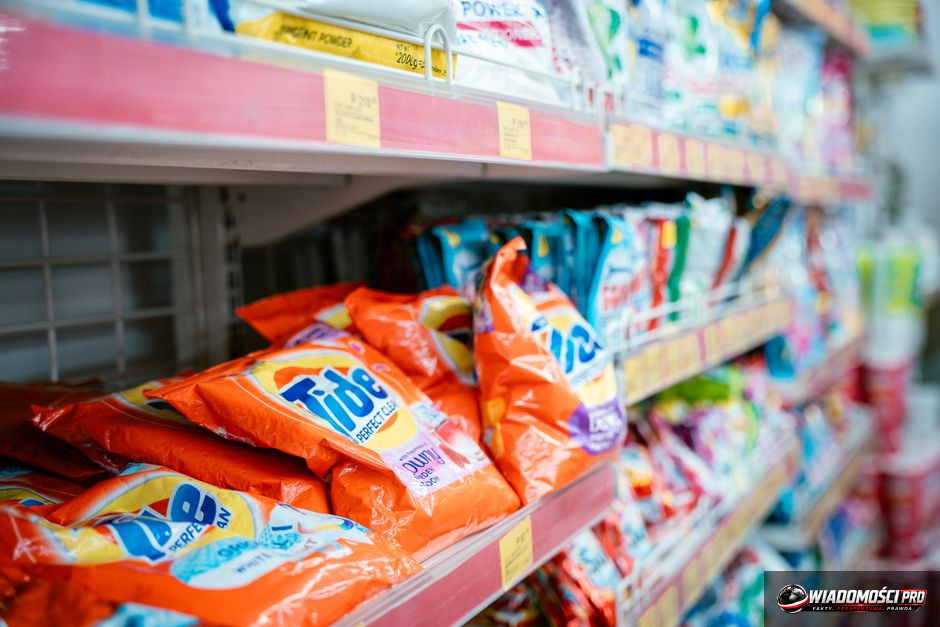
The introduction of the PPWR forces manufacturers to undergo a costly replacement of packaging, which, according to market analyses, will lead to an increase in the prices of final products that will be borne by consumers. These costs stem from the need to move away from single-use sachets and miniature packaging in favor of ecological solutions. Industry estimates suggest that for food and cosmetic products, the increase in shelf prices could range from 3 to 7 percent, depending on the complexity of the repackaging process for a given product.
The end of the single-use era: what is disappearing from shelves?
Single-use sachets for ketchup and mustard, which for years have been the standard for takeout meals, are disappearing from restaurant and bar shelves. A similar fate awaits miniature shampoos, conditioners, and shower gels in hotel bathrooms. This is not a singular aesthetic change, but a consequence of the EU's PPWR regulation, which eliminates packaging miniaturization from the market. For the hotel business, this means the necessity of installing reusable dispensers, which involves a one-time cost for purchasing systems and changing service procedures.
The real challenge for customers' wallets remains the fight against so-called "empty air" in packaging. These regulations hit manufacturers selling small products, such as dietary supplements, small electronic accessories, or cosmetics, in boxes that are many times larger than the volume of the contents. Companies that have used larger formats for decades to create a visual scale effect must now completely redesign production lines and warehouse logistics. This costly operation, requiring new molds and packaging systems, will not be financed from corporate margins but will translate directly into the final value of the goods.
All available market analyses point to one thing: the bill for replacing packaging with more ecological options that are better suited to the contents will ultimately be paid by the buyers. Companies are passing the costs of implementing the PPWR onto the prices of final products. Instead of cheap, single-use solutions, we are entering a model that forces technical changes, which in the short term hit our household budgets. Poland, which is implementing EU requirements with a clear delay, must now make up for lost time at a pace that further intensifies the pressure for price increases. A manufacturer who must rush to adapt a line to new standards adds the risk associated with underestimating implementation costs to their margin.
Poland lagging behind: a race against time and legislative backlogs
Reports published on August 25, 2026, by edgp.gazetaprawna.pl clearly indicate that the national packaging management system is in a phase of deep uncertainty. Time to adapt to the EU's PPWR regulation is running out relentlessly, and entrepreneurs, instead of investing in innovative production lines, are bogged down in a thicket of legal ambiguities resulting from the lack of a national act.
This situation is pointedly highlighted by PwC Studio in its report from July 13, 2026. Analysts warned that the draft of the Polish packaging act, a month before key deadlines, still raises numerous controversies between ministries and the industry. The lack of stable legal frameworks is the biggest obstacle for business. Companies that must drastically change their portfolios – moving away from popular single-use sachets and miniature packaging – are currently operating in an information vacuum. Every day of delay in legislation increases operating costs because companies must maintain stocks of old packaging without knowing exactly when the restrictive implementing regulations will come into force.
We will all feel the effects of this legislative paralysis in our wallets. A manufacturer who is not sure about the final shape of the regulations must add regulatory risk to the product price to protect themselves against possible penalties for non-compliance with EU requirements. According to information from June 25, 2026, published by "Rzeczpospolita," new obligations cover a wide spectrum of activities: from environmental audits to reporting the material composition of every piece of packaging introduced to the market.
The Polish market is losing momentum in the face of EU requirements for three main reasons. First, significant delays in implementing regulations hinder companies from transitioning to a circular economy, forcing them to use more expensive, certified substitutes on an ad-hoc basis. Second, the lack of final regulations forces manufacturers to guess technical requirements, which generates huge logistical costs. Third, the necessity of abandoning existing, cheap packaging formats, such as miniature sachets in the food industry, is becoming a fact that consumers will ultimately pay for at the checkout. Legislative impotence means that the loud announcements of an ecological transformation are in practice turning into price hikes for everyday goods, the scale of which depends on the pace at which the Polish government catches up on legislative backlogs.
BPA and raw materials: new safety standards
Regulations from August 18, 2026, introduce a total ban on the use of bisphenol A (BPA) in packaging that has direct contact with food. For the food industry, this is a fundamental redefinition of chemical compositions, which manufacturers must comply with under time pressure. This is not merely a cosmetic change to labels or logistics, but the necessity of implementing new technologies for sealing and securing products that cannot react with the packaging.
The industry has faced the necessity of immediate investments in safer material alternatives. Every new substance or sealing technology requires certifications and expensive laboratory tests. The money for this will not come from nowhere. Market analysts are unanimous: manufacturers will pass these expenses on to the end recipient, which will finally translate into an increase in product prices on store shelves. This applies particularly to the food segment, which is accustomed to single-use sachets for sauces or spices, which must disappear in light of the new regulations.
Moving away from cheap but harmful or difficult-to-recycle solutions drastically increases the production costs of a single package. Manufacturers lack a margin for error. The requirement to eliminate bisphenol A, combined with restrictions on single-use packaging, forces companies to completely redesign production lines. Investments in new raw materials that meet strict EU standards are becoming the new normal. For customers' wallets, this is a harbinger of inflation that no process optimization will stop. This is the price we pay for EU chemical safety, constituting a direct burden on households. Every bottle or box that must be tested for the presence of BPA generates additional certification costs, which are included in the product's margin.
Economic consequences: opportunities and threats
The introduction of the PPWR regulation from August 12, 2026, puts Polish companies before an unprecedented financial challenge. Manufacturers must instantly move away from single-use sachets and miniature packaging, replacing them with ecological solutions. The costs of this transformation are inevitable, as they include not only the necessary replacement of production line technology but also more expensive certification of new materials. The bill for this operation will ultimately be presented to consumers, which in practice means an increase in the prices of final products in stores.
The packaging market in Poland is in a peculiar position. On one hand, manufacturers have dominated exports to Sweden, which in the context of new regulations gives a theoretical chance to break further sales records, as reported by "Gazeta Prawna" in its August 12, 2026 issue. On the other hand, this optimism is cooled by hard operational data. Companies that do not adapt to EU requirements will fall out of the supply chain, giving way to innovative entities that have adapted more quickly to the tightened standards.
It is worth citing data regarding the condition of the sector:
- The opportunity for an export record to Sweden results from the high quality of Polish packaging components (Gazeta Prawna, 12.08.2026).
- The date of entry into force of the new EU regulations (August 12, 2026) is the final deadline for most manufacturers (Gazeta Prawna, 12.08.2026).
- The status of the implementation of regulations in Poland still shows a delay, which is confirmed by the report from August 25, 2026 (edgp.gazetaprawna.pl).
Those who can pass the investment costs onto the end recipient without a drastic drop in demand will survive. For the average buyer, this means one thing: we will pay for the ecological change at every checkout, and the price of ketchup or shampoo will cease to be just a resultant of raw material costs, becoming a reflection of EU environmental ambitions. The catch lies in hidden inflation – for ecology, in the final analysis, the customer always pays at the checkout. Manufacturers of innovative reusable packaging will gain from this, while companies based on cheap single-use plastic will face the specter of having to rebrand their entire assortment in a very short time.
What this means for you
The PPWR is a classic example of a green transformation where ecological goals collide with brutal economic reality. This change is not a cost-free process. As consumers, we must prepare for a permanent revaluation of the prices of everyday products. While in the long term a circular economy may bring raw material savings, the transition process is entirely financed from our wallets. Every single-use package disappearing from the shelf is a signal that the manufacturer had to implement more expensive technology.
Questions and answers
Will shampoos in hotels disappear completely?
They will not disappear, but they will be replaced by reusable dispensers instead of miniature, single-use bottles, which results from regulations eliminating unit packaging with small capacity.
Why does Poland have delays in regulations?
The delays result from difficulties in reconciling strict EU requirements with the interests of the Polish packaging production sector and a complicated legislative process, which is confirmed by reports from July and August 2026.
Does the BPA ban apply to all packaging?
The ban applies to packaging that has direct contact with food, which forces manufacturers to quickly change plastic production technology to exclude this substance from the technological process.
Sources
- Poland is already behind with these EU regulations. Report on backlogs and consequences for companies - edgp.gazetaprawna.pl
- Ketchup, hotel shampoos, giant packages. What stays and what has the EU banned? - Forsal.pl
- In this field, Poles have dominated exports to Sweden. New EU law from August 12 is an opportunity for further records - Gazeta Prawna
- BPA banned in the European Union. What has really changed in food regulations? - dlaLejdis.pl
- A month to PPWR – update on the draft of the Polish packaging act - PwC Studio
- New obligations regarding packaging - Rzeczpospolita
- PPWR regulation – what obligations for companies - Portal Ochrony Środowiska
- What obligations await packaging and product manufacturers? - Rzeczpospolita



Komentarze (0)
Ładowanie komentarzy...