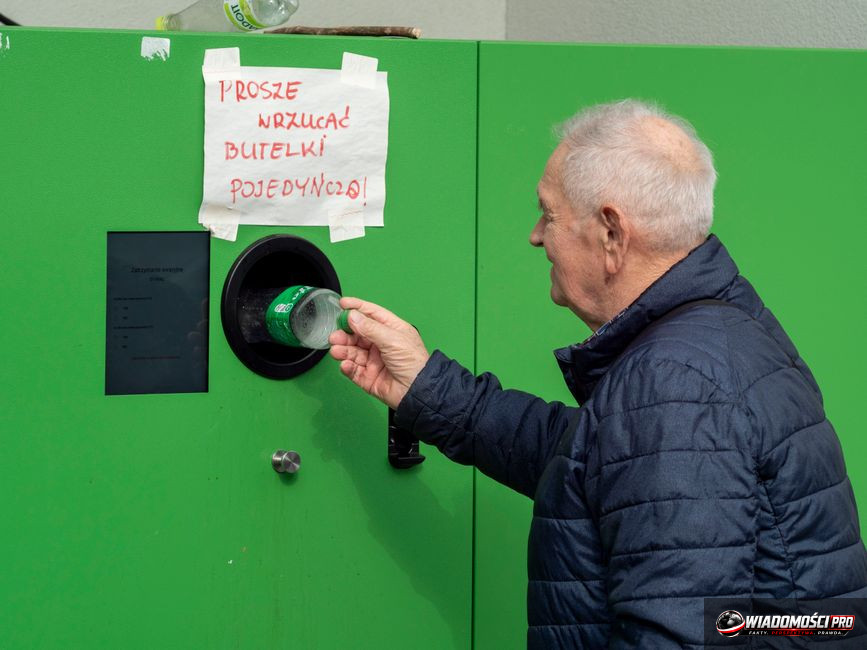
New EU regulations, including the deposit-refund system, force retailers to allocate 5 to 7 percent of their monthly turnover to operating costs, which, as of September 2025, results in a direct increase in retail product prices by an average of 15–20 groszy per unit. Companies are unable to absorb these expenses on their own without losing profitability, which is why they are shifting the fiscal burden onto consumer wallets. This change in the economic model makes the final bill at the store the primary tool for financing EU environmental directives.
Plastic tax and new costs for business
Polish enterprises have been operating under tightened fiscal requirements since August 2025. The implementation of EU law, as reported by Strefa Inwestorów on August 14, 2025, represents a real restructuring of cost models. Instead of investing profits in innovation, entrepreneurs are financing expanded environmental administration. In its "Regulatory Roadmap" of February 6, 2025, the Dentons law firm outlined a scenario in which companies must make drastic changes to their operational strategies to adapt to growing requirements. Logistics costs associated with handling new packaging reporting systems constitute a significant percentage of the operating margin. In the retail sector, where margins often hover around a few percent, any additional cost of 2–3 groszy per unit of goods forces an immediate adjustment of shelf prices.
Enterprises do not have the ability to absorb these expenses within their own budgets without the risk of losing financial liquidity. The burdens imposed by Brussels, including plastic fees, go beyond standard operating costs. Companies pay not only for the raw material but also for the life cycle of the waste they generate. In practice, this means that the price of a product on the shelf now consists of the value of the goods and an "environmental tax." The latter is most noticeable in the FMCG industries. Every bottle of beverage carries a hidden bill for logistics and administration. Instead of a simple product, we are paying for a complex raw material recovery architecture that changes the structure of expenses in every Polish household.
Supply chain analysis indicates that these costs accumulate at every stage of production. The packaging manufacturer must meet rigorous certification standards, which generates expenses of hundreds of thousands of zlotys per year in a medium-sized plant. Then, the wholesaler adds storage and transport costs that include environmental fees. The retailer finishes the process by adding a margin to the higher purchase price. As a result, the final consumer finances the entire system, having no choice regarding the brand or type of packaging, because almost the entire market is subject to the same restrictions. The lack of alternatives makes the price rigid upwards, and price competition between producers weakens.
Deposit-refund system: ecology or hidden tax?
The introduction of the deposit-refund system in September 2025 was the moment when the European Union's ecological ambitions collided with the daily shopping routine of Poles. An analysis by Faktura.pl from September 23, 2025, indicates that this mechanism drastically reduced the profitability of retail stores. Small retail outlets had to invest in packaging collection machines, the price of which ranges from several thousand to several tens of thousands of zlotys per device. These expenses do not disappear into a vacuum. Stores, in order to maintain profitability, are adjusting their price lists. If a retailer has to allocate about 5–7 percent of their monthly turnover to operating the deposit-refund system, including electricity costs, machine maintenance, and wages for staff handling returns, they must pass this burden on to customers. The result is an increase in the prices of beverage products.
The consumer sees a higher amount at the checkout, which includes not only the deposit but also a markup covering the administrative costs of implementing the system. Moreover, freezing cash in a deposit, although theoretically recoverable, lowers the current purchasing power of salaries. On an annual scale, this means that the average family must set aside an additional several hundred zlotys to handle the return of bottles that were previously just waste thrown into the appropriate container. This system requires not only money from citizens but also time. The necessity of sorting and transporting empty packaging back to the store is an additional hidden cost that is not visible in inflation statistics, but which actually burdens household budgets.
Large-format stores cope with these costs better due to economies of scale, but small retail is facing the specter of bankruptcy. Collection machines require space that many small stores simply do not have. This forces owners to give up part of their assortment or withdraw completely from the distribution of beverages in returnable packaging. This, in turn, limits consumer choice and leads to the monopolization of the market by the largest retail chains, which can afford to invest in automated infrastructure. As a result, a system that was supposed to serve ecology becomes a tool for eliminating small entrepreneurs from the market.
Sorting revolution: 11 bins at home
The latest EU draft from February 9, 2026, described by INFOR.PL, introduces the concept of an 11-bin system under every residential building, which aims to maximize the purity of secondary raw materials, although it is currently only a draft proposal that is causing huge controversy in the waste management industry due to the gigantic logistical and spatial costs that residents and municipalities would have to bear, while there is no guarantee that such extensive sorting will bring a proportional ecological gain.
For Polish municipalities, implementing such a system would mean the need to replace the entire fleet of vehicles adapted to collect so many fractions and a drastic increase in waste collection fees for residents. In dense urban development, finding space for 11 bins is physically impossible without eliminating parking spaces or green areas, which creates social conflicts. Manufacturing companies, in turn, would have to adapt all packaging to new certification standards, which means further investments in production lines. Each of these changes is financed from the margin of the goods sold, which ultimately hits the final consumer again.
Regulatory future: what awaits the European market?
The Brussels legislative calendar for 2026-2027 is extremely tight. Polski Obserwator DE reported on April 8, 2025, that the European Union is intensifying the process of phasing out specific types of packaging, following the solutions implemented earlier in France and Denmark. Producers face the forced modernization of technological lines, which in practice means expenses counted in millions of zlotys per production plant. The implementation of deposit-refund systems and increasingly rigorous requirements regarding waste sorting, which INFOR.PL described in February 2026, are becoming the new operational standard. Companies in Poland have been passing these expenses on to the end recipient since September 2025. This is a direct result of the implementation of EU law, as confirmed by reports from Strefa Inwestorów on August 14, 2025.
Entrepreneurs have no room for maneuver. If a regulation forces a new packaging architecture, the unit price of the product must cover the loss of margin. The coming months will bring further endurance tests for the market. While discussions about the "plastic tax" (Podatnik.info, September 2023) were treated with distance, today's reality – including the vision of 11 waste bins under every house – forces companies to audit every stage of the supply chain. In 2027, the Union's ecological ambitions will finally collide with the wallet of the average Pole. The change in the economic model is irreversible, but the bill for this process will be issued at the checkout in the grocery store.
Industries that use multi-material packaging are burdened much more heavily than producers using mono-materials. This creates market imbalance. Smaller producers, lacking the capital for rapid replacement of packaging technologies, may fall out of the market, which will lead to sector consolidation and reduced competition. Less competition always results in higher prices for the final consumer, regardless of the environmental regulations themselves. Such a situation promotes global corporations that have their own R&D departments capable of quickly adapting to new requirements, while local companies lose market share, unable to compete on price with giants that spread regulatory costs over millions of units of goods.
Environmental audits have become a new work standard for companies. Every enterprise that wants to stay in the supply chain must now hire external consultants or build its own compliance departments. The cost of such services on an annual scale in a medium-sized manufacturing company reaches even several hundred thousand zlotys. Added to this are the costs of packaging certification, which must prove that they are recyclable to the extent specified by EU standards. Laboratory tests and certificates are an expense that the company must include in the price of the product.
Reverse logistics costs are another factor affecting the final bill. The deposit-refund system requires the transport of empty packaging back to recycling centers. These are thousands of additional truck trips, which translates into higher fuel consumption and transport costs, which ultimately burden the price of the product on the shelf. If the average price of a beverage increased by 15–20 groszy in 2025, at least half of this increase resulted directly from the costs of implementing the deposit-refund system. The rest is the effect of rising energy and labor costs, which are also stimulated by EU regulations regarding energy transformation.
Cost analysis: hidden regulatory inflation
The impact of EU directives on product prices is referred to as "hidden regulatory inflation." It consists of several factors. First, the costs of environmental audits. Every company must now hire external consultants or build its own compliance departments that monitor compliance with EU regulations. The cost of such services on an annual scale in a medium-sized manufacturing company can reach even several hundred thousand zlotys. Second, the costs of packaging certification. Producers must prove that their packaging is recyclable to the extent specified by EU standards. Laboratory tests and certificates are an expense that the company must include in the price of the product. Third, the costs of reverse logistics. The deposit-refund system requires the transport of empty packaging back to recycling centers. These are thousands of additional truck trips, which translates into higher fuel consumption and transport costs, which ultimately burden the price of the product on the shelf.
Financial analysis of the market indicates that these costs are not one-off. This is a permanent burden that will only grow in future years as standards are tightened. Companies that will not be able to maintain such high cost pressure will be forced into mergers or acquisitions, which will further limit consumer choice. This phenomenon leads to the creation of a "regulated market," where the price is no longer the result of a pure market game between supply and demand, but a derivative of administrative decisions made in Brussels. Consumers, by paying more, are in fact financing the process of adapting the economy to requirements that are imposed from above, often without taking into account the specifics of local markets, such as Polish retail.
One should not forget about the impact on the labor market. New administrative requirements require the hiring of qualified employees to handle reporting systems and waste management. This generates wage costs, which, in an era of rising earnings expectations, pose another challenge for companies. All these components – audits, certificates, reverse logistics, machine maintenance, hiring compliance officers – create a cost mass that is inevitable.
What this means for you
New regulations are a huge logistical challenge for companies and an additional cost for citizens. Recycling companies and manufacturers of sorting systems gain, while small retail stores and households lose, as they have to face rising prices and cumbersome sorting. The current system is optimized for the purity of the raw material, not for the convenience or the wallet of the average resident. The cost of this optimization is entirely passed on to the final consumer, which creates a new, regulatory form of taxation on daily life. Data analysis indicates that in the coming years, one should not expect a decrease in these costs, because these systems are only just entering the phase of full operability, and their servicing and maintenance will generate further financial needs, which will ultimately always be compensated in the price of the final product.
Citizens should prepare for the fact that their daily expenses on food and beverages will increasingly depend on legislative decisions regarding waste management. This is a new reality in which every bottle of beverage is a carrier not only of the value of the liquid but also of the costs of the entire recycling process, which from the consumer's perspective is becoming more expensive and more complicated. The lack of transparency of these costs causes the average Pole to feel inflation without understanding that a significant part of it is a product of political, not market, decisions.
Questions and answers
Is the deposit-refund system in Poland a tax?
Although officially called a deposit-refund system, experts point out that the costs of its implementation directly burden product prices, which means higher expenses for consumers.
Why does the EU want to introduce 11 trash bins?
According to the draft from February 2026, it is intended to maximize the purity of secondary raw materials and eliminate sorting errors that residents currently make.
When did Polish companies feel the effects of the new regulations?
The process of implementing EU law, resulting in new packaging taxes, gained momentum in August 2025.
Is the 11-bin project already binding?
No, it is currently a draft proposal that aims to seal the recycling system, but it has not yet been implemented as a binding directive in Poland.
What are the estimated costs for stores?
These costs include the purchase of collection machines (from several thousand zlotys per unit) and operating expenses related to logistics and maintenance, which significantly reduces the profitability of retailers.
Sources
- Plastic tax 2025 - what is worth knowing? - Podatnik.info
- 11 waste bins may stand under every house so that people do not confuse where to throw what. Revolution in waste sorting in a new EU project - INFOR.PL
- Polish companies will pay another tax. This is the effect of implementing EU law - Strefa Inwestorów
- The deposit-refund system will hit the wallets of Poles and stores. Ecology or a hidden tax? - Faktura.pl
- Regulatory Roadmap: 2025 - Dentons
- The price of a pack of cigarettes in Ukraine will rise sharply - how much will it cost in 2025? - Obozrevatel
- Already banned in France and Denmark. Soon they will not be able to be sold throughout the EU - Polski Obserwator DE



Komentarze (0)
Ładowanie komentarzy...