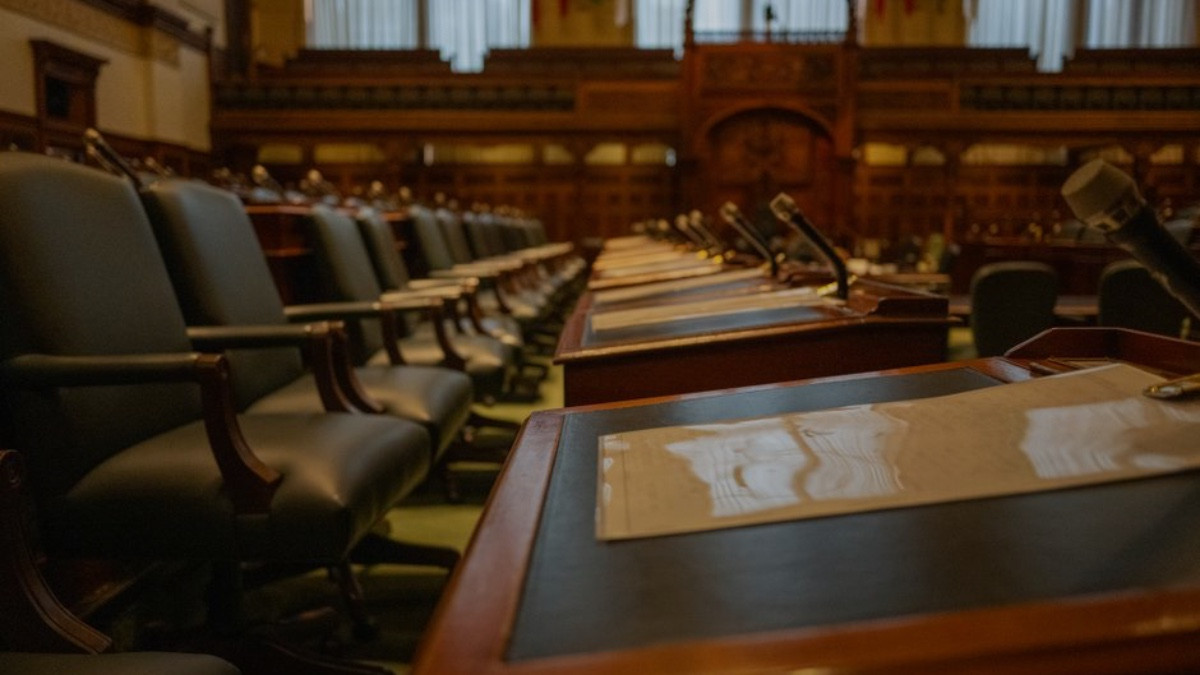
President Nawrocki has submitted at least 13 bills, most of which remain in the Sejm freezer under the supervision of Speaker Czarzasty, sparking an open political conflict. This number—thirteen proposals—forms the foundation of a dispute that has been paralyzing relations between the Presidential Palace and the parliament for months. The freezing of legislative initiatives has become not just a technique for managing the agenda, but a real tool in the struggle over the shape of Polish law, which in practice relegates presidential proposals to legislative oblivion.
The evolution of parliamentary practice that we are observing today is a direct consequence of the change in the position of the Speaker of the Sejm, which took place in November 2025. The beginning of the current parliamentary term was marked by slogans of transparency and full openness to debates on every bill, regardless of its origin. As late as March 2024, the term "Hołownia's smiling freezer" was used in public debate, suggesting that this tool, known from previous decades, was losing its chilling properties. These promises were meant to convince citizens that the Sejm would become a place for the real clash of arguments, rather than just a place where the Speaker decides what deserves public discussion and what should be extinguished in the privacy of offices.
Everything changed drastically after Włodzimierz Czarzasty took over the duties of the Speaker. The new dynamic in parliament, observed in November 2025, brought a quick return to the tradition where the Speaker of the Sejm becomes the arbiter of the fate of bills. As early as November 22, 2025, signals from Polish Radio 24 clearly indicated a return to the old custom, and Czarzasty's actions were interpreted as a harbinger of a complete departure from earlier declarations about the lack of blockades. This change of course was not merely a cosmetic adjustment in scheduling, but a fundamental turn in the way initiatives coming from the Presidential Palace are treated.
In parliamentary practice, the "freezer" means failing to assign a print number or deliberately not directing a bill to its first reading. For President Nawrocki, this means that his legislative priorities have no chance of existing in the public sphere. From the perspective of Sejm procedures, failing to move a bill forward is the most effective way to avoid an uncomfortable discussion. The Speaker, using his powers, becomes a selector who decides what image of the law will be presented to the citizens. When the head of state's bills enter this circuit, they become hostages of current party fighting rather than a substantive contribution to legislation.
The conflict between the Presidential Palace and the Sejm has reached a state where both sides do not hide their intentions. Włodzimierz Czarzasty, during public appearances, including on September 2, 2026, did not spare malice toward the president, which only deepened the polarization. For observers of political life, this is proof that the freezer institution has ceased to be a technical tool for organizing the Sejm's work and has become an instrument of political retaliation. The president accuses the Speaker of blocking initiatives, while the ruling majority argues that these bills do not fit their program or are not a priority for the state.
It is worth noting specific data that allow for an objective assessment of the situation. Analyses by the Konkret24 portal, published in December 2025, confirmed that at least 13 of President Nawrocki's bills were in the Sejm blockade at that time. This number has not changed for months, which proves that we are not dealing with a temporary downtime or staffing problems in the Speaker's office, but with a lasting, intentional action. This is a situation in which the parliamentary majority, having full control over the agenda, systematically excludes the president from the legislative process.
The following summary illustrates the scale of this phenomenon and the chronology of events that led to the current impasse in relations between the main centers of power in Poland.
Table: Calendar and legislative status of presidential bills
| Date of event | Event | Status/Conclusion |
| :--- | :--- | :--- |
| 23.11.2023 | Declarations of the end of the freezer | Promise of "bills leaving with a bang" |
| 18.11.2025 | Change of Sejm Speaker | W. Czarzasty takes the helm |
| 22.11.2025 | Reports of the freezer's return | Return to old Speaker practices |
| 02.12.2025 | Konkret24 report | Confirmation of 13 bills in the freezer |
| 03.06.2026 | Polska 2050 statement | Admission: "the freezer is working at full capacity" |
| 02.09.2026 | Sejm Speaker's speech | Escalation of malice toward Nawrocki |
An analysis of these facts leads to an unambiguous conclusion: the parliament has become an arena where legislation is subordinated to immediate party interests. Even coalition partners, such as Polska 2050, were unable to deny in June 2026 that the freezer was "working at full capacity." This is an admission that earlier promises about the end of party arbitrariness were merely an element of a political campaign. Today, when voters expect efficiency from the Sejm, they observe paralysis caused by a personal and political conflict.
For the citizen, this situation means that law in Poland is created selectively. If key bills that could affect the economic or social situation are held back without justification, then real legislative power shifts from the debating chamber to the Speaker's office. This mechanism is extremely effective because it does not require a vote, which could reveal divisions within the ruling coalition. It is enough to simply not move the matter forward.
The effects of this state of affairs are felt in many areas. First, we are dealing with an erosion of trust in parliamentary procedures. If the rules of the game change with the election of a new Speaker, then citizens have every right to ask about the durability and stability of the democratic process. Second, the constitutional position of the president is being weakened. The president, who has the right of legislative initiative, loses his main tool for influencing the law in a clash with a Speaker who controls the "freezer." This is a dispute over who actually sets the legislative agenda in the state – the head of state or the leader of the parliamentary majority.
Włodzimierz Czarzasty, by taking on the role of Speaker, adopted a strategy that is safe from his point of view. He does not have to enter into open polemics with the president on every issue. It is enough that Nawrocki's bills do not reach the committees, where they could be subjected to public debate. This "quiet" blocking is much more difficult for an opponent to fight than an open debate, in which arguments for or against a bill can be presented. President Nawrocki, trying to push through his proposals, becomes in the eyes of public opinion a figure who cannot effectively influence the work of parliament, which further weakens his authority.
Coalition politicians argue that President Nawrocki is not looking for a compromise, but only wants to force the Sejm to adopt solutions that do not have the support of the majority. In turn, the Presidential Palace points out that the Speaker should be an impartial host of the Sejm, not a party selector of bills. This stalemate is a classic example of an institutional crisis in which there is no space to find an agreement across divisions. Every subsequent bill that reaches the Sejm office is evaluated not in terms of its usefulness to citizens, but in terms of whether its adoption would strengthen the president's political capital.
It is worth noting that the freezer tool is extremely flexible. It can be used selectively. At the same time that Nawrocki's bills are waiting to be considered, other bills—often of a controversial nature—pass through the Sejm at lightning speed. This shows that the problem is not a lack of time or the overwork of MPs, but a lack of political will to process specific documents. Such management of the parliament does not serve the transparency that was so often talked about in 2023.
For voters, this is a clear signal that political promises have a short expiration date. When there was talk of a "smiling freezer" in 2024, society expected a new quality. Today, looking at the 13 blocked bills, we see a return to practices that were supposed to be a thing of the past. This is particularly important in the context of state stability. If the main organs of power cannot develop a mechanism for cooperation, the state loses its efficiency.
Questions and answers:
Why are the president's bills not being debated?
Speaker Czarzasty uses the so-called Sejm freezer, withholding the processing of bills, which in practice constitutes a form of Speaker's veto against presidential initiatives.
How many of the president's bills have been blocked?
According to data from December 2025, at least 13 bills authored by President Nawrocki were in the Sejm freezer.
Was the Sejm freezer supposed to be abolished?
Yes, the ruling coalition promised in 2023 to move away from freezing bills, but the practice under Speaker Czarzasty, which began in November 2025, shows a return to these methods.
What do these practices mean for the citizen?
Citizens are cut off from the debate on the president's proposals, which limits their right to learn about alternative legislative solutions and testifies to the dominance of party control over the law-making process in Poland.
The current situation proves that parliamentarism in its current form is a hostage to party calculations. Speaker Czarzasty, by deciding the fate of 13 presidential bills, is not only implementing a party strategy but is shaping the image of Polish law through exclusion. This is not a technical issue—this is politics in its most direct, albeit opaque, form. Will this practice last until the end of the term? Many indications suggest that as long as the conflict between the Palace and the Sejm serves to mobilize the electorates of both sides, the freezer will be one of the most important tools in the hands of the Speaker. Voters who counted on change remain disappointed, and the bills—in the Sejm drawer.
Sources
- Sejm "freezer." Czarzasty did not spare malice toward Nawrocki - Wprost
- Polska 2050 on the "Sejm freezer": "working at full capacity." They promised it would "leave with a bang" - Konkret24
- Czarzasty takes the helm. Hołownia's loud rule in the trash - Money.pl
- Czarzasty strikes at the president. It's about the bills - Do Rzeczy
- 13 presidential bills. All in the "Sejm freezer"? We check - Konkret24
- Hołownia's smiling freezer, or the coalition out of breath - Gazeta Prawna
- Will Czarzasty reach for the Speaker's veto? "Harbinger of the return of the so-called Sejm freezer" - Polskie Radio 24
- The Sejm freezer is no longer freezing. Hołownia made a decision. Millions of Poles are waiting for these bills - Fakt

Komentarze (0)
Ładowanie komentarzy...