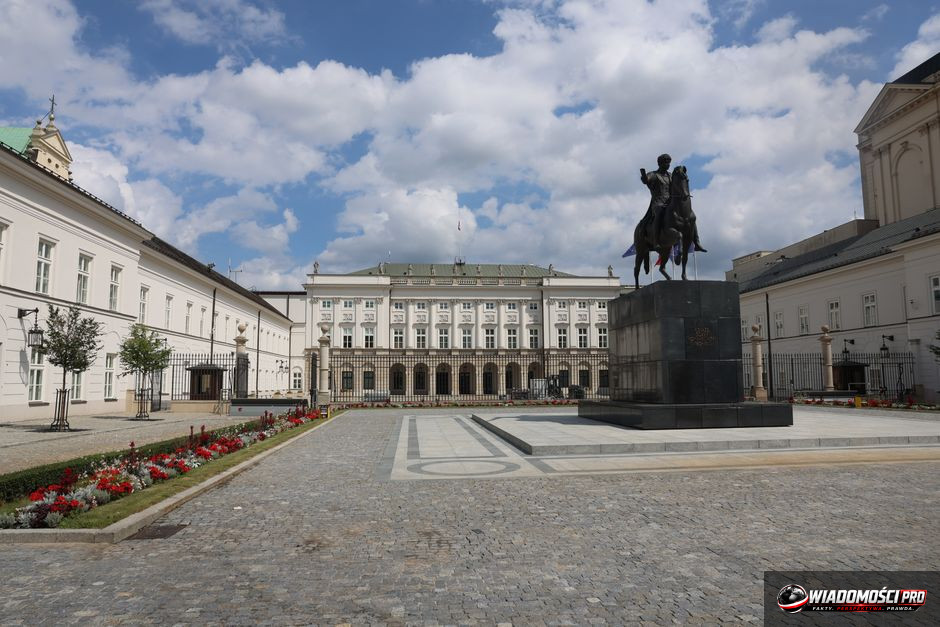
In just one year of his term, Karol Nawrocki has vetoed 41 laws, which, according to economists' estimates, has led to 12.4 billion PLN in losses to the state budget. This unprecedented number of legislative blocks has caused a real slump in the state's financial liquidity, preventing the implementation of key tax and systemic reforms. The Ministry of Finance, forced to work under conditions of permanent paralysis, has had to repeatedly revise revenue forecasts, which has directly impacted planned infrastructure investments and social support programs.
Balance sheet of the year: 41 blocked laws
The President's activity in vetoing laws has exceeded all previous standards of relations between the Presidential Palace and the government. The number of 41 vetoed legal acts is a result that has no precedent in the history of the Third Polish Republic. Each of these vetoes was announced as an expression of concern for the interests of citizens, but in practice, it meant halting processes that were crucial for the country's macroeconomic stability. The situation became particularly tense in March 2026, when Karol Nawrocki decided the fate of a package of 10 laws. Among them was a special project that formed the backbone of the financial reform planned by Donald Tusk's government. Blocking this package was not just a matter of a difference of opinion on the shape of the law, but a real rupture of budgetary liquidity. Instead of the efficient implementation of regulations, the government received a blockade, the effects of which are currently felt by every ministry. The economic consequences of this move are measurable – the lack of enacted changes means that the state has not collected due taxes and has not activated EU funds that were conditional on meeting specific legislative requirements.
Experts observing the legislative process point out that 41 vetoes are not just statistics, but above all, a tool of political paralysis. Nawrocki, using his constitutional right to a veto, shifted the burden of responsibility for the state of finances onto the government, suggesting that the solutions they prepared were harmful. However, an analysis of the facts points to something else. Most of the blocked laws directly concerned the budget's revenue mechanisms. As a result, instead of a balanced fiscal policy, we are dealing with ad-hoc patching of budget holes. Each veto represents months of work by officials, experts, and parliamentary committees, which become useless in an instant. This mode of operation does not favor investors, who expect predictability of the law. When the president says "no" 41 times in a year, the market reacts with nervousness. Capital does not like uncertainty, and the situation in Poland, where the law changes at a pace dictated by the conflict between the president and the prime minister, discourages long-term economic activities.
President Nawrocki argues that his actions are a form of democratic control, but economists point to a lack of consistency in this rhetoric. If the president blocks a law without simultaneously proposing any real alternative that would fill the budget gap, he becomes co-responsible for the financial destabilization of the state. Many of the vetoed laws were technical in nature, concerning the sealing of tax systems in sectors particularly vulnerable to the gray economy. Blocking these mechanisms is, in reality, permission for the continued leakage of capital from the Polish tax system. Statistics confirm that during the period of the president's intensified vetoes, VAT and excise tax revenues showed a downward trend compared to budget assumptions. It is precisely this lack of revenue that generates the billions in losses reported by business media.
The billion-dollar costs of political blockade
Budget losses resulting from Karol Nawrocki's vetoes are no longer just a theoretical calculation, but a fact openly reported by business media. Publications by "Super Biznes" and "INNPoland.pl" in August 2026 clearly indicate that the sum of billions of zlotys that did not flow into the state treasury is a direct effect of blocking key laws. This money was intended for infrastructure modernization, healthcare, and education. The mechanism of the losses is simple. Many of the laws vetoed by the president contained provisions aimed at sealing the tax system, especially in sectors prone to tax avoidance. Blocking these changes means that money that should have bolstered the budget remains in the pockets of entities avoiding taxes. The scale of the phenomenon, according to analysts' estimates, is calculated in billions of zlotys per year.
President Nawrocki consistently defends his veto decisions in his speeches, arguing that he is protecting the state from the government's incompetence. However, looking at the cold numbers, there is a clear discrepancy between presidential rhetoric and economic reality. The lack of systemic solutions in the area of indirect taxes and earmarked fees, which were among the vetoed laws, created a gap that cannot be filled without introducing new, often more burdensome taxes. The costs of the political blockade are not just direct budget losses. They are also opportunity costs. The time the government had to spend looking for workarounds for the presidential vetoes could have been used to prepare new reforms or analyze the market in the face of the changing geopolitical situation. Instead, we are dealing with a war of attrition, where every law becomes a political hostage. The taxpayer, who ultimately covers these losses, remains the biggest loser of this clash.
Economists point to one more aspect: the cost of debt servicing. In a situation where the budget loses billions due to blocked tax laws, the government is forced to increase the issuance of treasury bonds. Higher public debt means higher costs of servicing that debt, which is particularly dangerous in an era of volatile interest rates. Each subsequent veto by President Nawrocki increases Poland's credit risk in the eyes of foreign investors. Rating agencies are closely watching the conflict between the president and the government, and every subsequent blocked economic law could result in a downgrade of the country's creditworthiness. This, in turn, translates into higher interest rates on debt, which costs us all additional billions of zlotys per year. It is a vicious cycle that began with the decision to veto and ends with the real impoverishment of citizens through higher taxes or cuts in public services.
Conflict between the Presidential Palace and the Chancellery of the Prime Minister (KPRM)
Relations between the KPRM and the Presidential Palace in 2026 entered a phase of open conflict. The irritation of Prime Minister Donald Tusk, which even German media reported on in March, is not just an expression of emotion. It is a signal to financial markets that there are two centers of power in Poland that cannot work out even a minimum of agreement on fundamental issues. For foreign observers, this is a clear sign of instability. In April 2026, this conflict intensified during discussions on regulations concerning the cryptocurrency market. Karol Nawrocki, blocking the government's project, stated at the time: "The government will not cover up incompetence with lies." This sharp phrasing opened another front of the dispute. The president accused the government of a lack of professionalism in preparing the regulations, while the government accused him of deliberately torpedoing a modern economy. In this exchange of blows, regulations that could have attracted capital from the financial technology industry to Poland suffered.
Polls from March 2026, published by PolsatNews.pl, show a deep rift in society. Voters are divided almost half and half. Some see Nawrocki as the only barrier against – as they claim – the government's expansive policy, while others perceive him as a brake-man who, for his own political gain, blocks key reforms. This polarization hinders any attempts at compromise, which further deepens the impasse. German media, analyzing this conflict, emphasize that for Poland, this is an extremely dangerous situation in the context of planning the budget for the coming years. The lack of cooperation between the president and the government makes every law a subject of political bargaining, not substantive discussion. The economy is slowing down, innovation is at a standstill, and the taxpayer receives the bill for a political theater in which the main actors are Nawrocki and Tusk.
From a historical perspective, such intensive use of the veto power is an unprecedented phenomenon. Previous presidents rarely reached for this tool in such a massive way, usually saving it for cases of laws contradicting the constitution or in situations critical to the state's security. Karol Nawrocki has changed this practice, making the veto a daily tool of political struggle. Such a state of affairs leads to the erosion of the authority of the presidential institution. If the veto ceases to be a "last resort" for protecting constitutional order and becomes a tool of party games, it loses its gravity and becomes just another element of political brawling. Citizens observing this process with growing impatience are increasingly asking about the sense of maintaining such an expensive structure that, instead of binding the system together, actively breaks it.
Government counterattack: how to bypass vetoes?
Faced with a series of 41 vetoes, the government began looking for creative ways to bypass presidential blocks. An example of such a strategy was the law of July 22, 2026, reported by "Rzeczpospolita". The government administration, wanting to avoid another veto, applied an unusual legislative technique aimed at introducing necessary changes without having to go through the full path where the president could place his signature. The details of this solution remain a closely guarded legal secret, but the very fact that the government has to resort to such methods testifies to a deep systemic crisis. The effectiveness of these actions, however, is debatable. Although they allow for avoiding paralysis in specific matters in the short term, in the long term, they may lead to the destabilization of the legal system. If the government begins to use workarounds permanently, the quality of enacted law will drop drastically, which in turn will increase the risk of these regulations being challenged before the Constitutional Tribunal or EU bodies.
Nawrocki, of course, does not remain passive to these attempts. Every move by the government is analyzed by his lawyers for the possibility of blocking it. This creates a vicious cycle. The government tries, the president blocks, the government looks for a workaround, the president blocks again. In this race, there are no winners, only growing losses for the budget. The billions of zlotys that economists talk about are real money that, instead of working for the country's development, is frozen in disputes over legal interpretations. Does this government counterattack strategy have a chance of success? Analysts are skeptical. Without a change in the approach of both sides, every subsequent law will arouse the same emotions. The government hopes that society will eventually start blaming the president for every financial failure, while Nawrocki builds capital on the image of a defender who does not allow the government to do too much. Both sides are playing for high stakes, and the bill for this game is ultimately paid by the citizen.
It should be noted that the use of legislative workarounds by the government is a risky precedent. If legislation becomes a legal arms race between the Presidential Palace and the KPRM, the quality of enacted law suffers most. Entrepreneurs, citizens, and law enforcement agencies do not know which regulations are ultimately binding and which are merely an element of a political game. Legal chaos generates transaction costs that lower the competitiveness of the Polish economy. Instead of a transparent tax system, we have a thicket of regulations that often exclude each other. This is an ideal environment for corruption and abuse, and extremely difficult for honest taxpayers. Nawrocki, by blocking laws, not only deprives the state of revenue but also contributes to the degradation of law-making standards in Poland.
It is worth deepening the analysis of what is happening behind the scenes. The Chancellery of the President employs a staff of lawyers whose only task is to find loopholes in government laws that would allow for their effective vetoing. On the other hand, the KPRM creates teams tasked with "insuring" laws against vetoes. This is a huge cost for the taxpayer – thousands of man-hours of highly qualified lawyers spent on political squabbles instead of substantive improvement of the law. If this intellectual potential were redirected to creating law favorable to citizens, Poland would be in a completely different economic place. Unfortunately, the current political course excludes such cooperation.
What this means for you
Karol Nawrocki has made the veto the main tool of his presidency, which in a short time led to 12.4 billion PLN in losses to the state budget. The catch is that the president builds an image of a brake-man for his supporters without bearing responsibility for the deficit generated by blocking tax laws. In turn, the government, trying to bypass vetoes, enters a path of risky legislation that may in the future undermine the legal stability of the entire country. Citizens lose twice: through the lack of reforms and through the growing risk of legal chaos, which directly affects their wallets. The lack of predictability of the law means a lack of investment, and a lack of investment means a lack of new jobs and wage growth. In this game, the interests of citizens are in last place, giving way to the political ambitions of both sides.
The consequences for the average Pole are severe. Every billion-zloty hole in the budget is a potential increase in indirect taxes, higher fees for public services, or lower quality of healthcare and education. Since the government cannot realize planned tax revenues due to vetoes, it must look for money elsewhere. This means that the burden of maintaining the state shifts to those who do not have tools for tax optimization. President Nawrocki does not offer any shield for these groups, focusing only on blocking government projects. This is a short-sighted strategy that, in the long run, could lead to a deep crisis of trust in state institutions.
Additionally, the dispute over cryptocurrencies and other modern technologies shows that Poland is losing the chance to be a leader in innovation in the region. Fintech investors, seeing the lack of legislative stability, are moving their operational centers to other countries where the law is predictable. Every vetoed law is not only lost billions in the budget but also lost opportunities for the development of modern sectors of the economy. These are long-term effects that cannot be repaired in one election cycle. Poland, instead of developing at a pace corresponding to the potential of its citizens, wastes energy on internal disputes.
All these actions create an image of a state in which the law has ceased to be a tool serving the citizen and has become a weapon in the hands of politicians. If this trend continues, we can expect a further deterioration of macroeconomic indicators. The lack of cooperation between the president and the government on such fundamental issues as taxes or capital market regulations must eventually lead to an economic slowdown. The question is not whether, but how much we will feel this in our daily expenses.
Questions and answers
How many laws exactly has Karol Nawrocki vetoed?
In just one year of his term, Karol Nawrocki has vetoed 41 laws, which is an unprecedented number in the history of the presidency in Poland.
What are the financial consequences of the president's vetoes?
Experts estimate that Nawrocki's vetoes have led to 12.4 billion PLN in losses to the state budget, resulting mainly from blocking tax and budget laws that were intended to seal the country's fiscal system.
Is the government trying to deal with the president's vetoes?
Yes, Donald Tusk's government is looking for unusual legislative solutions, such as in the case of the law of July 22, 2026, to bypass presidential blocks and enable the implementation of key reform projects.
What is the main source of conflict between Nawrocki and the government?
The conflict stems from deep differences in the vision of economic policy and from the fact that the president treats the veto power as the main tool of political resistance, which paralyzes the law-making process and state budgeting.
Sources
- Nawrocki's vetoes have their price. We just found out what it is – it goes into the billions - INNPoland.pl
- 41 vetoes by Karol Nawrocki in a year. Here are all the blocked laws - Polskie Radio 24
- Nawrocki deprived the state budget of billions! Massive shortages after a series of vetoed laws - Super Biznes
- Nawrocki vetoed the law, but the government found an unusual way. It might work - Rzeczpospolita
- Karol Nawrocki decided on 10 laws. "Among them is a special project" - Interia Wydarzenia
- Concern for the state or blocking government actions? New poll on presidential vetoes - PolsatNews.pl
- Nawrocki on cryptocurrencies. "The government will not cover up incompetence with lies" - WP Wiadomości
- German media directly about Tusk's irritation. They write about the conflict in Poland - Interia Wydarzenia

Komentarze (0)
Ładowanie komentarzy...