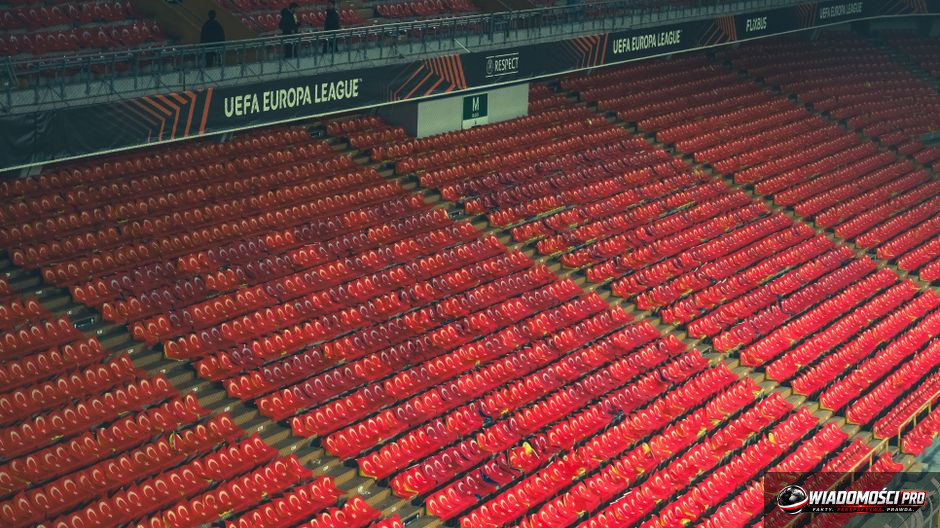
Thanks to their promotion to the Europa League, Lech Poznań and Jagiellonia Białystok have secured a starting bonus of 4.31 million euros from UEFA, which represents a record cash injection for both clubs. Each victory in the league phase will enrich their accounts by an additional 450,000 euros, while each draw is valued at 150,000 euros. This sum changes the financial dynamics in Polish club football, ending an 11-year period in which Polish teams rarely broke through to such prestigious competitions.
The financial foundation upon which both clubs now stand goes beyond just the participation bonus. UEFA has introduced a new system for distributing funds, in which the so-called historical ranking and the share of the television rights pool play a key role. Lech and Jagiellonia can count on additional income resulting from their position in the league table after the conclusion of the eight league phase matches. Each position in the final standings has an assigned financial value, meaning that the fight for every point is not just a matter of sporting ambition, but a calculated budgetary strategy. The presidents in Poznań and Białystok have been given tools that their predecessors could only envy.
However, the money from Nyon is a double-edged sword. In the past, Polish clubs that suddenly received a cash injection often fell into the trap of increasing fixed costs. This refers to inflating player contracts, which, in the absence of regular qualification for cups, led to deficits. Today, Lech and Jagiellonia face a challenge that cannot be solved by a bank transfer alone. Managing these funds requires, above all, investment in training infrastructure, scouting, and technologies that support player recovery. Only such an approach will allow for the building of capital that will pay off in subsequent seasons.
The situation of Raków Częstochowa and Górnik Zabrze stands in contrast to the success of Lech and Jagiellonia. Both clubs were eliminated in the qualifying phase, ending their European adventure at the play-off stage. The failure to advance to the Conference League is for them not only a loss of prestige but a real lack of income, which in the budgets of top Ekstraklasa clubs often represents the difference between profit and operating loss. For Raków, which in recent years has accustomed fans to regular play in Europe, the lack of an autumn in the cups is a warning signal. Meanwhile, Górnik, despite attempts to rebuild the squad, failed to break their impotence on the international stage.
The absence of Raków and Górnik in the league phase directly affects Poland's UEFA coefficient. Every victory or draw by Lech and Jagiellonia will now work toward the country's total score, which in the long term determines the number of teams Poland can field in the qualifiers. It is a system of connected vessels. The higher Poland is in the ranking, the easier the path to the league phase will be for future national champions. This year, the burden of responsibility for the development of Polish football on the international stage rests solely on the shoulders of two clubs.
Managing such large capital in the conditions of the Polish league is an art of balancing between the pressure of fans and economic requirements. It is often heard that money from UEFA should go entirely toward transfers. Experience shows, however, that the transfer market in Poland is unpredictable. High transfer fees do not always translate into quality on the pitch. Clubs that have dominated the league in the past built their success on the stability of structures, not on ad-hoc, expensive personnel moves. Lech and Jagiellonia now have the opportunity to create a long-term strategy that will make them independent of individual successes in the qualifiers.
Cup logistics is another barrier. Travel to matches, accommodation costs, flights, and media handling of matches generate expenses that grow in the league phase in proportion to the prestige of the opponents. Lech and Jagiellonia must prepare for organizational challenges that are a rarity for most Ekstraklasa clubs. UEFA's requirements regarding stadiums, lighting, or media zones are ruthless. Every shortcoming is a potential financial penalty that depletes the millions won on the pitch. Therefore, work in club offices is now just as important as training on the turf.
Analyzing the chances of both Polish teams in the Europa League, one must look at them through the prism of real squad strength. Lech Poznań has been building a team for years based on a mix of experienced players and standout youth academy graduates. Jagiellonia, on the other hand, has opted for intelligent reinforcements and coaching stability. Both management models were verified positively in the qualifiers, but the league phase is a completely different level of difficulty. Opponents from the top 5 European leagues have budgets against which Polish millions look modest. Nevertheless, the competition system offers a chance for surprises.
It is worth noting the role of broadcasting and media in the process of building a club's brand. Today's Europa League draw was the most important event of the day for fans, which shows how strong the demand for top-tier football is. Television stations such as Polsat or Canal+ are actively competing for the rights to show matches of Polish teams. For Lech and Jagiellonia, this is a chance for additional exposure that will attract sponsors. Money from UEFA is just the beginning of the cash flow. If the clubs skillfully use their promotion, they can count on an increase in commercial revenue in the coming months.
Skepticism toward Polish clubs in the cups is rooted in years of failure. However, the year 2026 brings changes that cannot be ignored. The promotion of two teams to the Europa League is a signal that the organizational level in Poland is rising. Of course, we still lag behind the powerhouses from England or Germany, but the financial distance that separates us from clubs from mid-sized leagues is becoming bridgeable with proper management. The coming months will show whether Lech and Jagiellonia can maintain the pace imposed by demanding schedules.
The key question remains what will happen to the money after the league phase ends. Will the boards decide to reinvest in the academy, or will they focus on patching up budgets? History teaches that short-sightedness is the greatest enemy of Polish clubs. Success in 2026 is not the end of the road, but merely an introduction to competing with the strongest. Every million euros earned in the Europa League must be secured by a development plan for years to come. Only then will Polish club football emerge from the shadows and become a permanent fixture in European cups, rather than just an occasional guest.
For fans, this is a time of hope. After years of drought, fans of Lech and Jagiellonia have the right to expect a fight for points in every match. Regardless of the draw result, participation in these competitions alone is confirmation that both clubs are doing good work. Now, it remains to wait for the first whistles of the referees in the league phase. It is there that it will turn out whether the Polish millions are backed by sporting quality.
Questions and answers
Why will only two clubs play in the Europa League?
Lech Poznań and Jagiellonia Białystok won their decisive matches in the play-off phase, which guaranteed them a place in the Europa League. Raków Częstochowa and Górnik Zabrze were eliminated in their qualifying paths, losing the chance to participate in the Conference League.
When exactly did the group draw take place?
The draw for the Europa League and Conference League league phase was scheduled for August 27, 2026. This event determined the opponents for the Polish teams in the autumn part of the season.
Will the matches of Lech and Jagiellonia be broadcast on Polish television?
Yes, the matches of Polish teams in European cups are available in Polish media. Broadcasting rights are held by stations such as Polsat Sport and CANAL+, which provide ongoing information about the match schedule.
How much are the specific bonuses for the clubs?
Clubs receive 4.31 million euros just for advancing to the Europa League league phase. Additionally, 450,000 euros is awarded for each victory, and 150,000 euros for a draw. There are also additional bonuses for finishing in specific places in the league table.
What does the lack of promotion mean for Raków and Górnik in a financial context?
The lack of promotion means losing the chance to earn the starting bonus as well as match-day income and revenue from UEFA, which for clubs with budgets at the Ekstraklasa level is a significant financial loss on an annual scale.
Sources
- Polish clubs in European cups 2026/27 – when are the matches of Lech, Jagiellonia, Raków, and Górnik? [SCHEDULE, BROADCASTS] - sport.tvp.pl
- Where to watch the Europa League and Conference League draw? - www.polsatsport.pl
- Lech, Jagiellonia, Raków, and Górnik play for cups. Where to watch the matches? [BROADCAST] - Radio Kolor 103 FM
- "Jaga" and Lech a step away from a historic feat. First time in 11 years - Interia Sport
- Lech, Górnik, Jagiellonia, Raków. Where to watch Polish clubs in European cups? Will it be on TV? When does it start? - SportoweFakty
- Millions for Lech and Jagiellonia. This is how much they will earn for advancing to the Europa League - Meczyki.pl
- Polish clubs in European cups 2026/27: when do Lech, Górnik, Raków, and Jagiellonia play? - CANAL+
- Polish clubs in the play-off of the EL and CL 2026/2027 - second legs - najlepsibukmacherzy.pl

Komentarze (0)
Ładowanie komentarzy...