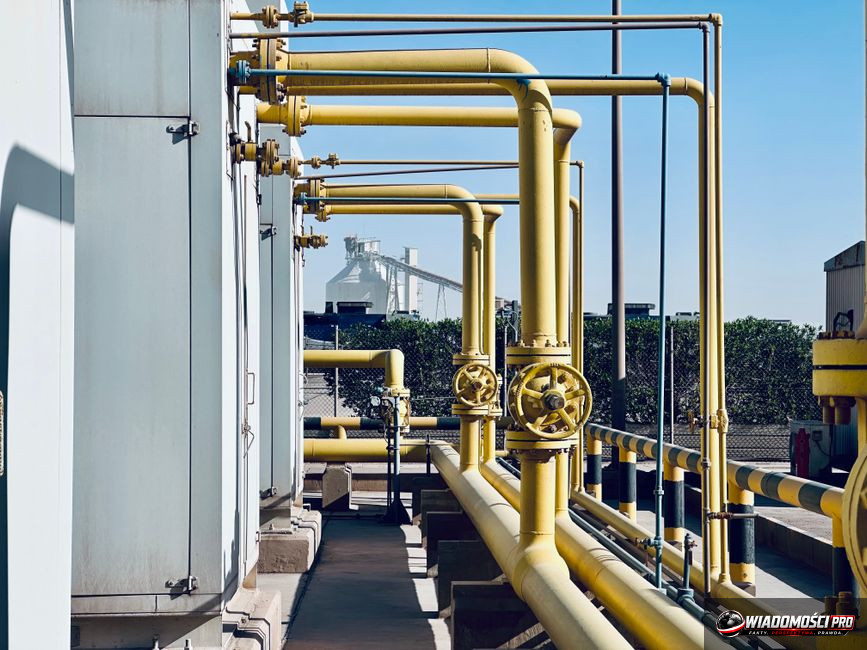
The European Union is still importing Russian gas, which accounts for 18 percent of total imports, directly fueling Russia's war budget despite declared sanctions. This state of affairs persists in 2026 as a lasting anomaly of the Community's energy system. Instead of the full isolation of Moscow, we are observing a complex process of European markets adapting to resources that officially should have been excluded from trade circulation.
The gas umbilical cord: Why is 18 percent of imports a problem?
The European Union has not cut off the Kremlin's financial drip, despite loud announcements of full energy source diversification. Data from September 2025 indicates that 18 percent of the total import of blue fuel into the Community still comes from Russia. This cash flow provides a real injection for the Russian war machine. This mechanism is based on a complicated network of intermediaries and long-term contracts, the termination of which requires not only political will but, above all, the physical reconstruction of transmission infrastructure.
In 2025, the gas market experienced a series of disruptions that forced European corporations to return to Russian suppliers. Instead of the expected drop in volume, increases in imports were recorded in many quarters. European companies, balancing between energy security and political pressure, choose cheaper molecules from Russia, which allows them to maintain competitiveness in the face of high energy prices. Brussels is trying to manage this crisis, however, current statistics show that demand is effectively bypassing political barriers.
The persistent 18 percent share of Russian resources confirms that sanction mechanisms are leaky. Energy companies operating in Western European ports often use LNG infrastructure, which allows for the free mixing of gas from various sources. As a result, the origin of the resource becomes opaque, and the final recipient has no certainty whether the gas flowing through regasification terminals was not extracted in fields operated by Russian entities. The strategic uncertainty the market faced last year showed that the Community does not yet have sufficient terminal capacity to fully replace the volumes lost after the reduction of pipeline gas supplies by Gazprom.
The oil paradox: Russia overtakes the USA in supplies to Europe
The situation on the crude oil market in 2025 exposed the weakness of European restrictions. Despite grand declarations about cutting off Russian hydrocarbons, supply statistics for the past year show that Russia managed to overtake the United States in terms of the volume of oil delivered to European Union ports. This is not a statistical error or a temporary fluctuation. It is proof that the oil market has shown astonishing import stability, ignoring the political postulates of Brussels diplomats.
Tankers with Russian oil are still docking at key transshipment terminals, maintaining the Kremlin's financial liquidity. This situation creates a dangerous precedent. Since the market can adapt so quickly to political turmoil by maintaining old supply routes, declarations of full energy independence are largely facade. Every barrel of raw material flowing into Europe directly finances war operations. The European taxpayer, by paying fuel bills, paradoxically maintains the status quo that their governments are officially fighting on the diplomatic stage.
Data from 2025 indicates that Russian oil is distributed to Europe through complex logistics chains, often using a so-called "shadow fleet" of tankers. These ships, often with unclear insurance and ownership status, allow for bypassing price caps and restrictions imposed on Russian ports. European companies, operating within the free market, take the opportunity to buy the raw material at attractive prices, which in practice means that the Russian product still dominates the energy balance of many member states.
Strategy 2028: Is a complete retreat from Russia realistic?
The European Commission's official plans assume a complete break from importing fuels from Russia by 2028. However, the energy reality remains brutal and significantly deviates from bureaucratic assumptions. Despite sanctions, Russian resources flow in a wide stream, currently accounting for 18 percent of total gas imports. Planning for such distant dates as 2028 in the conditions of an ongoing armed conflict is risky, especially when current infrastructure does not allow for full independence from supplies from the East.
The year 2025 was a painful lesson for EU decision-makers. The gas market had to face the new US energy policy and a series of strategic uncertainties. Instead of a smooth transition to alternative sources, we are observing chaos in which Europe cannot definitively cut itself off from the Russian supply chain. Why is the 2028 plan raising increasing doubts among market analysts? There are several reasons.
Firstly, the lack of adequate technical infrastructure to receive LNG in sufficient quantities. Although the construction of new regasification terminals is progressing, their capacity still does not meet the needs of European industry, especially during peak winter demand periods. Secondly, the new US energy policy, introduced in 2025, forced European importers to look for new supply paths, which often ended in a return to Russian suppliers as the most predictable cost option. Thirdly, price. Russian gas, despite imposed tariffs and restrictions, often remains more profitable than liquefied gas from distant markets, which puts European companies in a difficult economic situation.
For the average European, this means one thing. Political declarations about the end of dependence are merely a race against time in which Russia still holds the cards. If the pace of diversification does not accelerate, the date 2028 will become another dead deadline in the calendar of EU diplomacy, and dependence on Russian hydrocarbons will continue, fueling the conflict and weakening the Community's energy security.
Why are sanctions not working as expected?
The European Union is still importing Russian gas, directly fueling the Kremlin's war budget. Political declarations about becoming independent from resources from the East collide with brutal statistics. Instead of the expected cutting of the umbilical cord, we are observing a market paradox: EU states are still hungry for the resource, ignoring their own sanction provisions. Imports of Russian gas to member states in December 2024 reached record levels, and this trend strengthened in the following months of 2025.
The market has found its paths. Demand has effectively bypassed political barriers, and intermediaries profiting from raw material trade show great creativity in circumventing restrictions. Against this background, Poland remains a lonely exception. Our country definitively ended Russian gas supplies, abandoning Gazprom's dictates much earlier than the rest of the community. While Warsaw consistently built energy independence, our European partners are still balancing on the edge, stuck in a dependency that is becoming increasingly difficult to break.
The lack of consistency between ambitions and reality is glaring. Brussels sets end dates, but the market flows in its own current. Russian resources still reach Europe, and the profits from this continue to finance the Russian war machine. This is a convenient hypocrisy, for which Ukraine pays the price. From an economic point of view, maintaining the import of resources from Russia creates a dangerous dualism. On one hand, the EU supports Ukraine militarily, on the other, it finances the Russian economy. Suppliers and intermediaries gain, frontline countries lose, and the long-term risk is the loss of the Community's political credibility in the eyes of public opinion.
It is worth noting that the structure of energy resource supplies to the EU is currently more diverse than before 2022, but its "hard core" still relies on Russian hydrocarbons. The lack of full transparency in supply chains means that Russian gas and oil penetrate the EU market under the labels of other countries, which effectively deactivates the most restrictive sanction provisions. As long as European corporations are not forced to fully certify the origin of every cubic meter of gas, this problem will return in every subsequent report on the state of the Community's energy security.
What this means for you
The editorial team assesses that maintaining the import of resources from Russia creates a dangerous dualism: on one hand, the EU supports Ukraine militarily, on the other, it finances the Russian economy. Suppliers and intermediaries gain, frontline countries lose, and the long-term risk is the loss of the Community's political credibility in the eyes of public opinion. The reader should be aware that any attempt to quickly cut off Russian supplies without adequate infrastructure security will hit energy prices in citizens' wallets directly. We are witnessing a game in which we all pay the price for energy independence, regardless of whether our governments openly admit to maintaining trade with Moscow or hide it under the guise of market pragmatism.
Questions and answers
Has the European Union completely banned the import of gas from Russia?
No, the EU aims for a complete departure from Russian resources only by 2028. Currently, imports are being limited, but they still constitute a significant element of the Community's energy balance.
Which country overtook the USA in oil supplies to the EU in 2025?
Russia. Data from September 2025 confirms that despite sanctions, Russia maintained a stable position as a supplier of energy resources, overtaking the United States in volume statistics.
Does Poland still import Russian gas?
No, Poland ended Russian gas supplies, setting energy security standards in the region and becoming completely independent of supplies from that direction.
Why is 2028 considered a deadline?
This is the official deadline adopted by EU institutions as the time needed for full diversification of energy sources and the expansion of transmission infrastructure, which would allow for the elimination of Russian resources from the EU market.
Sources
- End of Russian gas supplies to Poland. Expert says what it means - Money.pl
- It is not easy to break free from Moscow's embrace. These data show the truth about Europe - Interia Biznes
- By 2028, the EU wants to move away from gas from Russia. It still accounts for 18 percent of imports - Energetyka24
- Gas market in the EU in 2025: Russian raw material, new US policy and strategic uncertainties - OSW Centre for Eastern Studies
- Stable crude oil imports to the European Union. Russia overtook the USA in 2025 - GospodarkaMorska.pl
- This is how sanctions (do not) work. Russian gas imports to the EU reached a record level this year - Business Insider Polska
- Gas and oil imports to Europe. There is new data. This country in the role of leader - Money.pl
- More Russian gas is flowing to Europe again - DW.com

Komentarze (0)
Ładowanie komentarzy...