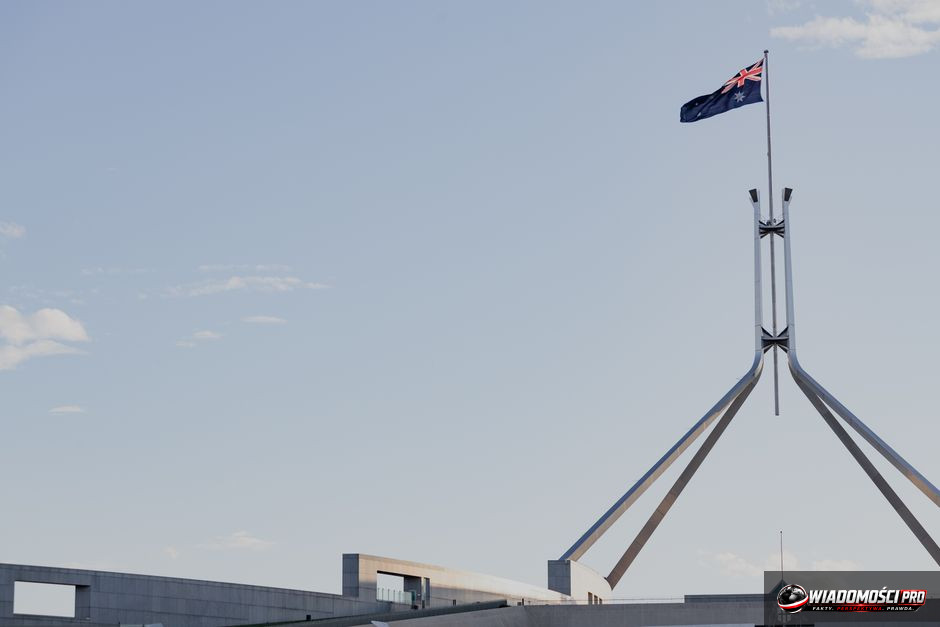
There are no documented cases of a sudden, complete ideological transformation of Australian politicians from the right to the left after an election; one only observes an evolution of views on social issues within parties. An analysis of parliamentary activity in Canberra shows, rather, the maintenance of a hard economic course while simultaneously relaxing discipline on ideological matters. The media often confuse this process with ideological will, ignoring purely tactical reasons resulting from the need to maintain support in key electoral districts.
Evolution of views within the Liberal-National Coalition
The Liberal Party of Australia has for years struggled with internal division, which external commentators mistakenly interpret as a "leftward shift." In reality, the ideological foundations remain intact, and the changes concern only tactical adjustments to the moods of the urban electorate. Examples of politicians such as Bridget Archer, Andrew Bragg, or Warren Entsch show that the conservative group allows a certain margin of freedom on moral issues, as long as it does not strike at the economic core of the program.
Bridget Archer, representing the Bass electorate in Tasmania, has become the face of the liberal faction within the Liberal Party. Her opposition to the party line on issues such as government transparency or the protection of minority rights does not, however, mean a move to the Labor Party. It is pragmatism. In the 2022 election, Archer retained her seat, obtaining 43.6% of the first-preference vote, which clearly proved that her "defiance" was accepted by local voters. A similar mechanism can be seen in Andrew Bragg, a senator from New South Wales, who openly supported the demands of progressive circles within conservative structures while remaining faithful to liberal fiscal orthodoxy.
Warren Entsch, the MP for the Leichhardt electorate, has for years built his position on supporting demands that are controversial in traditionally conservative circles. In 2017, during the vote on the Marriage Amendment Act, Entsch was one of the key architects of the initiative's success within the coalition. His stance was not an expression of "conversion" to the left, but the result of understanding the demographics of his own electorate. It is worth noting that in the same vote, many other conservative MPs voted against party discipline, which did not result in mass expulsions from the party, but rather in a quiet acceptance of a diversity of views within the parliamentary club.
Coming out and the image of a politician in Australia
Contemporary Australian politics has stopped treating ideological declarations as an obstacle to a career on the right. Making one's private orientation public by politicians such as Trevor Evans or Trent Zimmerman did not cause any ideological shock in the party. This phenomenon shows that conservatism in Australia is evolving toward a more inclusive model, but one still firmly rooted in economic liberalism.
Zimmerman, as a former MP for the North Sydney electorate, often emphasized that his involvement in social issues does not contradict his support for low taxes or market deregulation. After his 2022 loss to independent candidate Kylee Tink, the debate within the Liberal Party focused on whether this "liberal" approach to social issues had weakened the electoral base. The data from the North Sydney electorate is merciless here: Tink won 54.5% of the two-candidate preferred vote, taking a seat that had seemed to be a "safe haven" for Liberals for decades. It is math, not ideology, that forces today's politicians to analyze whether their openness to social change brings benefits or rather alienates the traditional, rural electorate.
However, it has not been confirmed that any of these politicians changed their voting in parliament after the election in a way that would radically change the party's profile. Votes on the budget or coal mining legislation remain consistently on the conservative side. What we are observing is not a change of political colors, but merely an attempt to modernize the language of communication. Politicians understand that in a clash with independent candidates – the so-called "Teals" – they must present an attitude more open to contemporary challenges without losing the trust of their core voters.
Electoral mechanisms: why do voters feel cheated?
The perception of electoral "deception" stems from a fundamental misunderstanding of the Australian preferential system. In this system, a politician must combine fire with water. They must assure the conservative base that their values are safe, while simultaneously attracting the votes of centrist voters, without whom it is impossible to win in electorates like Kooyong or Goldstein.
In 2022, in the Kooyong electorate, Josh Frydenberg – an extremely influential figure in the Liberal Party – lost his seat to Monique Ryan. An analysis of the results indicates that the centrist electorate drifted away from the Liberal Party because it considered its offer too ossified. This was not a betrayal of the program, but a brutal market verification. Politicians who try to correct their course after an election do so out of pure necessity for survival. There is no deep ideological transformation in this. It is a cold calculation of gains and losses.
Many voters expect that a candidate on election day is "locked in" to their views for the next three years. However, the parliamentary reality in Canberra is more fluid. MPs must react to crises, new economic reports, and changing moods in polls, which are published almost every week. If an MP changes their mind on greenhouse gas emissions or immigration policy, it is often not the result of a "leftward turn," but a reaction to data indicating that without this correction, the party will lose more seats in the upcoming election. Social frustration stems from the fact that the voter wants stability, while the system rewards flexibility.
The future of polarization on the political scene
Forecasting political behavior for 2026 in Australia requires rejecting emotional interpretations. There is no data to suggest that the Liberal Party is preparing to abandon its right-wing foundation. On the contrary – the internal debate that took place after the 2022 election defeats is moving toward a return to more distinct conservative roots on economic issues, while simultaneously silencing the ideological disputes that have so strongly divided the electorate.
The phenomenon that pundits call a "drift to the center" is in reality a tactical retreat from divisive topics to avoid further erosion of support in cities. We will not find in voting records any politician who became a left-wing radical after an election from the right. We will, however, find many parliamentarians who, in the face of the 2022 election defeats, began to avoid ideological topics so as not to irritate voters in electorates like Wentworth or Mackellar.
For an observer of the political scene, this means one thing: predictability on key issues and flexibility on secondary topics. The party system in Australia is designed to avoid sudden movements. Any attempt at a radical turn – in any direction – usually ends in a loss of support among the segment of voters who value the status quo. Instead of looking for evidence of "political deception," it is worth looking at specific data from electoral districts. It is there, in the math of preferences, that the true cause of every change in a politician's stance is hidden. The right is not drifting toward the center because it wants to; it is drifting because it must, so as not to cease existing as a force capable of governing.
What this means for you
If you are looking for crystal-clear ideologues in Australian politics, you will be disappointed. The parliamentary system promotes those who can read polls and adapt their message to the expectations of the residents of a specific district. Parties that can flexibly manage their own image gain from this, while rigidly sticking to a program from the 1990s leads to marginalization. For the voter, this means that by voting for a candidate, you are voting for someone who, in extreme situations, will choose political survival rather than fidelity to a party handbook.
Questions and answers
Is there an Australian politician who moved from the right to the left after an election?
In the available data, there is no confirmation of such cases; changes are usually evolutionary and concern specific social issues, not ideological foundations.
How does coming out affect the career of a right-wing politician in Australia?
The contemporary Australian electorate is increasingly open, which makes a politician's orientation less important than their economic program and effectiveness in solving local problems.
Can voters feel cheated after an election?
Yes, if they interpret the evolution of a politician's stance on social issues as a breach of election promises, although in reality, this is usually a pragmatic calibration of the campaign message.


Komentarze (0)
Ładowanie komentarzy...