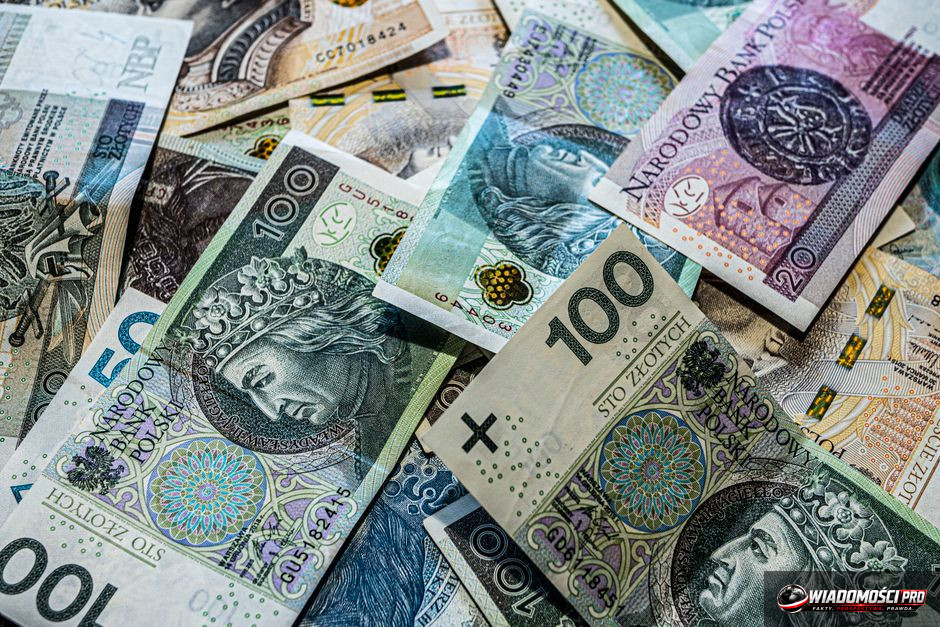
Poland is approaching the 60% debt-to-GDP threshold, which, according to 2026 forecasts, forces the government to consider painful budget cuts and tax hikes. Exceeding this limit poses a direct threat to the country's financial stability, paving the way for a scenario in which rising debt service costs limit the sovereignty of economic decisions. The bond market is already reacting to these signals, pricing Poland's credit risk higher, which in practice means more expensive financing for the state treasury and the risk of losing the trust of international investors.
The spiral mechanism: Why is debt growing faster than GDP?
The economy has entered a phase where debt has ceased to be merely a tool for financing pro-development investments and has begun to act as a brake. As early as December 10, 2025, the "Rzeczpospolita" daily pointed out a phenomenon in which the growth rate of public debt overtook GDP dynamics. This is a key paradigm shift. The state is taking on new obligations not only for development, but primarily to roll over old debt, which means that the lion's share of budget revenues is consumed by interest on bonds.
The mechanism of the so-called "Greek scenario" is based on a simple but destructive market process. When foreign investors and financial institutions buying Polish treasury bonds begin to doubt the state's ability to meet its obligations on time, they demand higher yields. The yield on ten-year bonds is the cost of credit for the government. If the debt-to-GDP ratio exceeds safe thresholds, the market perceives Poland as a higher-risk issuer. An increase in bond yields means that the state must pay more for every borrowed zloty, which automatically increases the budget deficit in the following year.
A vicious circle is created. A larger deficit requires the issuance of even more bonds, which, with weakening investor confidence, again drives up yields. In February 2026, Money.pl analysts called this phenomenon the "snowball effect." When debt service costs grow faster than nominal economic growth, the state loses control of its fiscal path. As a result, to avoid a liquidity crisis, the government must seek savings in current expenditures or drastically increase tax revenues. A lack of response to this process leads to currency devaluation, capital flight, and in extreme situations – the need to seek external assistance under very strict conditions.
The situation requires precise liquidity management. The government, adopting new long-term macroeconomic assumptions on April 28, 2026, had to confront the fact that existing fiscal safeguards had ceased to perform their role. Finance ministers found themselves in a situation where every decision on public spending must be weighed through the prism of the debt market's reaction. This is not a mathematical curiosity. It is a situation where the financial market dictates the state's social policy.
Are we facing a 'Greek scenario'? EC warnings
Poland is balancing on a border that, in the past, meant years of recession and drastic cuts for other eurozone countries. Forecasts published on February 25, 2026, by Euronews indicate that Poland could find itself in the group of the most indebted European Union countries. EU institutions are monitoring our public finances with increasing concern, which in practice means less flexibility in negotiations regarding development funds.
The fear of exceeding the constitutional 60 percent of GDP threshold did not appear yesterday. As early as April 28, 2025, Gazeta Prawna warned that this level would be reached before the end of that year. Similar conclusions, flowing from Bankier.pl analyses on June 8, 2025, were confirmed by later data from the Ministry of Finance. The reality that the government is facing in 2026 is a continuation of a trend that could not be stopped in previous quarters.
For decision-makers in Warsaw, this means the necessity of revising expenditures. The margin for error has ceased to exist. Rhetoric about ambitious public investments must give way to a discussion on how to limit the structural deficit. If financial institutions decide that Poland does not have a credible debt reduction plan, credit rating downgrades may follow. This, in turn, will automatically translate into higher mortgage costs for citizens and higher interest rates on loans for businesses, as government bond yields are a benchmark for the entire financial market.
EU institutions are watching us closely because the destabilization of the finances of one of the largest member states affects the stability of the entire region. A lack of quick corrections could turn the domestic discussion about finances into a European crisis of confidence. For the average citizen, this means the end of an era of political comfort, in which public money was treated as an inexhaustible source of funding for election promises.
Budget under pressure: Are cuts and higher taxes awaiting us?
We are approaching a turning point after which the state's fiscal policy ceases to be a matter of choice. Poland is in a phase where existing budget assumptions require a thorough overhaul. Recent forecasts leave no doubt: if the dynamics of debt growth remain unchanged, those in power will have to reach for tools they have previously put off for later.
The consequences for citizens are shaping up in a way that will force changes in everyday life. A Business Insider Polska analysis from May 1, 2026, points to an extremely tense budget situation, which opens the way for real cuts in social programs. From an economic perspective, social spending, although socially important, is the most difficult to finance under conditions of high debt service costs. The government faces a dilemma: maintain the level of transfers at the cost of further borrowing on the market, or limit spending, risking social unrest.
The long-term macroeconomic assumptions adopted on April 28, 2026, confirm in black and white the further growth of public debt. In the face of such data, a tax hike seems to the government the least risky solution from the point of view of system stability, although it is the most politically unpopular. Increasing VAT rates or introducing new targeted levies are ways to quickly patch the budget hole, but they hit consumption directly, which may further stifle GDP growth.
The clock is ticking, and the room for financial maneuver is shrinking with each passing month. Citizens must prepare for the fact that the state will have to start saving. This means likely limiting expenditures on local government investments, halting new infrastructure projects, and the need to renegotiate many grant agreements. Entrepreneurs, on the other hand, should expect a more restrictive approach from the tax office, which will be forced to maximize tax revenues by all available methods.
Four years to the rescue: What is the government planning?
Donald Tusk's government has been backed into a corner. The latest analyses show that the margin for error in fiscal policy has practically ceased to exist. According to Money.pl findings from February 18, 2026, the cabinet has only four years to put public finances on the right track. Otherwise, Poland will inevitably fall into a debt spiral, from which an exit will require drastic solutions, such as externally imposed austerity policies.
For citizens, this means coming years marked by belt-tightening. The scenario that analysts warn about assumes the necessity of cutting social spending and a series of tax hikes. The situation has become so tense that previous safeguards have stopped working. As Interia Biznes noted as early as August 28, 2025, existing debt limits have in practice been abolished, which opens the way for uncontrolled growth of public debt in relation to GDP.
The ruling team faces a brutal choice. Either a painful reform of finances carried out within the country, or handing over control of the budget to external institutions. There is no time for maneuvering. Every month of delay at the current rate of debt accumulation brings us closer to the 60 percent of GDP threshold, which in the minds of economists is the ultimate limit. The government therefore has a very short list of options, none of which will be socially acceptable, but each of which seems necessary to avoid a Greek scenario. The debate about the shape of the budget has ceased to be theoretical. The fight for the state's financial liquidity has begun.
In this context, it is worth noting the role of the central bank. Under conditions of rising debt, the pressure on monetary policy becomes enormous. If the government does not introduce fiscal reforms, the burden of stabilization may fall on interest rates. This, however, is a phenomenon that could deepen economic stagnation. Poland is in a debt trap, from which an exit requires not only political courage but, above all, transparency toward citizens regarding the real state of the state's finances.
What this means for you
The editorial analysis of the situation points to an unambiguous conclusion: the time is coming to verify election promises against brutal economic reality. The state's creditors will benefit from this, as they will expect higher interest on the bonds they hold, while citizens must prepare for less social support or higher taxes. The catch for the current government is that regardless of the decision made, political capital will melt at a rate similar to the growth of the budget deficit.
Questions and answers
Has Poland's public debt actually exceeded 60% of GDP?
Forecasts from 2025 and 2026 confirm that Poland has reached the 60% of GDP level, which puts the country in a high fiscal risk zone.
Is the government planning social cuts?
Reports from May 2026 indicate that due to the tense budget situation, cuts to social programs are becoming a real rescue tool, as other sources of savings are already exhausted.
How long can Poland maintain its current debt level?
Experts point to a four-year window in which the government must implement reforms to avoid an uncontrolled debt spiral and the loss of investor confidence in international financial markets.
What does the "Greek scenario" mean in Polish conditions?
It means a loss of investor confidence, a sharp increase in bond yields, the need for drastic budget cuts imposed by markets or external institutions, and a long-term economic slowdown.
Sources
- Poland's budget is tight. Are we threatened with social program cuts and tax hikes? - Business Insider Polska
- EC warns: Poland could be one of the most indebted countries - Euronews.com
- The snowball effect. The government has four years to avoid a debt spiral [ANALYSIS] - Money.pl
- Government adopts long-term macroeconomic assumptions. Public debt clearly on the rise - Business Insider Polska
- Polish public debt is growing faster than GDP. But new data from the finance ministry is surprising - Rzeczpospolita
- Public debt may exceed 60 percent. "Restrictions have been lifted" - Interia Biznes
- Poland on the edge? According to forecasts, public debt will exceed 60% of GDP - Bankier.pl
- Poland's public debt will reach 60 percent of GDP this year - Gazeta Prawna



Komentarze (0)
Ładowanie komentarzy...