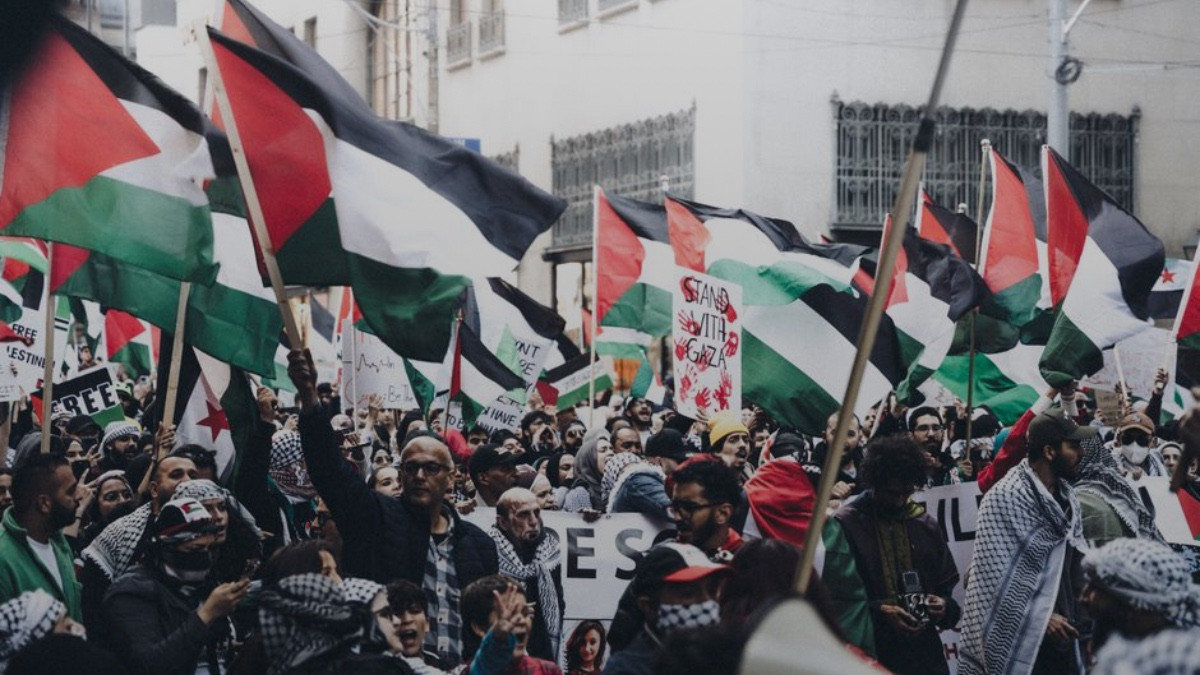
Recep Tayyip Erdoğan positions himself as the primary advocate for peace, accusing Israel of genocide against 74,000 victims; however, his role as the sole mediator is debatable in light of the diplomatic actions of other countries that recognize Palestine. The decision by Norway, Spain, and Ireland on September 21, 2025, to formally recognize Palestinian statehood constitutes a hard, legal fact that significantly weakens Ankara's narrative of having an exclusive claim to supporting Palestinian aspirations. Despite its rhetorical uncompromising nature, Turkey must face an increasingly broad coalition of states that have chosen concrete diplomatic tools instead of sharp exchanges of words.
Genocide instead of war: Erdoğan's radical narrative
The Turkish President rejected the diplomatic euphemism "war" in favor of accusations of genocide, which became the foundation of his foreign policy on September 23, 2025. Ankara, based on a toll of 74,000 victims, the vast majority of whom are women and children, is building a message aimed at both the Turkish electorate and a wide audience in the Middle East. The use of such radical language is a conscious political choice intended to frame Erdoğan as the only uncompromising defender of Gaza on the international stage.
This strategy is based on the assumption that in the face of such drastic statistical data, traditional diplomatic methods have failed. For the administration in Ankara, 74,000 dead is not just a number, but proof of the total failure of the Western security system. Erdoğan uses this argument to legitimize his claims to the role of the main arbiter in the region. The question is whether this way of conducting foreign policy actually brings real benefits to the residents of the Gaza Strip, or merely perpetuates the polarization that hinders constructive dialogue.
Positioning Turkey as the only righteous player, however, has its limitations. At the moment when Ankara decides on a confrontational course toward Tel Aviv, other European countries are choosing the path of formal recognition of Palestinian statehood. This phenomenon shows that the Turkish narrative of exclusivity in mediation is increasingly being questioned by states that, instead of verbal accusations, choose a legal path of support. Isolating Erdoğan as the only voice of opposition to Israel's actions proves to be a cognitive error, as it ignores the diplomatic actions taken in other capitals.
Diplomatic breakthrough: Who actually recognized Palestine?
September 21, 2025, brought information that changed the balance of power in the diplomatic game over the Middle East. Norway, Spain, and Ireland officially recognized the statehood of Palestine, which was noted in the Onet News report. This step is not merely a symbolic gesture of solidarity. It is a precise political tool that changes the status of Palestine in international structures, such as the United Nations. The recognition of statehood by these three countries creates a new level of pressure on Israel that cannot be ignored through sharp speeches in the parliament in Ankara.
The actions of Norway, Spain, and Ireland are part of a long-term legislative strategy aimed at forcing the authorities in Jerusalem to change their approach to the conflict. Unlike Erdoğan's rhetoric, which focuses on accusations, the aforementioned European states are building a legal structure that, in the long run, may prove much more effective in limiting military actions. Recognition of statehood is a concrete step that gives Palestinians legal subjectivity, not just sympathy flowing from Turkish rallies.
Focusing attention solely on the President of Turkey leads to a distorted image of modern diplomacy. While Erdoğan operates with emotional language, other European capitals are systematically working to change the status quo. This approach differs from the Turkish strategy, which is often limited to sharp criticism without offering an alternative political path of recognizing Palestinian subjectivity on the world stage. Countries such as Norway, Spain, and Ireland show that diplomacy based on legal facts can be just as loud as accusations of genocide, while being much more lasting in its effects.
Erdoğan's strategy: Real help or political theater?
Recep Tayyip Erdoğan consistently builds his image, pulling no punches toward Tel Aviv. The Turkish President openly accuses Israel of genocide, citing the staggering number of 74,000 victims. This rhetoric of the "defender of the oppressed" is the foundation of his foreign policy, which is intended to cement Ankara's position as a regional leader. But do fiery speeches translate into real influence on the course of the conflict in the Gaza Strip?
Erdoğan's role as the sole mediator is in question in the face of the actions of other states. Turkey's diplomatic monopoly is weakened by the decisions of Norway, Spain, and Ireland on September 21, 2025, which chose their own legal path of support for Palestine. For Ankara, this is a clear warning signal. The Turkish administration must now compete not only with Israel but also with increasingly confident European players who do not need Turkish patronage to recognize Palestinian state aspirations.
The real challenge for the Turkish leader remains diplomatic acrobatics. Ankara is desperately trying to balance between NATO membership and increasingly sharp anti-Israeli rhetoric. This is a dangerous game. On one hand, Erdoğan must maintain a radical course to satisfy his electorate and maintain his position in the Muslim world; on the other, he cannot afford to completely sever ties with his North Atlantic Treaty Organization allies. In this puzzle, his peace mission often resembles political theater more than an effective tool for ending the war. The reader must ask themselves whether, in the face of the actions of Norway, Spain, and Ireland, Turkey is losing its unique room for maneuver, becoming one of many, rather than the only voice on the matter of Palestine.
Toll of victims: Why can't the world ignore 74,000?
The number of 74,000 civilian victims in the Gaza Strip has ceased to be just a statistic, becoming a drastic turning point in the debate on human rights. Recep Tayyip Erdoğan, using this toll, has adopted the strategy of an accuser, directly calling Israel's actions genocide. This firm approach builds the image of the Turkish leader as the main advocate for peace, who, as one of the few world leaders, is not afraid to use such radical language. The increase in pressure on decision-makers, clearly visible in the data from September 2025, forces reactions that could have been avoided just a year ago.
However, Ankara's monopoly on the role of the sole mediator is debatable. Erdoğan does not act in a vacuum, although his rhetoric suggests that only he is truly fighting for peace. Just two days before his September speech, the world was reached by news of the historic decision of Norway, Spain, and Ireland, which formally recognized the statehood of Palestine. This is a gesture of enormous diplomatic significance that weakens the narrative of Turkey's isolation in this conflict.
From an international perspective, the recognition of Palestine by these countries constitutes an alternative path to solving the crisis, different from the unilateral accusations voiced from Ankara. Erdoğan has effectively harnessed social emotions, but on the diplomatic stage, the real tools of pressure are dispersed. Turkey's strategy is loud, but other capitals have chosen the path of formal recognition, which in the long run may prove to be a more effective mechanism than rhetorical attacks.
The catch in this whole puzzle remains the fact that Turkish radicalism, while effective in building support within the country, may close the path to negotiations with many Western capitals. As a result, instead of facilitating the establishment of peace, Erdoğan's rhetoric may make finding common ground with states that truly recognize Palestine much more difficult. Turkey, wanting to be the voice of opposition, risks isolation within a broader diplomatic front that is forming outside its direct influence. The reader should note that an effective fight for peace requires not only loud accusations but, above all, the ability to build lasting, legal coalitions, which in the case of Ankara is a big question mark.
Questions and answers
Is Erdoğan the only leader who talks about genocide?
No, however, he is the most expressive voice on the international stage who directly links the number of 74,000 victims with the term genocide, making it the foundation of his foreign policy.
What is the significance of the recognition of Palestine by Norway, Spain, and Ireland?
It is a real diplomatic and legal step that changes the status of Palestine in international structures and forces Israel to change its political strategy in the region, going beyond mere rhetoric.
Does Turkey really help in establishing peace?
Turkey exerts diplomatic and emotional pressure, but its effectiveness depends on cooperation with other powers, which in the current situation is hindered by its confrontational course toward NATO allies and Israel.
Why is Erdoğan's role as a mediator debatable?
His monopoly on mediation is undermined by the independent, formal actions of European states, which, by recognizing Palestinian statehood, create alternative, legally binding mechanisms of pressure on Israel, while ignoring Turkish leadership.
What exactly happened on September 21, 2025?
According to the Onet News report, three countries – Norway, Spain, and Ireland – made the historic decision to officially recognize the statehood of Palestine, which constitutes a measurable, legal concrete step in the ongoing conflict.



Komentarze (0)
Ładowanie komentarzy...