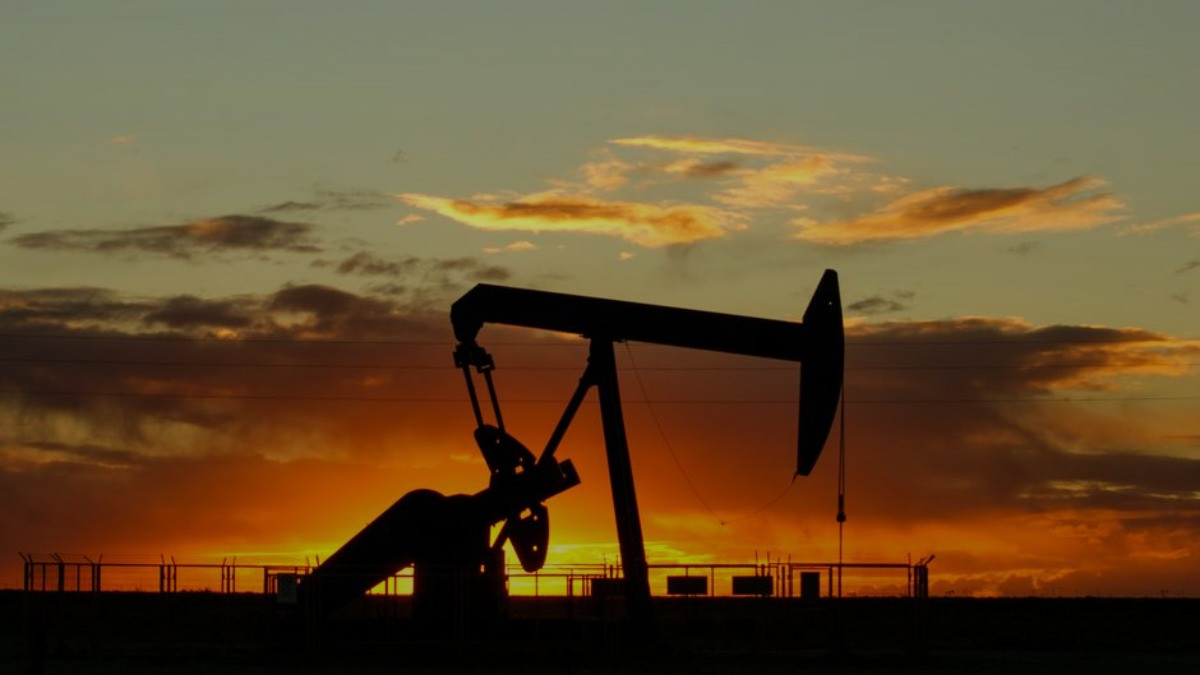
Iran has confirmed the discovery of 212 billion m³ of gas in Fars province, however, experts warn that the resource will not reach the market quickly due to sanctions and a lack of technology. This discovery, announced in August 2026, represents Tehran's biggest exploration success in years, yet in the eyes of analysts, it remains merely an engineering challenge rather than a real boost to global energy supply. The field, while impressive in numbers, will remain at a standstill due to the inability to acquire the advanced know-how necessary for its exploitation.
Facts about the field in Fars province
Official statements from the Iranian Ministry of Petroleum from August 2026 indicate the discovery of 212 billion cubic meters of natural gas. The Fars region, previously less associated with such volumes than the offshore fields of the Persian Gulf, has become a new point on the country's resource map. The geology of this area, however, presents engineers with challenges that cannot be overcome without access to the global technology market.
Gas extraction on this scale requires advanced deep-drilling systems that allow for the safe penetration of rock formations under high pressure. The Iranian energy sector, isolated from Western partners for decades, struggles with a chronic shortage of modern drill bits, flow control systems, and advanced equipment for real-time well logging. Without these tools, precisely reaching the gas deposits in Fars is fraught with enormous technological and financial risk.
The next stage where Iran hits a wall is gas liquefaction. For the resource to reach international markets, it must be processed into LNG. Cryogenic technologies, necessary for building efficient export terminals, are in the hands of a few Western corporations. Sanctions imposed on Tehran have effectively blocked the transfer of these technologies, as well as access to patents allowing for the construction of facilities capable of processing gas with a high degree of impurities, which often occurs in Iranian inland fields. As a result, 212 billion cubic meters remains merely a mathematical entry in government reports.
Geopolitical context and the Strait of Hormuz
The presentation of data on the field coincided with disturbing signals coming from the Strait of Hormuz. According to data published by BitHub.pl, ship traffic in this strategic bottleneck has increased by 400 percent in recent days. Such a scale of shipping intensification in such a short time is an anomaly that raises questions about Tehran's real goals. The fields in Fars, although located inland, are being contrasted with Iran's maritime power in the authorities' rhetoric.
Analysts point out that the sudden discovery of resources in the shadow of such a rapid jump in activity in Hormuz may be part of a negotiation strategy. In a situation where the capacity of the strait is becoming a flashpoint for global trade, Tehran is trying to remind the world that it controls not only transport routes but also vast resources of "blue fuel." However, it is hard not to notice that the propaganda of success is intended to distract from infrastructural stagnation.
Energy markets are observing these moves with distance. The 400 percent increase in ship traffic in Hormuz does not translate into increased gas exports, but rather into a complex logistical game in which Iran tries to bypass restrictions using a "shadow fleet" or other non-standard methods of transporting raw materials. The field in Fars, in this puzzle, plays the role of psychological insurance. The authorities in Tehran are sending a signal internally and externally: the country has potential that could become a bargaining chip in the future, provided that sanctions are eased.
Why does the market remain skeptical?
Iran's isolation is not just a political issue, but a technological barrier that cannot be bypassed by decrees. Gas exploitation is a process requiring a continuous supply of spare parts, regular servicing of gas turbines, and advanced process automation. The current systems used in Iranian refineries and mines are often obsolete, which drastically lowers extraction efficiency.
Investor skepticism is based on three pillars that make the fields in Fars province fail to spark enthusiasm on stock exchanges:
1. Lack of access to Western know-how in deep drilling makes it impossible to exploit geologically difficult deposits profitably. Without modern drill positioning and pressure control systems, any new drilling in Fars is a lottery.
2. Transmission infrastructure in Fars province is inefficient. Gas extracted from the fields must be injected into a network that does not have the capacity to handle such large additional volumes without costly upgrades, for which Iran has no capital.
3. The risk of secondary sanctions for any entity that decides to cooperate technologically with Tehran is higher in 2026 than ever before. Global energy concerns will not risk access to the American or European market for a contract in Fars province.
As long as these three barriers are not removed, the gas will safely remain underground. The market needs concrete investment plans, confirmed by technological certifications and security guarantees. At this moment, Iran's declarations remain merely an element of an image-building game intended to maintain the narrative of the state's energy sovereignty.
Perspectives for the Iranian energy sector
The situation of the Iranian gas sector in mid-2026 resembles a besieged fortress that boasts about its pantry supplies while not having the keys to use them. The discovery of 212 billion cubic meters of gas is undoubtedly a success for geologists who possess the knowledge and maps allowing for the location of natural wealth. However, from the moment a field is found until the moment the blue fuel powers power plants or LNG terminals, there is a long road that Iran is unable to travel alone.
Foreign concerns that considered returning to Iran a decade ago have withdrawn from these plans today. They have been replaced by attempts to establish cooperation with entities from Asia, but resistance is encountered there as well. Chinese companies, although interested in cheap raw materials, are cautious about investing in extraction infrastructure, fearing that the costs of operation under sanctions will exceed potential profits. The field in Fars is the best example of this. To launch it, billions of dollars must be invested in infrastructure that could be subject to new restrictions at any time.
Iran faces a choice: either it opens up to international conditions, which would mean political concessions, or it will continue to manage its resources in an autarkic way, which by definition limits the scale of extraction. The fields in Fars province, despite being impressive, will remain a strategic reserve for "post-sanction" times in this model of operation. For the global gas market, which in 2026 relies on supply flexibility and diversified sources, the prospect of starting production in Fars is irrelevant.
For a market observer, the most important fact is that Tehran has not presented any investment schedule. There is no start date for drilling, no plans for building a gas pipeline, and no concrete technological partners. There is only information about a field. In a world where capital seeks stability, not promises, such announcements are treated with great reserve.
What this means for you
Editorial angle: This discovery is largely a propaganda success, aimed at boosting domestic morale in the face of escalating tensions in Hormuz. From the perspective of a global energy consumer, this information changes nothing – the lack of technology and Iran's isolation mean that these deposits will not affect gas prices in the short or medium term.
Questions and answers
Will this field affect gas prices on stock exchanges?
No. Due to sanctions imposed on Iran, this resource will not reach international markets in the foreseeable future, so it will not affect global supply or prices.
Where exactly is the new field located?
The field was located in Fars province, in the southern part of Iran.
What are the estimated gas resources?
Official estimates by Iranian authorities indicate 212 billion cubic meters of natural gas.
Why can't Iran extract this gas on its own?
Iran lacks specialized technologies, such as advanced deep-drilling systems, cryogenic liquefied natural gas (LNG) technology, and modern process automation, which are subject to export restrictions.
Is the increase in traffic in the Strait of Hormuz related to this discovery?
According to analysts, the timing is an attempt to draw public attention to the country's resource potential at a time when the Strait of Hormuz is becoming a key, albeit unstable, point on the global logistics map.
Sources
- Iran discovered over 212 billion m³ of gas. The market, however, will not see it soon - GlobEnergia
- New gas field in Iran: over 212 billion m3 discovered in Fars province - wnp.pl
- New discovery in the shadow of sanctions. Iran found large gas deposits - Bankier.pl
- A large field was discovered in Iran. There are already estimates - Money.pl
- Iran announces the discovery of a huge natural gas field. - Vietnam.vn
- Allah ex machina? Iran claims it discovered new deposits – just when ship traffic through Hormuz jumped by 400% - BitHub.pl
- Iran claims it discovered a record gas field in Fars province. - Vietnam.vn



Komentarze (0)
Ładowanie komentarzy...