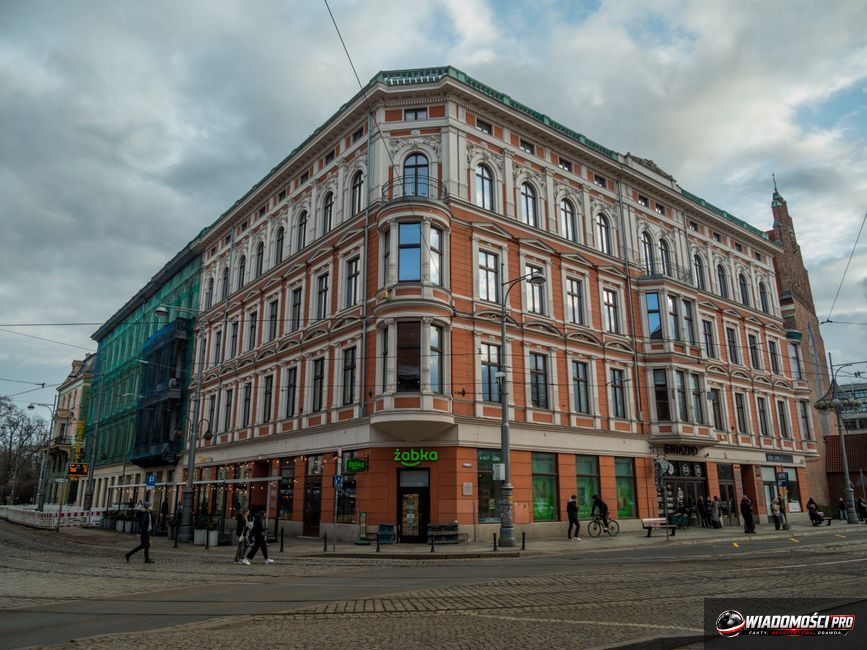
The Żabka chain has been sold to the Canadian corporation Couche-Tard, owner of the Circle K stations, for the amount of 32 billion zlotys, which corresponds to a value of approximately 8.7 billion dollars. This transaction marks the finale of a long-term process of seeking new capital for the leader of the Polish convenience market, ending the era of involvement of the previous investors. The agreement between the parties opens a new chapter for thousands of outlets operating under the franchise system across the country.
The official green light from shareholders, announced on Friday, July 31, 2026, confirms that the process of withdrawing previous shareholders, including investors from Japan, has come to an end. The acquisition documents were initialed by representatives of the management of Alimentation Couche-Tard and the board of Żabka Group. Although the exact timeline for closing the transaction, including the technical transfer of share ownership, is currently subject to regulatory procedures, market analysts predict that full operational integration will take at least several months.
Acquisition mechanisms: Canadian capital in Polish retail
Couche-Tard's entry into the Polish retail market is not accidental. The Canadian giant, headquartered in Laval, Quebec, has been consistently building its position in the retail fuel and fast-moving consumer goods sector for years. The acquisition of Żabka is a step for them that goes beyond standard fuel station management. The Canadians are not just buying a logo or a chain of stores. They are acquiring a sophisticated supply chain management system that, in Polish conditions, sets the standards for the convenience segment.
The value of 32 billion zlotys is not just a number on the balance sheet. It reflects the valuation of a unique business model in which the headquarters operates on data, and thousands of micro-entrepreneurs carry out direct sales. Investors from Japan, who controlled the chain in recent years, decided to exit the investment in accordance with their adopted portfolio rotation strategy, which allowed Couche-Tard to take control at a moment of high technological maturity of the Polish entity.
Logistics and synergy: What will actually change in the stores
The term "synergy" is often overused, but in the relationship between Circle K and Żabka, there are concrete operations involved. The Canadian owner has its own food service management systems that can be implemented in neighborhood stores. Customers can expect, above all, a unification of the coffee offer. Coffee brands currently functioning under the "Żabka Cafe" program may be replaced or supplemented with premium products from the Circle K offer, which will allow for the use of the Canadians' global purchasing contracts.
Another area is the payment and loyalty system. Couche-Tard has its own solutions in terms of digital wallets and point-of-sale automation. Integrating these tools with the Polish "żappka" application could bring new functionalities, such as integrated payment systems for fuel and shopping within a single loyalty ecosystem. However, one should not count on an immediate revolution in the shelf assortment. Żabka maintains its strength thanks to the local adaptation of its offer. Changing food product suppliers to Canadian equivalents would be risky and economically unjustified.
In the area of logistics, Couche-Tard can optimize transport costs by using shared distribution centers for fuel stations and neighborhood stores. Exchanging experience in fresh food management, which is the foundation of both chains, will allow for the reduction of losses resulting from expired goods. It is precisely the efficiency in managing short shelf-life products that constitutes the real competitive advantage that the Canadians now want to fully exploit.
Franchisee perspective: Risk or opportunity
For thousands of Żabka franchisees, the change of owner naturally raises concerns about contract terms. The Polish chain is based on cooperation agreements, which for many small entrepreneurs are the only source of income. Couche-Tard, as a corporation with global reach, will certainly introduce more rigorous reporting standards. From the perspective of the headquarters, every point of sale is a unit in a spreadsheet that needs to be optimized for profitability.
There is a risk that the new owner will strive to increase margins by reducing operating costs, which may be passed on to franchisees. On the other hand, access to the global group's financing could lower the costs of investments in store modernization, such as the installation of new refrigeration systems or self-service terminals. The financial stability of the giant from Canada is a guarantee that Żabka will not have to look for savings in the quality of service, which is the most common trap during ownership changes in the retail sector.
The market is also watching the issue of decision-making with interest. Will the Polish branch retain autonomy in selecting the assortment, or will all decisions be made in offices in Laval? Experiences from acquisitions of other chains show that success depends on preserving the local character of the brand. Żabka is a cultural phenomenon in Poland, not just a commercial one. Imposing a rigid, Canadian corporate structure could destroy the unique bond the chain has built with the young, urban consumer.
Market impact: Is this the end of expansion
This transaction definitively ends the search for a new investor for Żabka, which stabilizes the retail market in Poland. Competition, including chains such as Dino or local food cooperatives, has gained a powerful opponent with access to almost unlimited capital. This does not mean, however, that Żabka will stop growing. On the contrary, Couche-Tard bought the chain to scale it into neighboring markets. Poland could become a hub for the further expansion of the Canadian giant in Central and Eastern Europe.
The value of the acquisition positions Poland as an attractive market for private equity investments and strategic acquisitions. Despite global economic turmoil, the Polish convenience sector remains resistant to economic fluctuations. Consumers do not give up on quick "on-the-go" shopping, which makes this business a safe haven for capital looking for long-term returns.
For the Polish customer, the most important information remains the fact that the Żabka brand will remain in the public space. The change in the company's documents will not directly affect the availability of products or the opening hours of the outlets. The transformation process will be evolutionary, not revolutionary. The Canadians did not buy Żabka to shut it down, but to squeeze out the potential that the previous owners were unable to fully consume.
Questions and answers
Who exactly acquired the Żabka chain?
The buyer is the Canadian corporation Alimentation Couche-Tard, a global operator of convenience store chains and fuel stations, known in Poland mainly for the Circle K brand. Transaction documents were signed by the boards of both entities.
What is the total value of this transaction?
The parties set the acquisition value at 32 billion zlotys, which corresponds to an amount of approximately 8.7 billion US dollars. This is one of the largest transactions in the retail sector in Poland in recent years.
When can we expect real changes in the stores?
The operational integration process will be spread over time. Customers will feel the changes gradually, mainly through modifications in the food service offer and loyalty systems, although a detailed schedule of work has not yet been publicly presented.
Will the Żabka brand be replaced by the Circle K sign?
Official announcements emphasized that the Żabka brand remains the foundation of the acquired business. A mass change of signs is not expected, because the value of the recognition of the Polish brand on the domestic market is a key asset for the new owner.
What impact will this change have on product prices?
The new owner announces the optimization of the supply chain, which theoretically could lead to the stabilization of prices for private label goods. However, no direct decisions regarding price cuts or increases as part of the acquisition process have been confirmed.
What will happen to franchisees after this transaction?
The business model based on franchising remains a pillar of the chain's operations. Any changes to contracts will be introduced in accordance with applicable law, and the new owner declares a desire to maintain the stability of cooperation with current business partners.
Sources
- Żabka will be sold. There is a green light from shareholders. The buyer is known in Poland - Wyborcza.biz
- Żabka may change owners. PLN 32 billion on the table - Money.pl
- Żabka is changing owners. A company known in Poland is putting up PLN 32 billion - Telepolis.pl
- What will Couche-Tard do with Żabka? CEOs of both companies on the behind-the-scenes of the big acquisition - xyz.pl
- Circle K owner acquires Żabka for PLN 32 billion. Canadian giant goes all in - INNPoland.pl
- Canadian corporation goes after Żabka. Transaction for PLN 32 billion - Business Insider Polska
- Żabka acquired by the owner of Circle-K stations. What will be the effects? - Subiektywnie o finansach
- After the Japanese withdrew, a new player wants to acquire Żabka - Rzeczpospolita
Komentarze (0)
Ładowanie komentarzy...