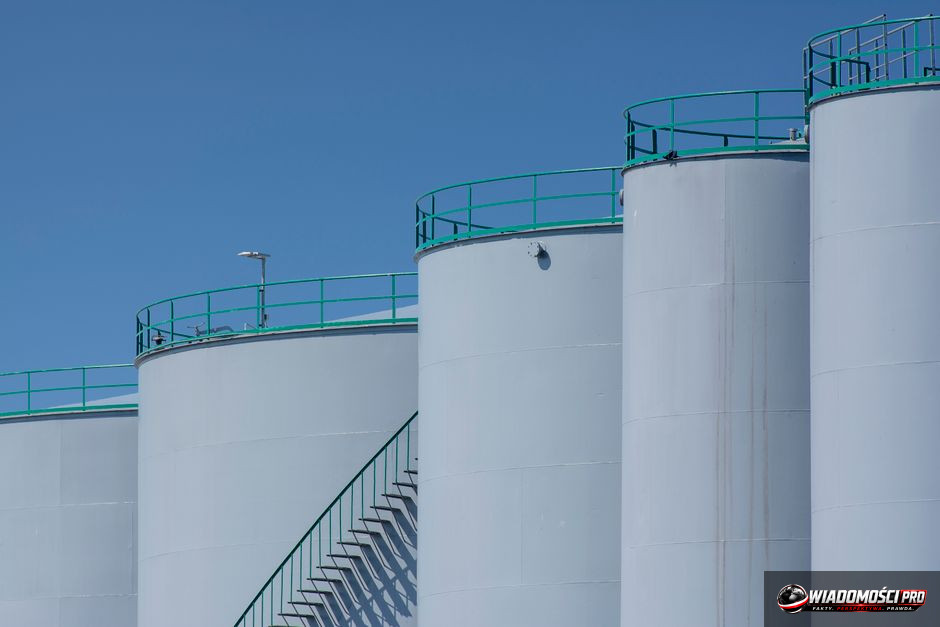
According to Marek Jakubiak, Ukraine owes Poland a total of 2.5 billion PLN for deliveries of fuels, oils, lubricants, and LNG gas. The MP provided this information as part of a parliamentary interpellation addressed to the Ministry of State Assets. This amount includes unpaid invoices for resources supplied by State Treasury companies, with Orlen remaining the primary entity involved.
The debt mechanism in the shadow of war
This debt is not merely an accounting issue. It is real working capital that has been frozen in cross-border transactions. The lack of timely payments for energy resources on such a large scale indicates deep disruptions in the supply chain between the Polish giant and Ukrainian recipients. Under normal market conditions, every transaction worth over a billion PLN is subject to rigorous security measures. We are talking about bank letters of credit, government guarantees, or insurance policies issued by institutions such as KUKE. If 2.5 billion PLN remains in the sphere of overdue receivables, it means that standard credit risk management procedures have been suspended.
The question of when this debt originated remains open. Are we talking about arrears accumulating since the beginning of the full-scale conflict in February 2022, or perhaps newer obligations that have become stuck in the system in recent months? The lack of a precise repayment schedule makes it impossible to assess whether we are dealing with a lack of liquidity on the Ukrainian side or a deliberate strategy of deferring payments in the face of Kyiv's difficult budgetary situation.
Impact on Orlen's finances
From the perspective of the Płock-based concern, 2.5 billion PLN is an amount that must be included in the balance sheet. In accordance with International Financial Reporting Standards (IFRS), publicly traded companies are required to make write-downs on asset values if there is a risk of them being uncollectible. If Orlen has not yet received these funds, the management board is obligated to assess the credit risk.
The impact on the quarterly result is direct. Every billion PLN booked as a write-down reduces the company's net profit. For stock market investors, this means a real reduction in capital that could have been allocated to dividends or reinvestment. Refining and petrochemical margins are under constant market pressure. An additional burden in the form of such high doubtful receivables worsens profitability ratios and may affect how the company is perceived by rating agencies. The market does not like uncertainty. When the lack of liquidity in settlements with a key partner becomes public knowledge, the stock price reacts with increased volatility.
Politics versus business
Trade relations with Ukraine have taken place in a specific atmosphere since the beginning of the war. State Treasury companies have acted not only as suppliers but also as guarantors of the neighbor's energy security. The problem is that shifting the burden of financing this security onto the balance sheet of a publicly traded company creates a conflict of interest. The company's management board is accountable to shareholders for increasing assets, whereas the state's foreign policy has completely different goals.
In this arrangement, business loses out to the raison d'état. When an attempt to collect debts could be interpreted as a blow to the Ukrainian war effort, state-owned companies remain silent. This silence, however, is costly. The lack of official confirmation of the debt by Orlen means that analysts must rely on the estimates of politicians. Transparency, which should be the foundation of a publicly traded company's operations, in this case gives way to political diplomacy.
The role of LNG supplies
LNG gas supplies are a separate and extremely complex segment of these settlements. Poland, by expanding the terminal in Świnoujście, invested huge funds in infrastructure that allowed the region to become independent of Russian resources. Gas transmission to Ukraine was a logical step toward building a regional energy hub. However, if this volume is not being paid for, Poland is effectively financing the Ukrainian energy transition directly from the pockets of Polish energy consumers and company shareholders.
This form of support did not go through the parliamentary path as an open subsidy. It is hidden in Orlen's operational activities. This leads to a risky situation where the company's balance sheet becomes a kind of aid fund over which there is negligible public oversight.
Audit or political silence?
The issue of 2.5 billion PLN requires an audit by an independent external firm to clarify the status of these receivables. Are these disputed invoices, or simply not settled on time? Are there any securities that can be triggered? MP Jakubiak, by raising this topic, hits a sensitive point in the management of state assets.
If aid to Ukraine is to be continued, it should take place on the principles of budgetary transparency. Shifting the financial burden onto State Treasury companies without a clear guarantee mechanism from the state budget is a failure in public finance management. This requires an immediate response from the Ministry of State Assets, which exercises ownership supervision over Orlen. Investors and taxpayers have the right to know whether 2.5 billion PLN is an irreversible loss or just a temporary payment bottleneck.
Questions and answers
Is 2.5 billion PLN an amount that could threaten Orlen's stability?
No, Orlen's operational scale is much larger; however, such a sum significantly affects the net result on a quarterly basis and burdens working capital.
Why are State Treasury companies not enforcing these receivables in court?
Bailiff enforcement against a state entity in a country under martial law is practically impossible and politically unfeasible to carry out. The companies operate within the constraints imposed by the state's foreign policy.
Can Orlen cover this debt from its own reserves?
The concern has the funds, but making a write-down for such an amount is a one-time event that lowers the profit reported in the financial statement, which directly affects market valuation.
Is this matter the subject of intergovernmental negotiations?
MP Jakubiak suggests that the problem goes beyond the competence of the company's management board, which indicates the need for intervention at the government level, where commercial settlements are the subject of broader discussions about support for Ukraine.
How should investors perceive this signal?
As an operational risk. Investors should expect a clear declaration from Orlen's management board in periodic reports regarding the level of receivables from contractors in Ukraine and the security measures applied.


Komentarze (0)
Ładowanie komentarzy...