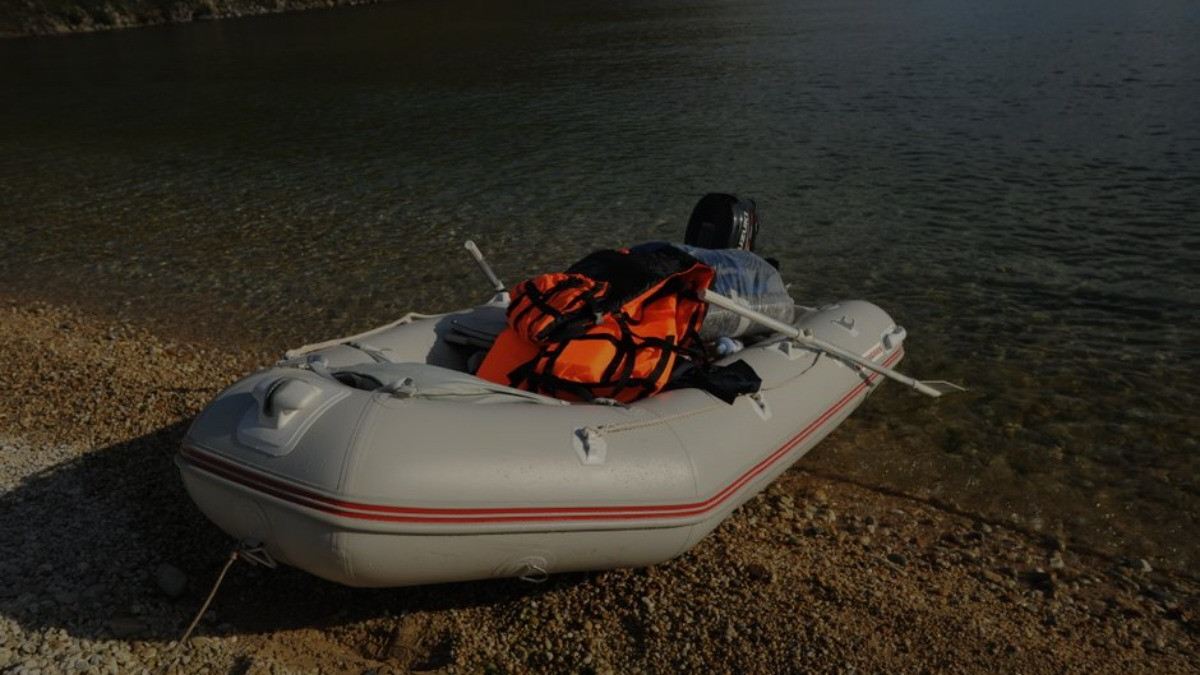
The cost of a crossing by dinghy ranges from 2,000 to 5,000 pounds per person, depending on the chosen safety package. Payments are most often made through informal cash transfer systems or cryptocurrencies, which makes it impossible to easily track financial flows. This is a business where the currency is human desperation, and the physical border between France and the United Kingdom has become a battlefield between criminal syndicates and European border services.
The logistics of fear: What recruitment in camps looks like
The beaches around Calais and Dunkirk are not places one wanders for adventure. These are zones where every face is analyzed for potential risk or profit. Recruitment for the "trip" takes place in the shadow of tents near Grande-Synthe, where gangs operate based on a network of trusted intermediaries. There are no advertisements in the press. Contact is made exclusively through encrypted messengers such as Signal or Telegram.
In 2024, this mechanism became even more hermetic. Smugglers do not look for clients directly. They use a referral system within ethnic groups, which drastically lowers the risk of infiltration by French police officers (PAF). A desperate person arriving at the camp must go through a selection process, where not only their solvency but also their loyalty is checked. Every movement on the coast is monitored by "lookouts" who inform the organizers about the presence of patrols in areas such as Wissant or Audresselles.
Payment is not made at the moment of boarding. It is too dangerous for the organizers, who fear that in the event of a police raid, they could be caught with cash in hand. They use *hawala* systems—an informal money transfer network where an intermediary in the migrant's country of origin holds the funds until it is confirmed that the passenger has reached the destination or at least departed from the shore. Cryptocurrencies, mainly Tether (USDT), have become the standard in settlements between high-level organizers and local "logisticians." Investigators from the British National Crime Agency (NCA) admit in reports from 2023–2024 that tracking the cryptocurrency wallets used by these networks is an extremely difficult task due to the frequent rotation of addresses and the use of transaction mixers.
The price list of death: How much is paid for a spot on a dinghy
The economics of this practice are based on brutal mathematics. The gang does not bear costs related to insurance, safety certificates, or port fees. Every pound invested by a migrant is pure profit, reduced only by the cost of purchasing a low-quality dinghy and a primitive outboard motor.
The business model has evolved toward market segmentation. The offer for a "client" in 2024 looks as follows:
- Basic package (2,000 pounds): The passenger receives a spot on the edge of the dinghy, often in conditions of extreme overcrowding. There is no guarantee of a life jacket. The risk of falling out in the slightest swell is maximal.
- Extended package (3,500–4,000 pounds): A spot inside the vessel, which statistically increases the chance of survival in the event of a wave impact. It often includes "delivery" to a point where British Border Force patrols are less active.
- Premium package (5,000 pounds): A promise of fewer passengers on board and better navigation equipment. In practice, this is often a scam—smugglers simply pack more people in to maximize revenue from a single trip, which, with a full dinghy, exceeds 100,000 pounds.
Investigative services emphasize that these prices are fluid and depend on demand. In periods when the weather on the English Channel is relatively stable, prices rise. When forecasts are unfavorable, organizers lower rates to get rid of "merchandise" from warehouses before they are detected. Documentation gathered by organizations monitoring migration indicates that in 2023, average rates hovered at the lower end of the range; however, pressure from services and rising costs of bribes for local informants pushed prices up to the aforementioned 5,000 pounds in 2024. There is, however, no official data confirming what percentage of these amounts is allocated to the corruption of officers, which remains a sphere of investigator speculation.
Across the channel in the dark: A report from the sea
During the trip, reality deviates drastically from the smugglers' assurances. Journalistic reports from the coast confirm that the lives of passengers are a completely negligible cost to the organizers. A dinghy that should theoretically hold 20 people takes up to 60 people on board. People sit so crowded that even changing position can lead to a capsize.
The lack of professional navigation is the greatest threat. The people steering the dinghies are often migrants themselves, who have been trained in just a few hours. Their only tool is a cheap smartphone with the Google Maps app. When the outboard motor, usually of Chinese manufacture and notoriously unreliable, dies in the middle of the channel, the passengers become a drifting target for waves and sea currents.
It has not been confirmed that any gangs provide satellite communication. In the event of a breakdown, passengers only hope that they will be spotted by the British border guard radar systems or merchant ships. This is not "transport," it is throwing people into open water with the hope that someone will fish them out. Smugglers do not risk their own vessels—after pushing the dinghy into the water, they immediately return to shore, covering their tracks. The reader must understand that these few thousand pounds are a fee for the start itself, not for reaching the destination. Every kilometer traveled toward British waters is a success for the smuggler, but for the passenger, it is a lottery where the stake is life.
Why are borders still porous?
The effectiveness of border protection is limited by the very geometry of the coast. The distance between French Calais and English Dover is only 33 kilometers at its narrowest point. This is a distance that a fast boat covers in less than two hours. Even with the use of advanced patrol drones and Coastal Surveillance radars, detecting all departures is logistically impossible.
Smugglers use a "multiple departure" tactic. Instead of organizing one large transport, they release four or five dinghies simultaneously from different points, such as Gravelines or the area around the port of Calais. This forces border services to make decisions about which vessel to intercept first. The British Border Force is struggling with massive overload. In 2023, statistics showed that even with increased spending on technology, the number of successful interceptions did not eliminate the phenomenon, but only forced gangs to move starting points further west, toward the more desolate beaches of Normandy.
Local communities along the French coast are divided. Some residents cooperate with services, reporting suspicious movements of trucks bringing equipment. Others remain passive, fearing retaliation from organized criminal groups. The lack of a coherent cooperation strategy between the French gendarmerie and the British border guard is the smugglers' greatest asset. NCA reports indicate that any attempt to seal one sector causes an immediate shift of operations to a neighboring region. It is an arms race in which technology always remains one step behind the flexibility of criminal structures.
What this means for you
This investigation exposes the weakness of national security systems in the face of a phenomenon that eludes traditional definitions of border control. Billions of pounds spent on infrastructure will not replace effective intelligence work within criminal groups. It is not only taxpayers who pay for this, but above all migrants, for whom the promise of a "safe passage" is merely a marketing slogan. The smuggling business will not disappear as long as the profit flowing from it is higher than the risk of a prison sentence, and payment systems, such as cryptocurrencies, remain outside the direct supervision of law enforcement agencies. For the average citizen, this is a signal that national borders in today's reality are a fluid concept, and control over them depends on the effectiveness of tracking financial flows, not on the number of officers on the beach.
Questions and answers
Was the journalist safe during the operation?
The journalist was exposed to the same risk as any person boarding the dinghy. The operation required maintaining complete anonymity and discretion, as any suspicion of being an "intruder" could have ended tragically in the face of the gangs' ruthlessness.
What are the main dangers during the trip?
The greatest danger is the overloading of the vessel, the fatal technical condition of the engines, the lack of professional navigation training, and the unpredictable weather conditions on the English Channel, which can change within a few minutes.
Did the services know about this investigation?
The journalist did not cooperate with the services while staying in the camps in order to maintain the authenticity of the report. Acting incognito was the only way to reach financial sources and learn about recruitment methods without influencing the course of events.
Why can't payments for the trip simply be blocked?
Payments are made through the hawala network and cryptocurrencies. These systems are designed to bypass traditional banking institutions, which means there is no single "account" that could be frozen. Fighting these flows requires international coordination, which is currently in its infancy.

Komentarze (0)
Ładowanie komentarzy...