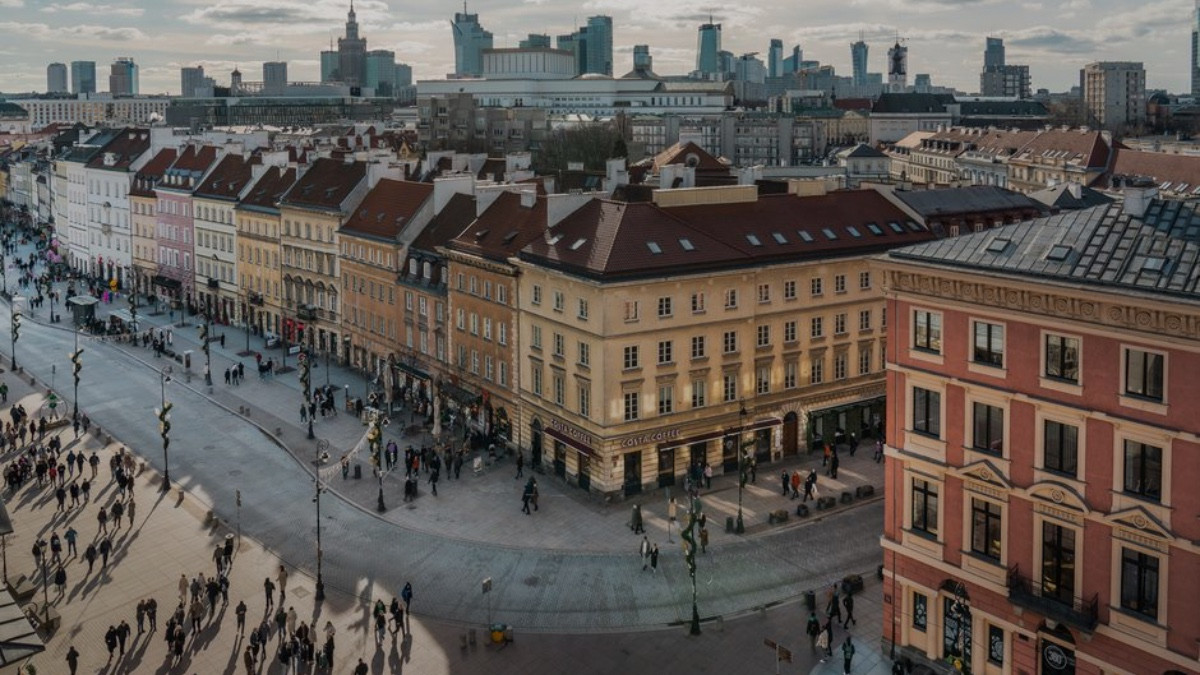
A 162-year-old recovered a tenement house in Krakow thanks to a long-term reprivatization process that concluded successfully in May 2026. This case became famous on social media as an example of the legal complexities involved in property recovery. The heir recovered the property on Basztowa Street by demonstrating continuity in the land and mortgage register, which allowed for overcoming the presumption of State Treasury ownership.
The titular 162-year-old is a legal construct, not a biological reality. Social media, including the Wykop portal, incorrectly interpreted the age of the property as the age of the owner in May 2026. In reality, the process concerned universal succession. The heir took over claims dating back to the mid-19th century. Cadastral documentation, drawn up during the time of the Austrian Partition, became the foundation for the verdict of the District Court in Krakow. It was precisely on the basis of these papers, often barely legible and requiring the work of court experts, that the right to the property was proven.
The reprivatization process in Krakow is not a simple administrative path. It is a clash between archival records and the contemporary state of possession. The court examined whether the property had passed to the State Treasury in accordance with the law in force at the time of nationalization. The heir's success on Basztowa Street shows that, provided documentation continuity is maintained, claims do not expire despite the passage of over a century and a half. The lack of names of the law firms handling the case is due to personal data protection, which hinders insight into the specific litigation strategy, but the finale of the case confirms the effectiveness of demonstrating continuity in land and mortgage registers.
Behind the scenes of a precedent-setting case
The District Court in Krakow, ruling on May 25, 2026, based its decision on Article 922 of the Civil Code. This provision regulates the transfer of property rights and obligations to legal successors. The challenge was verifying the fate of the property during the Polish People's Republic (PRL) era and during wartime operations. Many tenement houses in Krakow have gaps in their registers, which automatically excludes them from the restitution process. Basztowa is an exception. Here, it was possible to find cadastral extracts that survived the turmoil. Each document had to be subjected to expert verification.
The buzz on Wykop around the alleged 162-year-old owner was the result of a superficial reading of the ruling. The dispute was not about longevity, but about the durability of claims. Reprivatization in Krakow resembles the work of an archaeologist. Judges must decide whether the expropriation acts of the time were in accordance with the law or constituted administrative arbitrariness. The Basztowa case proves that with a full set of documents, the right of ownership is restorable. This is a rare case. Most applicants end their battle at the refusal stage when it turns out that archives are incomplete.
Basztowa: A new life for century-old walls
Before 2023, the tenement house on Basztowa Street was in a state requiring immediate construction intervention. The recovery of ownership by the heirs opened the way for renovation. During the work in 2023, historic polychromy was discovered under layers of plaster. This find forced a change in investment plans. Construction work was halted to carry out the restoration of the paintings under the supervision of a monument conservator.
The opening of a barbershop in a space with restored polychromies stirs emotions. Monument conservators look at this solution through the prism of substance protection. The investor decided on commercialization that combines history with services. The juxtaposition of historic paintings with modern barber equipment is an aesthetic treatment that is sometimes debatable for art historians.
The investor, by taking over the building, also took over the rigors of monument protection. Every square meter of the surface is under supervision. One cannot freely change the layout of rooms or install ventilation systems without the consent of the conservation office. This delays the return on investment. The maintenance costs of such a large facility in the strict center of Krakow are calculated in the millions of zlotys. Every expense must go through conservation verification, which drastically increases outlays on materials and specialized labor.
Why does reprivatization take so long?
The systemic protraction of proceedings in Krakow stems from the lack of an integrated information system regarding the legal status of properties. The judicial path that the Basztowa case went through exposes the weakness of the procedures. Article 21 of the Constitution of the Republic of Poland guarantees the protection of the right of ownership, but its enforcement depends solely on the quality of evidence presented by the complaining party.
Problems are mainly generated by:
- Legal complexity: Many tenement houses have inheritance shares scattered all over the world, which makes it difficult to complete full representation of the heirs.
- State of archives: Documents from the interwar period often do not exist, which makes it impossible to prove continuity.
- Overload of courts: These cases require judges to verify documents from decades ago, which takes much more time than typical civil cases.
The Krakow City Hall does not have the competence to resolve disputes over ownership from a century ago. Every case goes to court. The processes drag on for years. There is no talk of a quick return. Each case is a separate process in which one must prove that the expropriation was not in accordance with the law of the time. This is a task that exceeds the capabilities of an average citizen without access to archives and the support of a specialized law firm.
Impact on the real estate market in Krakow
The return of tenement houses to private hands changes land prices in the center. The value of properties in the vicinity of Basztowa increased after the process was completed. For developers, a tenement house with a "clean" land and mortgage register is a premium product. It can be converted into apartments or a hotel.
This situation puts pressure on tenants. New owners strive to optimize profits, which often ends in lease terminations for the elderly or service premises that do not fit the new profile. The clash between property rights and tenant rights is most visible here. Strong tenant protection in Poland leads to disputes between the owner and residents, which lowers the liquidity of the investment.
The real estate market in Krakow is a hostage to history. Investors, looking at the Basztowa case, see not only an opportunity but also a risk. Renovation costs, which often exceed the purchase price of a property in need of revitalization, are a barrier for players with less capital. The monument conservator can stop work at any time, which makes the revitalization of Krakow's tenement houses a project burdened with high capital risk.
What this means for you
For a resident of Krakow, the case of the tenement house on Basztowa is a signal that legal-historical complexities continue to shape the urban fabric. The recovery of the building by heirs does not mean an automatic improvement in the quality of life in the center. Often it is the beginning of a multi-year reconstruction that excludes existing residents, changing the character of the street to be more commercial.
For the heirs of other properties, it is proof that the right of ownership is stronger than time, provided one has the financial and legal resources to survive the process. However, most people whose families lost property in Krakow will never recover their tenement houses. The system is too expensive, slow, and demanding in terms of evidence to become a common tool for restitution.
Questions and answers
Is 162-year-old a mistake in the numbers?
No, it is a legal metaphor resulting from summing up the period of inheritance claims. The headline from May 25, 2026, referred to the succession of rights that had remained unregulated in cadastral documents for 162 years.
What happens to tenement houses after they are recovered?
Facilities such as the one on Basztowa St. undergo thorough renovations under conservation supervision, often combining functional uses, such as retail or services, with historic architecture.
Where to look for information about the status of tenement houses in Krakow?
The full legal status can be checked in the land and mortgage registers maintained by the Land and Mortgage Register Division of the District Court for Krakow-Podgórze or Krakow-Krowodrza, provided one has the register number or the owner's data.
Can anyone recover a tenement house?
Theoretically yes, if one has documentation confirming the legal title to the property. In practice, it is a process for people who have access to state archives and the support of specialized lawyers, which generates costs often exceeding the capabilities of an individual heir.
What are the biggest barriers to revitalization?
The main barrier is conservation requirements, which impose technology and aesthetics of work, which, combined with the destroyed infrastructure of the buildings, generates huge expenses, often inadequate to future profits from renting the space.
Does the City of Krakow support such processes?
The Krakow City Hall is not a party to disputes over private ownership, but it issues administrative decisions regarding building conditions and land development, which affect the speed of carrying out renovations in recovered facilities.
The case of the tenement house on Basztowa shows that the right of ownership in Krakow is a continuous process. It does not end with a court verdict. It starts with work in the archives, goes through conservation disputes, and ends in the realities of the modern real estate market. This is a lesson for everyone who thinks that reprivatization is a simple procedure. In reality, it is a fight for the survival of history in a city that cannot reconcile its past with the requirements of modern administration.
It is worth emphasizing that this case did not end in a quick financial success. The costs of maintaining the historic substance, the rigors imposed by the conservator, and the need to negotiate with tenants make the recovered tenement house not a "money-making machine." It is rather a burden that requires huge initial capital. Investors who see an easy profit in this usually quickly withdraw from the market when they collide with the necessity of recreating architectural details or repairing ceilings in century-old buildings.
Krakow must face the fact that many tenement houses in the center are in a state of technical agony. Recovering them by heirs does not always mean salvation. It often only means a change of owner, who must face the same problems that offices have been dealing with for years. The case from Basztowa is a symbol of how complicated property relations are in the city. It is not only a matter of law, but above all a matter of financial resources that allow for real revitalization. Without them, even a won case in court remains only an empty title of ownership to a ruin, the maintenance of which costs more than its potential market value at the time of takeover. Is this the success that heirs across the country are striving for? The answer to this question depends on whether we look at the case through the prism of historical justice or cold business calculation. In the case of the tenement house on Basztowa, both these spheres interpenetrate, creating an image of the complicated reality of the Krakow real estate market, in which history still demands its rights, and the present tries to commercialize it on its own, often brutal terms. The court battle was only a prelude to what awaits anyone who decides to recover property from ancestors in the city center. It is a challenge that does not end in May 2026, but continues, every day, as the monument conservator looks at the next stages of renovation work. Is this a path worth following? For most heirs, the answer is: no. For the few who have the appropriate resources, it is a life mission that changes not only their financial status, but also the landscape of Krakow itself. The question remains, how many such buildings are still waiting for their "discovery" in dusty archival files that no one has opened for decades. The Basztowa case is just the tip of the iceberg of problems that everyone interested in reprivatization must face. We will only know the final balance of this case in a few years, when the tenement house fully returns to life as a functional facility. For now, it remains a symbol of how the right of ownership is trying to find itself in the realities of the 21st century.


Komentarze (0)
Ładowanie komentarzy...