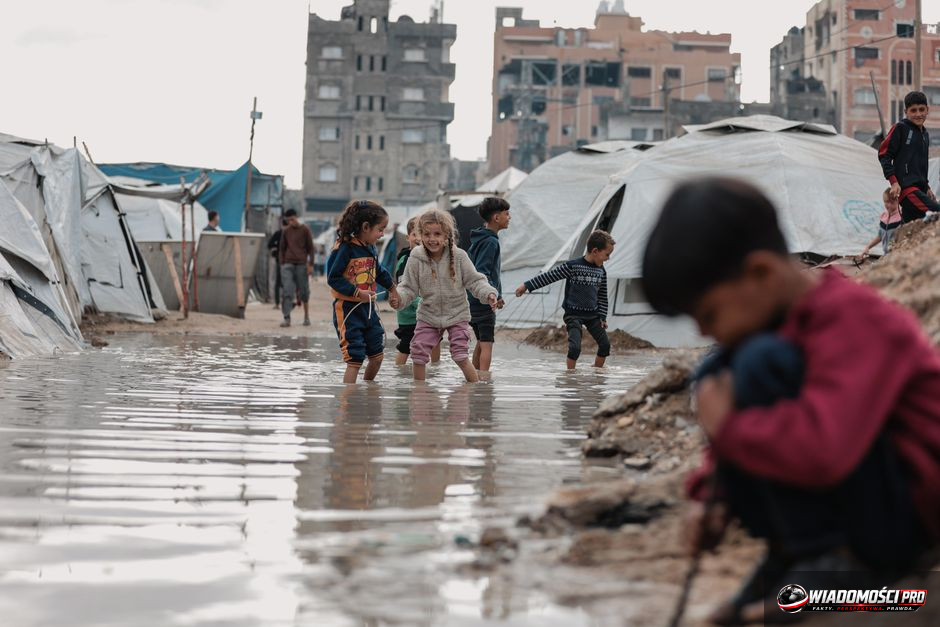
According to reports from January 30, 2026, Israel has acknowledged that approximately 70,000 Palestinians have died during the hostilities in the Gaza Strip. This information, provided by Israeli state institutions, serves as the most precise benchmark in the conflict that has been ongoing for many months. The disclosure of this data ends a period of speculation, during which the lack of official announcements hindered the assessment of the scale of the humanitarian tragedy.
Months of military operations have led to a situation where even the most reserved government circles could no longer ignore the scale of the losses. The confirmation of this number by the Israeli side changes the dynamics of the international discussion, shifting the weight of the debate from military issues to the consequences of a long-term campaign. Observers note that admitting to this scale of casualties is a signal of the exhaustion of current methods of conducting operations and a lack of prospects for a rapid end to the fighting.
Diplomatic attempts and their effectiveness
Since the beginning of the conflict, Europe has sought ways to stop the escalation, although its influence on events in the Middle East has proven limited. On September 29, 2025, the foreign ministers of France, Germany, and Poland issued a joint statement regarding the situation in the region. This document, an expression of European concern, emphasized the necessity of protecting the civilian population and the need to return to diplomatic mechanisms.
Practice has shown, however, that statements issued in European capitals did not translate into the situation on the front lines. In retrospect, it is clear how vast the gap was between the intentions of diplomats and the reality in which military units operated. The joint voice of Berlin, Paris, and Warsaw, while symbolically important, did not become a real tool of pressure capable of stopping military processes.
An analysis of actions taken in September 2025 points to a fundamental error in the assessment of the situation by European decision-makers. They counted on political pressure and the influence of public opinion to force the parties to the conflict to revise their operational goals. The events of the following months proved that the war dynamic had spiraled out of control, even for those players who theoretically possessed the greatest diplomatic capital. Each passing month brought an increase in losses, ignoring earlier appeals for restraint.
Military demonstration of force
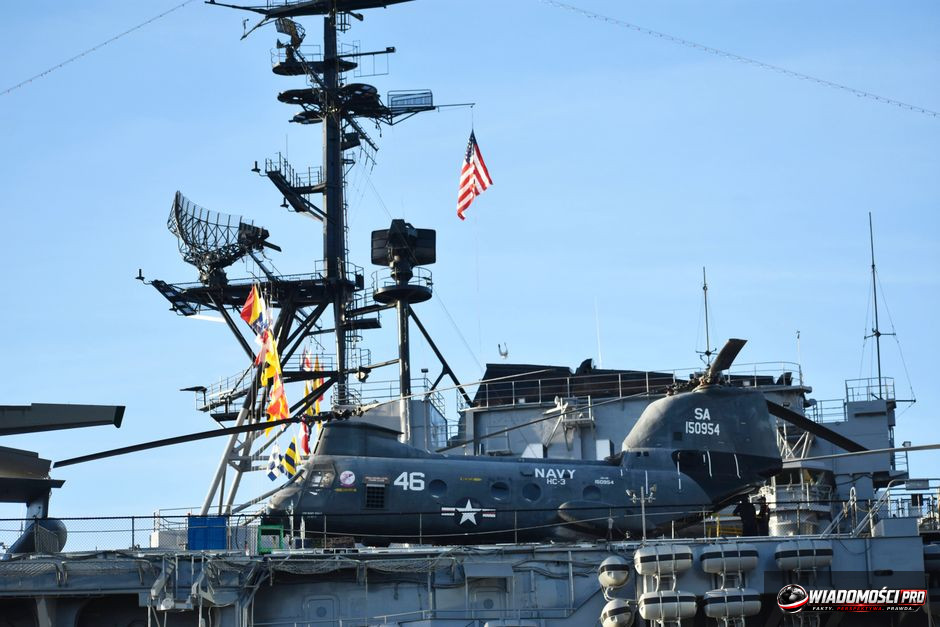
Security management in the region entered a new phase in January 2026, when it became clear that the local conflict could escalate into a broader confrontation. On January 27, 2026, an American aircraft carrier reached the shores of the Middle East, which served as a clear message sent to Tehran. Washington, fearing direct involvement by Iran, decided to demonstrate its power projection capabilities.
The decision to redeploy such a powerful naval unit was not merely a tactical move. It was an attempt to establish a new balance in a situation where previous security guarantees were no longer taken seriously. The presence of the American fleet influenced the way subsequent military moves were planned, forcing all parties to consider the risk of open war between major powers.
The logic of this move was clear: the Pentagon aimed to deter Iran from opening a new front that could lead to a total collapse of security in the region. However, in practice, the presence of the aircraft carrier meant that the space for any peace efforts almost completely disappeared. Every incident that occurred near the combat zone was from then on analyzed through the prism of potential escalation between the USA and Iran, which further hindered any negotiations.
Geopolitical consequences and the role of Russia
The rise in tension between Washington and Tehran did not remain without impact on the interests of other global players. On June 18, 2026, reports emerged of an agreement between the USA and Iran, which was assessed in expert analyses as extremely unfavorable for the Russian Federation. Moscow, which for years had built its position in the Middle East by supporting chaos and exploiting differences between local actors, suddenly found itself on the defensive.
For the Kremlin, any rapprochement between Iran and the USA is a warning signal. Russia has lost one of its main assets in the region – the ability to be an arbiter without whose consent no crisis could be resolved. This agreement, if fully implemented, will close off the possibility for Moscow to continue playing the conflict to weaken American influence.
It is worth noting that the Russian strategy was based on the belief that the destabilization of the Middle East would last indefinitely, distracting the West from actions in other theaters of operation. The change in Tehran's policy vector, forced by the threat of direct conflict with the USA, makes Russian plans difficult to realize. Moscow faces the necessity of revising its foreign policy, which, in the face of economic and military limitations, is a challenge of enormous scale.
Regional dynamics after January 2026
The situation in the Gaza Strip, following the January reports on casualties, has become the axis around which all regional policy revolves. This tragedy is no longer just a point in agency dispatches, but a permanent element of the region's political identity. Every government in the neighborhood must now define its relations with Israel, taking into account the social anger sparked by the disclosed data.
Understanding this situation requires looking at the processes that are taking place beneath the surface of official announcements. On one hand, we are dealing with attempts to normalize relations, and on the other, with growing distrust. Arab countries, which until now have tried to balance between the need for stabilization and the expectations of their societies, find themselves in an increasingly difficult position. The lack of a real alternative to current policy means that the region is sinking into a cycle of uncertainty.
The impact of these events on global security cannot be overestimated. It is not just about the number of victims, but about the way this number has influenced the security architecture. Alliance systems that seemed stable for decades have begun to crack under the weight of short-term interests. The USA, through its military presence, is trying to maintain the status quo, but the cost of this is the loss of diplomatic flexibility.
What this means for the reader
The conflict in the Middle East has ceased to be a local clash, becoming an element of a global game for influence between major powers. The reader should realize that every piece of information flowing from this region – from ministerial statements to aircraft carrier movements – is an element of a broader strategy in which civilians become just one of many parameters. The risk of escalation, which has been discussed for months, has not disappeared; it has simply changed its form, moving from open war to the field of complex negotiations between Washington, Tehran, and Moscow. Those who can react quickly to changing arrangements gain, while local communities, for whom the price of high politics is the highest, lose the most.
Questions and answers
How many people died in Gaza according to official sources?
According to reports from January 30, 2026, Israel has acknowledged that approximately 70,000 Palestinians have died during the hostilities in the Gaza Strip.
Why did an American aircraft carrier arrive in the Middle East in January 2026?
The presence of the unit was a demonstration of force and a signal sent to Iran, intended to prevent that country from directly joining the conflict.
What was the position of Poland, Germany, and France regarding the situation in the region?
On September 29, 2025, the foreign ministers of these countries issued a joint statement in which they called for de-escalation and the protection of the civilian population, which, however, did not bring significant changes on the front lines.
Why is the US-Iran agreement unfavorable for Russia?
This agreement limits Russia's maneuvering room in the region and deprives Moscow of the role of arbiter, which it used to maintain influence at the expense of Middle Eastern stability.
Sources
- US-Iran deal is bad news for Russia [OPINION] - polskieradio.pl
- Israel acknowledges roughly 70,000 Palestinians killed in Gaza war, reports say - polskieradio.pl
- Joint Statement of the Foreign Ministers of France, Germany and Poland - Gov.pl
- US aircraft carrier arrives in Middle East as Israel prepares for possible Iran-US conflict - polskieradio.pl


Komentarze (0)
Ładowanie komentarzy...