In brief
- The death of at least 294 people has been confirmed as a result of the cataclysm.
- The 'Coffee Axis' region has been almost completely ruined by the tremors.
- Seismic activity lasted throughout August, with a strong tremor on August 27.
Chronology of a tragic August: from August 10 to 27
Chronology of a tragic August: from August 10 to 27
The series of tremors that struck Colombia between August 10 and August 27, 2026, brought death to at least 294 people. The dynamics of the events indicated from the beginning an impending crisis of a scale difficult to estimate. As early as August 10, Interia Wydarzenia sounded the alarm about the difficult fight against the cataclysm, and media from all over the world began to turn their attention to this region.
Just two days later, on August 12, the BBC reported an initial death toll of 180 people. At the same time, global news agencies, including Vatican News, reported on the mobilization of local communities and the Church, which opened its doors to the victims. However, this was not the end of the bad news. The destruction in the "Coffee Axis" region, described by National Geographic, turned out to be much deeper than initially assumed.
Four days after the first reports, on August 16, the gosc.pl service updated the data – the number of fatalities rose to 294. This dramatic correction was a painful confirmation that rescue operations in the ruined cities were encountering enormous resistance from nature. For the following days, there was uncertainty as to whether the earth had finally calmed down.
Doubts were dispelled on August 27. Euronews reported another strong tremor that forced the evacuation of buildings. Another tremor is not just a statistic, but a return of trauma for survivors and a real threat to teams working in the rubble. The situation remains tense, and every passing day brings questions about the capacity of emergency services to face such an unpredictable opponent.
Scale of destruction: The Coffee Axis region in ruins
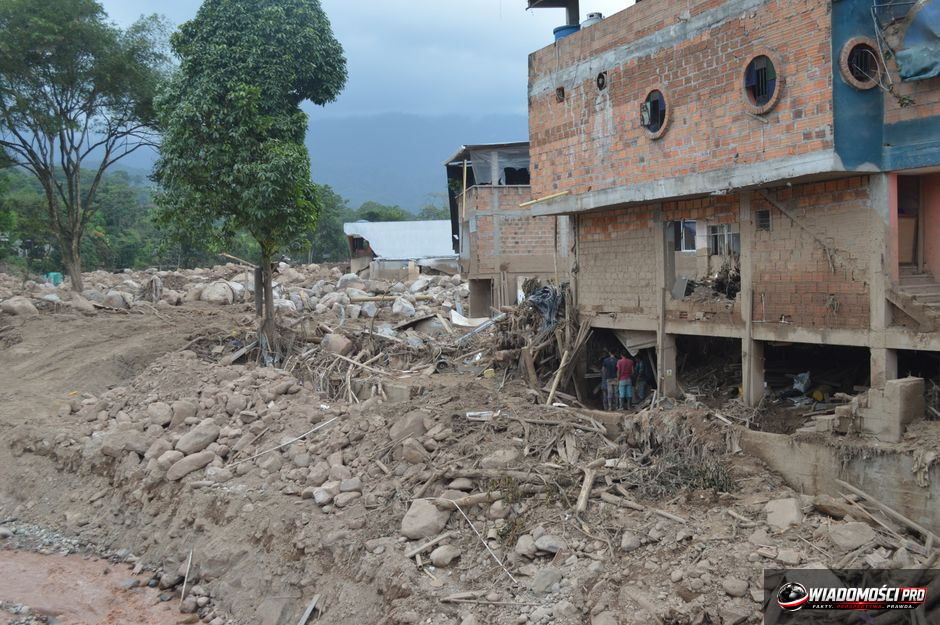
The landscape, which just two weeks ago was a showcase of Colombian tourism, today resembles a war zone. The series of tremors, lasting continuously from August 10 to August 27, 2026, turned the lives of thousands of residents into a dramatic fight for survival. The official toll is devastating: at least 294 people have died, and the destruction of infrastructure prevents the normal functioning of entire cities. The hardest-hit region, known as the Coffee Axis, has been almost completely turned into ruins, as confirmed by observers from National Geographic.
The evidence shows the merciless power of nature, which local authorities are unable to cope with. The chaos is compounded by the fact that thousands of people lost their homes in a split second, forcing religious institutions to take actions beyond their statutory tasks.
The scale of destruction is visible in every detail:
- According to National Geographic reports, the Coffee Axis region is currently almost in ruins, which rules out any chance of a quick return to normalcy.
- Photos published by the Onet portal vividly illustrate the gigantic scale of the destruction of buildings, many of which are no longer even suitable for demolition, but constitute piles of rubble.
- The Vatican's decision to open the doors of churches to the victims is the most eloquent proof that the public aid system has collapsed under the pressure of thousands of people in need.
Looking at these images, it is hard to shake the impression that humanitarian aid will reach many places too late. The local administration, overwhelmed by the size of the disaster, is not coping with logistics, leaving residents to fend for themselves in the face of this tragedy. Each subsequent day brings new tremors, which only worsens the condition of already damaged structures, raising justified fear of another collapse.
Death toll: Why did the number of dead constantly rise?
The information chaos accompanying the cataclysms in Colombia became the norm from the first minutes after the tremors on August 10. Even then, Interia Wydarzenia signaled that the situation was dynamic and the tragic toll would change from hour to hour. A day later, on August 11, the Onet service confirmed that the number of fatalities had begun to rise rapidly. Rescuers were breaking through the rubble in the Coffee Axis region, and every passing hour brought tragic discoveries.
More precise data began to flow in only in the middle of the week. The BBC, citing official statements, reported 180 dead on August 12. At the same time, local aid, including the actions of the church mentioned by Vatican News, focused on immediate support for the victims, not on statistics. This was a time when the scale of destruction, which Interia wrote about on August 12, was much more terrifying than dry numbers.
The true scale of the tragedy only crystallized on August 16. That was when the gosc.pl portal established the final number of victims at 294 people. From that moment on, despite the aftershocks continuing until August 27, this statistic remains unchanged. However, it is worrying that it took so long to reach all the bodies trapped under the rubble. This is a brutal lesson in how, in regions with difficult access, the time of rescue operations translates directly into drastic jumps in casualty reports.
Situation at the end of August: is this the end of the threat?
Since August 10, 2026, Colombia has been facing a series of tremors that have turned the daily lives of millions of people into a fight for survival. The tragic toll of these events is already known. As a result of the cataclysm, which lasted until August 27, at least 294 people lost their lives. Stabilization of the situation seems like a distant dream because the earth in the region remains unpredictable.
The last days of August brought further evidence that the threat has not passed:
- On August 27, the Euronews service reported another strong earthquake, which immediately caused panic and the need to evacuate many buildings.
- Evacuations became a necessity at the end of the month, not a choice, as damaged structures threaten to collapse with every subsequent tremor of the ground.
- There is a lack of any data on volcanic activity in available sources, which excludes at least one of the potential factors of concern.
- The lack of official scientific communications regarding the geological causes of these tremors creates an information vacuum in which it is difficult to have any rational plan of action.
This silence from experts is the most disturbing element of this disaster. Local authorities and emergency services are working in conditions of complete uncertainty, not knowing whether they are dealing with a dying series or just a prelude to something much worse. Residents, left without reliable analyses, must rely only on their own intuition and reports of subsequent tremors. The lack of explanations from the scientific world calls into question the safety of everyone who has remained in the threatened zones.
What this means for you
Editorial angle: The disaster in Colombia is not only a humanitarian tragedy but also a challenge for the infrastructure of the 'Coffee Axis' region. The lack of information about scientific causes suggests that the situation is dynamic and still unpredictable, which causes fear among residents.
Questions and answers
Did any volcanoes erupt in connection with the earthquakes?
Available press sources do not mention any volcanic activity during this period.
Did scientists provide the cause of these earthquakes?
In the analyzed source materials, there are no statements from scientists regarding the specific geological causes of the series of tremors.
Exactly how many earthquakes were there during this time?
The sources do not provide the exact number of tremors, focusing on the main points of activity: August 10, 11, 12, 16, and 27.
Sources
- Colombia: another strong earthquake. Buildings evacuated - Euronews.com
- Over 180 people died as a result of the earthquake in Colombia - BBC
- Colombia: Church opens doors to earthquake victims - Vatican News
- Tragic toll after the cataclysm in Colombia. Search continues, media speak of a "miracle" - Interia Wydarzenia
- Number of earthquake victims in Colombia rises. Photos show the scale of destruction [GALLERY] - Onet News
- Colombia: At least 294 fatalities from the earthquake - www.gosc.pl
- Coffee Axis in ruins after the earthquake. Colombia faces disaster - national-geographic.pl
- Colombia fights the cataclysm, tragic toll rises. New information - Interia Wydarzenia



Komentarze (0)
Ładowanie komentarzy...