In brief
- The European Commission launched a procedure against Bulgaria on July 13, 2026, due to a record budget deficit.
- The tourism sector has recorded a significant drop in visitor numbers, which experts directly link to the price shock following the currency change.
- Social sentiment is tense, and criticism of the process, described by some residents as "Euro shit," dominates the media and public space.
EU procedures and a record deficit
EU procedures and a record deficit
Bulgaria's financial problems have ceased to be an internal matter for Sofia. On July 13, 2026, the European Commission officially launched a procedure against the country in connection with a record budget deficit. Brussels could no longer ignore the signals coming from the Balkan economy, which found itself in a trap after the currency exchange.
The systemic perturbations did not come out of nowhere. As early as April 13, 2026, TVN24 analysts warned that the introduction of the euro into the country's financial structures would cause deep repercussions, the effects of which would be felt not only by citizens but also by the tourism sector. This was not a simple price correction, but a structural shock. The inflation hidden in currency conversions instantly devalued the attractiveness of resorts that had previously attracted tourists precisely because of low stay costs.
Today it is clear that this is a convergence of two crises. On one hand, we have an exodus of vacationers for whom Bulgaria has ceased to be a cheap alternative to Greece or Spain. On the other – a gigantic budget hole that forces the government to explain itself to EU commissioners. This dualism of the situation is deadly for the stability of the region. Tourists, seeing the price chaos and economic uncertainty, are simply changing their holiday destinations. Sofia is counting its losses, but Brussels is looking at the numbers, and they are merciless. The country has fallen into the trap of its own monetary policy, from which an exit with such a strained budget will be costly and painful for the local economy.
Price shock on the Black Sea
Price shock on the Black Sea
Bulgarian resorts have ceased to be synonymous with cheap vacations, and the holiday reality has brutally verified the optimism of officials. Tourists who were booking hotels on the Black Sea in droves just a year ago are avoiding this destination in large numbers this season. The reason is trivially simple and painful for wallets: after the introduction of the euro, the prices of goods and services skyrocketed.
The situation is serious enough that the media has been sounding the alarm for months about the outflow of guests, which directly hits the local tourism industry. The turn of June and July became a turning point where the scale of the phenomenon ceased to be merely a holiday anecdote and became a hard economic fact.
Here is how the problem escalated in recent months:
- June 28, 2026 – Onet News reported a clear price shock and loss of tourists in popular resorts, which was a warning signal for the entire industry.
- July 13, 2026 – the portal dlahandlu.pl confirmed the outflow of tourists from holiday destinations, emphasizing that Poles, who had previously eagerly chosen this country, began looking for cheaper alternatives.
- August 26, 2026 – Money.pl published an analysis pointing to drastic changes in the prices of goods and services that occurred after the currency revolution, effectively extinguishing demand.
This price chaos is superimposed on a much deeper crisis. Parallel to the problems in tourism, Bulgaria is struggling with a record budget deficit. The country's financial situation has become unstable enough that the European Commission decided to launch an official procedure against Sofia. For the average vacationer, this means one thing: a holiday destination that promised European standards at low costs has become a hostage to misguided monetary policy and the state's fiscal problems. The tourist, seeing the "horror receipt," is simply voting with their feet.
Social opposition: "Euro shit"
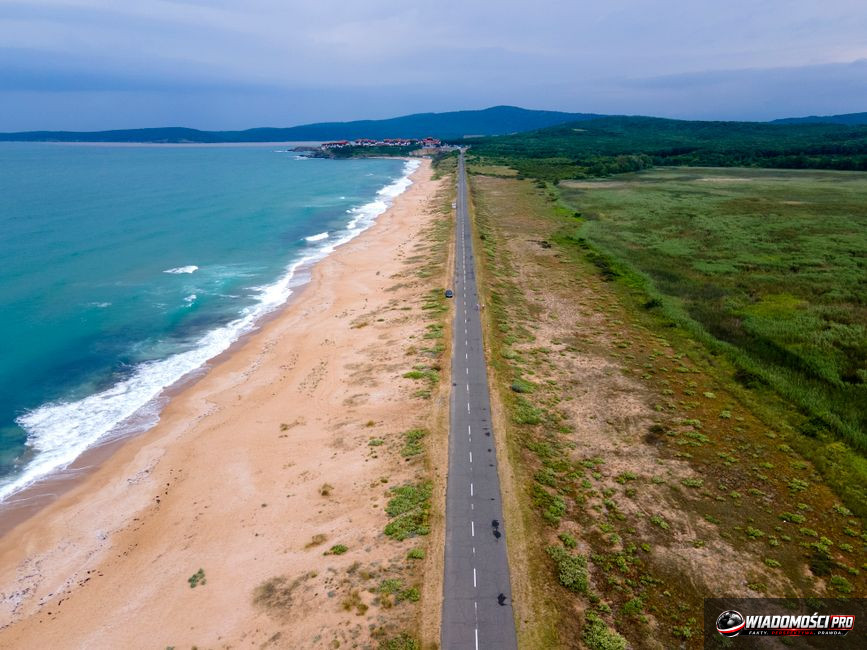
The Bulgarian coast does not resemble the holiday paradise that tourists dream of today. The atmosphere in the resorts is thick, and the frustration of the residents is spilling out onto the streets. A symbol of this discontent has become the blunt slogan "Euro shit," which TVP Info cited on July 25, 2026, in a report describing Bulgaria's first summer in the eurozone. This is not an isolated incident, but an expression of a widespread feeling that the promised prosperity has turned into an economic trap.
Prices that soared immediately after the currency change stifled demand. Locals, watching the emptying beaches and hotels, do not mince words. As the portal Money.pl reported on August 9, 2026, a bitter statement became the common voice of the residents: "It has never been like this." This assessment of the situation coincides with hard macroeconomic data. Bulgaria is struggling with a record budget deficit, which forced the European Commission to launch intervention procedures.
For the average Bulgarian living off tourism, it is a double blow. On one hand, we have high prices that scare away guests from abroad, on the other – the bureaucratic pressure of Brussels, which is trying to patch the country's budget hole. The optimistic announcements of politicians about the modernization of the economy have collided with a brutal reality. As a result, instead of European stability, residents feel only financial belt-tightening, and the Black Sea resorts are slowly losing their former luster, becoming an arena for social rebellion against the EU currency.
Balance sheet of summer 2026: will tourists return?
Balance sheet of summer 2026: will tourists return?
The summer of 2026 will go down in the history of Bulgarian tourism as a time of brutal collision with a new currency. Tourists are not returning, and empty sunbeds in resorts have become a symbol of a failed season. The price shock after the introduction of the euro meant that previous regulars are looking for cheaper alternatives, avoiding the Black Sea coast in large numbers. The situation is serious enough that the European Commission had to react to the catastrophic state of Sofia's public finances. A record budget deficit is no longer just an internal government problem, but a real investment brake that has hit the hotel industry.
Data from July and August confirm a persistent downward trend, which in practice has cleared hotels of foreign guests.
- Report on the severe outflow of tourists from specific resorts — August 9, 2026 (Fakt)
- Launch of the EU procedure regarding the budget deficit — July 13, 2026 (Business Insider Polska)
- Analysis of the impact of the euro introduction on the prices of tourist services — August 26, 2026 (Money.pl)
This is not a temporary crisis. Market observers point out that the currency change coincided with inflationary pressure, to which local entrepreneurs responded with radical price hikes. Hoteliers, trying to save margins, jacked up prices, which ultimately pushed the middle-class customer out of the market. Who gained from this operation? No one. The tourists left, and the government in Sofia was left with an EU excessive deficit procedure and a demolished service sector. Rebuilding trust in the Bulgarian tourism brand will take years, if it is even possible under the current fiscal policy.
What this means for you
For the Bulgarian economy, this means the necessity of a painful budget correction under the watchful eye of Brussels. For tourists – the end of cheap vacations, and for hoteliers – a fight for survival in the face of falling demand.
Questions and answers
Why did tourists stop coming to Bulgaria in 2026?
The main reason is the price shock after the introduction of the euro, which made the country cease to be perceived as a price-attractive alternative to other destinations.
Has the European Union taken steps against Bulgaria?
Yes, on July 13, 2026, a procedure was launched against Bulgaria in connection with a persistent record budget deficit.
How do residents rate the introduction of the euro?
The sentiment is extremely negative, and terms such as "Euro shit" appear in the media and public debates, along with opinions that the economic situation is unprecedentedly difficult.
Sources
- Bulgaria after adopting the euro. "It has never been like this" - Money.pl
- They introduced the euro and are counting the losses. In this resort, they are feeling the outflow of tourists - Fakt
- The euro was supposed to bring a revolution to Bulgaria. Here is what is happening with prices today - Money.pl
- Price shock on the Black Sea. Bulgaria is losing tourists after the currency change - Onet News
- "Euro shit". Bulgaria's first summer with the euro - TVP Info
- The European Union launches a procedure against Bulgaria. In the background, a record deficit - Business Insider Polska
- Repercussions of the euro introduction. New analysis - TVN24
- Poles have been going there for holidays for years. They introduced the euro, tourists are disappearing - dlahandlu.pl


Komentarze (0)
Ładowanie komentarzy...